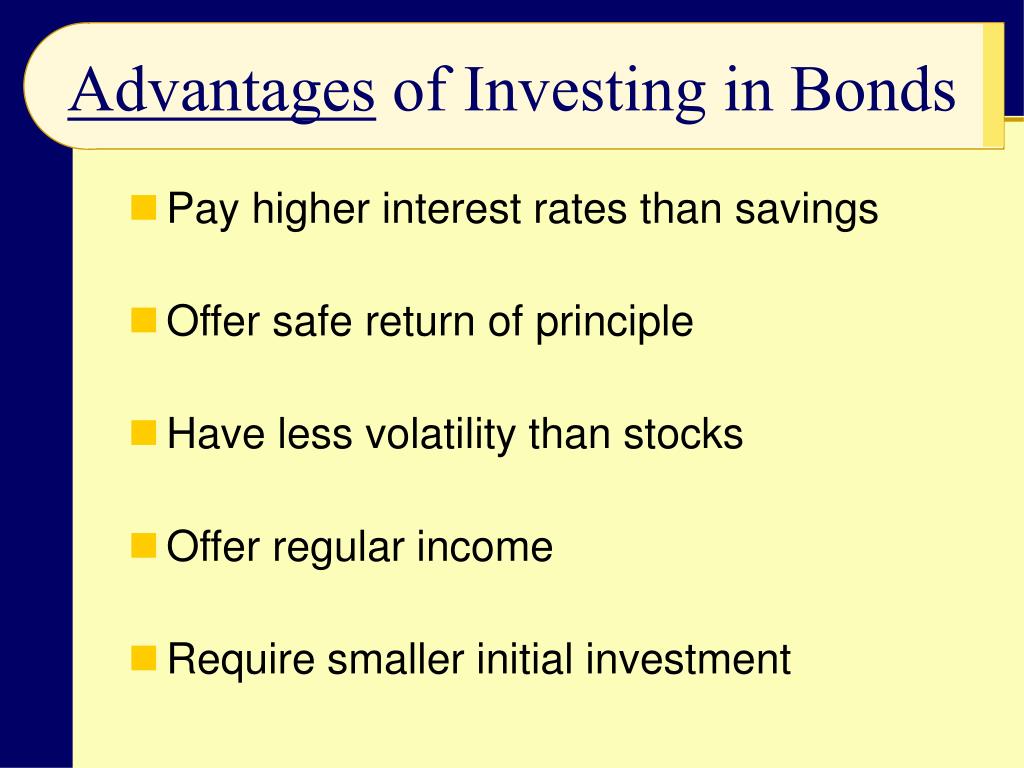
Investing in bonds provides a reliable stream of predictable income through fixed interest payments while serving as a critical buffer against stock market volatility. By acting as a lender to governments or corporations, you secure a contractual right to receive your initial principal back at maturity, making bonds a cornerstone for capital preservation and long-term wealth stability.
The financial landscape of 2026 has seen a renewed interest in fixed-income securities. Following the interest rate recalibrations of the early 2020s, bonds have reclaimed their traditional role as the "ballast" of the investment portfolio. For many investors, the primary advantages of bonds extend beyond simple interest; they encompass legal protections, tax efficiencies, and strategic diversification that equities alone cannot provide.
Disclaimer: This article is for informational purposes only and does not constitute financial, legal, or tax advice. Investment involves risk. Consult with a qualified financial advisor before making significant investment decisions.
1. Predictable Income Generation through Coupon Payments
One of the most significant advantages of bonds is the creation of a consistent, predictable cash flow. Unlike stocks, which may or may not pay dividends at the discretion of a board of directors, most bonds are contractual agreements that mandate regular interest payments, known as coupons.
Fixed vs. Floating Rates
In the 2026 market, investors typically choose between fixed-rate and floating-rate bonds. Fixed-rate bonds provide a set percentage of the face value annually or semi-annually. This predictability allows individual investors to plan for retirement expenses, education costs, or other major life events with high precision. Floating-rate notes (FRNs), conversely, have interest rates that adjust periodically based on benchmark rates (like the Secured Overnight Financing Rate, or SOFR), offering a safeguard if market interest rates rise.
The Contractual Nature of Income
The "bond indenture"—the legal contract between the issuer and the bondholder—specifies exactly when and how much interest will be paid. If an issuer fails to make these payments, they are considered in default. This legal obligation provides a level of certainty that is absent in equity markets, where companies can cut or eliminate dividends without being in breach of contract.
2. Capital Preservation and Return of Principal
While all investments carry some degree of risk, bonds are generally categorized as lower-risk instruments compared to stocks. This is primarily because of their focus on capital preservation. When you purchase a bond, you are essentially lending money for a specific period. At the end of that period (the maturity date), the issuer is legally obligated to return the full "par value" or "face value" of the bond to you.
Maturity Certainty
For investors with a specific time horizon—such as a parent saving for a child’s college tuition in five years—buying a bond with a five-year maturity ensures that the principal will be available exactly when needed, provided the issuer remains solvent. This makes bonds an excellent tool for matching assets to future liabilities.
Lower Volatility
Bonds historically exhibit significantly lower price volatility than stocks. While bond prices do fluctuate in response to interest rate changes (a concept known as duration risk), these movements are usually less dramatic than the price swings seen in the S&P 500 or Nasdaq. In a balanced portfolio, this stability helps prevent the "total account value" from cratering during a bear market, which can have a profound psychological benefit for the investor.
3. Enhanced Portfolio Diversification
A fundamental principle of modern portfolio theory is that a diversified portfolio can achieve better risk-adjusted returns. Bonds play a vital role here due to their historically low or negative correlation with stocks.
The "Flight to Quality" Phenomenon
During periods of economic uncertainty or stock market crashes, investors often sell equities and move their capital into the safety of government bonds. This "flight to quality" frequently drives up the price of bonds just as stock prices are falling. By holding both asset classes, the gains in your bond holdings can partially offset the losses in your stock holdings, smoothing out the overall performance of your investment journey.
Strategic Rebalancing
Holding bonds also provides the "dry powder" necessary for rebalancing. When stocks are down, an investor can sell a portion of their appreciated bond holdings to buy stocks at lower prices. Without the stability of bonds, an investor might be forced to sell stocks at a loss to cover liquidity needs, which is a significant setback to long-term compounding.
4. Priority in the Capital Structure
One of the technical but crucial advantages of bonds is the seniority of bondholders in the event of a corporate bankruptcy. In the world of finance, there is a clear hierarchy of who gets paid first when a company’s assets are liquidated.
Seniority Over Equity
Bondholders are creditors, not owners. In a liquidation scenario, the company must pay its debts before it can distribute any remaining value to shareholders. This means that even if a company fails, bondholders—especially those holding senior secured bonds—have a much higher chance of recovering at least a portion of their investment compared to common stockholders, who usually receive nothing.
Credit Ratings as a Guide
To help investors assess the safety of these claims, independent agencies such as Moody’s and S&P Global Ratings provide credit ratings. These ratings evaluate the issuer’s ability to meet its financial obligations. By sticking to "investment-grade" bonds (rated BBB-/Baa3 or higher), investors can significantly mitigate the risk of principal loss.
5. Potential for Significant Tax Advantages
Not all bond interest is treated equally by the tax authorities. Depending on the type of bond and your jurisdiction, you may be able to keep a much larger portion of your earnings.
Municipal Bonds (Munis)
In the United States, interest earned on municipal bonds—issued by states, cities, and counties to fund public projects like roads and schools—is generally exempt from federal income tax. If you live in the state where the bond was issued, the interest is often exempt from state and local taxes as well, a status known as "triple tax-exempt."
Tax-Equivalent Yield (TEY)
For investors in high tax brackets, the tax-equivalent yield of a municipal bond can be significantly higher than the yield of a taxable corporate bond.
To compare them, use the following formula:
TEY = Tax-Free Yield / (1 – Marginal Tax Rate)
If a municipal bond yields 4% and you are in a 35% tax bracket, the tax-equivalent yield is approximately 6.15%. This makes "Munis" an incredibly efficient way to grow wealth without the drag of heavy taxation.
6. Protection Against Inflation
While inflation is generally considered the "enemy" of fixed-income investors, specific types of bonds are designed specifically to combat it. In 2026, these instruments remain essential for maintaining purchasing power.
Treasury Inflation-Protected Securities (TIPS)
TIPS are government bonds whose principal value is adjusted based on changes in the Consumer Price Index (CPI). When inflation rises, the principal increases, and because the interest rate is applied to the adjusted principal, the interest payments increase as well. This ensures that the real value of your investment stays constant regardless of how much prices rise in the economy.
Series I Savings Bonds
For individual retail investors, Series I Savings Bonds offer a combination of a fixed rate and an inflation-adjusted rate. These have become popular due to their high degree of safety (backed by the U.S. Treasury) and their ability to hedge against sudden spikes in the cost of living.
Asset Class Comparison Table
The following table summarizes how bonds generally compare to other major asset classes as of 2026.
| Feature | Bonds (Fixed Income) | Stocks (Equities) | Cash / Money Markets |
|---|---|---|---|
| Primary Goal | Income & Preservation | Capital Growth | Liquidity & Safety |
| Risk Level | Low to Moderate | High | Very Low |
| Returns | Predetermined (Interest) | Variable (Dividends/Growth) | Minimal (Interest) |
| Ownership | Creditor (Lender) | Owner (Shareholder) | Depositor |
| Volatility | Moderate | High | Negligible |
| Legal Priority | High (Priority in Liquidation) | Low (Residual Claim) | N/A |
| Tax Status | Varies (Munis can be exempt) | Capital Gains / Dividends | Taxable Interest |
7. Accessibility and Market Variety
The bond market is massive—larger, in fact, than the global stock market. This provides investors with a staggering array of choices to fit their specific needs.
Bond Funds and ETFs
You no longer need to buy individual bonds in $10,000 or $50,000 increments. Exchange-Traded Funds (ETFs) and mutual funds allow you to own a diversified slice of thousands of bonds for the price of a single share. These funds provide professional management and daily liquidity, meaning you can sell your "bonds" as easily as a stock.
Global Opportunities
Investors can also access international bonds, including emerging market debt. While these carry higher risks (such as currency fluctuations and political instability), they often offer higher yields and further diversification, as foreign interest rate cycles may move independently of those in your home country.
Common Strategies: The Bond Ladder
One of the most effective ways to maximize the advantages of bonds while minimizing interest rate risk is through a bond ladder.
- Divide your investment: Instead of putting all your money into one 10-year bond, you divide it equally.
- Stagger maturities: You buy bonds that mature in 1, 2, 3, 4, and 5 years.
- Reinvest: When the 1-year bond matures, you take that principal and reinvest it into a new 5-year bond at the "top" of the ladder.
This strategy ensures that you always have cash becoming available at regular intervals (liquidity) and that you are constantly reinvesting at current market rates, which protects you if interest rates rise.
Frequently Asked Questions (FAQ)
What is the biggest risk of investing in bonds?
The most common risk is interest rate risk. When market interest rates rise, the prices of existing bonds typically fall because new bonds are being issued with higher yields, making older, lower-yielding bonds less attractive. However, if you hold a bond until its maturity date, these price fluctuations do not affect your final return of principal.
Are bonds safer than savings accounts?
Generally, high-quality government bonds (like U.S. Treasuries) are considered nearly as safe as cash. However, unlike a savings account, the market value of a bond can fluctuate before maturity. While a savings account offers immediate liquidity at a fixed value, bonds often provide higher interest rates in exchange for committing your money for a longer period.
How do I know if a bond issuer will pay me back?
You should check the credit ratings provided by agencies like Fitch Ratings. Ratings ranging from AAA to BBB are considered "investment grade," indicating a high likelihood of repayment. Ratings of BB or lower are "high yield" or "junk" bonds, which offer higher interest to compensate for a higher risk of default.
Can I lose money in bonds?
Yes. You can lose money if the issuer defaults (fails to pay) or if you sell the bond before maturity at a price lower than what you paid. To minimize this, diversify across many issuers or use bond ETFs, and focus on high-quality government or corporate debt.
Why would I buy a bond with a low yield?
Investors buy low-yielding bonds primarily for safety and diversification. During a market crash, a bond yielding 3% that keeps its value is far superior to a stock that has lost 30% of its value. Bonds act as the "insurance policy" for your portfolio.
Next Actions for Investors
To begin leveraging the advantages of bonds in 2026, consider these practical steps:
- Assess Your Asset Allocation: Determine how much of your portfolio should be in bonds based on your age and risk tolerance. A common rule of thumb is "110 minus your age" equals your stock percentage, with the remainder in bonds.
- Start with Treasuries: If you are new to bonds, look at TreasuryDirect.gov to purchase government-backed securities directly without middleman fees.
- Research Bond ETFs: For instant diversification, look for "Total Bond Market" ETFs. These provide exposure to government, corporate, and mortgage-backed securities in one ticker symbol.
- Consult a Tax Professional: If you are in a high tax bracket, specifically ask about the benefits of municipal bonds in your state to maximize your after-tax yield.
By integrating bonds into your strategy, you move away from pure speculation and toward a disciplined, structural approach to wealth management that prioritizes both income and security.