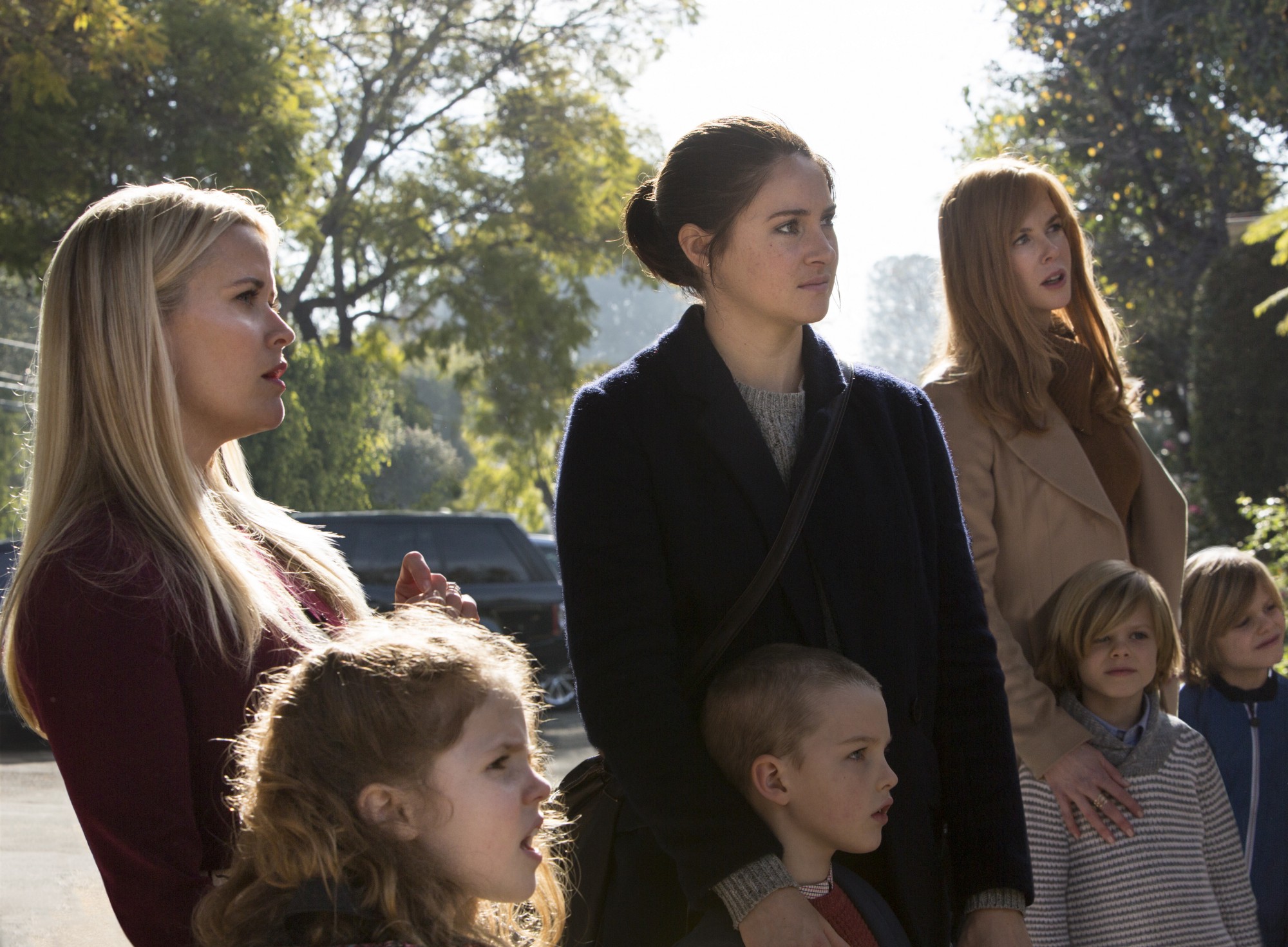
Adam Scott delivers a nuanced performance as Ed Mackenzie in the critically acclaimed HBO series Big Little Lies, portraying a husband grappling with the complexities of his marriage to Madeline Martha Mackenzie, played by Reese Witherspoon. Over the course of two seasons, Scott transforms Ed from a seemingly supportive, secondary figure into a central pillar of the narrative, highlighting themes of resentment, domestic stability, and the quiet struggles of modern masculinity.
Understanding the Character of Ed Mackenzie
In the landscape of Big Little Lies, the men of Monterey often serve as mirrors to the protagonists' internal states. Ed Mackenzie stands out because his arc is defined by his consistency, patience, and eventual, explosive recognition of his own marginalization. As a successful interior designer, Ed is portrayed as the quintessential "good guy"—stable, empathetic, and fundamentally kind. However, his character arc is a masterclass in the "boiling frog" metaphor.
Throughout the first season, Ed’s primary function is to serve as the grounded contrast to Madeline’s chaotic, high-energy life. He manages the home, cares for their daughter, Chloe, and navigates his relationship with Madeline’s ex-husband, Nathan, with a degree of grace that borders on self-erasure. Adam Scott brings a specific, understated physicality to this role; his reactions are often conveyed through subtle shifts in his expression rather than overt dialogue. This restraint makes the moments where his patience finally fractures all the more impactful for the audience.
The Dynamics of the Marriage: Ed and Madeline
The relationship between Ed and Madeline is the emotional anchor of the series. While Madeline is constantly seeking excitement and grappling with her past, Ed is looking for intimacy and truth. The friction in their marriage is not born of a single catastrophic event, but rather the cumulative effect of constant neglect. Madeline often views Ed as a safe harbor, but she fails to realize that the harbor requires maintenance.
Adam Scott’s portrayal excels in the scenes where Ed attempts to communicate his needs. He doesn't resort to shouting or manipulation; instead, he asks for honesty. When the truth eventually comes out—specifically regarding Madeline’s infidelity—Scott shifts his performance to reflect a deep, soul-crushing betrayal. This shift is critical because it forces the audience to stop viewing him as merely a "support system" and instead see him as a complete individual with his own set of psychological wounds.
Evolution Across Seasons
The narrative trajectory of Big Little Lies shifts significantly between the first and second seasons, and Ed’s role evolves in tandem.
- Season 1: The Stabilizer. In the inaugural season, Ed is primarily reactive. He is a puzzle piece that fits into the lives of the other Monterey mothers. His storyline is defined by his patience, but the viewer can see the cracks forming under the surface.
- Season 2: The Independent Agent. In the second season, the dynamic changes. Ed begins to advocate for his own agency. His interactions with others, including his brief and uncomfortable dalliance with Bonnie Carlson (Zoë Kravitz), highlight a man trying to find a new identity outside of his marriage. Adam Scott plays this period of aimlessness with a palpable sense of longing and confusion, which grounds the season’s more melodramatic turns.
The following table summarizes the key developmental phases of Ed Mackenzie across the series:
| Phase | Core Motivation | Relationship Status | Key Character Trait |
|---|---|---|---|
| Initial Calm | Sustaining family harmony | Passive, supportive | Stoic, observant |
| The Realization | Seeking genuine intimacy | Distant, suspicious | Vulnerable, confused |
| The Confrontation | Demanding transparency | Fractured, strained | Assertive, wounded |
| The Reconstruction | Redefining individual self | Re-evaluating commitment | Resilient, cautious |
The "Nice Guy" Archetype in Modern Television
One of the reasons Adam Scott’s performance in Big Little Lies remains a frequent topic of discussion is how he deconstructs the "nice guy" archetype. Television has a long history of characters like Ed—the reliable partner who is overlooked. By giving Ed depth and allowing him to make mistakes, the writers—and Scott himself—avoided making him a caricature.
Scott’s performance invites the audience to ask: What happens when the person who always puts everyone else first finally decides they have nothing left to give? The brilliance of the writing lies in the fact that Ed is never turned into a villain. Even when he is at his most frustrated, he remains fundamentally honorable. This creates a fascinating tension because the audience is forced to root for both Madeline’s search for herself and Ed’s search for respect.
Technical Craft: Adam Scott’s Approach
As an actor known for both comedic roles (such as Parks and Recreation) and dramatic performances, Adam Scott utilizes his comedic timing to enhance his dramatic delivery. In Big Little Lies, he uses deadpan delivery to cut through the heavy, often intense atmosphere of the Monterey social scene. This brings a necessary levity to the show, preventing it from becoming entirely consumed by its darker themes of abuse and trauma.
His technical approach relies heavily on "listening." In scenes involving the larger group of characters, the camera often captures Ed observing the madness unfolding around him. His ability to convey internal monologue through silence is perhaps his greatest contribution to the production. It allows the viewer to feel the weight of his experience as a husband who feels increasingly like an outsider in his own home.
Impact on the Narrative Arc
The inclusion of Ed Mackenzie is essential for the series’ commentary on domestic life. If Madeline were paired with a partner who was equally chaotic or demanding, the show would lose its sense of normalcy. Ed acts as the benchmark for reality. When his reality begins to fracture, it signals to the audience that the entire world of Monterey is in danger of collapsing.
Without the grounded performance by Adam Scott, the emotional stakes of the series would be significantly lower. The pain of the infidelity subplot is magnified specifically because the audience has seen how much effort Ed invested in keeping the relationship afloat. His journey serves as a cautionary tale about the dangers of emotional complacency.
Frequently Asked Questions
1. Does Adam Scott appear in both seasons of Big Little Lies? Yes, Adam Scott is a recurring cast member in the first season and is promoted to the main cast in the second season. His character’s development is a significant focus of the latter half of the show.
2. What is the central conflict for Ed Mackenzie? The central conflict is the erosion of his marriage due to a lack of genuine communication and the eventual revelation of his wife's infidelity. He struggles to maintain his identity while being relegated to a secondary role in his household.
3. How does Ed Mackenzie’s personality differ from Adam Scott’s other roles? While many of Scott's roles feature a level of neuroticism or dry wit, Ed Mackenzie is defined by a more somber, quiet, and deeply patient demeanor. It is a departure from his more overtly comedic work, focusing on suppressed emotion rather than performative humor.
4. Is Ed Mackenzie a "victim" in the show? Labeling him a victim is reductive. While he experiences profound betrayal, the show portrays him as an active participant in his marriage who must eventually take responsibility for his own silence and his failure to address his needs earlier in the relationship.
5. Why is Ed’s relationship with Madeline considered realistic? It is considered realistic because it depicts the "slow drift" that occurs in long-term marriages. It avoids the trope of an explosive, sudden breakup in favor of portraying the painful, incremental process of losing intimacy and the difficult work of trying to reclaim it.
Next Steps for Viewers
To truly appreciate the depth of Adam Scott’s performance, viewers should re-watch the sequences featuring the Mackenzie household, specifically focusing on his body language during group scenes in Season 1 versus his more vocal, decisive moments in Season 2. Observing how he changes his posture and eye contact when he begins to suspect the truth provides a masterclass in subtle, character-driven acting. For those interested in the wider context of the show, exploring the original novel by Liane Moriarty can offer further insight into how the character was conceived versus how he was expanded for the television adaptation.