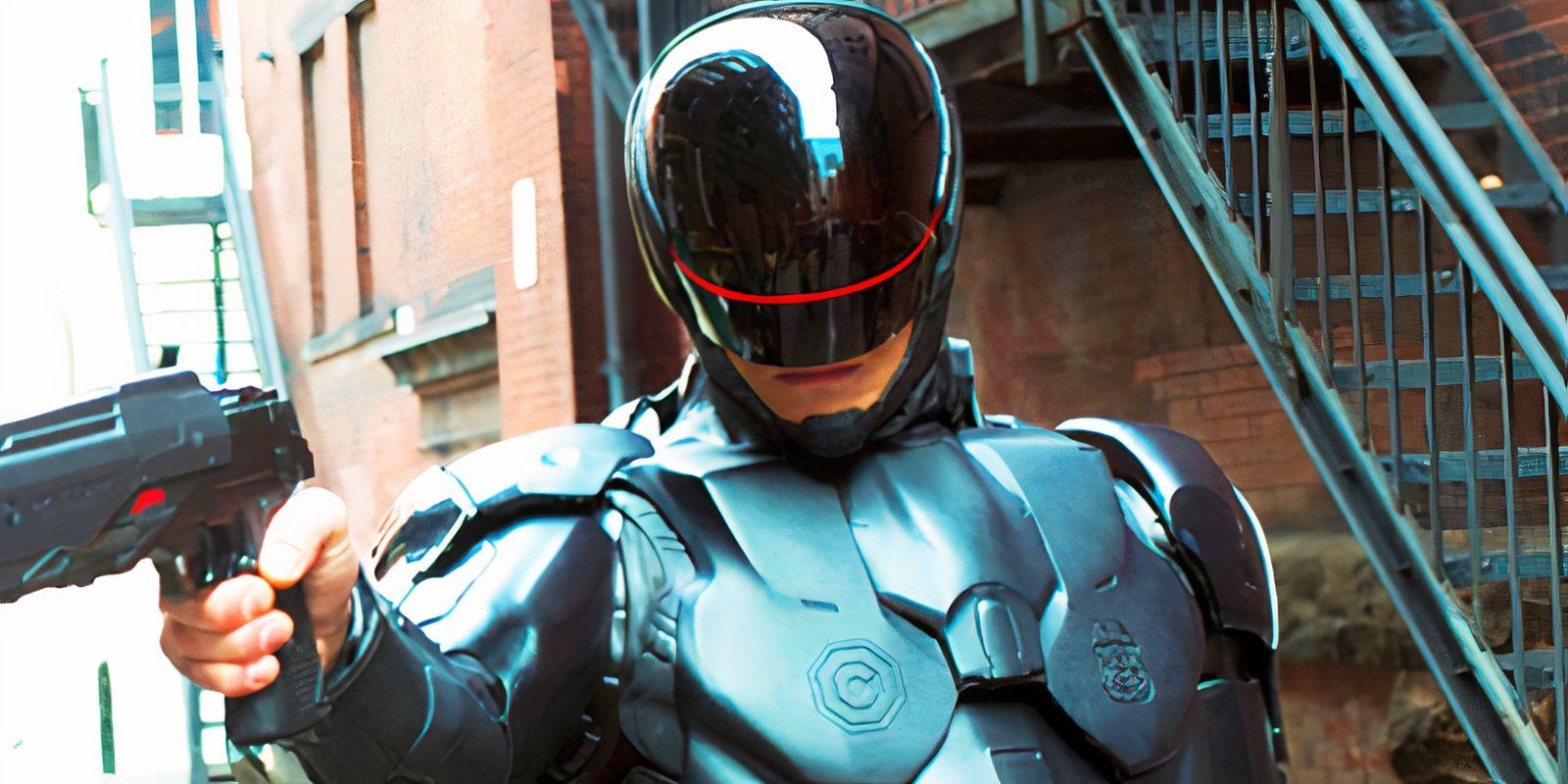
The portrayal of Alex Murphy, better known as RoboCop, remains one of the most physically demanding and iconic roles in the history of science fiction cinema. Since the character’s debut in 1987, the role has been defined by a unique blend of rigid mechanical movement and profound human pathos, primarily established by Peter Weller and later reinterpreted by Robert John Burke and Joel Kinnaman.
While the "RoboCop" franchise has expanded into television, animation, and video games, the cinematic history of the character is anchored by these three distinct performances. Each actor faced the daunting task of conveying emotion through a heavy, restrictive suit that often obscured their most expressive tool: their face. In the landscape of 2026, as we look back at nearly four decades of the franchise, the evolution of the RoboCop performance serves as a masterclass in physical acting and the intersection of human psychology with cybernetic hardware.
Peter Weller: The Architect of the Cyborg
When director Paul Verhoeven began casting for the 1987 original RoboCop, he wasn't looking for a traditional action star with a massive physique. Instead, he sought an actor with a specific "look"—particularly a strong, expressive chin—and the discipline to handle a role that would be physically punishing. Peter Weller, a classically trained actor with a background in the works of Strindberg and O'Neill, became the definitive choice.
The Mime and the Machine
Weller’s approach to the character was academic and highly technical. To prepare for the role, he worked extensively with Moni Yakim, a renowned mime instructor. The goal was to develop a movement style that felt distinctly non-human yet retained a ghost of Alex Murphy’s former self. This resulted in the signature "Robo-walk," a series of staccato, liquid movements that required immense core strength and precision.
The suit itself, designed by Rob Bottin, was a masterpiece of 1980s practical effects, but it was a nightmare for the actor. On the first day of filming, it famously took eleven hours to get Weller into the suit. The heat inside the costume was so intense that Weller lost several pounds of water weight daily, eventually requiring the installation of an air-conditioning system that could be plugged in between takes.
Emotional Resonance Under Chrome
What set Weller's performance apart—and what remains the benchmark in 2026—was his ability to convey Murphy’s burgeoning self-awareness. In the first film, the audience watches a machine slowly rediscover its humanity. Weller used his mouth and lower jaw to signal confusion, pain, and eventually, a cold, calculated sense of justice. His return in 1990’s RoboCop 2 allowed him to explore a more tragic side of the character, as Murphy is forced to confront his wife and the realization that he can never truly return to his old life.
Robert John Burke: Taking the Reins for RoboCop 3
By the time RoboCop 3 entered production in the early 1990s, Peter Weller had moved on to other projects, most notably David Cronenberg’s Naked Lunch. The production team turned to Robert John Burke to step into the chrome suit. Burke, known for his work in independent cinema and his collaboration with director Hal Hartley, faced the unenviable task of mimicking a performance that had already become legendary.
Continuity and Challenges
Burke’s performance in the 1993 film is often noted for its technical fidelity to Weller’s original movements. However, the production faced immediate physical hurdles. Burke was slightly taller and broader than Weller, meaning the original suit—which was reused for parts of the film—was exceptionally tight. This led to significant physical discomfort and limited the actor's range of motion even more than it had for his predecessor.
Despite the film’s shift toward a more family-friendly, PG-13 tone (a move that remains controversial among fans in 2026), Burke’s portrayal attempted to maintain the stoicism of the character. He focused on the "justice" aspect of RoboCop, portraying him more as a heroic protector of the citizens of Old Detroit during the corporate-sponsored displacement of the poor. While RoboCop 3 was a critical and commercial disappointment, Burke’s dedication to the physical requirements of the role is generally respected by film historians.
Joel Kinnaman: The Modern Reimagining
After a long hiatus from the big screen, the franchise was rebooted in 2014 by director José Padilha. Swedish-American actor Joel Kinnaman was cast as Alex Murphy, bringing a significantly different energy to the role. Unlike the 1987 film, which focused on a man who had "died" and was being rebuilt, the 2014 version focused on a man who was consciously aware of his transformation as it happened.
A Different Kind of Suit
The 2014 suit was a departure from the bulky, silver-and-blue aesthetic of the original. Kinnaman donned a sleeker, black tactical suit that allowed for much greater agility. This reflected a shift in film history toward more realistic, high-tech military hardware. Because the reboot featured a version of Murphy whose face was often visible behind a retractable visor, Kinnaman had to rely more on traditional facial acting than the "mask work" required of Weller and Burke.
The Psychology of the Reboot
Kinnaman’s performance centered on the horror of being a "prisoner" within a machine. His Murphy struggled with the loss of his physical agency as OmniCorp programmed his brain to prioritize tactical efficiency over human emotion. This gave the 2014 film a more explicit focus on the "ghost in the machine" concept. While the film lacked the satirical bite of Verhoeven’s original, Kinnaman provided a grounded, emotionally raw portrayal of a man grappling with his new existence as a product.
Comparison of Cinematic RoboCop Portrayals
The following table outlines the key differences between the major cinematic iterations of the character, highlighting the evolution of the performance and the technology involved.
| Feature | Peter Weller (1987, 1990) | Robert John Burke (1993) | Joel Kinnaman (2014) |
|---|---|---|---|
| Movement Style | Rigid, "Mime-based" staccato steps | Faithful imitation of Weller | Fluid, tactical, and agile |
| Suit Design | Silver/Blue, bulky practical armor | Similar to original, modified fit | Sleek black, high-tech tactical |
| Physical Toll | Extreme heat, 11-hour prep | Intense constriction, reused suit | Modern lightweight materials |
| Core Theme | Rediscovery of humanity/satire | Heroic protector/social justice | Psychological trauma/loss of agency |
| Voice Style | Monotone with rhythmic pauses | Deep, authoritative, synthesized | Naturalistic human voice |
Technical Evolution: From Practical Effects to Digital Augmentation
The history of the actors playing RoboCop is also a history of special effects. For Peter Weller, the performance was entirely physical. Every movement had to be planned and executed within a suit that weighed approximately 30 to 80 pounds depending on the scene. The "Robo-Vision" seen by the audience was created through traditional hand-drawn overlays and early computer graphics.
By 2014, Joel Kinnaman benefited from the advancements in motion capture and CGI. While a physical suit was built, many of the more complex movements and the mechanical internal workings shown on screen were augmented digitally. This allowed Kinnaman to perform with a level of speed and violence that was physically impossible for Weller in 1987. However, many critics in 2026 argue that the weight and "clunkiness" of Weller’s suit actually added a layer of realism and stakes that the more fluid 2014 version lacked.
The Physical Toll of the Armor
One of the less discussed aspects of being the "Actor RoboCop" is the long-term physical impact. Peter Weller has frequently spoken in interviews about the sheer exhaustion and the "Zen-like" state he had to enter to survive the filming process. The suit was not just a costume; it was an endurance test.
Robert John Burke faced similar issues, often noting that the pressure points of the suit caused bruising and limited circulation during long shooting days. Even Joel Kinnaman, with his more advanced suit, had to deal with the mental strain of being encased in plastic and metal for 12 to 14 hours a day, which he used to inform the character's own feelings of claustrophobia and frustration.
Legacy and the Character's Future
As of 2026, the character of RoboCop remains a cultural touchstone. The actors who have worn the visor have contributed to a legacy that explores the intersection of corporate greed, law enforcement, and the definition of the soul. Peter Weller’s performance is still widely considered the "gold standard" because of its perfect balance of mechanical rigidity and human vulnerability.
The influence of these actors extends beyond the films themselves. Their work has informed how cyborgs are portrayed in subsequent media, from Star Trek’s Borg to the various iterations of Ghost in the Shell. The "RoboCop" acting style—the precise head turns, the scanning eyes, and the deliberate gait—is now a recognized archetype in the toolkit of physical performers.
Frequently Asked Questions
Why did Peter Weller not return for RoboCop 3?
Peter Weller declined to return for the third installment primarily due to scheduling conflicts. At the time RoboCop 3 was beginning production, Weller was already committed to starring in Naked Lunch, directed by David Cronenberg. He has also expressed in various retrospectives that he felt he had explored the character of Alex Murphy as much as he could in the first two films.
Was the 2014 RoboCop suit easier for the actor to wear?
While the 2014 suit was lighter and used more modern materials than the 1987 version, it was still challenging for Joel Kinnaman. The suit was comprised of many interlocking pieces that required a team of technicians to assemble. However, unlike Weller, Kinnaman did not have to deal with the same level of extreme heat and weight, as modern cooling vests and lighter composites were used during production.
Did the actors do their own stunts in the RoboCop suits?
For the most part, the lead actors performed the majority of the "acting stunts," such as walking, turning, and handling weapons. However, because the suits were so restrictive and expensive, professional stunt doubles were used for falls, explosions, and high-impact sequences. In the 1987 film, stuntman Russell Towery performed many of the more dangerous movements, and he actually returned to play the character in several of the subsequent television appearances.
How did the actors change their voices for the role?
In the original 1987 film, Peter Weller worked with the sound department to find a specific cadence. He spoke in a flat, monotone voice with very deliberate pauses between words to simulate a computer processing speech. In post-production, his voice was electronically lowered and given a slight metallic reverb. Joel Kinnaman’s voice in the 2014 reboot was much more natural, as the film’s narrative emphasized that Murphy’s personality was being preserved by OmniCorp for marketing purposes.
Are there any other actors who have played RoboCop in movies?
In terms of major theatrical releases, Peter Weller, Robert John Burke, and Joel Kinnaman are the only three. However, Richard Eden played the character in the 1994 RoboCop: The Series, and Page Fletcher played an older version of the character in the 2001 miniseries RoboCop: Prime Directives. While these were television productions, they are often included in the broader discussion of the character's history.
Recommendations for Further Study
For those interested in the technical aspects of these performances, the 2026 digital archives of Cinefex magazine provide detailed breakdowns of the suit construction for both the 1987 and 2014 films. Additionally, watching the "making-of" documentaries included in the 4K restoration of the original RoboCop (released by Arrow Video) is essential for understanding Peter Weller’s mime-based preparation. To truly appreciate the contrast in acting styles, a back-to-back viewing of the 1987 original and the 2014 reboot is recommended, focusing specifically on the "awakening" scenes in both films to see how Weller and Kinnaman handle the realization of their cybernetic nature.