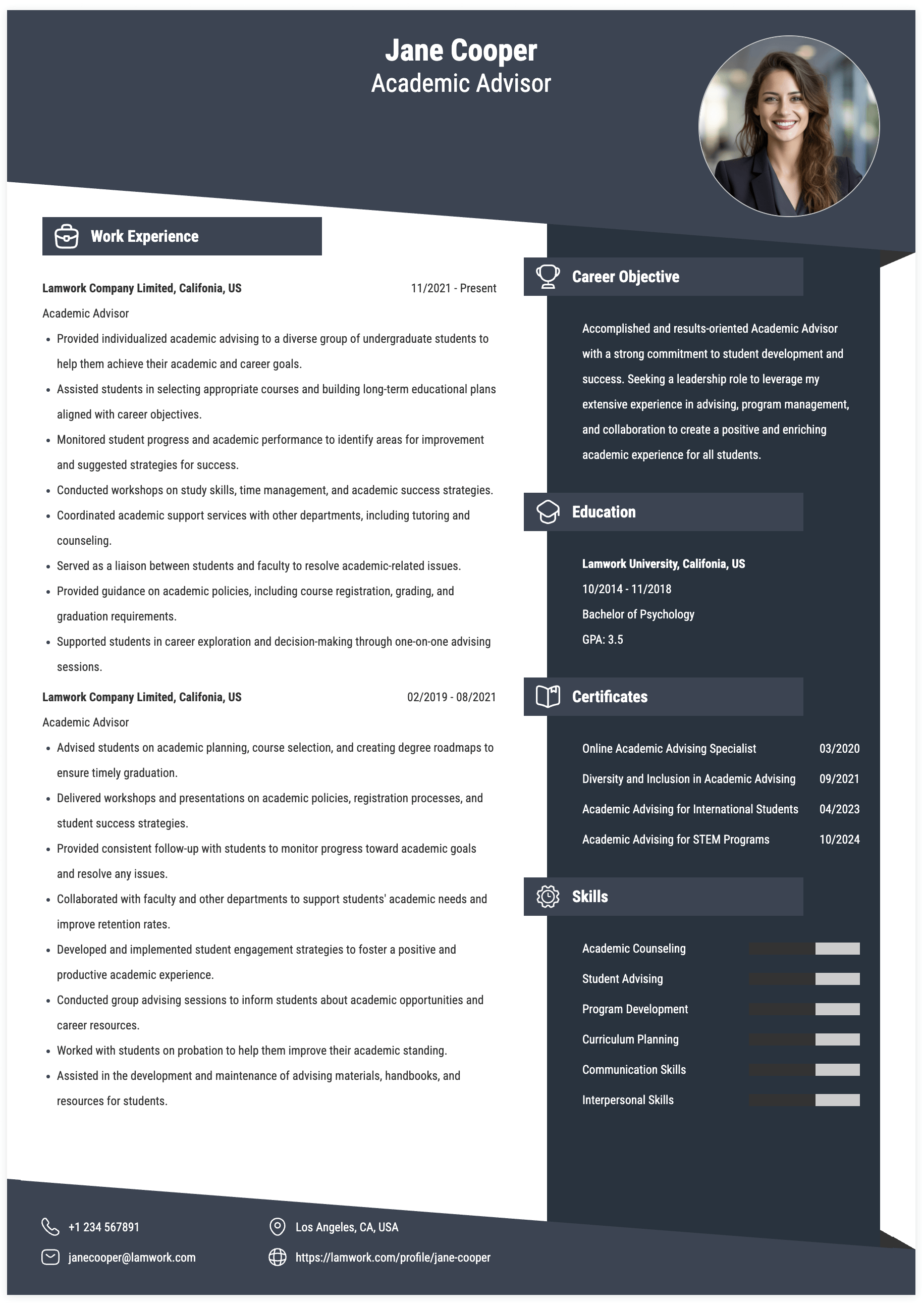
An academic advisor guides college and university students through their educational journeys by helping them select courses, map degree paths, and navigate institutional policies to achieve their long-term professional and personal goals.
Introduction to Academic Advising
The role of an academic advisor sits at the intersection of administrative policy, mentorship, and student advocacy within higher education. In modern colleges and universities, students face an increasingly complex landscape of degree requirements, financial aid stipulations, institutional deadlines, and career options. An academic advisor acts as a primary institutional touchpoint, helping individuals decipher course catalogs, interpret prerequisite structures, and align their academic choices with post-graduation objectives.
Whether working at a large public research university, a small liberal arts college, or a technical community college, the responsibilities of an advisor extend far beyond simple schedule-building. Effective advisors employ developmental advising frameworks, psychological insight, and data-driven tracking tools to identify at-risk students, foster academic resilience, and support institutional retention efforts.
Core Responsibilities and Daily Duties
The daily routine of an academic advisor involves a diverse mix of direct student interaction, administrative paperwork, cross-departmental collaboration, and professional development. While exact tasks vary depending on institutional size and student-to-advisor ratios, several core responsibilities define the position.
One-on-One Student Consultations
The most visible aspect of an academic advisor's job is direct counseling. Advisors conduct scheduled appointments and walk-in sessions with undergraduate or graduate students. During these meetings, advisors:
- Review degree audit reports to track progress toward graduation requirements.
- Recommend specific course sequences for upcoming semesters based on availability and student performance.
- Discuss academic probation, suspension, or warning statuses, developing targeted improvement plans.
- Provide referrals to campus resources such as mental health counseling, financial aid offices, tutoring centers, and disability services.
Degree Planning and Curriculum Management
Advisors help students construct comprehensive multi-year graduation plans. This requires a deep working knowledge of general education requirements, major-specific prerequisites, minor options, and elective credits. Advisors must ensure that course selections comply with institutional policies and financial aid standards, such as satisfactory academic progress (SAP) guidelines.
Institutional Advocacy and Policy Guidance
Colleges and universities operate under complex layers of governance. Academic advisors act as translators of these rules. They explain add/drop deadlines, withdrawal policies, grade forgiveness options, and transfer credit evaluations to students and their families. Furthermore, advisors often advocate for student exceptions when extraordinary circumstances—such as medical emergencies or family crises—impair academic performance.
Key Qualifications, Education, and Skills
Securing a position as an academic advisor typically requires a blend of formal higher education, interpersonal competencies, and technical proficiency. Hiring committees look for candidates who can demonstrate both empathy and administrative rigor.
Educational Background
Most four-year universities and community colleges require a minimum of a Bachelor's degree for entry-level advising positions. However, many institutions—particularly competitive universities or specialized professional schools—strongly prefer or strictly require a Master’s degree. Common academic fields of study for successful applicants include:
- Higher Education Administration
- College Student Personnel Counseling
- Educational Leadership
- Psychology, Sociology, or Counseling
- Communications or English
Essential Soft Skills
Because advising relies heavily on human communication and psychological support, certain interpersonal traits are indispensable:
- Active Listening: The ability to hear not just the explicit scheduling request, but underlying stressors like financial anxiety or imposter syndrome.
- Cultural Competency: Skill in working with diverse student populations, including first-generation college students, non-traditional adult learners, international students, and historically underrepresented groups.
- Problem-Solving: The capacity to untangle complicated prerequisite errors, transfer credit discrepancies, and scheduling conflicts under tight registration deadlines.
- Empathy and Boundaries: Maintaining a compassionate environment while enforcing institutional rules consistently and fairly.
Technical Proficiencies and Hard Skills
Modern advising relies heavily on specialized software and data management systems. Competence in these areas is frequently listed as a requirement in professional job postings:
- Student Information Systems (SIS): Proficiency in platforms such as Ellucian Banner, PeopleSoft Campus Solutions, or Workday Student.
- Degree Audit Systems: Experience with software like DegreeWorks or homegrown auditing tools that track student progress.
- Customer Relationship Management (CRM): Familiarity with platforms like Salesforce or EAB Navigate to track student interactions, send automated outreach, and schedule appointments.
- Data Literacy: The ability to interpret institutional metrics regarding retention, persistence, and graduation rates to inform proactive advising strategies.
Academic Advisor vs. Faculty Advisor
Institutions structure advising differently. Understanding the distinction between professional staff advisors and faculty advisors helps clarify organizational expectations within higher education.
| Feature | Professional Academic Advisor | Faculty Advisor |
|---|---|---|
| Employment Status | Full-time administrative staff or student affairs professionals. | Tenured or tenure-track teaching faculty (professors, lecturers). |
| Primary Focus | Dedicated exclusively to student guidance, retention, and institutional policies. | Balancing teaching, research, publication, and student advising. |
| Caseload | Often manages large cohorts (ranging from 150 to 400+ students). | Typically manages smaller cohorts focused within a specific major department. |
| Expertise | Broad knowledge of general education, university policy, and support services. | Deep specialized knowledge of career tracks, graduate school admissions, and discipline-specific research. |
Work Environment and Career Progression
Academic advisors typically work in office settings on college and university campuses, though hybrid and remote models have become increasingly common. The work environment is subject to distinct seasonal cycles. During peak registration periods—typically in the middle of fall and spring semesters, as well as before summer terms—advisors experience high-volume student traffic, extended appointment schedules, and fast-paced decision-making.
Career Ladder and Advancement Opportunities
The advising profession offers clear pathways for upward mobility within higher education administration. A standard progression might include:
- Entry-Level Advisor / Graduate Assistant Advisor: Working with a general, undeclared, or lower-division student cohort.
- Professional Academic Advisor: Managing a specialized caseload within a specific college (e.g., College of Engineering or School of Business).
- Senior Advisor / Lead Advisor: Mentoring junior staff members, handling complex student cases, and managing special populations (such as student-athletes or honors students).
- Director of Academic Advising / Assistant Dean: Overseeing department-wide advising operations, setting training policies, managing budgets, and collaborating with university leadership on retention initiatives.
Common Challenges and Ethical Considerations
Advisors face several unique professional challenges that require careful navigation. Understanding these hurdles is essential for anyone evaluating the career path.
- Caseload Management: High student-to-advisor ratios can limit the amount of time an advisor can spend with each individual, increasing the risk of burnout.
- Confidentiality and FERPA: Advisors must strictly adhere to the Family Educational Rights and Privacy Act (FERPA), balancing a student's right to privacy with institutional safety and parental inquiries.
- Navigating Institutional Bureaucracy: Helping students bypass rigid administrative roadblocks can be frustrating when institutional policies offer little flexibility.
Frequently Asked Questions
What degree do you need to become an academic advisor?
Most entry-level positions require a bachelor's degree, but many universities require or strongly prefer a master’s degree in higher education, counseling, student affairs, or a related behavioral science field.
What is the primary goal of developmental advising?
Developmental advising goes beyond mere course scheduling. It focuses on the whole student, encouraging personal growth, critical thinking, decision-making skills, and self-efficacy alongside academic success.
How do academic advisors handle at-risk students?
Advisors use early-alert software systems, midterm grade reports, and attendance tracking to identify students struggling academically. They then reach out proactively to create intervention plans, connect students with tutoring, or adjust course loads.
Is prior teaching experience required for an academic advisor role?
No, prior classroom teaching experience is generally not required for professional staff advising roles, though experience in student affairs, higher education administration, teaching, or counseling is highly advantageous.
Do academic advisors work year-round?
Yes. While student interactions peak during the fall and spring semesters, the academic calendar includes summer terms, orientation sessions for incoming students, professional development, and strategic planning throughout the year.
Conclusion and Next Actions
For professionals passionate about student success, higher education administration, and mentorship, the academic advisor role offers a deeply rewarding career path. Aspiring candidates should review current job listings on higher education job boards like HigherEdJobs or institutional human resources pages, tailor their resumes to highlight transferable skills in communication and data management, and prepare to demonstrate a student-centered philosophy during interviews.