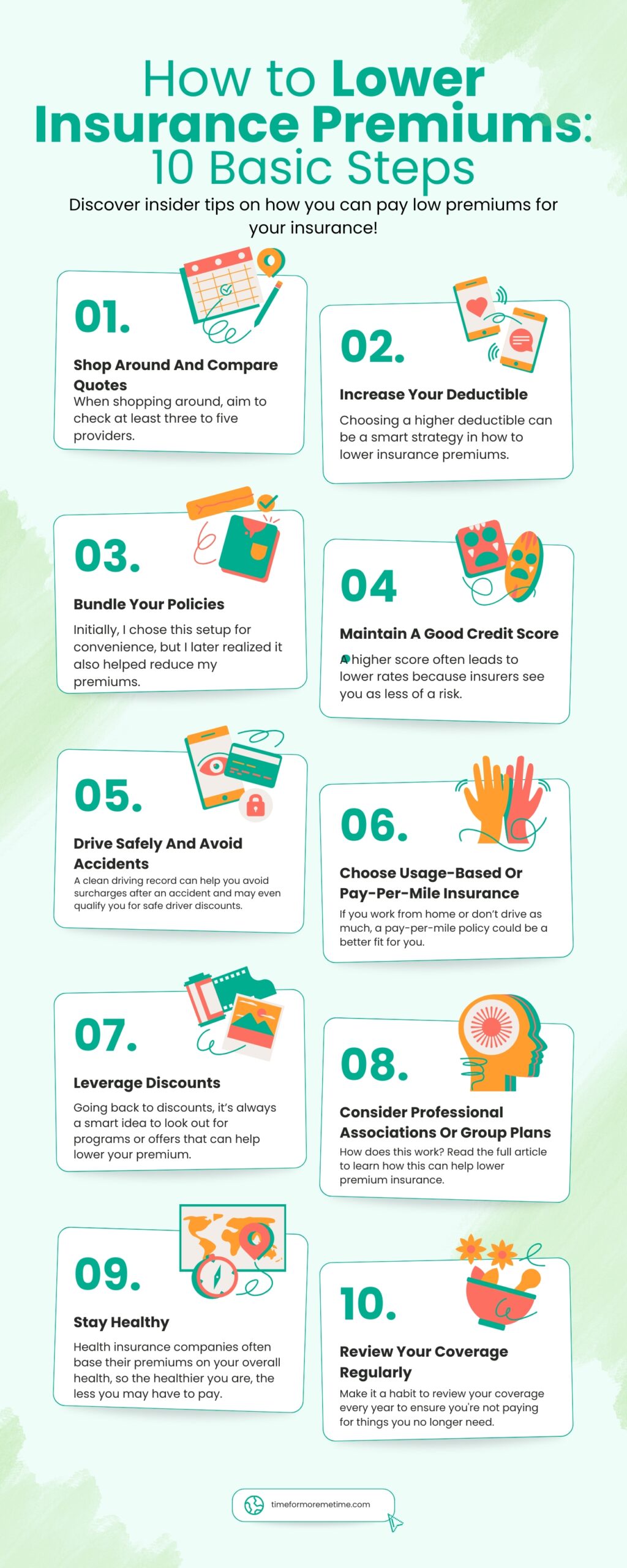
Lowering your car insurance premiums involves a combination of risk management, policy optimization, and active consumer comparison. By adjusting your coverage limits, maintaining a clean driving record, utilizing discounts, and leveraging telematics technology, you can reduce annual expenditures while ensuring you remain adequately protected against financial liability and vehicle loss.
1. Optimize Coverage Limits and Deductibles
The most direct way to impact your insurance premium is to adjust the balance between your coverage limits and your deductible. The deductible is the out-of-pocket amount you agree to pay toward a claim before your insurer covers the remainder. Raising this amount—for example, moving from a $500 deductible to a $1,000 deductible—signals to the insurer that you are willing to assume more financial risk, which typically results in a lower premium.
However, proceed with caution: you must have the liquidity to pay the higher deductible if an accident occurs. Furthermore, evaluate your liability limits. If you drive an older vehicle with low market value, carrying high levels of comprehensive and collision coverage may cost more than the actual cash value of the car. In such instances, dropping optional coverages can provide immediate savings, though this removes financial protection for your vehicle in the event of theft or non-collision damage.
2. Leverage Telematics and Usage-Based Insurance
In 2026, many major insurance carriers offer telematics programs—often referred to as usage-based insurance (UBI). These programs utilize either a mobile application or a plug-in device installed in your vehicle’s OBD-II port to monitor driving habits. Data points typically include speed, braking intensity, acceleration, time of day, and total mileage.
By demonstrating safe driving patterns over a specific observation period, you can qualify for significant discounts, often ranging from 10% to 30%. This is particularly effective for low-mileage drivers who avoid high-risk traffic hours. Be aware, however, that these programs also track negative behaviors, which could potentially lead to premium increases if your driving profile is deemed high-risk.
3. Consolidate Policies for Multi-Policy Discounts
Insurance companies prioritize customer retention and often provide "bundling" discounts to incentivize clients to hold multiple policies with them. If you carry homeowner’s, renter’s, or life insurance, consolidating these with your auto insurer can reduce the total cost of all policies combined.
Beyond bundling, inquire about "multi-vehicle" discounts. Insuring two or more vehicles under a single household policy is almost universally cheaper than insuring them individually with different carriers. When you group these policies, the insurance company benefits from administrative efficiency and reduced overhead, which is passed on to you as a discount on your premiums.
4. Maintain a Clean Driving Record
Your driving history is the primary variable in the underwriting process. Insurance carriers assess risk based on past behavior; therefore, traffic violations, at-fault accidents, and license suspensions act as triggers for premium increases that can last for three to five years depending on the jurisdiction and carrier policy.
By practicing defensive driving and avoiding citations, you preserve your "preferred" status with insurers. Even if you have prior incidents on your record, premiums typically decrease as those marks age and eventually expire from your motor vehicle report. If you have been cited for a minor offense, check if your jurisdiction allows for the completion of a defensive driving course to remove points from your license, which may also satisfy requirements for a premium reduction from your insurer.
5. Improve Your Credit-Based Insurance Score
In most states, insurance companies use credit-based insurance scores to determine the likelihood of a policyholder filing a claim. This is distinct from a traditional mortgage-lending credit score, though both are informed by your credit report. Data has historically shown a correlation between lower credit scores and an increased frequency of insurance claims.
You can improve your standing by paying bills on time, keeping credit card balances low relative to your limits, and avoiding unnecessary credit inquiries. Because this is a long-term strategy, consistency is key. If you have recently experienced a significant financial event—such as a job loss or medical emergency—that adversely impacted your score, speak with your agent. Some insurers allow for "extraordinary life circumstance" exceptions that may temporarily exempt those negative data points from your premium calculation.
6. Review Your Vehicle Choice Before Purchase
The specific make, model, and year of the car you drive influence your premium through the lens of repair costs, theft rates, and safety features. Vehicles with expensive, specialized parts or advanced driver-assistance systems (ADAS) are often more costly to repair after a collision, leading to higher premiums. Conversely, cars with high safety ratings and low theft statistics often qualify for lower rates.
Before purchasing your next vehicle, request a quote from your insurer for the specific VIN you are considering. This proactive step helps you identify which vehicles are classified as "expensive to insure" before you commit to a purchase. Choosing a vehicle with standard safety features—such as anti-lock brakes, airbags, and anti-theft tracking systems—can also help you secure specific equipment-related discounts.
7. Shop and Compare Quotes Annually
Insurance markets are highly competitive, and loyalty to a single provider does not always translate to the best pricing. Carriers adjust their regional rate filings periodically to reflect changes in claims costs, regional disaster risks, and inflation. A rate that was competitive three years ago may be significantly higher than current market offerings.
Make it a habit to shop your policy at least 30 days before your renewal date. Using independent insurance agents or online comparison tools allows you to benchmark your current rate against peers in your demographic. When comparing, ensure you are looking at "apples-to-apples" coverage—identical deductibles, liability limits, and add-on coverages—so you aren't sacrificing necessary protection just to achieve a lower monthly payment.
Comparison Table: Premium Reduction Strategies
| Strategy | Primary Mechanism | Effort Level | Potential Impact |
|---|---|---|---|
| Raise Deductible | Shifts risk to policyholder | Low | High |
| Telematics/UBI | Data-verified safe driving | Moderate | High |
| Multi-Policy Bundle | Efficiency/Retention discount | Low | Moderate |
| Credit Improvement | Statistical risk reduction | High | Moderate |
| Shop Annual Quotes | Market competition | Moderate | High |
Frequently Asked Questions
Does paying for my insurance annually instead of monthly lower the cost? Yes, most insurers offer a "paid-in-full" discount. When you pay the full term upfront, the insurer saves on administrative costs and eliminates the risk of missed payments, which they pass on to you as a reduction, often between 5% and 10%.
Will changing my coverage status affect my credit score? No. Requesting an insurance quote or changing your coverage limits involves a "soft pull" of your credit data, which does not impact your credit score. Only formal loan applications typically result in "hard pulls" that affect your credit rating.
Does parking in a garage help lower premiums? In some instances, yes. Insurers consider where a car is kept overnight. A secure garage reduces the risk of theft, vandalism, and weather-related damage, which may qualify you for a small discount depending on the provider's regional guidelines.
How long do points from a traffic violation stay on my record? This is determined by state law, not the insurance company. While points may remain on your Department of Motor Vehicles record for 24 to 36 months, insurers generally stop factoring them into your premium calculations after three years, provided no new violations occur.
Should I report every minor accident to my insurance company? Not necessarily. If the repair cost is only slightly higher than your deductible, filing a claim may result in a "surcharge" or the loss of a "claims-free" discount, which could cost more in the long run than paying for the minor repair out-of-pocket.
Next Steps for Policyholders
To immediately assess your potential for savings, log into your current provider’s web portal to view your "active discounts" list. Ensure you are receiving credit for every category you qualify for, such as low-mileage, safety equipment, or professional organization memberships. Once verified, perform a market comparison with at least three reputable carriers to ensure your current premium remains aligned with the 2026 market average for your specific risk profile. If you find a significantly lower rate, contact your current agent to see if they can match it before switching.