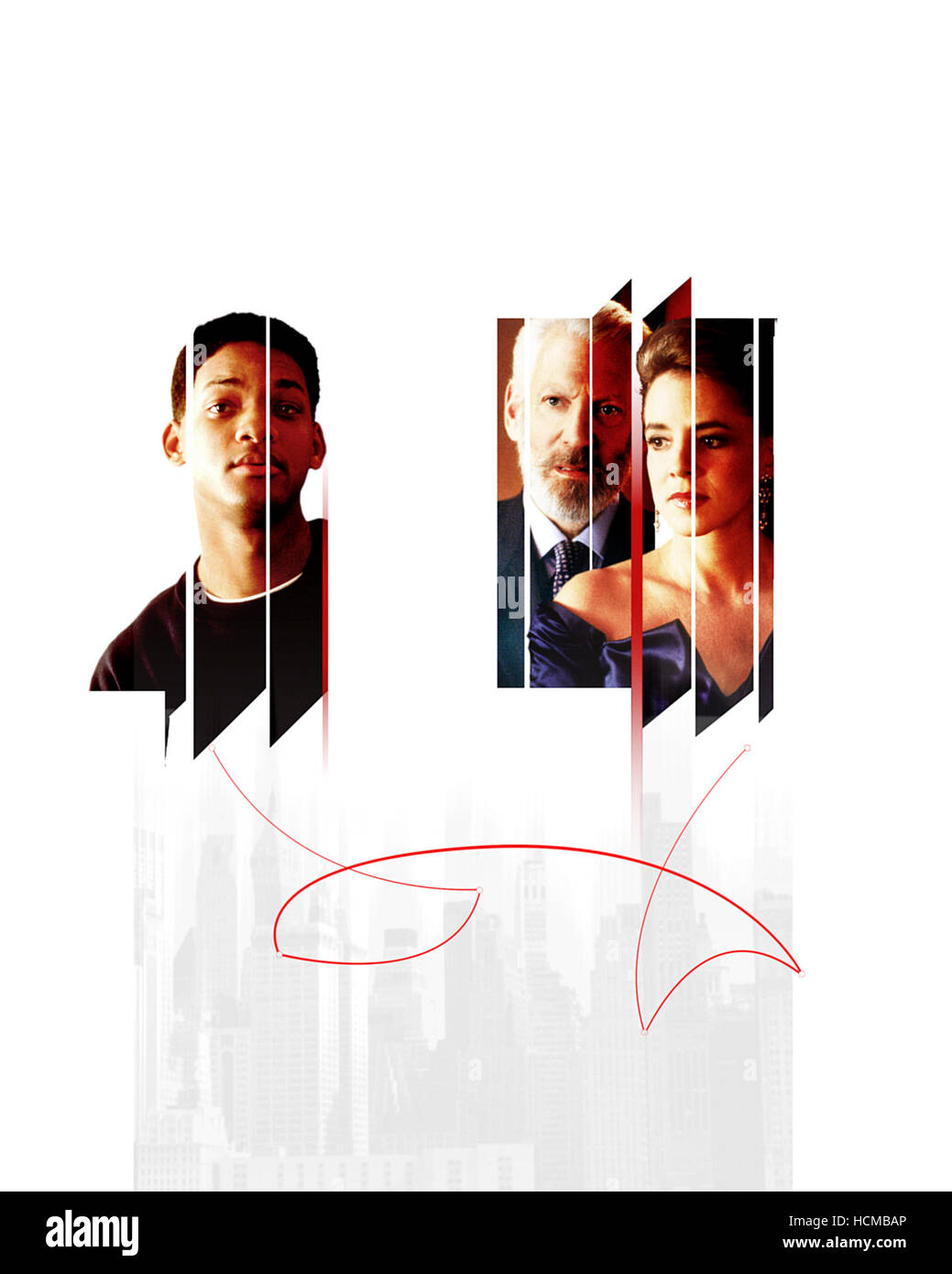
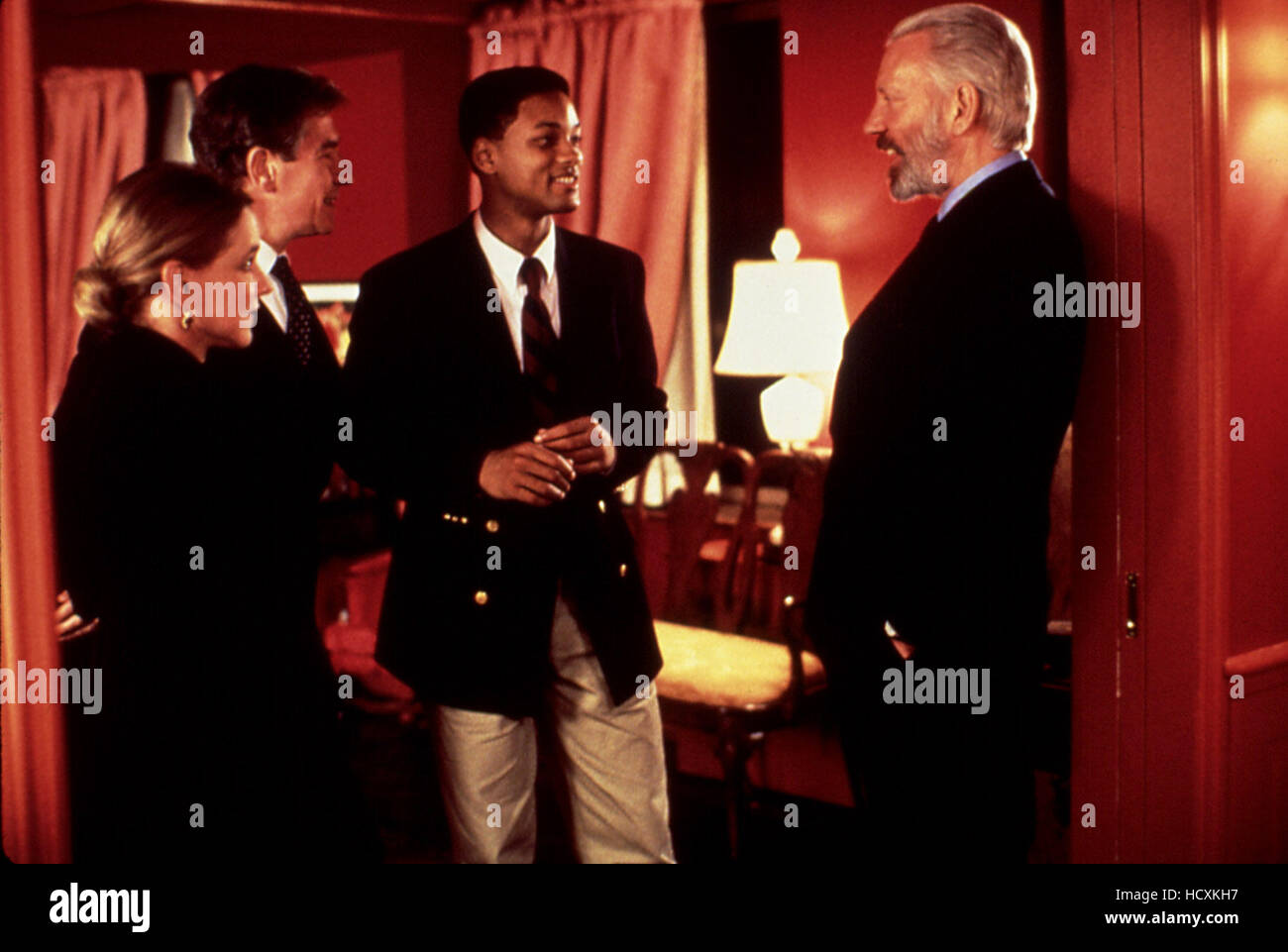
The connection between the "six degrees of separation" concept and Will Smith centers on the 1993 film Six Degrees of Separation. In his first major dramatic role, Smith played Paul, a charismatic con artist who infiltrates the lives of wealthy New Yorkers. The film, based on John Guare’s Pulitzer Prize-nominated play, popularized the theory that everyone on Earth is connected by six or fewer social links.
Understanding the Concept: What is Six Degrees of Separation?
The phrase "six degrees of separation" describes the idea that all people are six or fewer social connections away from each other. As a result, a chain of "a friend of a friend" statements can be made to connect any two people in a maximum of six steps. While the concept is a staple of modern pop culture, its origins are rooted in mathematical theory and sociological experimentation.
The Origins: Frigyes Karinthy and Stanley Milgram
The idea was first proposed in 1929 by Hungarian author Frigyes Karinthy in his short story "Chains" (Láncszemek). Karinthy hypothesized that the modern world was shrinking due to advances in communication and travel, making it possible for any two individuals to be linked through a short chain of acquaintances.
In 1967, American psychologist Stanley Milgram conducted the "Small World Experiment," which sought to measure these paths. Milgram asked participants in the Midwestern United States to send a package to a target person in Massachusetts. They could only send the package to someone they knew personally who might be closer to the target. Although many packages never reached their destination, those that did averaged a path length of approximately six people.
John Guare’s Influence
The term "six degrees of separation" was not actually coined by Karinthy or Milgram. It was popularized by playwright John Guare in his 1990 play of the same name. In the play, the character Ousa Kittredge delivers a monologue explaining the theory, describing it as a "prophetic" and "beautiful" concept that links us all, yet also highlighting the tragedy of being unable to find the right six people to reach those we admire or need.
Will Smith’s Role in the 1993 Film
By 1993, Will Smith was primarily known as "The Fresh Prince," a successful rapper and the star of a hit NBC sitcom. His casting in the film adaptation of Six Degrees of Separation was a significant risk for both the producers and Smith himself. Directed by Fred Schepisi, the film required Smith to pivot from broad comedy to a sophisticated, nuanced dramatic performance.
The Character of Paul
Smith portrays Paul, a young man who appears at the doorstep of art dealers Flan and Ouisa Kittredge (played by Donald Sutherland and Stockard Channing). Paul arrives bleeding, claiming to have been mugged, and introduces himself as a friend of their children at Harvard and the son of Hollywood legend Sidney Poitier.
Paul is a master of social engineering. He uses his intellect, charm, and knowledge of high culture—specifically his "thesis" on J.D. Salinger’s The Catcher in the Rye—to enchant the Kittredges and their wealthy friends. The film explores how Paul uses the "six degrees" theory to navigate social hierarchies that would otherwise be closed to him.
A Career-Defining Performance
As of 2026, film historians look back at Six Degrees of Separation as the moment Will Smith proved his range as a "serious" actor. His performance required him to balance Paul’s magnetic charm with an underlying desperation and mystery.
One of the most discussed aspects of his performance at the time was the "kissing scene." Smith famously refused to kiss his male co-star on screen, a decision he later expressed regret for, stating that he was "immature" and worried about how it would affect his image as a burgeoning movie star. Despite this, his portrayal of Paul remains one of the most complex characters in his filmography.
Critical Reception and Career Impact
The film was a critical success, particularly for its lead actors. Stockard Channing received an Academy Award nomination for Best Actress, reprising her role from the stage play. While Smith did not receive an Oscar nod for this specific role, the film's success directly paved the way for his transition into blockbuster leads like Bad Boys (1995) and Independence Day (1996).
Breaking the Sitcom Mold
Before Six Degrees of Separation, many critics doubted whether a sitcom star could lead a prestige drama. Smith’s ability to hold his own against veterans like Sutherland and Channing silenced these doubts. He demonstrated a specific type of screen presence: the ability to be simultaneously vulnerable and calculating. This duality would later define his most acclaimed roles in Ali and The Pursuit of Happyness.
The Kandinsky Metaphor
A central visual and thematic element in the film is a double-sided Wassily Kandinsky painting owned by the Kittredges. One side represents "Chaos" and the other "Order." This serves as a metaphor for the lives of the characters and the "six degrees" theory itself. Paul represents the chaos that enters the Kittredges' orderly, sterile lives, forcing them to confront their own superficiality and their disconnect from the rest of humanity.
Comparison: Six Degrees of Separation vs. Six Degrees of Kevin Bacon
While Will Smith is the face of the film that popularized the phrase, the concept is most frequently associated in the modern era with the game "Six Degrees of Kevin Bacon." It is important to distinguish between the film’s dramatic exploration of the theory and the popular trivia game.
| Feature | Six Degrees of Separation (Film) | Six Degrees of Kevin Bacon (Game) |
|---|---|---|
| Primary Focus | Social class, identity, and human connection. | Cinematic trivia and actor collaborations. |
| Key Entity | Will Smith (as Paul). | Kevin Bacon. |
| Origin Year | 1993 (Film) / 1990 (Play). | 1994 (Created by Albright, Ginelli, and Turtle). |
| Tone | Dramatic, satirical, and philosophical. | Lighthearted and competitive. |
| Core Concept | Every person is linked by a chain of six. | Every actor is linked to Kevin Bacon through movie roles. |
| Key Metaphor | The Kandinsky painting (Chaos vs. Order). | The "Bacon Number" (distance from Kevin Bacon). |
While the Kevin Bacon game is a fun exercise in film history, the Will Smith film deals with the social implications of the theory—how people use connections to gain access to power and how those connections can be both fragile and profound.
Technical Analysis: Narrative and Social Networking
The narrative structure of the movie mirrors the "small world" theory it discusses. The story is told through a series of anecdotes shared by the Kittredges at various high-society dinner parties. This framing device emphasizes how Paul’s story spreads through their social network, illustrating the very "degrees of separation" the title references.
Social Networking in the Pre-Digital Age
In 2026, it is fascinating to analyze this film through the lens of modern social media. In 1993, "six degrees" was a mind-bending philosophical concept. Today, platforms like LinkedIn and Facebook have made these connections visible and quantifiable. Research by Facebook’s data science team in the 2010s suggested that the "degrees of separation" between the billions of users on the platform had actually shrunk to roughly 3.5.
The film highlights a world where "who you know" is the ultimate currency. Paul’s con works because the Kittredges are so enamored with the idea of being "one degree" away from Sidney Poitier that they fail to perform basic due diligence. In the modern era, a quick search on a smartphone would have debunked Paul’s claims in seconds, making Six Degrees of Separation a poignant time capsule of pre-internet social dynamics.
The Continuing Relevance of the Film in 2026
As we look at Will Smith's career trajectory in 2026, Six Degrees of Separation stands as a pivotal milestone. It represents the "Old Hollywood" style of star-making—where a performer had to prove their mettle in a dialogue-heavy, character-driven drama before being handed the keys to a franchise.
Socio-Economic Commentary
The film’s critique of the "limousine liberal" class in New York remains relevant. The Kittredges are fascinated by Paul’s "struggle" and his intellect, but only as long as he remains a guest in their home or a story to tell at dinner. When the reality of his situation becomes inconvenient, the "degrees of separation" they once found so beautiful become walls used to shut him out.
The "Paul" Archetype
The character of Paul also prefigured a trend in cinema: the "talented Mr. Ripley" archetype. He is a character who reinvented himself to survive, using the language of the elite to critique the elite. Smith’s performance captures the tragedy of a man who can speak the language of "Order" but is forever relegated to "Chaos" by his circumstances.
FAQs About Six Degrees of Separation and Will Smith
Did Will Smith win an Oscar for Six Degrees of Separation?
No, Will Smith was not nominated for an Academy Award for this film. However, his co-star Stockard Channing was nominated for Best Actress. Smith’s first Oscar nomination came later in 2002 for his portrayal of Muhammad Ali in Ali. He eventually won the Best Actor Oscar in 2022 for King Richard.
Is the movie based on a true story?
Yes, the film and the play it is based on were inspired by the real-life exploits of David Hampton. In the early 1980s, Hampton successfully conned several wealthy New Yorkers—including Dean of the Columbia University School of Journalism Osborn Elliott and actress Melanie Griffith—by claiming to be the son of Sidney Poitier. Hampton later attempted to sue John Guare for a share of the play’s profits, but the lawsuit was unsuccessful.
Why did Will Smith refuse to kiss his co-star?
At the time of filming in 1993, Will Smith was concerned about his image as a young Black actor and rapper. He felt that a scene involving a kiss with another man might alienate his existing fan base or pigeonhole his career. Director Fred Schepisi eventually used a camera trick (shooting from behind the head) to simulate the moment. In later years, Smith admitted this was a mistake and cited it as a growth point in his acting journey.
How does "Six Degrees of Kevin Bacon" relate to the movie?
The game was inspired by the concept popularized by the play and film. A group of college students (Craig Fass, Brian Turtle, and Mike Ginelli) saw the movie and noticed that Kevin Bacon seemed to be in everything. They realized they could connect almost any actor to him through shared film credits. While Smith is the star of the movie about the theory, Bacon became the face of the game based on the theory.
What is the significance of the J.D. Salinger monologue?
In the film, Paul delivers a lengthy, brilliant analysis of The Catcher in the Rye. He argues that the book is about the "death of the imagination." This monologue is crucial because it convinces the Kittredges that Paul is highly educated and "one of them." It also reflects Paul’s own character—a man using his imagination to create a world where he belongs.
Practical Guidance: Exploring the Legacy
For those looking to understand the intersection of social theory and Will Smith’s career, the following steps are recommended:
- Watch the 1993 Film: Observe the nuances of Smith's performance, specifically his code-switching between a street-smart persona and a refined Harvard intellectual.
- Read the John Guare Play: The source material provides even deeper philosophical dialogue regarding the "six degrees" theory that was slightly condensed for the screen.
- Research the "Small World" Phenomenon: Explore the mathematical updates to Stanley Milgram's work, which provide context on how digital connectivity has reduced the "degrees" from six to fewer than four.
- Compare Early Smith Roles: To appreciate the jump in skill, watch Six Degrees of Separation alongside early episodes of The Fresh Prince of Bel-Air to see the evolution of his dramatic timing and presence.
The film remains a masterclass in adaptation and a reminder of how a single role can redefine a career while immortalizing a complex social theory in the public consciousness.