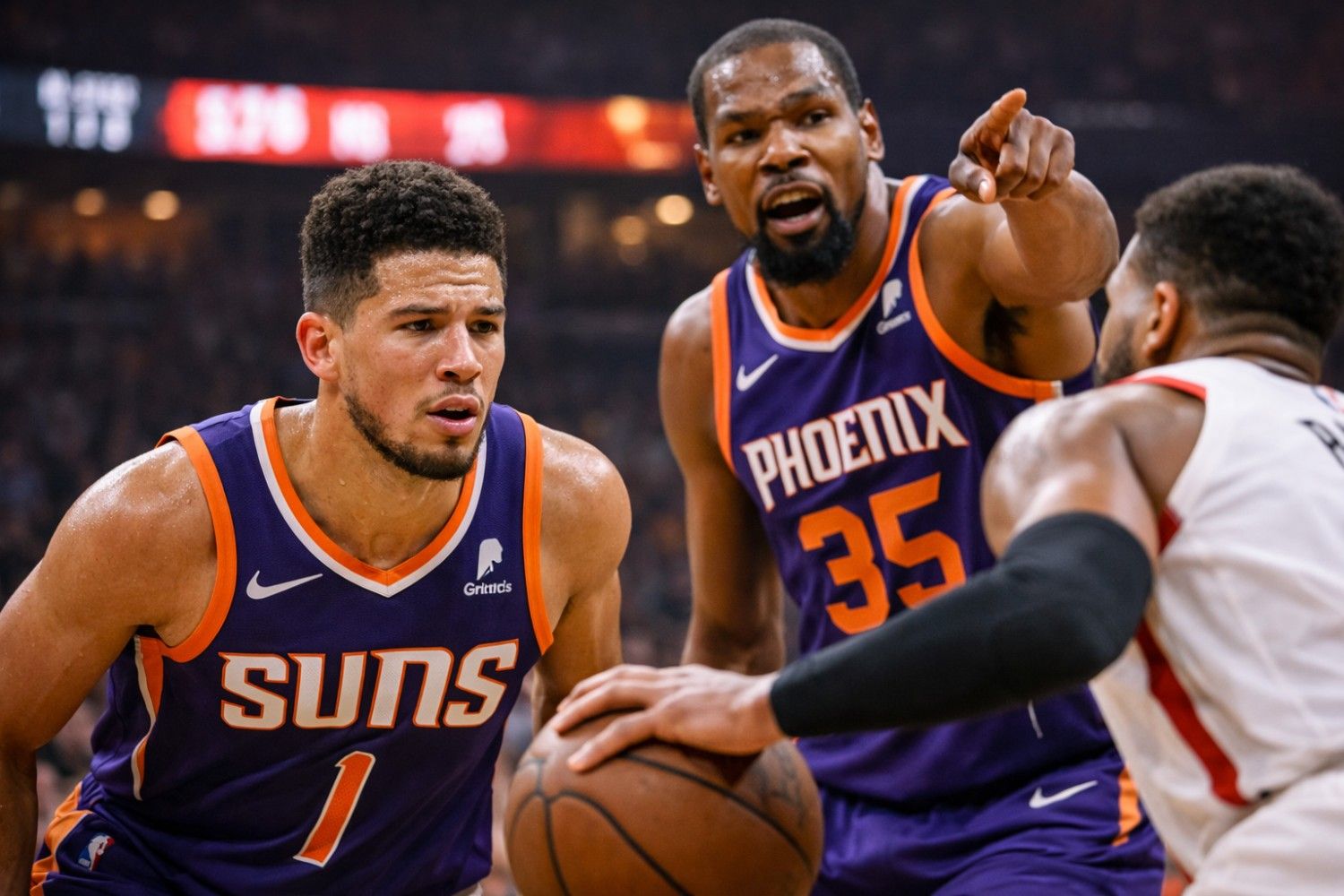
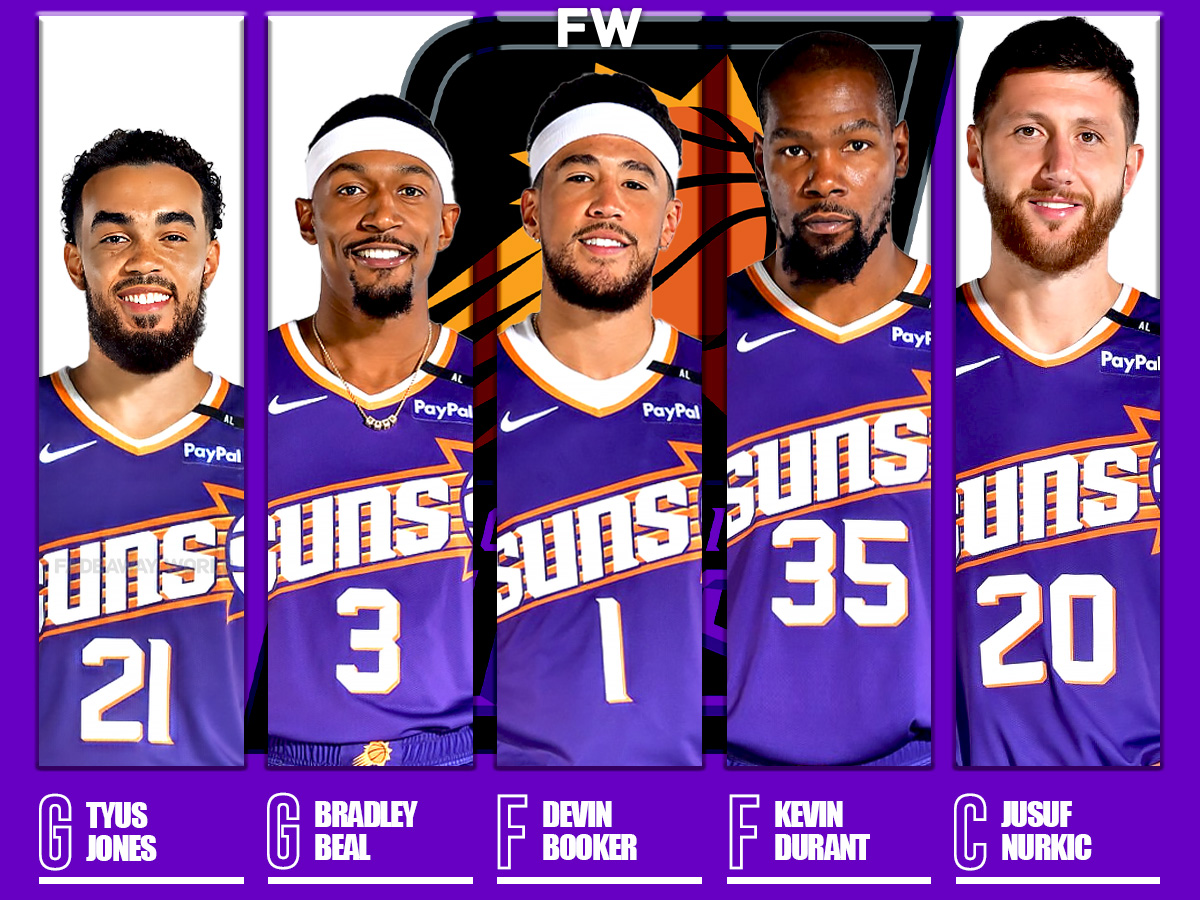
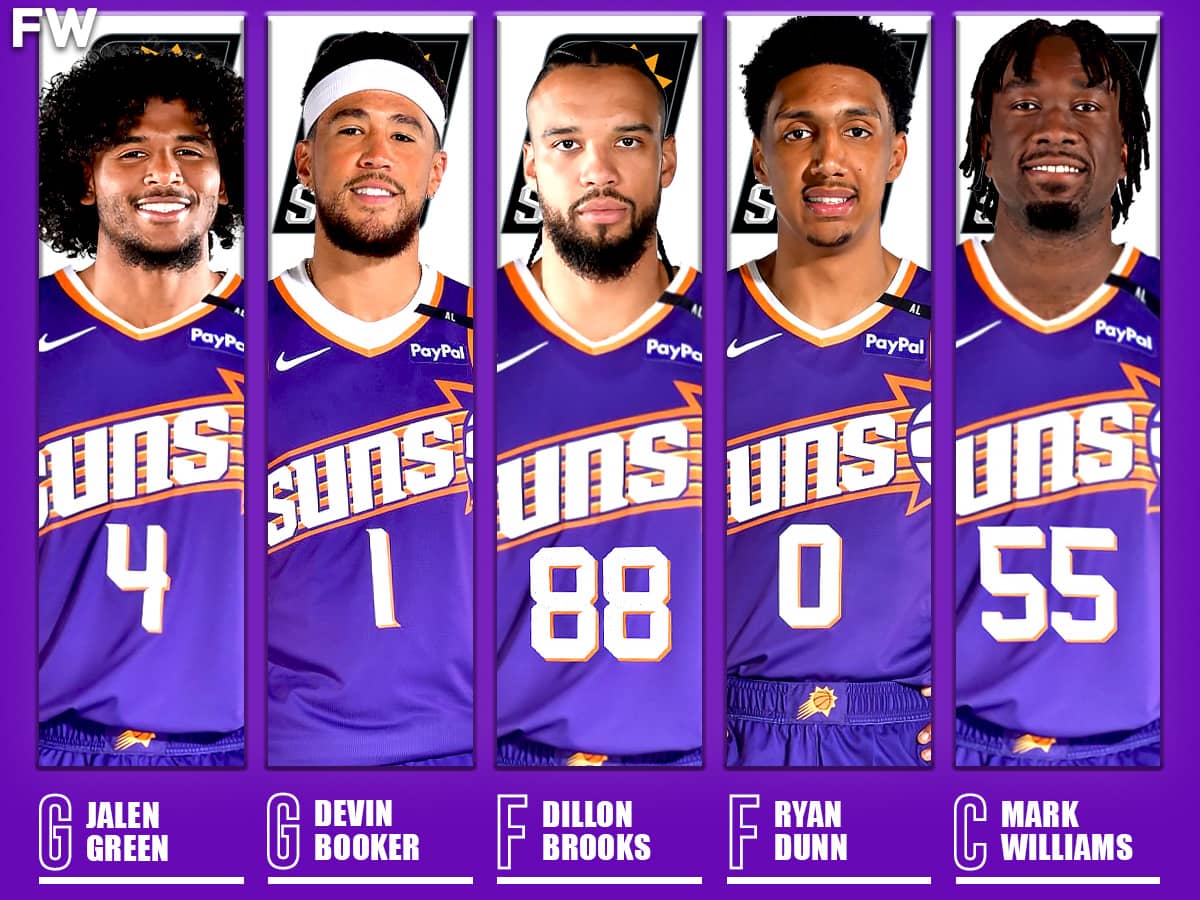
The Phoenix Suns' starting five in 2026 is defined by the elite scoring trio of Devin Booker, Kevin Durant, and Bradley Beal, complemented by the traditional playmaking of Tyus Jones and the interior presence of Jusuf Nurkić. This lineup represents a strategic pivot toward balanced offensive distribution and floor spacing under head coach Mike Budenholzer.
The Evolution of the Phoenix Suns Identity
By the 2025-26 NBA season, the Phoenix Suns have fully committed to a roster construction strategy that balances "star power" with functional role specialization. Following the experimentation of the 2023-24 season—where the team attempted to operate without a traditional point guard—the 2026 iteration of the Suns has returned to a more structured offensive hierarchy. This shift was necessitated by the complexities of the NBA’s Collective Bargaining Agreement (CBA) and the "Second Apron" restrictions, which forced the front office to find high-value contributors within tight financial constraints.
The identity of this starting five is rooted in "gravity." When you have three of the most prolific perimeter scorers in NBA history sharing the floor, the defensive geometry for opponents becomes nightmarish. However, the true "definition" of this starting unit in 2026 isn't just their ability to score; it is how they have integrated Mike Budenholzer’s system, which prioritizes high-volume three-point shooting and rapid ball movement.
1. Devin Booker: The Franchise Anchor
Devin Booker remains the heartbeat of the Phoenix Suns in 2026. Now in his 11th season with the franchise, Booker has evolved from a pure volume scorer into one of the most complete offensive engines in the league. At 29 years old, he is in the absolute physical prime of his career, serving as the bridge between the veteran leadership of Kevin Durant and the team’s long-term future.
The Hybrid Role In 2026, Booker no longer carries the full-time burden of bringing the ball up the court, thanks to the presence of a dedicated point guard. This has allowed him to return to his most lethal form: an off-ball assassin who can also operate as a secondary playmaker. Booker’s ability to navigate screens and find mid-range pockets remains elite, but his catch-and-shoot efficiency has seen a significant uptick in the current system.
Leadership and Defensive Growth Defining Booker’s impact in 2026 requires looking at the defensive end. As the longest-tenured Sun, he has taken on the challenge of guarding the opposing team's best perimeter player more frequently. His defensive rating has stabilized, proving that his value extends far beyond the 25–28 points he provides nightly. He is the vocal leader of the starting five, the player who sets the tone for the team's "all-in" championship pursuit.
2. Kevin Durant: The Timeless Efficiency
Entering 2026, Kevin Durant continues to defy the typical aging curve of a professional athlete. At 37, Durant’s role in the Suns' starting five is defined by his unparalleled efficiency and his defensive versatility. While his minutes are more carefully managed than in previous years, his impact on the floor remains as significant as ever.
Spacing and Gravity Durant’s primary contribution to the 2026 starting unit is the "gravity" he provides. Even at this stage of his career, he requires a double-team in high-post situations, which opens up lanes for Booker and Beal. According to NBA Advanced Stats, lineups featuring Durant consistently rank in the 90th percentile for offensive rating because he can transition from a primary scorer to a decoy seamlessly.
The Defensive "Free Safety" Under Budenholzer, Durant has thrived in a defensive role that allows him to act as a weak-side rim protector. His length remains a deterrent for guards attacking the paint. In the 2025-26 defensive scheme, Durant is often tasked with guarding the "corners," allowing him to use his reach to disrupt passing lanes while conserving energy for his offensive masterpieces.
3. Bradley Beal: The Dynamic Third Option
The 2026 season marks a critical juncture for Bradley Beal. After navigating injury concerns in previous years, Beal has redefined his game to fit the "Big Three" dynamic. His presence in the starting five is what differentiates the Suns from teams with only two stars; he is a luxury that forces opposing defenses to make impossible choices.
Attacking the Closeout With Booker and Durant drawing the bulk of the defensive attention, Beal has become the league’s premier "closeout" attacker. When the ball swings to him, he uses his elite first step to penetrate the paint, either finishing at the rim or kicking it out to the corners. His willingness to embrace a tertiary role—while still being capable of 40-point outbursts—is the glue that keeps the Suns' offense from becoming stagnant.
Physicality and Versatility Beal has also increased his defensive physicality. In the 2026 starting five, he often finds himself guarding larger wings, using his strength and low center of gravity to prevent drives. His health remains the "X-factor" for the Suns, but when active, his ability to create his own shot late in the shot clock provides a vital safety valve for the offense.
4. Tyus Jones: The Floor General
The inclusion of Tyus Jones (or a similar high-IQ traditional point guard) in the 2026 starting five was the most important tactical adjustment made by the Suns' front office. Jones defines the "stability" of the unit. His presence allows the "Big Three" to focus on scoring rather than the administrative duties of initiating the offense.
Assist-to-Turnover Excellence Jones is consistently among the league leaders in assist-to-turnover ratio. In 2026, his role is simple but difficult: bring the ball up, get the team into their sets, and ensure that the ball touches the hands of Durant, Booker, and Beal in their preferred spots. By reducing the team's overall turnover rate, Jones has maximized the Suns' offensive possessions, making them the most efficient "clutch time" team in the Western Conference.
Three-Point Spacing Opponents often try to "hide" their weakest defender on the point guard when playing the Suns. Jones has punished this strategy in 2026 by shooting career-high percentages from the corners. He doesn't need high volume to be effective; he just needs to be a threat that defenses cannot ignore.
5. Jusuf Nurkić: The Interior Anchor
Jusuf Nurkić rounds out the starting five as the essential "dirty work" specialist. In a lineup filled with perimeter superstars, Nurkić defines the Suns' physical identity in the paint. His role in 2026 is less about scoring and more about facilitation, rebounding, and screen-setting.
Elite Screen Setting One of the most underrated aspects of the Suns' high-scoring offense is the quality of the screens. Nurkić is a master of the "Gortat screen" and traditional high-ball screens that create the split-second of daylight Booker and Durant need to launch. His massive frame makes him a difficult obstacle for perimeter defenders to navigate.
Passing from the Post Nurkić acts as a secondary hub of the offense. When teams blitz the Suns' guards, the ball often goes to Nurkić at the elbow. His vision and passing ability allow him to find cutters or cross-court shooters with ease. In 2026, his rebounding—particularly on the defensive glass—is what allows the Suns to get out in transition, where they are most lethal.
2026 Starting Five Impact Metrics
The following table outlines the projected roles and primary statistical contributions of the Phoenix Suns' starting five for the 2025-26 season.
| Player | Primary Position | Defined Role | Key Statistical Impact |
|---|---|---|---|
| Devin Booker | SG | Franchise Engine | 26.5 PPG, 6.2 APG, 41% 3PT |
| Kevin Durant | PF | Efficient Spacing | 24.1 PPG, 1.4 BPG, 52/44/90 Splits |
| Bradley Beal | SF | Slashing/3rd Option | 19.8 PPG, 4.5 RPG, High Rim Pressure |
| Tyus Jones | PG | Floor General | 9.1 APG, <1.5 TOV/Game, 39% Corner 3PT |
| Jusuf Nurkić | C | Interior Anchor | 11.2 RPG, 3.8 APG, Screen Assists Leader |
Strategic Considerations: The Mike Budenholzer Effect
The 2026 Phoenix Suns are a reflection of Mike Budenholzer’s coaching philosophy. Known for his "Let it Fly" mantra, Budenholzer has transformed the Suns from a mid-range heavy team into a modern three-point juggernaut. This shift was essential for the starting five to remain competitive against younger, more athletic rosters in the Western Conference.
Defensive Schemes
The Suns' starting five in 2026 employs a "contain and contest" strategy. Because the lineup lacks a hyper-athletic, switch-everything center, they rely on Nurkić playing a "drop coverage" in the pick-and-roll, while the perimeter trio of Booker, Durant, and Beal use their length to contest shots. This strategy prioritizes protecting the paint and forcing opponents into tough, contested mid-range jumpers—ironically, the very shots the Suns themselves excel at making.
The "Second Apron" Constraints
It is impossible to discuss the 2026 Suns without mentioning the financial framework. Being a "Second Apron" team means the Suns have had limited tools to improve the roster. This has placed an immense premium on the starting five's health and chemistry. The 2026 unit is a result of the front office's ability to find "minimum" players and mid-level exceptions that fit perfectly around the expensive core.
Supporting the Starting Five: Key Bench Contributors
While the starting five defines the team's ceiling, the 2026 Suns' success is also tethered to their depth. Players like Grayson Allen and Monte Morris provide essential relief. Allen, in particular, often closes games in place of Nurkić when the Suns opt for a "small ball" lineup, moving Durant to the center position to maximize five-out spacing.
The Role of Grayson Allen Allen remains one of the most accurate three-point shooters in the league in 2026. His ability to slot into the starting lineup for Beal or Booker during injuries ensures that the offensive system remains uninterrupted. His defensive tenacity and "3-and-D" profile make him the unofficial "sixth starter."
Rookie/Minimum Impact By 2026, the Suns have also integrated younger, cheaper talent drafted in late rounds or signed as undrafted free agents. These players are tasked with high-energy rebounding and defensive hustle, providing the "legs" that the veteran starters sometimes lack during the grueling 82-game regular season.
Frequently Asked Questions
Who is the highest-paid player in the Suns starting 5 in 2026?
Devin Booker and Kevin Durant are both on supermax-level trajectories, but due to the timing of his extension, Devin Booker holds the highest cap hit for the 2025-26 season, reflecting his status as the cornerstone of the franchise.
How has Kevin Durant’s game changed by 2026?
Durant has transitioned into a "high-efficiency specialist." While he still takes over in clutch moments, his regular-season game focuses on spot-up shooting and acting as a defensive roamer. This preservation strategy ensures he is fresh for the postseason.
Why did the Suns move away from the "Point Book" experiment?
The "Point Book" experiment (using Devin Booker as the primary point guard) was taxing on Booker’s energy levels and led to higher turnover rates. In 2026, the team uses a traditional PG like Tyus Jones to streamline the offense, allowing Booker to be more efficient as a scorer.
Can this starting five survive defensively in the playoffs?
Yes, but it requires a "collective" effort. While they lack a perennial Defensive Player of the Year candidate, their combined length and high basketball IQ allow them to execute complex scouting reports. The 2026 scheme focuses on winning the "math game"—taking more threes and making more free throws than the opponent.
What happens if Jusuf Nurkić gets into foul trouble?
In 2026, the Suns frequently pivot to a "KD at the 5" lineup. This "death lineup" features Jones, Booker, Beal, Allen, and Durant. While it sacrifices rebounding, it offers the most potent offensive spacing in the NBA.
Next Steps for the Suns
As the 2026 season progresses, the Phoenix Suns must prioritize "load management" for their veteran stars to ensure the starting five is healthy for the playoffs. Fans and analysts should watch the trade deadline for any "buyout market" veterans who could provide interior depth behind Nurkić. The ultimate goal for this specific five-man unit is clear: a championship window that is open now, but potentially narrowing as the CBA restrictions and player ages begin to converge.
For those tracking the team's progress, monitoring the "Net Rating" of the starting five via Basketball-Reference provides the best insight into whether this star-heavy experiment is successfully balancing its offensive brilliance with defensive viability.