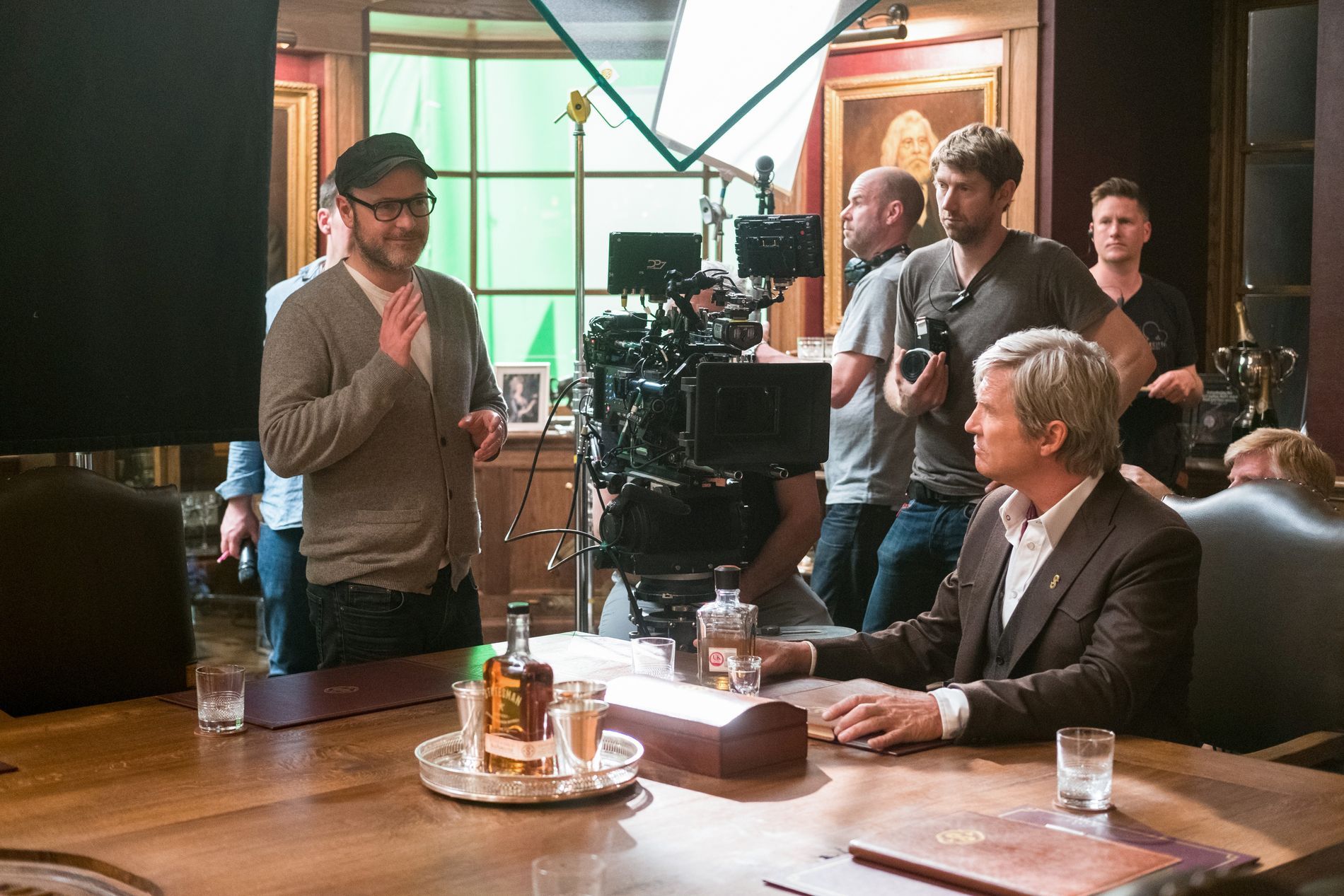
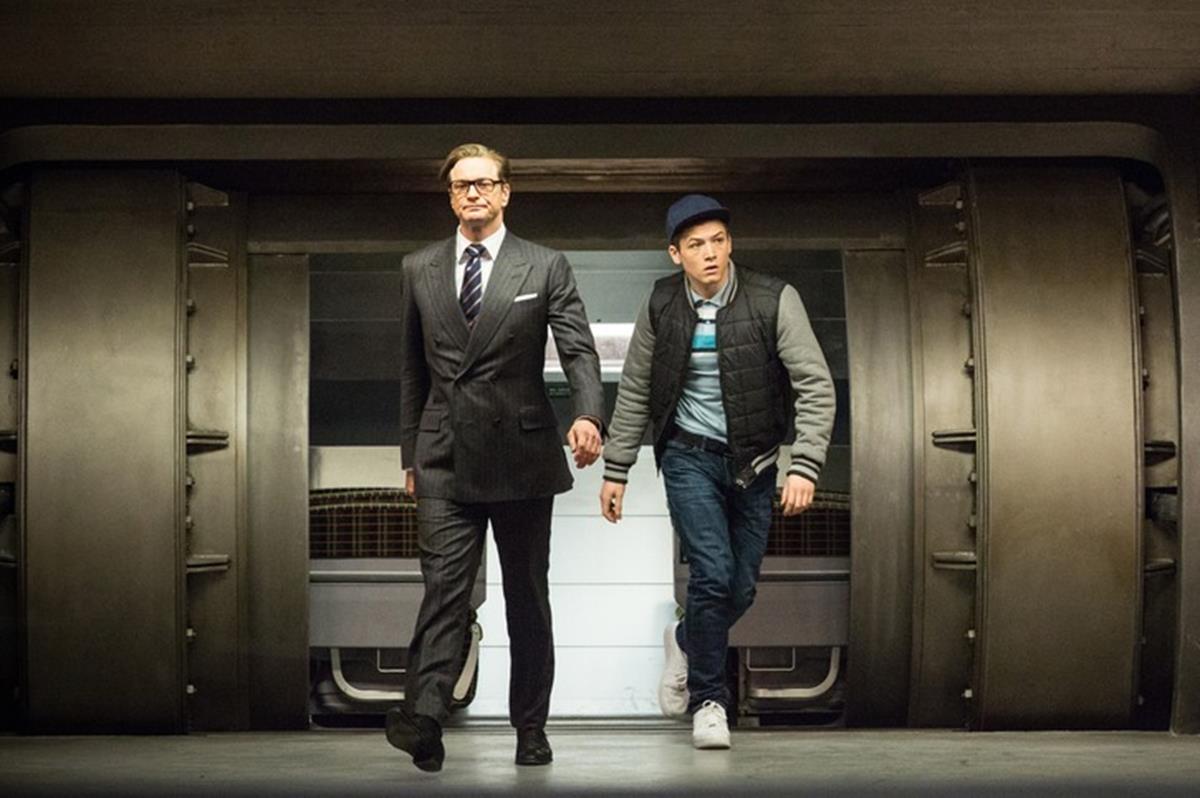
The global box office total of $408.8 million for Kingsman: The Golden Circle (also known as Kingsman 2) represents a pivotal moment in modern action cinema, confirming that Matthew Vaughn’s stylized, R-rated spy franchise had the staying power to compete with traditional PG-13 blockbusters. Released in September 2017, the sequel faced the "sophomore slump" challenge typical of high-energy debuts, yet it managed to nearly match its predecessor's financial footprint. As we look back from 2026, this figure remains a benchmark for how mid-budget "hard-R" action films can leverage international markets to offset domestic plateaus.
The Financial Breakdown of the $408.8 Million Total
To understand the weight of the $408.8 million figure, one must look at the geographic distribution of the receipts. Unlike many domestic-heavy franchises, the Kingsman series has always relied heavily on international appeal. For The Golden Circle, the split was significantly skewed toward overseas territories, which accounted for approximately 75% of the total gross.
Domestic Performance vs. International Dominance
In North America (the United States and Canada), The Golden Circle earned roughly $100.2 million. While this was a respectable showing, it was a decline from the first film’s $128.3 million domestic take. The domestic audience's response was somewhat more polarized, likely due to the film’s increased runtime and more eccentric plot choices, such as the introduction of the "Statesman" and the controversial fate of certain beloved characters from the first installment.
However, the international markets provided the necessary cushion to bring the total to the $408.8 million mark. Overseas territories contributed $308.6 million, outperforming the original film’s international gross. This shift indicated that the Kingsman brand had transitioned from a British novelty into a global powerhouse, particularly in Asian and European markets where the "gentleman spy" aesthetic remains a strong selling point.
Key International Territory Contributions
Several key markets were instrumental in pushing the sequel toward its $400 million+ goal. China, in particular, was a massive driver of growth.
- China: The film grossed approximately $74.7 million in China, a significant increase over the first film's performance in the region. The high-octane action sequences and stylized violence resonated well with Chinese audiences during that period.
- South Korea: Long a stronghold for the franchise, South Korea delivered roughly $36.4 million. The first film was a massive cult hit there, and the sequel maintained that momentum, even if it didn't quite reach the same heights.
- United Kingdom: In its home market, the film earned approximately $33.6 million. Given the British DNA of the series, a strong performance in the UK was essential for the film's cultural credibility.
The Production Budget and Profitability Ratios
When analyzing a box office figure like $408.8 million, it is vital to contrast it with the production and marketing costs. Kingsman: The Golden Circle carried a production budget of approximately $104 million, a notable increase from the $81 million budget of the first film.
The "Rule of Two" and Marketing Expenses
In the film industry, a common rule of thumb is that a movie needs to earn roughly 2 to 2.5 times its production budget at the theatrical box office to reach its "break-even" point. This accounts for the theater owners' cut (theatrical rental) and the massive "P&A" (Prints and Advertising) expenses.
For The Golden Circle, the P&A costs were estimated to be in the $80–$100 million range, given the global nature of the campaign and the high-profile cast which included Channing Tatum, Halle Berry, Jeff Bridges, and Julianne Moore. With a total investment (production + marketing) approaching $200 million, the $408.8 million global gross ensured that the film was a clear financial success for 20th Century Fox (now owned by Disney).
Box Office Multipliers
The film opened domestically with $39 million. Its final domestic gross of $100.2 million gives it a "multiplier" of approximately 2.57x. In the world of box office analytics, a multiplier below 2.5x often suggests poor "legs" (meaning people stopped going after the first weekend), while anything above 3x is considered a massive hit. The Golden Circle sat comfortably in the middle, showing that while it didn't have the runaway word-of-mouth of the first film, it wasn't a "front-loaded" disaster either.
Comparative Performance: Kingsman 1 vs. Kingsman 2
The most frequent question regarding the $408.8 million total is how it compares to the original 2014 hit, Kingsman: The Secret Service. Many critics at the time suggested the sequel was a step down, but the numbers tell a more nuanced story of brand stabilization.
| Metric | Kingsman: The Secret Service (2014) | Kingsman: The Golden Circle (2017) | Variance |
|---|---|---|---|
| Global Box Office | $414.4 Million | $408.8 Million | -1.35% |
| Production Budget | $81 Million | $104 Million | +28.4% |
| Domestic Gross | $128.3 Million | $100.2 Million | -21.9% |
| International Gross | $286.1 Million | $308.6 Million | +7.8% |
| Opening Weekend (US) | $36.2 Million | $39.0 Million | +7.7% |
As the table demonstrates, the sequel actually had a stronger opening weekend than the original, showing high anticipation. However, it lacked the long-term domestic "legs" of the first film. The international growth of 7.8% is the most critical figure here, as it proved the franchise had untapped potential outside of the Western sphere.
Strategic Factors Behind the $408.8 Million Success
Several strategic decisions by director Matthew Vaughn and the studio contributed to reaching this specific box office milestone.
The "Statesman" Expansion
By introducing an American counterpart to the Kingsman—the Statesman—the production sought to broaden its appeal in the United States. Casting American heavyweights like Jeff Bridges and Channing Tatum was a calculated move to secure domestic interest. While the domestic gross actually dipped compared to the first film, the presence of these stars likely prevented a steeper decline and bolstered international marketing materials.
The Elton John Factor
One of the most talked-about elements of The Golden Circle was the extended cameo by Sir Elton John. From a marketing perspective, this was a stroke of genius. It provided a unique "viral" hook that separated Kingsman from more serious spy fare like James Bond or Jason Bourne. This eccentricity helped the film maintain its identity as a subversive, "fun" alternative to the standard action blockbuster.
The R-Rating Hurdle
It is important to remember that The Golden Circle achieved its $408.8 million gross while carrying an R rating (or its equivalent 15/18 rating internationally). This restricted the potential audience by cutting out the younger "all-ages" demographic that fuels Marvel or Disney hits. For an R-rated film, crossing the $400 million mark is a significant achievement, placing it in an elite tier of adult-oriented action cinema.
Technical Analysis of Revenue Shares
When a film earns $408.8 million, the studio does not keep the entire amount. The "Theatrical Rental" is the actual amount of money that flows back to the studio after the theaters take their cut.
- Domestic Share: Studios typically take about 50% of the domestic gross. For The Golden Circle, this was roughly $50 million.
- International Share (Excluding China): Studios take roughly 40% of the international gross.
- China Share: Due to strict regulations, Hollywood studios traditionally only took back about 25% of the gross in China.
Based on these percentages, the actual revenue returned to the studio from the theatrical run was closer to $160–$170 million. This highlights why the $104 million production budget was a risk; the film required strong performance in home video, streaming, and television licensing to reach high profitability—which it ultimately did.
The Long-Term Impact on the Franchise
Looking back from 2026, the $408.8 million performance of The Golden Circle was the catalyst for everything that followed in the "Vaughn-verse."
The Prequel Pivot
The consistency between the first two films gave the studio the confidence to greenlight the prequel, The King's Man (2021). While the prequel did not reach the $400 million heights of its predecessors—partly due to a shifted cinematic landscape and pandemic-related delays—it was only possible because of the solid foundation laid by the $408.8 million success of the second film.
Kingsman 3 and Beyond
The enduring nature of the $408.8 million figure has kept Kingsman 3 (titled Kingsman: The Blue Blood) on the radar for years. Executives and investors view the $400 million mark as a "floor" for the main series' potential, provided the original cast returns. The financial data from 2017 continues to be used by analysts to project the viability of high-budget R-rated sequels in the current streaming-heavy environment.
Potential Challenges and Criticisms of the Box Office Run
While the total was a success, it was not without its "near-misses." Some industry analysts at the time argued that if the film had been tighter (it ran 141 minutes), it might have reached $450 million or $500 million.
The increased budget also meant the profit margins were thinner than the first film. In 2014, the first film was a "surprise" hit, which is always more profitable than a "calculated" hit. The $408.8 million figure proved that the franchise was stable, but it also suggested that it had perhaps found its ceiling.
Competition and Timing
The film was released in a crowded autumn window. It had to contend with the massive success of It (2017), which was siphoning away the R-rated audience, and later, the arrival of Thor: Ragnarok. Despite this competition, the $408.8 million total showed that the Kingsman brand had a loyal enough following to survive "blockbuster fatigue."
FAQ: Understanding the Kingsman 2 Global Box Office
Was Kingsman: The Golden Circle considered a "flop" compared to the first one?
No. While it earned roughly $5 million less than the first film and had a higher budget, a $408.8 million global gross for an R-rated sequel is considered a solid commercial success. It maintained the vast majority of its audience and expanded the brand's reach in international markets.
Why was the international box office so much higher than the domestic gross?
The "gentleman spy" trope has historically performed better internationally than in the US. Additionally, the stylized action, which borrows heavily from comic book and anime aesthetics, resonates strongly in South Korea and China, where the film saw significant engagement.
How much did Channing Tatum and the new cast help the box office?
While it is difficult to quantify exactly, the inclusion of the "Statesman" characters was a major part of the marketing campaign. Even though Tatum's role in the actual film was smaller than trailers suggested, his presence likely helped maintain the $39 million opening weekend in North America.
Does the $408.8 million include DVD and streaming sales?
No, the $408.8 million figure refers specifically to the theatrical box office—the money generated from ticket sales in cinemas. Ancillary revenue from digital platforms, Blu-ray sales, and television rights is calculated separately and adds significantly to the total lifetime profit of the film.
Which country was the most profitable for Kingsman 2 outside of the US?
China was the highest-grossing international territory for Kingsman 2, bringing in nearly $75 million. However, because the studio take-home percentage is lower in China (25%), the United Kingdom and South Korea were likely more "profitable" in terms of actual revenue returned to the studio.
Final Summary and Next Actions
The $408.8 million global box office of Kingsman: The Golden Circle serves as a case study in franchise sustainability. It proved that a sequel could sustain a massive audience despite a higher budget and more divisive critical reception, largely by leaning into international growth markets. For fans of the series or students of film finance, this number highlights the importance of the global "gentleman spy" brand.
Next Actions for Researchers and Fans:
- Compare with the Prequel: Look at the box office of The King's Man (2021) to see how the franchise handled a prequel format compared to the $408.8 million sequel.
- Monitor Kingsman 3 Updates: Stay tuned for production updates on The Blue Blood, as its financial expectations will be directly benchmarked against this $400 million+ standard.
- Review Home Media Sales: For a fuller picture of the film’s success, check the "Numbers" or other financial trackers for the estimated $60–$80 million in domestic home video sales that followed the theatrical run.