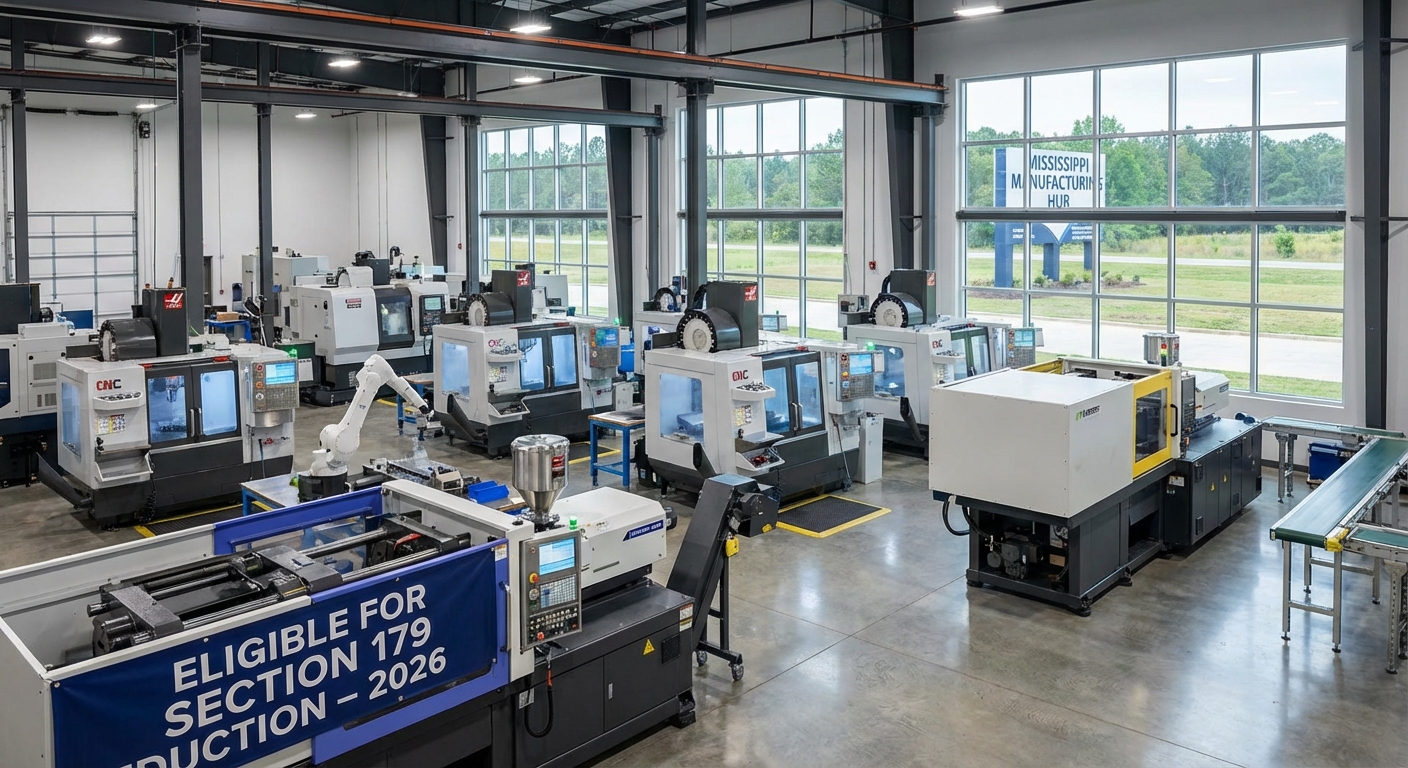
For the 2026 tax year, Section 179 does not utilize a "net worth" cap to determine eligibility. Instead, the IRS enforces a spending cap (investment limit) of $3,300,000 and a maximum deduction limit of $1,320,000. These figures, adjusted for inflation, restrict the tax benefit based on annual equipment purchases rather than a company's total valuation or assets.
Section 179 of the Internal Revenue Code remains one of the most significant tax incentives available to small and medium-sized businesses. As we navigate the 2026 fiscal year, understanding the nuances of these limits—and the common misconception regarding "net worth"—is essential for effective capital budgeting and tax planning. Unlike standard depreciation, which spreads the cost of an asset over several years, Section 179 allows a business to deduct the full purchase price of qualifying equipment and software in the year it is placed in service.
The Misconception: Net Worth vs. Spending Caps
In tax terminology, "net worth" refers to the total value of an entity's assets minus its liabilities. While net worth is a critical metric for banking and credit, it is not the gatekeeper for Section 179 eligibility. The confusion often stems from the Investment Limit (also known as the phase-out threshold).
The IRS designed Section 179 specifically to assist small and medium-sized businesses. To ensure that large corporations do not monopolize the benefit, the tax code implements a "dollar-for-dollar" phase-out once a business's total equipment purchases for the year exceed a specific threshold. For 2026, this threshold is approximately $3,300,000.
If your business has a high net worth but only invests $500,000 in new machinery this year, you remain fully eligible for the deduction. Conversely, if a startup with a low net worth spends $4,000,000 on equipment, their Section 179 deduction will be significantly reduced or eliminated because they exceeded the spending cap, regardless of their balance sheet's bottom line.
2026 Section 179 Limits and Thresholds
As we move through 2026, the specific limits adjusted for inflation are the primary figures business owners must monitor. These limits apply to both new and used equipment, provided the equipment is "new to you."
The Deduction Limit: $1,320,000
The maximum amount that can be written off in 2026 is $1,320,000. This is the absolute ceiling for the deduction. For example, if you purchase $1,000,000 in qualifying software, you can deduct the entire amount. If you purchase $1,500,000, you can only deduct $1,320,000 under Section 179 (the remainder would typically be depreciated over several years or handled via Bonus Depreciation).
The Spending Cap (Phase-Out): $3,300,000
This is the "cap" most people are searching for. Once your total equipment purchases for the 2026 tax year exceed $3,300,000, the deduction limit begins to decrease dollar-for-dollar.
The Phase-Out Math: If a company purchases $3,500,000 worth of equipment:
- Excess spending = $3,500,000 - $3,300,000 = $200,000.
- New Deduction Limit = $1,320,000 - $200,000 = $1,120,000.
If your total equipment investment reaches $4,620,000, the Section 179 deduction is reduced to zero ($1,320,000 - $1,320,000 = 0). At this level of spending, the IRS considers the business "too large" for this specific small-business incentive.
| Feature | 2026 Value (Estimated/Adjusted) |
|---|---|
| Maximum Deduction Limit | $1,320,000 |
| Spending Cap (Phase-out Threshold) | $3,300,000 |
| Bonus Depreciation Rate | 20% |
| Qualifying Property | New and Used Equipment |
| Business Income Limit | Deduction cannot exceed net taxable income |
The Taxable Income Limitation
Beyond the spending cap, there is a second "cap" that is often overlooked: the Taxable Income Limit. According to IRS Publication 946, your Section 179 deduction cannot exceed the total intangible taxable income derived from the active conduct of any trade or business during the year.
In simpler terms, you cannot use Section 179 to create a Net Operating Loss (NOL) for your business. If your business earns $100,000 in profit before the deduction, but you bought $150,000 in equipment, your Section 179 deduction is limited to $100,000.
Carryover Provisions
However, the "lost" $50,000 from the example above isn't gone forever. The IRS allows you to carry over the disallowed portion of the deduction to future tax years. You can apply the carried-over amount to the 2027 tax year, provided you have enough taxable income then to support it and you stay within that year's limits.
Qualifying Property for 2026
To utilize the deduction and navigate the spending cap, the property must be "Qualifying Property." For 2026, the definition remains broad but specific. The equipment must be used for business purposes more than 50% of the time.
- Tangible Personal Property: This includes machinery, equipment, office furniture, and "off-the-shelf" computer software.
- Qualified Improvement Property (QIP): This covers internal improvements to non-residential buildings, such as HVAC systems, fire protection, alarm systems, and roofing.
- Vehicles: Often referred to as the "Hummer Tax Loophole," this applies to heavy SUVs, trucks, or vans with a Gross Vehicle Weight Rating (GVWR) between 6,000 and 14,000 lbs. In 2026, these vehicles have their own specific deduction limit (usually much lower than the general $1.32M limit, often around $30,000).
- Property Attached to Buildings: Items that are not structural components, such as printing presses or large manufacturing silos, typically qualify.
Section 179 vs. Bonus Depreciation in 2026
One of the most critical factors for 2026 is the sunsetting of Bonus Depreciation under the Tax Cuts and Jobs Act (TCJA). In previous years, Bonus Depreciation allowed for a 100% write-off. However, it has been phasing down by 20% each year.
- 2024: 60% Bonus Depreciation
- 2025: 40% Bonus Depreciation
- 2026: 20% Bonus Depreciation
Because Bonus Depreciation has dropped to only 20% in 2026, Section 179 has become the primary tool for immediate tax relief. Most businesses will choose to maximize their Section 179 deduction first (at 100% of the cost up to the limit) and then use the 20% Bonus Depreciation for any remaining equipment costs that exceed the $1,320,000 limit.
Strategic Planning: The "Placed in Service" Rule
A common mistake that leads to missing the 2026 deduction is failing to understand the "Placed in Service" requirement. Simply purchasing or paying for equipment in 2026 is not enough. To qualify for the 2026 Section 179 deduction, the equipment must be placed in service—meaning it is installed and ready for use—by December 31, 2026, at midnight.
If you order a CNC machine in November 2026 but it isn't delivered and calibrated until January 2027, you cannot claim the deduction on your 2026 tax return. This makes end-of-year supply chain management vital for tax efficiency.
Common Pitfalls and Compliance Issues
While Section 179 is a powerful tool, it comes with strict compliance rules that the IRS monitors closely.
1. The 50% Usage Rule
If you use an asset for both business and personal reasons (common with vehicles and laptops), it must be used for business more than 50% of the time to qualify for Section 179. Furthermore, you can only deduct the percentage of the cost equivalent to the business use. If a truck is used 70% for business, you can only apply Section 179 to 70% of its cost.
2. Recapture Rules
If you claim Section 179 on a piece of equipment and then sell it or stop using it for business before its "useful life" (as defined by the IRS) is over, you may be subject to recapture. The IRS essentially "takes back" the tax benefit by requiring you to report a portion of the previous deduction as ordinary income.
3. State-Level Variations
It is important to note that not all states follow federal Section 179 rules. Some states have much lower deduction limits (e.g., $25,000) or do not allow the deduction at all, requiring you to use standard depreciation for state tax filings. Always verify your specific state's "conformity" to federal tax law.
Frequently Asked Questions
Is there a net worth limit for Section 179 in 2026?
No, there is no specific "net worth" limit. Eligibility is based on the total dollar amount of qualifying equipment purchased and placed in service during the year. However, if your business spends more than $3,300,000 on equipment, the deduction begins to phase out.
Can I use Section 179 for used equipment in 2026?
Yes. As long as the equipment is "new to you" and was not acquired from a related party (like a family member or a sister corporation), used equipment qualifies for Section 179 in the same way as new equipment.
What happens if I buy more than $3.3 million in equipment?
For every dollar you spend over $3,300,000, your maximum deduction of $1,320,000 is reduced by one dollar. If you spend $4,620,000 or more, you cannot claim any Section 179 deduction for that year, though you may still be able to use the 20% Bonus Depreciation or standard MACRS depreciation.
Can Section 179 be used for leased equipment?
Yes, provided it is a "capital lease" rather than an "operating lease." If the lease structure essentially functions as a purchase (where you own the equipment at the end of the term for a nominal fee), you can generally claim the Section 179 deduction on the full purchase price in the year you start the lease.
Does Section 179 apply to real estate?
Generally, no. Section 179 is for "tangible personal property." However, Qualified Improvement Property (QIP)—which includes specific internal improvements to non-residential buildings like new roofs, HVAC systems, and fire alarms—does qualify under the current tax code.
Can I claim Section 179 if my business had a loss this year?
You can claim it, but you cannot use it to increase your loss. The deduction is limited to your business's taxable income. Any amount that exceeds your income can be carried forward to future years when the business is profitable.
Practical Recommendations
For businesses looking to maximize their 2026 tax position, the strategy should focus on the $3,300,000 investment ceiling. If your planned capital expenditures for the year are nearing that threshold, consider deferring additional purchases until January 2027 to avoid the dollar-for-dollar phase-out.
Additionally, because Bonus Depreciation is at a low 20% this year, ensure that your accounting software or tax professional prioritizes Section 179 for assets with the longest depreciation cycles to maximize the immediate "time value" of your tax savings. Consult with a certified tax professional to review your specific equipment list and ensure that all items meet the "placed in service" criteria before the end of the fiscal year.