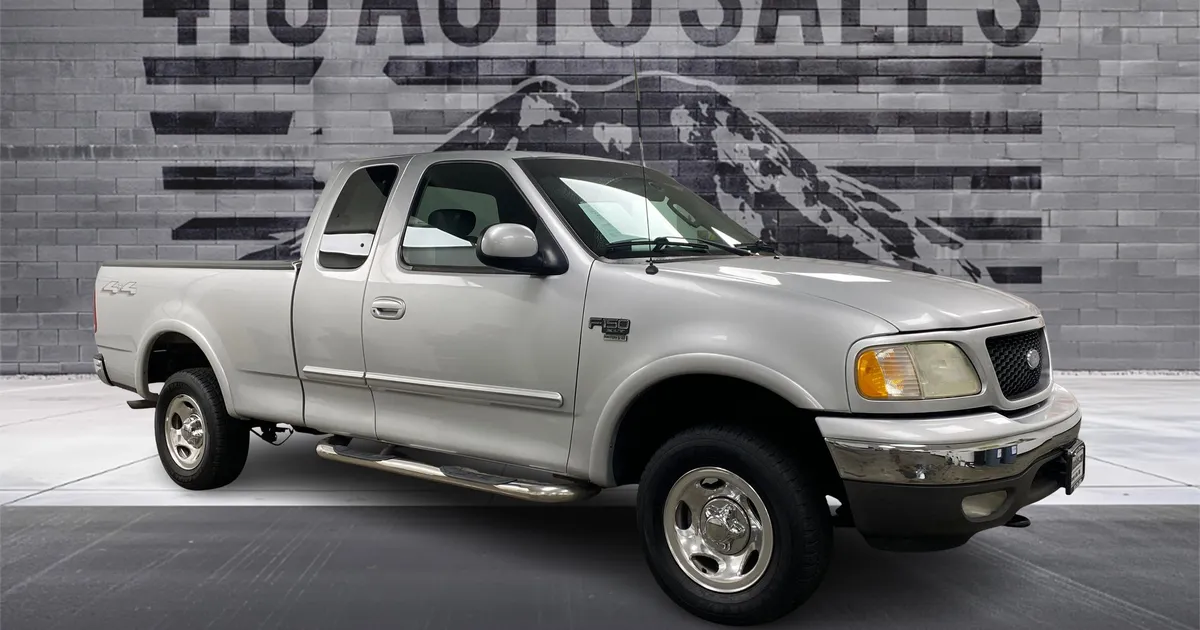
The 2002 Ford F-150 features three primary engine options—a 4.2L V6, 4.6L V8, and 5.4L V8—multiple cab styles including Regular, SuperCab, and SuperCrew, and a maximum towing capacity of up to 8,800 pounds when properly equipped.
As part of the tenth generation of Ford’s enduring full-size truck lineup, the 2002 model year occupies a sweet spot in automotive history. It bridges the gap between raw, utility-focused work trucks of the past and the more comfortable, amenity-laden passenger haulers that would dominate the late 2000s and beyond. Whether you are looking to purchase a used example for weekend hauling, restoring a classic-era tenth-generation truck, or researching historical automotive data, understanding the precise specifications of the 2002 Ford F-150 is essential. This guide breaks down the powertrain options, physical dimensions, towing capacities, trim levels, and maintenance considerations for the 2002 model year.
Historical Context and Lineup Overview
The 2002 Ford F-150 arrived during the height of the tenth generation (1997–2003). By 2002, Ford had refined the aerodynamic styling introduced in 1997, moving away from the traditional square-shouldered look of older trucks toward a rounded, wind-cheating silhouette. This generation also benefited from major structural revisions made in 1999 to improve crash safety ratings, making the 2002 models significantly safer than their earlier tenth-generation counterparts.
During this model year, Ford catered to a rapidly diversifying truck market. Contractors needed robust regular cabs with long beds, families required four full doors and rear-seat comfort, and enthusiasts craved high-performance variants. This variety led to an extensive matrix of body styles, bed lengths, drivetrain configurations, and trim packages.
Powertrain Specifications and Engine Options
The performance capabilities of the 2002 Ford F-150 depend heavily on which of the three available engines sits under the hood. Each engine was paired with specific transmission choices—either a 4-speed automatic (4R70W) or a 5-speed manual (M5OD-R2)—depending on the configuration.
4.2L Essex V6
- Configuration: 90-degree V6, pushrod, overhead valve (OHV)
- Horsepower: 202 hp at 4,400 rpm
- Torque: 260 lb-ft at 3,400 rpm
- Fuel Delivery: Sequential Electronic Fuel Injection (SEFI)
- Intended Use: Entry-level fleets, light-duty commercial use, and daily commuting where fuel economy took priority over heavy towing.
4.6L Triton V8
- Configuration: 90-degree V8, Single Overhead Cam (SOHC), 2-valve per cylinder
- Horsepower: 232 hp at 4,750 rpm
- Torque: 291 lb-ft at 3,400 rpm
- Fuel Delivery: Sequential Electronic Fuel Injection (SEFI)
- Intended Use: A balanced middle ground offering V8 capability for moderate towing and daily driving without the heavier fuel consumption of the 5.4L engine.
5.4L Triton V8
- Configuration: 90-degree V8, Single Overhead Cam (SOHC), 2-valve per cylinder
- Horsepower: 260 hp at 4,500 rpm
- Torque: 350 lb-ft at 2,500 rpm
- Fuel Delivery: Sequential Electronic Fuel Injection (SEFI)
- Intended Use: Heavy towing, hauling, and high-end trims. This engine also served as the base for the supercharged variant found in the SVT Lightning.
SVT Lightning Supercharged 5.4L V8
- Configuration: Supercharged 90-degree V8, SOHC, 2-valve per cylinder
- Horsepower: 380 hp at 4,750 rpm
- Torque: 450 lb-ft at 3,250 rpm
- Intended Use: High-performance street truck, exclusively available on the Regular Cab Lightning sport trim.
Dimensions, Weights, and Cab Configurations
The 2002 F-150 was offered in three primary cab configurations, each dictating the overall length of the vehicle, wheelbase measurements, and interior passenger volume.
| Cab Style | Seating Capacity | Wheelbase (inches) | Overall Length (inches) | Standard Bed Length (inches) |
|---|---|---|---|---|
| Regular Cab | 3 | 120.2 (Short) / 138.5 (Long) | 204.8 / 223.1 | 78.8 (Standard) / 96.0 (Long) |
| SuperCab (Extended) | 5 or 6 | 138.5 (Standard) / 157.1 (Long) | 223.1 / 241.7 | 78.8 (Standard) / 96.0 (Long) |
| SuperCrew (Crew Cab) | 5 or 6 | 138.5 | 225.8 | 67.1 (Short) |
Curb weights for the 2002 F-150 ranged from approximately 4,200 pounds for a base, rear-wheel-drive 4.2L Regular Cab up to nearly 5,300 pounds for a four-wheel-drive SuperCrew with the 5.4L V8 engine. Gross Vehicle Weight Ratings (GVWR) spanned from 6,250 pounds to 7,200 pounds depending on the chassis reinforcement and suspension package.
Towing and Payload Capacities
Towing performance for the 2002 Ford F-150 varies widely based on the rear axle ratio, transmission type, engine choice, and whether the truck was equipped with two-wheel drive (2WD) or four-wheel drive (4WD).
- 4.2L V6 Models: Best suited for light utility trailers, small boats, or pop-up campers, with maximum towing capacities generally ranging between 2,000 and 5,000 pounds when properly equipped with a heavy-duty towing package.
- 4.6L V8 Models: Capable of towing up to 7,200 pounds with the correct axle ratio (typically 3.55 or 3.73 limited-slip differentials).
- 5.4L V8 Models: The heavy hitter of the standard lineup, offering maximum conventional towing capacities up to 8,800 pounds on properly configured 2WD SuperCab models.
- Payload Capacity: Ranging from roughly 1,500 pounds on well-equipped SuperCrew models up to over 2,000 pounds on certain long-bed Regular Cab work configurations.
Trim Levels and Equipment Packages
Ford structured the 2002 F-150 lineup into a clear hierarchy of trim levels, ranging from Spartan utility trucks to luxurious long-haul cruisers.
XL
The base work truck trim. It typically featured vinyl bench seats, black bumpers, manual windows and door locks, and 16-inch steel wheels. Air conditioning and an AM/FM radio were standard, but many creature comforts remained optional.
XLT
The volume-selling mid-tier trim. It added cloth seating, power windows, power door locks, power exterior mirrors, cruise control, remote keyless entry, and upgraded exterior trim with chrome bumpers and alloy wheels.
Lariat
The luxury-oriented trim. It included premium leather-trimmed seating, power-adjustable front buckets, automatic climate control, an upgraded audio system with a 6-disc CD changer, woodgrain interior accents, and color-keyed exterior styling.
Harley-Davidson Edition
A special-edition collaboration featuring a monochromatic black exterior, unique 20-inch chrome wheels, specialized badging, leather captain's chairs with Harley-Davidson logos, and a supercharged 5.4L V8 engine (introduced for the 2002 model year on the SuperCrew).
King Ranch
Debuting Western-themed luxury for the F-150, this trim featured rich, Saddle-grade Castilian leather seats sourced from the King Ranch in Texas, unique interior wood accents, and specialized exterior paint treatments.
Chassis, Suspension, and Brakes
The tenth-generation F-150 featured an independent front suspension utilizing upper and lower control arms with torsion bars on 4WD models (and coil springs on 2WD models). The rear suspension relied on a traditional hotchkiss-type live axle with multi-leaf springs designed to handle heavy payload weights without excessive sag.
Braking duties were handled by power-assisted four-wheel disc brakes equipped with standard Anti-lock Braking System (ABS) technology. While early tenth-generation trucks utilized rear drum brakes on base models, by 2002, four-wheel disc setups became increasingly common across higher trims and heavier configurations, providing reliable stopping power under load.
Common Maintenance Items and Ownership Considerations
For buyers or owners evaluating a 2002 Ford F-150 today, several mechanical traits and known issues warrant attention:
- Spark Plug Blowout: The 4.6L and 5.4L 2-valve Triton engines of this era are known for a design quirk where spark plugs can eject from the aluminum cylinder head due to a low thread count in the spark plug holes. Inspecting the service history for thread repairs (such as time-serts) is crucial.
- Intake Manifold Cracking: The composite intake manifolds on the 4.6L and 5.4L engines can develop coolant leaks near the thermostat housing or crossover passage over time.
- Transmission Performance: The 4R70W 4-speed automatic transmission is generally durable if fluid and filter changes were performed regularly, but high-mileage units can suffer from overdrive band failure or shifting solenoid wear.
- Rocker Panel and Cab Corner Rust: Like many trucks of the late 1990s and early 2000s, road salt and moisture collection in the rear cab corners and rocker panels can lead to structural corrosion if the vehicle spent winters in northern climate zones.
Frequently Asked Questions
What is the maximum towing capacity of a 2002 Ford F-150?
The maximum towing capacity for a 2002 Ford F-150 reaches up to 8,800 pounds. This maximum is achieved on specific configurations equipped with the 5.4L Triton V8 engine, a rear-wheel-drive layout, and the proper axle ratio package. Lighter engines and four-wheel-drive variants have lower maximum ratings.
What engines were available in the 2002 Ford F-150?
Ford offered three standard engine choices in 2002: a 4.2-liter V6, a 4.6-liter V8, and a 5.4-liter V8. Additionally, the high-performance SVT Lightning featured a supercharged version of the 5.4-liter V8 engine producing 380 horsepower.
Does the 2002 Ford F-150 have a timing belt or timing chain?
The 4.2L V6 engine utilizes a timing chain driven setup, while the 4.6L and 5.4L Triton V8 engines utilize multi-chain overhead cam timing systems. None of these standard production engines use a rubber timing belt that requires periodic replacement intervals like standard interference belts.
What is the fuel economy of a 2002 Ford F-150?
Fuel economy varies significantly by engine choice and drivetrain. The 4.2L V6 typically achieves roughly 14 to 16 mpg combined, while the larger 5.4L V8 averages closer to 11 to 14 mpg combined, depending heavily on driving habits, cargo weight, and whether the vehicle utilizes four-wheel drive.
How many cab sizes did Ford offer for this model year?
Ford offered three distinct cab sizes for the 2002 F-150: the two-door Regular Cab, the extended SuperCab with rear-opening access doors, and the four-door SuperCrew, which provided full-size rear doors and seating for up to six passengers.
Conclusion and Buying Guidance
The 2002 Ford F-150 remains a dependable, robust workhorse when maintained properly. Selecting the right model depends on matching your intended workload to the correct powertrain—opting for the 4.2L V6 for light daily driving, the 4.6L V8 for balanced capability, or the 5.4L V8 for heavy towing. Before purchasing a used model from this era, conduct a thorough inspection of the spark plug threads, cooling system, transmission shift quality, and lower structural body panels for rust.