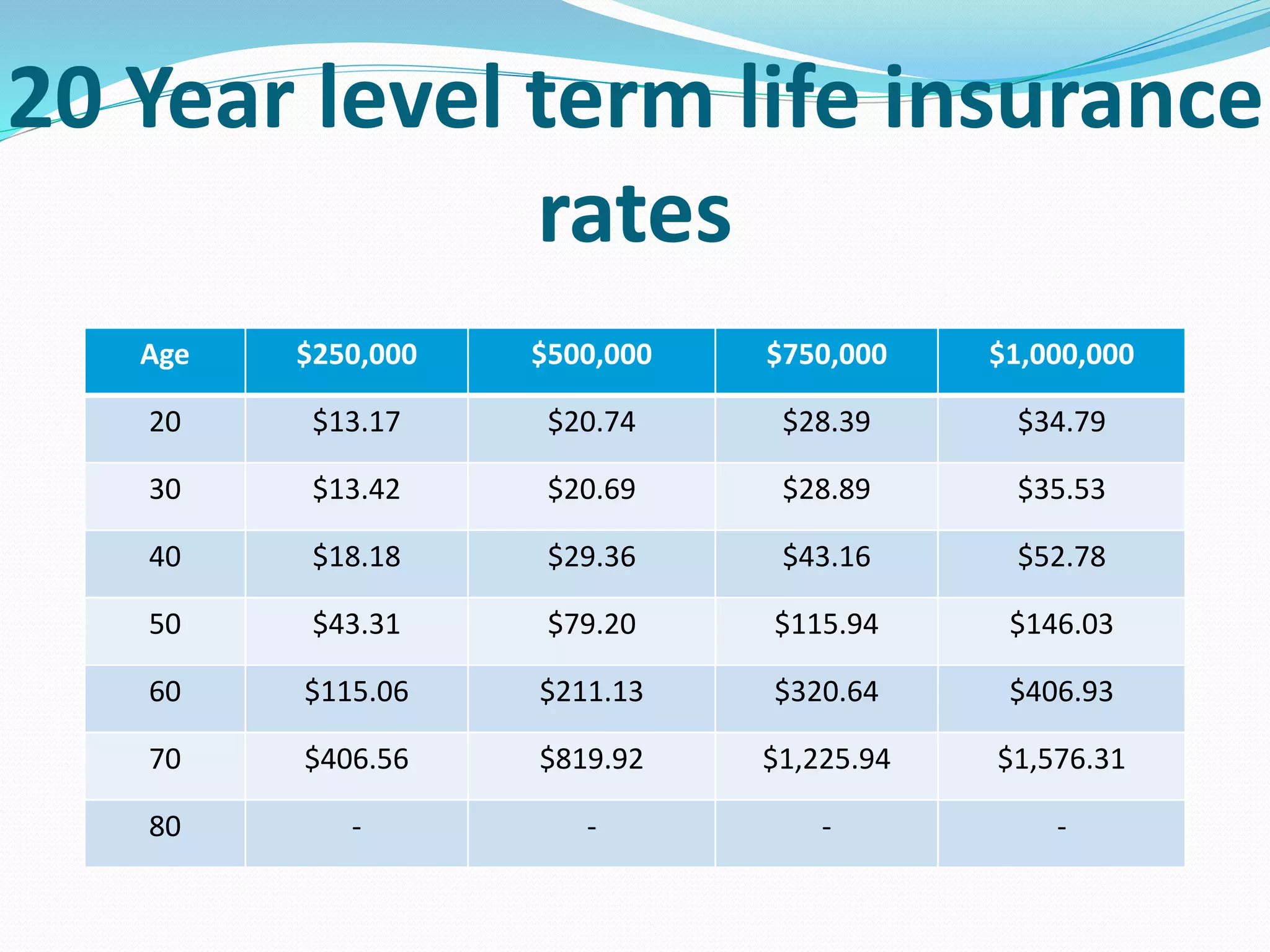
In 2026, 20-year term life insurance rates are primarily dictated by your age and health status at the time of application. For a $500,000 policy, healthy 30-year-olds typically see monthly premiums between $25 and $38, while those in their 50s may face rates exceeding $110 to $160, reflecting the increased actuarial risk associated with aging.
20-year term life insurance remains one of the most popular financial instruments for individuals seeking to cover specific, long-term liabilities such as a mortgage, a child’s education through university, or income replacement during peak earning years. Because the premium remains level for the entire two-decade period, the age at which you lock in your rate is the single most significant factor in your total cost of ownership.
The Actuarial Mechanics of 20-Year Term Insurance
Insurance companies use actuarial tables—specifically the most recent iterations of the Commissioners Standard Ordinary (CSO) Mortality Tables—to project the probability of a policyholder passing away during the 20-year term. In 2026, these projections have been refined by advanced data analytics and real-time health monitoring, but the core principle remains: the older you are, the higher the statistical probability of a claim.
When you apply for a 20-year term, the insurer "front-loads" the risk. In the early years of the policy, your premium is higher than the actual risk of you dying. In the later years, the premium is much lower than the actual risk. This creates the "level premium" effect. If you wait until age 45 to buy a policy instead of age 35, the insurer must account for the significantly higher mortality risk present between ages 55 and 65, which was not a factor in the younger applicant's 20-year window.
Estimated 2026 Monthly Rates for a 20-Year Term ($500,000 Policy)
The following table provides estimated monthly premiums for a $500,000 20-year term policy for individuals in "Preferred Plus" (excellent) health. These figures are based on 2026 market averages and represent non-smokers.
| Issue Age | Male Monthly Premium (Est.) | Female Monthly Premium (Est.) |
|---|---|---|
| 25 | $21.40 | $17.90 |
| 30 | $24.80 | $20.15 |
| 35 | $29.50 | $24.30 |
| 40 | $42.10 | $34.75 |
| 45 | $65.30 | $52.40 |
| 50 | $105.15 | $81.90 |
| 55 | $168.40 | $124.20 |
| 60 | $285.00 | $198.50 |
Note: These rates are estimates for illustrative purposes. Actual quotes require full underwriting and may vary by carrier, geography, and specific health history.
How Rates Evolve Across Age Brackets
Coverage in Your 20s: The Opportunity Cost of Waiting
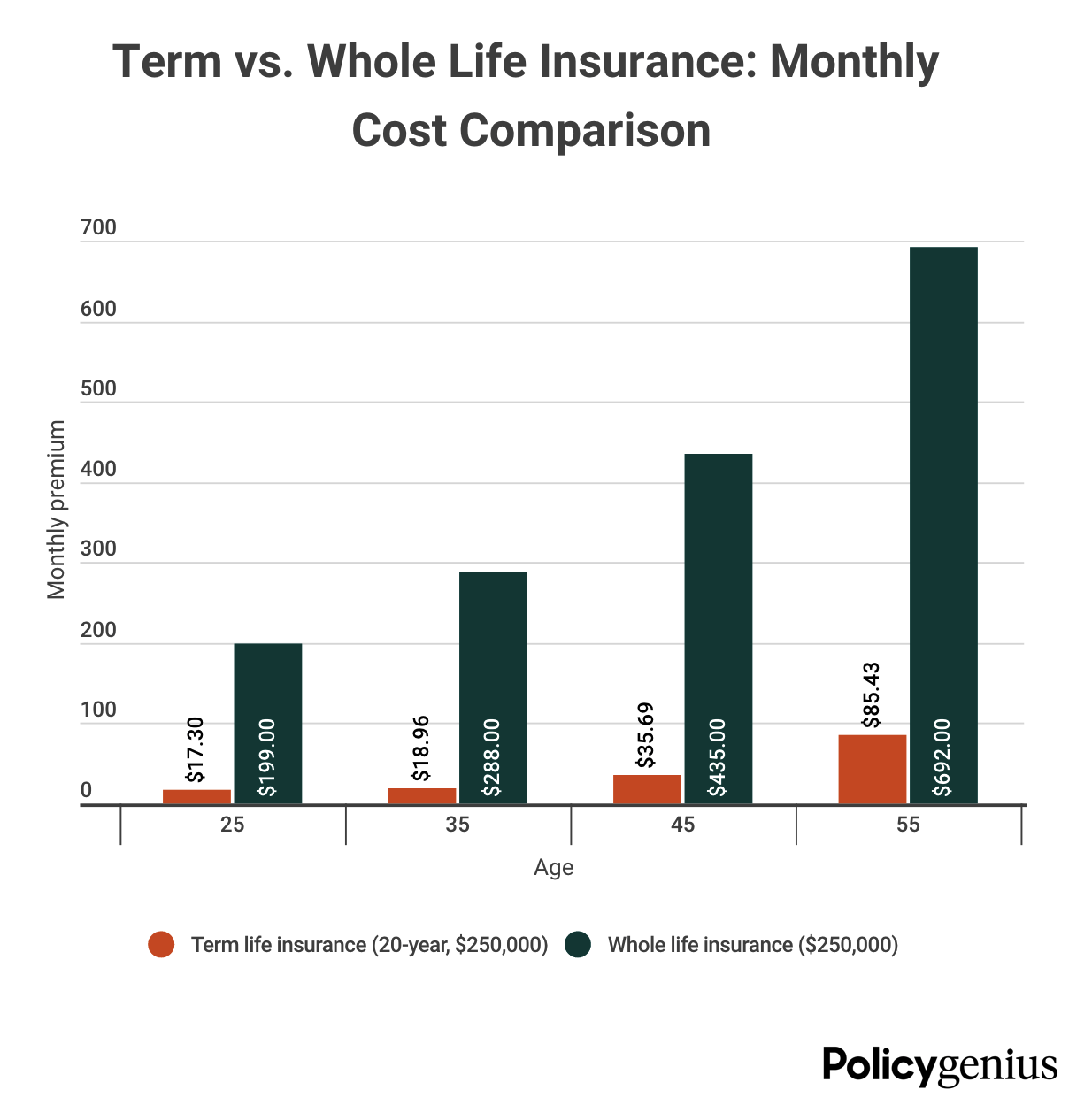
Purchasing a 20-year term policy in your mid-20s is often the most cost-effective financial move an individual can make regarding life insurance. At this stage, biological "wear and tear" is minimal, and most applicants qualify for the "Preferred Plus" tier. In 2026, many young professionals utilize these low rates to cover student loan debt or early-stage mortgages. The "cost of waiting" here is subtle but compounding; every year you delay can increase your lifetime premium outlay by thousands of dollars.
Coverage in Your 30s: The Peak Demand Years
The 30s are the most common decade for securing 20-year terms. This typically aligns with major life events: marriage, purchasing a primary residence, and the birth of children. A 20-year term purchased at age 35 provides a safety net until age 55—the period where financial responsibilities are usually at their highest. While rates are slightly higher than in the 20s, they remain highly affordable. However, this is also the decade where minor health issues, such as elevated cholesterol or slightly high BMI, begin to push applicants from "Preferred" to "Standard" rates, effectively increasing the cost by 25% or more.
Coverage in Your 40s: The Pricing Pivot Point
Once an applicant crosses the age 40 threshold, the rate of premium increase accelerates. Carriers view the 40s as a decade where "hidden" risks—such as cardiovascular issues or early-onset diabetes—become more prevalent. A 40-year-old male will pay roughly 40-50% more than a 30-year-old male for the exact same 20-year term. For those in their late 40s, a 20-year term will carry them into their late 60s, a period where mortality rates rise more steeply, which is reflected in the premium jump.
Coverage in Your 50s and 60s: High-Stakes Underwriting
Securing a 20-year term in your 50s is still common, particularly for those who started families later in life or have late-stage mortgages. However, the premiums at this stage are significantly higher. By age 55, the monthly cost for a male is nearly six times what it would have been at age 25. Furthermore, medical underwriting becomes much more rigorous. Expect the requirement of a paramedical exam, including blood work, urinalysis, and potentially an EKG, as insurers scrutinize the likelihood of the policyholder reaching age 75.
Factors Beyond Age That Influence Your Rate
While age is the primary driver, other variables in 2026 play a critical role in determining which pricing tier you fall into.
Gender-Based Pricing
Statistically, women have a longer life expectancy than men. Consequently, life insurance rates for females are consistently lower across all age brackets. In 2026, the gap between male and female premiums for a 20-year term often ranges from 15% to 30%, with the discrepancy becoming more pronounced as the issue age increases.
Health Classifications and Underwriting
Insurers categorize applicants into "health classes." The names may vary by company, but the hierarchy generally follows:
- Preferred Plus (or Super Preferred): Exceptional health, ideal height/weight ratio, no risky hobbies, and a clean family medical history.
- Preferred: Excellent health, perhaps one minor, well-controlled issue like mild hypertension.
- Standard Plus: Better than average health, but some minor issues or a less-than-perfect family history.
- Standard: Average health and life expectancy.
- Substandard (Table Ratings): For those with significant health issues, the "Standard" rate is increased by a certain percentage (e.g., Table 2, Table 4).
Tobacco and Nicotine Usage
In 2026, the definition of "tobacco use" has expanded in some underwriting circles to include various nicotine delivery systems, though some carriers have become more lenient toward occasional cigar use or vaping. However, for a standard cigarette smoker, rates for a 20-year term can be 200% to 300% higher than for a non-smoker of the same age.
The Economic Context of 20-Year Terms in 2026
The year 2026 has seen a stabilization in life insurance pricing following the volatility of the early 2020s. Interest rates, which influence the returns insurers earn on their reserves, have reached a plateau, allowing carriers to offer competitive pricing on long-term products like 20-year terms.
Furthermore, the rise of "Accelerated Underwriting" has changed the experience for many. For applicants under age 50 seeking up to $1 million in coverage, many 2026 policies are issued without a medical exam, using algorithmic assessments of prescription history, motor vehicle records, and credit-based insurance scores. While this speeds up the process, it does not necessarily lower the rate; age remains the dominant variable in the algorithm.
Strategic Use of the 20-Year Term
Because 20-year terms are rigid in their duration, they are often used in "laddering" strategies. For example, a 35-year-old might purchase a $500,000 20-year term and a $500,000 10-year term simultaneously. This provides $1 million in coverage for the first decade (when kids are young and the mortgage is high) and drops down to $500,000 for the second decade, optimizing the cost-to-benefit ratio as one ages.
Conversion and Renewal Options
Most 20-year term policies in 2026 include a conversion rider. This allows the policyholder to convert their term coverage into a permanent life insurance policy (like Whole Life or Universal Life) without undergoing a new medical exam. This is a critical feature for those who develop health issues during their term. If you buy a policy at 30 and develop a chronic condition at 45, you can convert to a permanent policy at age 50 when the term ends, bypassing the medical disqualification you would otherwise face.
Common Pitfalls to Avoid
- Waiting for Better Health: Many people delay applying for insurance because they want to lose weight or quit smoking. However, the age-based price increase often outweighs any savings from a slightly lower weight. It is generally better to secure coverage now and ask for a "re-rating" later if your health improves.
- Underestimating Coverage Needs: While a $250,000 policy might seem sufficient, inflation and rising education costs in 2026 mean that a 20-year term should ideally cover 10-15 times your annual income.
- Ignoring the Financial Strength of the Carrier: A 20-year term is a long-term contract. It is essential to choose a carrier with a high rating from agencies like A.M. Best or Standard & Poor's to ensure they will be able to pay a claim two decades from now.
Frequently Asked Questions
Can I get a 20-year term if I am over age 65?
In 2026, most major insurers cap 20-year term eligibility at age 65 or 70. Applicants in this age range are often steered toward 10-year terms or Final Expense policies, as the premiums for a 20-year term become prohibitively expensive. The actuarial risk of an individual reaching age 85 or 90 is high enough that "level term" pricing becomes difficult for carriers to sustain for new applicants.
Does my premium increase every year during the 20-year term?
No. One of the defining features of a 20-year level term policy is that your monthly premium is locked in at the time of purchase. Whether you are in the first year or the nineteenth year of the policy, you will pay the same amount. The rate only increases if you choose to renew the policy after the initial 20-year period expires, at which point the rate typically jumps to a much higher "annual renewable" price based on your attained age.
What happens if I outlive my 20-year term insurance?
If you are still living at the end of the 20 years, the coverage simply expires. There is no cash value or payout, as term insurance is "pure" protection. However, most 2026 policies offer two options: you can either let the policy lapse or utilize the "conversion" feature to switch to a permanent policy. Some policies also offer a "Return of Premium" (ROP) rider, though this significantly increases the monthly cost.
Is a 20-year term better than a 30-year term?
The "better" choice depends on your specific liability. A 20-year term is typically 20-40% cheaper than a 30-year term. If your primary goal is to cover a 15-year or 20-year mortgage, the 20-year term is more efficient. If you have a newborn and want coverage until they are through university and established in a career, a 25-year or 30-year term may be more appropriate, despite the higher cost.
How does "Accelerated Underwriting" in 2026 affect my age-based rate?
Accelerated underwriting uses data from your electronic health records and other databases to approve your application quickly, sometimes in minutes. While it is more convenient, it doesn't fundamentally change how age affects your rate. The insurer still uses your age as the base of the calculation; the "acceleration" merely refers to how quickly they verify your health status.
Recommendation for Next Actions
To secure the most competitive 20-year term life insurance rate in 2026, your first step should be to obtain a pre-underwriting assessment. Because different carriers have different appetites for specific risks (for example, one company might be more lenient with family history while another is better for high BMI), consulting with an independent broker who can compare multiple 2026 rate tables is essential.
If you are currently in your 30s or 40s, prioritize locking in a rate immediately. Even a six-month delay can move you into a new "age bracket" for some insurers who use "age nearest" calculations, resulting in a permanent increase in your level premium for the next 20 years. Always ensure your chosen policy includes a guaranteed conversion rider, providing you with flexibility should your health or financial needs change before the 20-year term concludes.