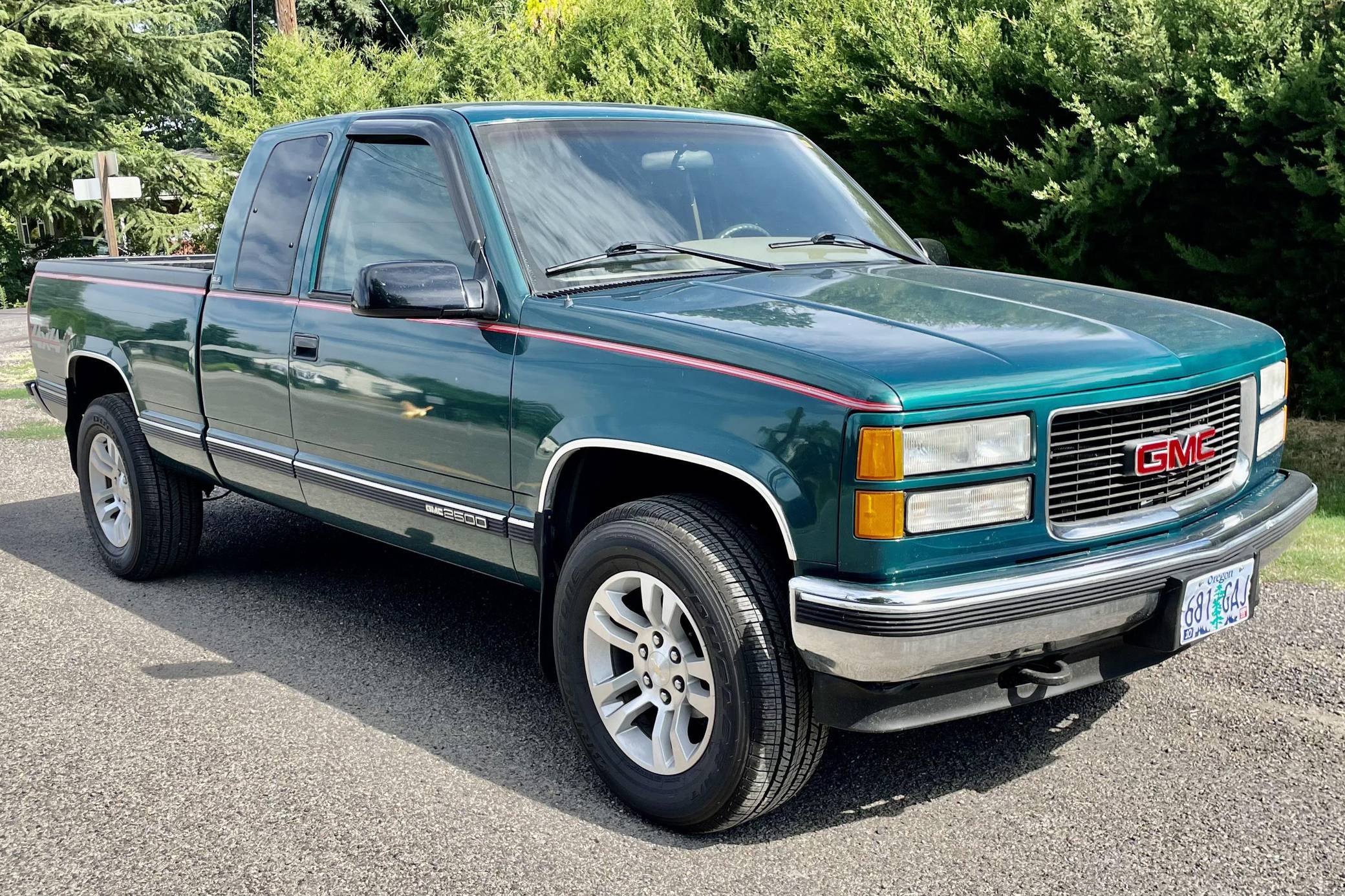
The 1995 GMC Sierra 1500 4WD represents a high-water mark for the GMT400 platform, blending the rugged "Old Body Style" (OBS) aesthetic with a significantly modernized interior. Available in various cab configurations, bed lengths, and trim levels like the SLE and SLT, these trucks remain highly prized in 2026 for their mechanical simplicity, durability, and classic design.
In the lineage of General Motors trucks, the 1995 model year is particularly significant. It served as the transition point where the utility-focused cabin of the late 1980s was replaced with a more ergonomic, passenger-car-like environment, all while retaining the dependable Throttle Body Injection (TBI) powerplants. Understanding the specific variants of the 1995 GMC Sierra 1500 4WD requires looking at the intersection of chassis configurations, trim packages, and the specialized off-road equipment that defined the era.
The Foundation: Chassis and Cab Variants
The 1995 GMC Sierra 1500 4WD was built on the ladder-type frame of the GMT400 architecture. Unlike modern trucks that prioritize four-door crew cabs, the 1995 lineup was dominated by two primary cab styles, each offering different utility profiles for the four-wheel-drive enthusiast.
Regular Cab Variants
The Regular Cab was the backbone of the Sierra lineup. In a 4WD configuration, the Regular Cab offered the shortest possible wheelbase when paired with a short bed, making it a favorite for off-roaders who required better breakover angles and a tighter turning radius.
- Wheelbase Options: The Regular Cab could be paired with either a 6.5-foot "Short Box" or an 8-foot "Long Box."
- Dimensions: The short-box variant sat on a 117.5-inch wheelbase, while the long-box version extended to 131.5 inches.
Extended Cab (Club Coupe) Variants
The Extended Cab, often referred to as the "Club Coupe" in GMC marketing literature, was the choice for those needing extra interior storage or occasional rear-seat passengers. It is important to note that in 1995, the Extended Cab did not yet feature a third door; access to the rear bench required folding the front seats forward.
- Configuration: Nearly all 4WD Extended Cab 1500s were produced with the 6.5-foot short bed to keep the overall vehicle length manageable, though an 8-foot bed variant existed on a massive 155.5-inch wheelbase.
- Utility: This variant offered a significant upgrade in lockable storage space behind the front seats, which was a major selling point for hunters and outdoor professionals.
Cargo Bed Styles: Wideside vs. Sportside
Beyond length, GMC offered two distinct aesthetic and functional styles for the cargo box. This choice significantly altered the look of the Sierra 1500 4WD.
Wideside (Fleetside)
The Wideside was the traditional truck bed where the outer body panels were flush with the cab. This provided the maximum internal width for hauling plywood, ATVs, or construction materials. In the 4WD 1500 series, the Wideside was the standard and most common variant.
Sportside (Stepside)
The Sportside featured flared rear fenders with a step located between the cab and the wheel well. While it reduced the internal width of the bed (the wheel wells were no longer intrusive, but the entire box was narrower), it provided a sporty, classic look. The Sportside was only available with the 6.5-foot bed length and is increasingly sought after by collectors in 2026 due to its distinct silhouette.
Trim Levels and Interior Packages
The 1995 model year introduced the "rounded" dashboard, replacing the square, modular look of the 1988–1994 models. This interior refresh also brought a driver-side airbag to the Sierra for the first time. The trim levels dictated the level of luxury and technology found inside these 4WD variants.
SL (Special Line)
The SL was the entry-level or "Work Truck" variant. It was designed for durability and cost-effectiveness.
- Features: Vinyl flooring, vinyl bench seats, manual windows, and manual locks were standard.
- Identification: These often featured painted silver bumpers and a simplified grille without the chrome accents found on higher trims.
SLE
The SLE was the mid-range and most popular variant. It struck a balance between utility and comfort, making it the quintessential family truck of the mid-90s.
- Features: Cloth upholstery, carpeting, power windows, power locks, and air conditioning were standard.
- Exterior: Chrome bumpers, body-side moldings, and aluminum alloy wheels were typically included.
SLT
The SLT was the top-tier luxury variant. By 1995, GMC was positioning itself as a more premium alternative to Chevrolet, and the SLT reflected this.
- Features: Leather seating surfaces, high-end Delco audio systems with CD players (a luxury at the time), and power-adjustable seats.
- Distinction: The SLT variant is the rarest in the used market today, as the price point in 1995 pushed many buyers toward the SLE or into the 2500 series.
Powertrain Options for 4WD Models
While the 1500 series was the "half-ton" offering, the 4WD variants required significant torque to manage the weight of the transfer case and front differential. In 1995, GMC utilized the TBI (Throttle Body Injection) system for its gasoline engines, a system known for its extreme reliability and ease of maintenance.
| Engine Type | Displacement | Horsepower (Approx) | Torque (lb-ft) | Common Usage |
|---|---|---|---|---|
| V6 Vortec 4300 | 4.3L | 160 hp | 235 lb-ft | Base 4WD Regular Cab models |
| V8 Small Block | 5.0L (305) | 175 hp | 265 lb-ft | Light-duty SLE variants |
| V8 Small Block | 5.7L (350) | 210 hp | 300 lb-ft | Most 4WD Extended Cabs & Z71s |
| V8 Diesel | 6.5L | 155 hp | 340 lb-ft | Heavy-duty towing (Non-Turbo) |
The 5.7L 350 V8 remains the most desirable engine for the 1995 Sierra 1500 4WD. It provided the necessary grunt for the Insta-Trac four-wheel-drive system and paired perfectly with the 4L60-E four-speed automatic transmission.
The 4WD System: Insta-Trac Mechanics
Every 1995 GMC Sierra 1500 4WD featured the Insta-Trac system. This allowed drivers to shift from 2WD to 4WD High at any speed, provided the vehicle was moving in a straight line.
Manual Floor Shift vs. Push-Button
Most 1995 variants featured the floor-mounted transfer case lever. This mechanical connection to the New Process (NP241) transfer case is favored by enthusiasts for its reliability. However, 1995 also saw the continued availability of the electric push-button shift (NP243 transfer case) on higher-trim SLE and SLT models, which used an electric motor to engage the 4WD ranges.
The Front Differential Actuator
A key technical component of the 1995 4WD system was the thermal linear actuator located on the front axle. When 4WD was engaged, this actuator heated a gas that expanded a plunger to engage the front hubs. In the decades since, many owners have replaced these with updated electronic actuators or manual cable-pull systems to ensure faster engagement in cold weather.
The Z71 Off-Road Package
Perhaps the most famous variant of the 1995 GMC Sierra 1500 4WD isn't a trim level, but an option package: the Z71 Off-Road Decoration Package. While technically available on any 4WD Sierra, it is most commonly found on SLE and SLT models.
The Z71 package included several functional upgrades:
- Gas-Charged Shocks: Usually Bilstein units that improved damping on rough terrain.
- Skid Plates: Protective plating for the transfer case and front differential.
- Increased Cooling: Heavy-duty radiators and oil coolers were often bundled with the package.
- Graphics: The iconic "Z71 4x4" decals on the rear bedside panels.
In 2026, a "true" Z71 is verified by checking the RPO (Regular Production Option) code sticker inside the glovebox for the "Z71" designation.
Technical Depth: The 1995 "Hybrid" Nature
The 1995 model year is often called a "hybrid" year among GMT400 enthusiasts. It is unique because it features:
- The New Interior: The 1995–1998 dashboard, which is vastly superior in comfort and aesthetics to the 1988–1994 version.
- The Old Engine: The TBI 5.7L V8. In 1996, GMC moved to the Vortec 5700 with Multi-Port Fuel Injection. While the Vortec made more power (255 hp), the 1995 TBI engine is often considered easier to work on and less prone to fuel spider assembly leaks.
For a restorer, the 1995 model provides the "best of both worlds": the classic reliability of the TBI engine with the modern comfort of the updated cabin.
Maintenance and Common Issues in 4WD Variants
When evaluating or maintaining a 1995 Sierra 1500 4WD, certain variant-specific issues should be addressed.
- The 4L60-E Transmission: This was the first era of fully electronic shift control for the 700R4 successor. Keeping the fluid cool is vital, especially in 4WD models used for towing.
- Frame Rust: The GMT400 frames are durable but prone to scale and rot near the rear spring hangers and the fuel tank crossmembers.
- Steering Play: The steering gearboxes on these trucks often develop "slop" over time. Many owners in 2026 upgrade to "Redhead" or "Blue-Port" steering gears to restore factory-fresh handling.
- Transfer Case Operation: The electronic actuators on push-button models are known to fail due to corrosion in the wiring harness. Regular use of the 4WD system helps keep the internal components lubricated.
Summary of 1995 GMC Sierra 1500 4WD Specifications
| Feature | Regular Cab Short Bed | Extended Cab Short Bed | Regular Cab Long Bed |
|---|---|---|---|
| Total Length | 194.5 inches | 218.5 inches | 213.1 inches |
| Payload Capacity | ~1,600 lbs | ~1,450 lbs | ~1,800 lbs |
| Fuel Tank Size | 26 Gallons | 26 Gallons | 34 Gallons |
| Standard Engine | 4.3L V6 | 5.0L V8 | 5.0L V8 |
| Standard Tires | P245/75R16 | P245/75R16 | LT245/75R16 |
FAQs
What is the difference between a 1995 GMC Sierra 1500 and a 2500?
The 1500 is a half-ton truck typically utilizing a 6-lug wheel bolt pattern and a lighter-duty 10-bolt rear axle. The 2500 is a three-quarter-ton truck that features an 8-lug bolt pattern, a heavier frame, and usually a 14-bolt semi-floating or full-floating rear axle for higher towing and payload capacities.
Is the 1995 GMC Sierra 1500 4WD good for towing?
When equipped with the 5.7L V8 and the 3.73 or 4.10 rear axle ratio, the 1995 Sierra 1500 4WD is rated to tow approximately 6,000 to 7,000 pounds. However, by 2026 standards, its braking and cooling systems are modest, so many owners upgrade to Powerstop brakes and larger external transmission coolers for modern towing tasks.
How do I know if my 1995 Sierra has the Z71 package?
Check the RPO code sticker, which is usually located in the glove box. Look for the code "Z71." If the sticker is missing, look for factory-installed skid plates under the transfer case and front differential, as well as the specific Bilstein (often blue and yellow) shock absorbers.
Can I swap a 1996+ Vortec engine into a 1995 model?
Yes, but it is not a direct "plug and play" swap. The 1995 model uses an OBD-I (or "OBD 1.5") computer system and TBI fuel delivery, while 1996+ models use OBD-II and Sequential Central Port Injection. A swap requires changing the wiring harness and the ECU, or modifying the Vortec engine to accept a TBI intake manifold.
Why is 1995 considered a "special" year for the Sierra?
It is the only year where you could get the modern, rounded interior dashboard (which included a driver’s airbag and a much-improved HVAC layout) paired with the simpler, ultra-reliable TBI engines. In 1994 you had the old interior; in 1996 you had the more complex Vortec engine.
Final Recommendations for Buyers and Owners
If you are looking to acquire a 1995 GMC Sierra 1500 4WD in 2026, prioritize the Extended Cab SLE or SLT with the 5.7L V8. This variant offers the best balance of historical charm, daily drivability, and resale value. Ensure that the 4WD engages promptly and listen for any "clunking" from the front CV axles during tight turns.
For current owners, focus on preserving the dashboard—the 1995 plastic can become brittle—and ensuring the 4L60-E transmission is serviced every 30,000 miles. With proper care, these "OBS" variants are easily capable of exceeding 300,000 miles, serving as a testament to GMC's engineering during a golden era of American truck production.