The Russell 1000 is a stock market index that tracks the performance of the 1,000 largest companies in the United States by market capitalization. It does not have a single "ticker symbol" because it is an index, not a tradable security. Instead, it serves as a benchmark for investment products like ETFs and mutual funds, each of which carries its own unique ticker symbol.
Defining the Russell 1000 Structure
To understand the "Russell 1000 symbol," one must first distinguish between a market index and a tradeable asset. The Russell 1000 is a subset of the broader Russell 3000 Index. It represents the top 1,000 U.S. equities, accounting for approximately 90% of the total market capitalization of the entire U.S. stock market.
Because the Russell 1000 is a calculation—a numerical value based on the weighted market caps of its components—you cannot "buy" the index itself. If you attempt to find a single ticker symbol for the Russell 1000 in a trading platform, you will likely find nothing, or you may find an index price feed provided by data services. To invest in the Russell 1000, you must purchase a financial vehicle that tracks it, such as an Exchange Traded Fund (ETF) or an index mutual fund. These vehicles each possess their own ticker symbols.
Why Investors Seek Russell 1000 Tickers
Investors and analysts frequently seek "the" symbol for the Russell 1000 because they intend to gain exposure to large-cap U.S. stocks. The Russell 1000 is widely considered the premier gauge of the U.S. "large-cap" segment. Unlike the S&P 500, which is selected by a committee, the Russell 1000 is entirely rules-based, making it a highly transparent representation of the largest U.S. companies.
When investors ask for the symbol, they are usually looking for the most efficient, low-cost way to track the performance of these 1,000 companies. This typically involves identifying an ETF provider—such as BlackRock (iShares), Vanguard, or State Street (SPDR)—and locating the ticker associated with their specific Russell 1000-tracking product.
Identifying Major Russell 1000 Tracking Symbols
While the index has no symbol, the funds that follow it have prominent, liquid tickers. Below is a comparison of some of the most common investment vehicles used to gain exposure to this index.
| Provider | Fund Name | Ticker Symbol | Expense Ratio (Approx) |
|---|---|---|---|
| iShares | Russell 1000 ETF | IWB | 0.15% |
| Vanguard | Russell 1000 ETF | VONE | 0.08% |
| SPDR | Portfolio Russell 1000 ETF | ONEK | 0.09% |
Note: Expense ratios are subject to change and vary by the share class or specific fund iteration. Always consult the official prospectus of the specific fund for the most current financial data in 2026.
Prerequisites for Investing in Index Funds
Before choosing a symbol to trade, an investor must establish a brokerage account that supports equity and ETF trading. The process typically requires:
- Verification of Residency: You must be a legal resident in a jurisdiction where the brokerage is authorized to operate.
- Funding the Account: A cash balance or margin capability is required to execute the purchase of shares.
- Researching Prospectuses: Before using a ticker symbol to execute a trade, review the fund's "Prospectus" or "Summary Prospectus." This document provides essential details on the fund’s strategy, risks, and annual management fees.
- Market Timing: Since these funds trade on major exchanges (like the NYSE or NASDAQ), you must execute orders during standard market hours (typically 9:30 AM to 4:00 PM Eastern Time in the United States).
Common Mistakes Regarding Index Symbols
A frequent error among novice investors is confusing the index itself with a derivative product. For example, assuming that a ticker symbol for an ETF is the index leads to misunderstanding the role of the fund manager. The ETF manager must track the index, but they may utilize "sampling" techniques—owning a representative subset of the stocks rather than all 1,000—to minimize costs and manage liquidity.
Another common mistake is conflating the Russell 1000 with the Russell 2000. While the Russell 1000 tracks large-cap companies, the Russell 2000 tracks the "small-cap" end of the Russell 3000. These two indices are often used in tandem for portfolio diversification, but their performance profiles are fundamentally different.
Technical Depth: The Reconstitution Process
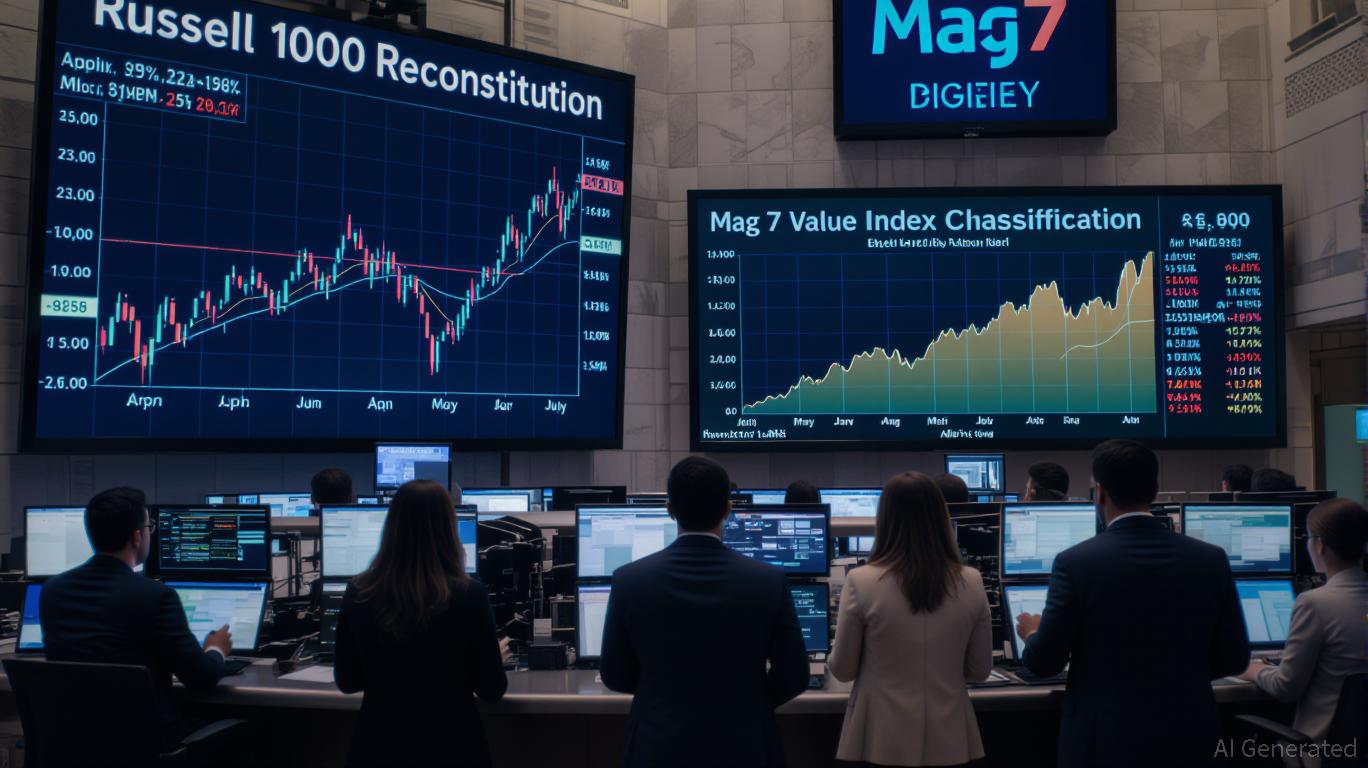
The Russell 1000 is not static. Every year, typically in June, the index undergoes a process called "reconstitution." During this time, the index provider re-evaluates the market capitalizations of thousands of U.S. companies.
Companies that have grown significantly may move from the Russell 2000 (small-cap) to the Russell 1000 (large-cap). Conversely, companies that have shrunk may be removed from the Russell 1000. When you hold an ETF ticker tied to the Russell 1000, the fund manager automatically adjusts the fund's holdings to reflect these changes. This is why holding an index fund is considered "passive" management; you do not need to manually trade the underlying 1,000 stocks as they change status.
Frequently Asked Questions
Is there a ticker symbol for the Russell 1000 that I can trade directly? No. The Russell 1000 is a mathematical index calculated by FTSE Russell. You cannot trade the index itself. You must use the ticker symbol of an ETF or mutual fund that is designed to replicate the performance of the index.
Which Russell 1000 ticker is the best? "Best" is subjective and depends on your investment goals. Investors often prioritize low expense ratios, high liquidity (high trading volume), and the reputation of the fund provider. Compare the expense ratios of symbols like IWB, VONE, and ONEK to see which aligns with your cost structure.
How often does the Russell 1000 change? The index undergoes a major reconstitution annually, usually in June. During this period, the membership list is refreshed to ensure it accurately reflects the current state of the U.S. large-cap market.
Can I buy Russell 1000 futures? While index futures exist for many benchmarks, you should check with your brokerage to see if they offer trading in derivatives based on the Russell 1000. Trading futures involves higher risk and different regulatory requirements than purchasing standard ETFs.
What is the difference between the Russell 1000 and the S&P 500? The S&P 500 is a committee-selected index of 500 large U.S. companies. The Russell 1000 is a rules-based index of 1,000 companies. Because the Russell 1000 includes more companies, it provides slightly broader exposure to the large-cap segment of the U.S. market compared to the S&P 500.
Practical Next Steps
If your goal is to add large-cap exposure to your portfolio:
- Identify your brokerage platform’s requirements for purchasing ETFs.
- Review the current list of Russell 1000 ETFs and compare their expense ratios using official financial sites or your brokerage’s research tools.
- Once you have selected a ticker, such as VONE or IWB, search for that symbol within your brokerage interface.
- Verify the current market price and the fund's historical tracking error before executing a buy order.
- Monitor the fund's performance periodically against the official Russell 1000 index benchmark to ensure it remains a suitable investment for your long-term goals.
Disclaimer: This information is for educational purposes only and does not constitute financial, investment, or legal advice. Investing in the stock market involves risk, including the loss of principal. Consult with a qualified financial advisor before making any investment decisions based on these metrics.