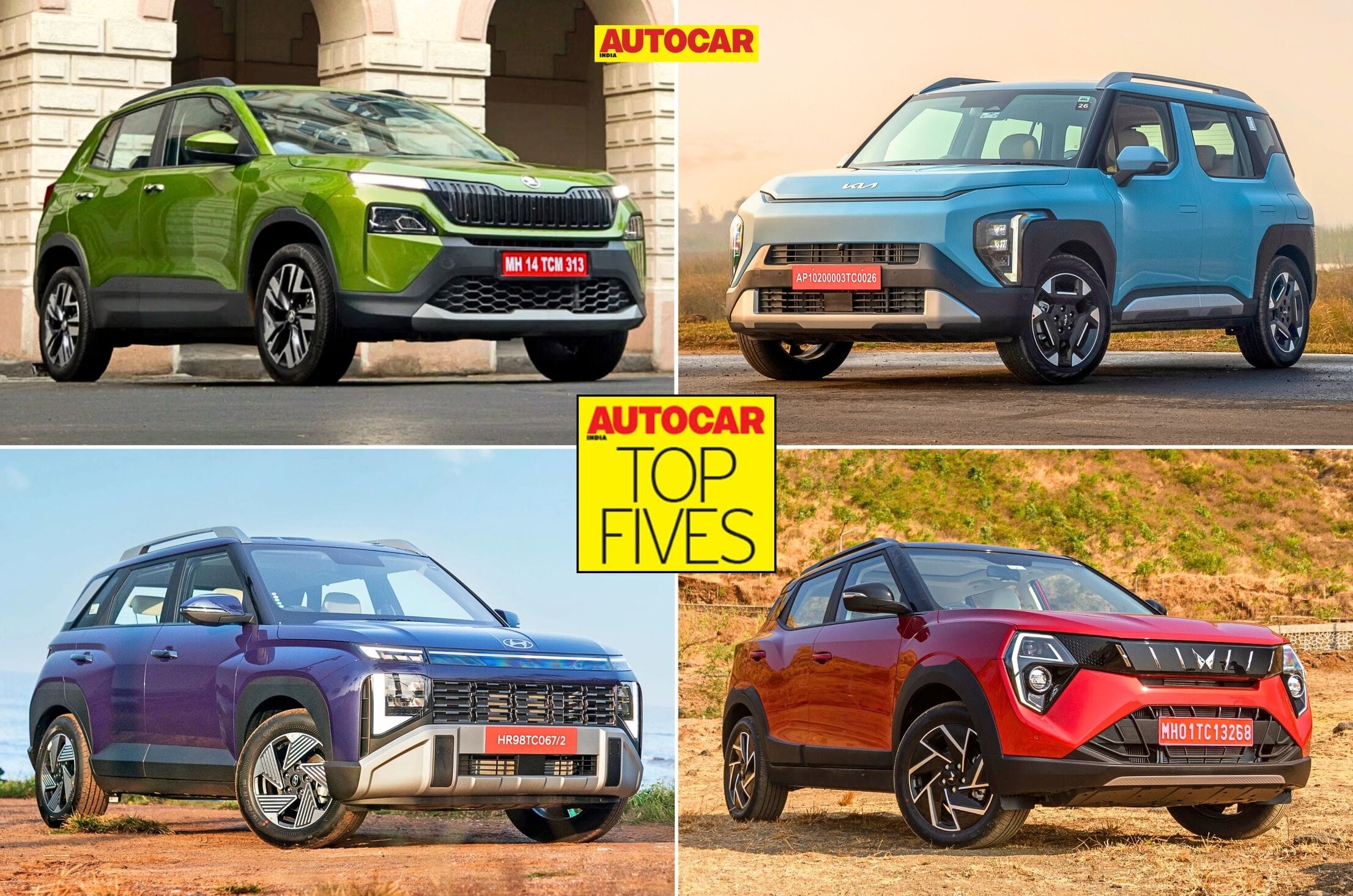
In Car and Driver terms, a compact SUV is defined as a unibody crossover that strikes an optimal balance between passenger volume, cargo utility, and car-like driving dynamics. These vehicles typically feature two rows of seating, a wheelbase between 104 and 110 inches, and prioritized "fun-to-drive" characteristics that distinguish them from more utilitarian competitors.
The Definition of a Compact SUV: Beyond the Marketing
In the automotive industry, manufacturers often play fast and loose with segment labels to make a vehicle seem more rugged or more spacious than it actually is. However, for a publication like Car and Driver, the classification of a "compact SUV" (or compact crossover) is rooted in rigorous measurement and competitive benchmarking.
A compact SUV is essentially the modern successor to the mid-size sedan. While a subcompact SUV (like the Mazda CX-30) is often too cramped for a family of four and a mid-size SUV (like the Honda Pilot) offers a third row and a larger footprint, the compact segment is the "Goldilocks" zone. In 2026, this segment remains the most competitive slice of the American automotive market.
To be considered a true compact SUV in this context, a vehicle must utilize a unibody construction. This means the frame and body are manufactured as a single solid piece, unlike the "body-on-frame" construction found in traditional trucks or large SUVs like the Chevrolet Tahoe. This unibody design is critical because it allows for the sophisticated suspension tuning and lower center of gravity that Car and Driver editors look for during instrumented testing.
The Car and Driver Testing Rigor: Metrics That Matter
When evaluating a compact SUV, editorial teams do not rely solely on "seat-of-the-pants" feel. They employ a suite of instrumented tests to quantify performance. Understanding these terms is essential to understanding how these vehicles are ranked.
Instrumented Performance Testing
Every compact SUV that enters the fleet undergoes a battery of tests using high-precision GPS data loggers (often VBox units).
- Zero to 60 mph: While a compact SUV isn't a sports car, a time under 7.0 seconds is generally considered "quick" for the segment in 2026.
- Roadholding (Skidpad): This measures lateral acceleration in "g" forces. A top-tier compact SUV like the Mazda CX-50 might pull 0.85g, indicating high cornering grip, whereas a more comfort-oriented model might struggle to reach 0.80g.
- 70-to-0 mph Braking: This is a vital safety and performance metric. A distance under 170 feet is the benchmark for excellence in this category.
The Real-World Fuel Economy Test
While the EPA provides estimated MPG figures, Car and Driver conducts its own 75-mph highway fuel-economy test. This is particularly relevant for compact SUVs, which are often used for long-distance road trips. Many turbocharged or hybrid compact SUVs fail to meet their EPA highway ratings in real-world conditions, and this discrepancy is a frequent point of critique in their reviews.
The Carry-On Suitcase Test
Rather than relying on manufacturer-quoted "cubic feet," which can be misleading due to irregular interior shapes, the editors use a standardized "carry-on suitcase test." They physically fit as many 9x14x22-inch boxes into the cargo area as possible, both with the rear seats up and folded. This provides a tangible measurement of how much a family can actually pack for a vacation.
Key Attributes of a "10Best" Compact SUV
The 10Best award is the highest honor a vehicle can receive from the publication. For a compact SUV to win, it must demonstrate three core qualities: value, mission fulfillment, and—most importantly—driving involvement.
Chassis Balance and Steering Feel
Most manufacturers tune compact SUVs for softness, which often results in "numb" steering and significant body roll. In Car and Driver terms, a "best-in-class" SUV must have a chassis that feels alive. This means the steering should provide feedback about the road surface, and the suspension should manage bumps without feeling floaty or unsettled. The Honda CR-V has historically been a favorite in this regard because its controls feel precise and natural, much like a well-sorted sedan.
Ergonomics and Interior "Flow"
The interior of a compact SUV should be "easy to live with." This includes the placement of physical knobs for volume and tuning—an area where editors often criticize modern "all-touch" interfaces. In 2026, the integration of wireless smartphone mirroring and the intuitive layout of digital instrument clusters are major factors in a vehicle’s overall score.
Powertrain Refinement
A compact SUV's engine shouldn't just be powerful; it should be refined. This refers to the lack of vibration (NVH—Noise, Vibration, and Harshness) and the logic of the transmission. A Continuously Variable Transmission (CVT) that "drones" under acceleration is often a "con" in a review, whereas a snappy 8-speed automatic or a well-integrated hybrid system is a "pro."
The 2026 Landscape: Hybridization and Electrification
By 2026, the "compact SUV" definition has shifted slightly to accommodate a wide variety of powertrains. The segment is now split into three primary categories:
- Internal Combustion (ICE): Standard gasoline engines, often turbocharged.
- Hybrid and Plug-in Hybrid (PHEV): Now the dominant choice for those seeking a balance of power and efficiency. Models like the Toyota RAV4 Hybrid and the Hyundai Tucson PHEV set the standard here.
- Battery Electric (EV): Vehicles like the Hyundai Ioniq 5 or the Ford Mustang Mach-E are often grouped into "Electric Compact SUVs," though their packaging often allows for more interior room than their gas-powered counterparts.
Comparative Overview of Leading 2026 Compact SUVs
To see how these "Car and Driver terms" apply in practice, consider the following data comparing the top contenders in the segment for the 2026 model year.
| Model | C/D Estimated Performance (0-60 mph) | Cargo Space (Carry-on Luggage - Seats Up) | Highlighted Attribute | "Car and Driver" Verdict |
|---|---|---|---|---|
| Honda CR-V | 7.6 seconds | 9 boxes | Exceptional Packaging | The best all-rounder for most families. |
| Mazda CX-50 | 6.6 seconds (Turbo) | 8 boxes | Driving Dynamics | The enthusiast's choice in a dull segment. |
| Toyota RAV4 | 7.1 seconds (Hybrid) | 10 boxes | Fuel Efficiency | Pragmatic, if a bit uninspired to drive. |
| Kia Sportage | 7.2 seconds | 11 boxes | Interior Technology | Massive screens and high-value features. |
| Volkswagen Tiguan | 8.1 seconds | 9 boxes | European Handling | Solid feel but lacks powertrain punch. |
Distinguishing Between Mainstream and Luxury Compacts
One area of potential confusion is the "Luxury Compact" segment. Car and Driver separates these into distinct comparison tests. While a Honda CR-V and a BMW X3 are similar in physical dimensions, they are judged on different scales.
- Mainstream Compacts: Evaluated on value, fuel economy, and everyday utility. The benchmark is often the Honda CR-V.
- Luxury Compacts: Evaluated on material quality, cabin quietness, and performance ceilings. The benchmark is often the Porsche Macan or the BMW X3. In 2026, the gap between mainstream and luxury is narrowing, as top-trim "mainstream" SUVs now feature Nappa leather, ventilated seats, and premium audio systems that rival entry-level luxury offerings.
Common Pitfalls: What Makes a "Bad" Compact SUV?
A compact SUV can fail to impress the editorial board in several ways. These "cons" are often deal-breakers for enthusiasts:
- Excessive Road Noise: Many compact SUVs skimp on sound deadening to save weight and cost. A cabin that is loud at 70 mph is a major drawback.
- Intrusive Active Safety Tech: While safety is paramount, systems that provide "false positives" (like beeping unnecessarily or jerking the steering wheel) are frequently panned.
- Cramped Rear Seats: Some compact SUVs have sloping rooflines ("coupe-like" styling) that severely limit rear-seat headroom and cargo utility, violating the "mission fulfillment" rule of the segment.
- Lack of Identity: An SUV that is neither particularly comfortable nor particularly engaging to drive often ends up at the bottom of the rankings.
The Role of Safety Ratings
While Car and Driver focuses on performance and "feel," they integrate data from two primary sources to verify the safety of compact SUVs:
- NHTSA (National Highway Traffic Safety Administration): Provides star ratings for crashworthiness.
- IIHS (Insurance Institute for Highway Safety): Provides detailed ratings on everything from small-overlap crashes to headlight effectiveness. A compact SUV must achieve an "IIHS Top Safety Pick+" to be considered a top-tier recommendation in 2026.
You can verify current safety data at the official NHTSA and IIHS websites.
Frequently Asked Questions
Is there a difference between a "Crossover" and an "SUV"?
In modern terminology, the terms are used interchangeably for this segment. However, technically, a "Crossover" is based on a car platform (unibody), while an "SUV" was originally based on a truck platform (body-on-frame). Since almost all compact "SUVs" are unibody, they are all technically crossovers.
Why does Car and Driver prefer the Mazda CX-5/CX-50 over more popular models?
Because their evaluation criteria heavily weight the "driving experience." Mazda tends to prioritize steering feel and transmission logic (using traditional automatics instead of CVTs), which aligns with the publication's enthusiast-leaning perspective, even if the Mazda offers slightly less cargo space than a Toyota or Honda.
What is the "Average" Price for a Compact SUV in 2026?
By 2026, the entry-point for a well-equipped mainstream compact SUV is approximately $32,000 to $36,000. Hybrid models and top-tier trims often push toward the $45,000 mark.
Does a compact SUV have a third row?
Generally, no. Compact SUVs are two-row vehicles. While some models (like the VW Tiguan or Mitsubishi Outlander) have offered a tiny third row in the past, these are usually considered "tweeners" and the third row is rarely functional for adults. For a usable third row, one must step up to the "Mid-size" segment.
How much can a compact SUV tow?
Most compact SUVs are rated to tow between 1,500 and 3,500 pounds. This is enough for a small utility trailer or a pair of jet skis, but not for a large camper or horse trailer.
Final Recommendation
When shopping for a "compact SUV in Car and Driver terms," your first step should be to identify your priority: Utility or Engagement.
If you prioritize Utility, the Honda CR-V or Kia Sportage are the leaders. They offer the most "carry-on boxes" in their class and provide a seamless, comfortable ride that excels in the "mission fulfillment" category.
If you prioritize Engagement, look toward the Mazda CX-50 or the Volkswagen Tiguan. These vehicles offer the "steering feel" and "chassis balance" that make them feel like more than just a family appliance.
For those focused on Efficiency without sacrificing the compact footprint, the Toyota RAV4 Hybrid remains the benchmark for real-world fuel economy. Regardless of your choice, ensure the vehicle has been through an "instrumented test" to confirm that the manufacturer's marketing claims match real-world performance.