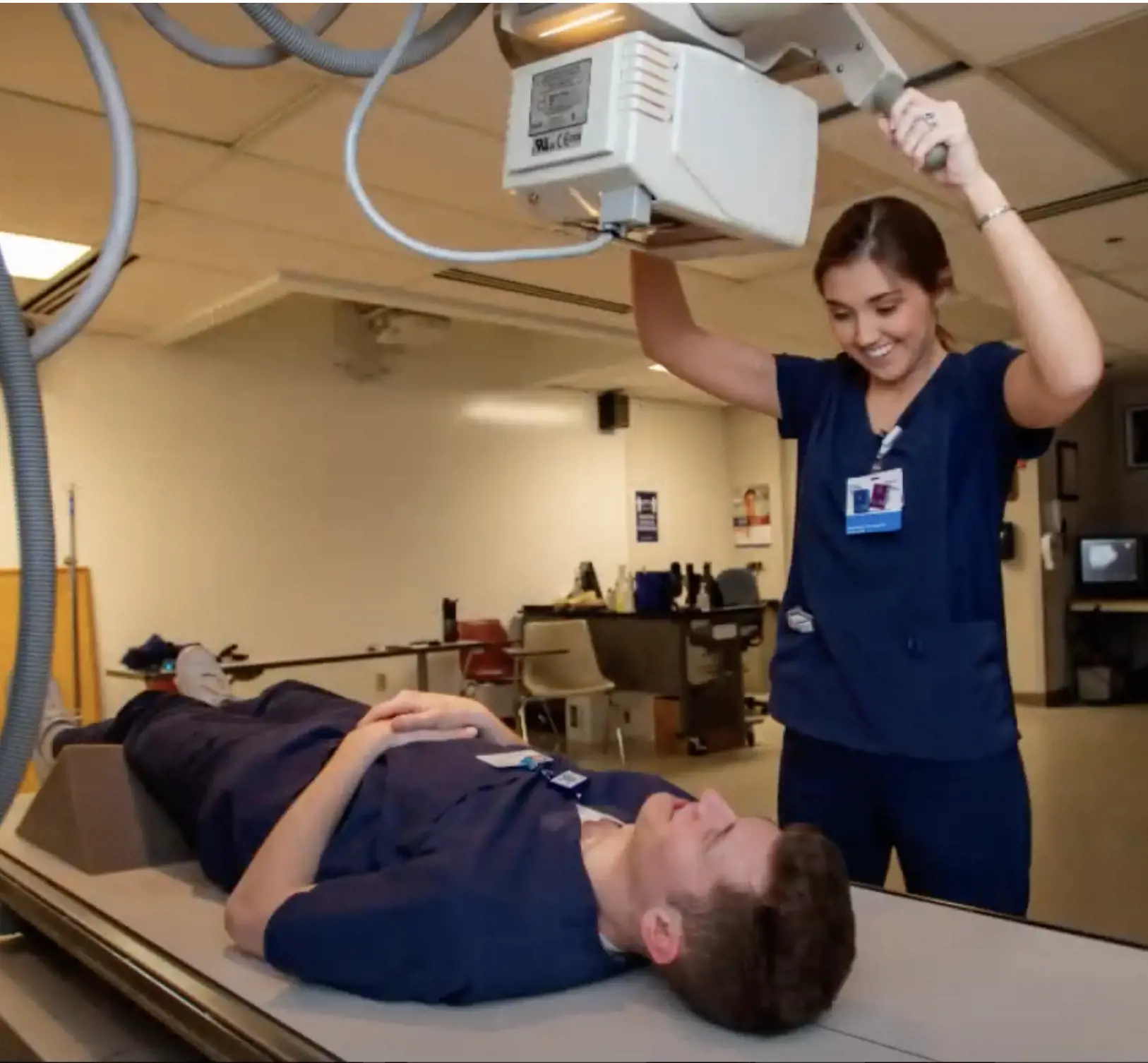
An Associate Degree in Radiologic Technology is the primary educational credential required to become a certified Radiologic Technologist (RT). This two-year program combines rigorous classroom instruction in radiation physics and anatomy with intensive clinical rotations, preparing students to pass national certification exams and enter the healthcare workforce as skilled diagnostic imaging professionals.
The path to becoming a radiologic technologist—often referred to as a "rad tech"—is structured to balance technical proficiency with compassionate patient care. As of 2026, the demand for diagnostic imaging continues to grow due to an aging population and advancements in non-invasive medical procedures. Obtaining an associate degree is not merely a checkbox; it is a comprehensive technical training period that transforms a student into a healthcare provider capable of operating sophisticated machinery while ensuring the safety of both patients and staff.
Understanding the Associate Degree Pathway
In the United States, there are three main routes to becoming a radiologic technologist: a certificate program, an associate degree, or a bachelor’s degree. The Associate of Applied Science (AAS) in Radiologic Technology is the most common and widely accepted entry point. While certificate programs exist, they are often reserved for those who already hold a degree in another healthcare field.
The Associate of Applied Science (AAS) is designed for immediate workforce entry, focusing heavily on the practical skills needed in a clinical setting. Alternatively, some students pursue an Associate of Science (AS), which typically includes more general education credits designed to transfer into a four-year Bachelor of Science program. Regardless of the specific degree title, the core "Rad Tech" curriculum must meet the standards set by the American Registry of Radiologic Technologists (ARRT) to ensure the graduate is eligible for national certification.
The Importance of JRCERT Accreditation
Before enrolling in any program, verification of accreditation is the most critical step. The Joint Review Committee on Education in Radiologic Technology (JRCERT) is the only agency recognized by the United States Department of Education (USDE) and the Council for Higher Education Accreditation (CHEA) for the accreditation of traditional and distance delivery educational programs in radiography.
Attending a non-accredited program can have severe consequences. Most notably, the ARRT may not allow graduates from unaccredited programs to sit for the national certification exam. Furthermore, many hospitals and imaging centers explicitly require candidates to have graduated from a JRCERT-accredited institution to ensure a baseline level of clinical competence and safety knowledge.
Essential Prerequisites and Admission Standards
Admission into a radiologic technology program is notoriously competitive. Most colleges utilize a "points-based" or "ranking" system because clinical spots are limited by the number of local hospital partnerships available.
Academic Foundation
Prospective students should focus on excelling in high school or introductory college-level sciences. Common prerequisites include:
- Human Anatomy and Physiology (I & II): A deep understanding of the skeletal, muscular, and circulatory systems is mandatory.
- College Algebra or Statistics: Necessary for calculating radiation dosages and understanding the physics of the X-ray tube.
- Biology and Chemistry: Provides the cellular context for how ionizing radiation affects human tissue.
- Medical Terminology: Essential for communicating within a healthcare team and understanding physician orders.
Non-Academic Requirements
Because students will be working directly with vulnerable populations, programs require several screenings before clinical placement:
- Criminal Background Check: Certain felonies or misdemeanors can disqualify a student from clinicals or later from ARRT certification.
- Drug Screening: Mandatory for all healthcare environments.
- Immunization Records: Includes proof of vaccination for Hepatitis B, MMR, Varicella, and current TB testing.
- Physical Stamina: Technologists must be able to lift patients, move heavy lead shields, and stand for 8–12 hours a day.
Core Curriculum: What You Will Study
The associate degree curriculum is a blend of theoretical science and practical application. In 2026, the curriculum has expanded to include more digital imaging processing and AI-assisted screening tools, though the fundamental physics remains the same.
Radiation Physics and Protection
This is often cited as the most challenging part of the program. Students learn about the production of X-rays, the electromagnetic spectrum, and the interaction of radiation with matter. A significant portion of the course is dedicated to ALARA (As Low As Reasonably Achievable), the principle of minimizing radiation dose to patients and staff through the use of shielding, distance, and timing.
Radiographic Positioning
Positioning courses teach students how to manipulate the patient's body to capture the clearest possible image of specific internal structures. This involves learning thousands of variations for the chest, extremities, spine, and skull. Students practice in "labs" using "phantoms"—human-like models designed to be X-rayed—to perfect their technique before working on real patients.
Image Evaluation and Digital Imaging
Modern radiology is entirely digital. Students must learn how to manipulate digital metadata, understand the "Exposure Index" (a numerical value indicating whether an image received too much or too little radiation), and troubleshoot artifacts in the digital image. Understanding the PACS (Picture Archiving and Communication System) is also a core competency.
Patient Care and Ethics
Radiologic technologists are often the first people a patient sees after a traumatic injury. Courses cover vital sign monitoring, emergency response (CPR certification is usually required), infection control procedures, and the legalities of HIPAA (Health Insurance Portability and Accountability Act).
Clinical Practicums: Bridging Theory and Practice
The clinical component is the backbone of the associate degree. While classroom hours provide the "why," clinical rotations provide the "how." Most programs require between 1,000 and 1,500 hours of unpaid clinical experience at hospitals, orthopedic clinics, or urgent care centers.
During clinicals, students progress through three stages:
- Observation: Watching a registered technologist perform exams and learning the workflow of the department.
- Assistance: Helping with patient positioning, changing linens, and setting technical factors on the X-ray console.
- Competency: Performing the exam independently under the supervision of a licensed tech. To graduate, students must "check off" or prove competency in a specific list of mandatory procedures required by the ARRT, ranging from routine chest X-rays to complex surgical fluoroscopy.
Clinical rotations also expose students to different shifts (days, evenings, and weekends) and various environments, such as the Emergency Room (ER), the Operating Room (OR) using a mobile C-arm, and bedside imaging in the Intensive Care Unit (ICU).
The Certification Process: ARRT Requirements
Graduating with an associate degree is the penultimate step. To legally practice in most states, you must become "Registered." The American Registry of Radiologic Technologists (ARRT) manages this process.
The Education Requirement
Candidates must have earned an associate degree (or higher) from an institution accredited by a mechanism recognized by the ARRT. This degree does not necessarily have to be in radiologic sciences, but the candidate must have completed an ARRT-approved educational program in radiography.
The Ethics Requirement
The ARRT conducts a thorough review of the candidate’s background. Individuals with prior criminal records are encouraged to undergo a "Pre-enrollment Ethics Review" before starting school to ensure they will be eligible for certification upon graduation.
The Examination Requirement
The ARRT exam is a comprehensive, 200-question computer-based test covering patient care, safety, image production, and procedures. A passing score of 75 is required. Once passed, the individual can use the professional title RT(R)—Registered Technologist (Radiography).
Program Comparison: AAS vs. Bachelor’s vs. Certificate
| Feature | Associate Degree (AAS/AS) | Bachelor’s Degree (BS) | Certificate Program |
|---|---|---|---|
| Duration | 2 years | 4 years | 12–18 months |
| Primary Focus | Clinical entry-level skills | Skills + Management/Advanced Modalities | Rapid entry for existing degree holders |
| Cost Range | $6,000 – $25,000 | $30,000 – $80,000 | $5,000 – $15,000 |
| Career Goal | Staff Technologist | Lead Tech, Manager, Educator | Specialized Staff Tech |
| ARRT Eligible | Yes | Yes | Yes (if previous degree held) |
Financial Considerations and Program Costs
The cost of an associate degree in radiologic technology varies wildly depending on the type of institution.
- Community Colleges: Often the most affordable route, with total program costs ranging from $6,000 to $12,000. These programs are highly sought after and usually have long waiting lists.
- Private Technical Schools: May cost between $20,000 and $45,000. While more expensive, these programs often have more frequent start dates and less competitive entry requirements.
- Additional Costs: Students should budget for lead markers (personalized markers used to identify left/right sides on an image), uniforms (scrubs), dosimeter badges (to monitor radiation exposure), and the ARRT application fees.
Many students utilize federal Pell Grants or Stafford Loans to fund their education. Because radiologic technology is a "high-demand" field, some hospital systems offer tuition reimbursement or "work-to-learn" programs where they pay for the degree in exchange for a multi-year employment commitment after graduation.
Career Outlook and Earning Potential in 2026
As we move through 2026, the Bureau of Labor Statistics (BLS) continues to project steady growth for radiologic technologists. The integration of 3D rendering and the expansion of outpatient imaging centers have created a robust job market.
Salary Expectations
The median annual wage for radiologic technologists currently fluctuates based on geography and setting.
- Hospital Settings: Generally offer higher pay and better benefits, often including shift differentials for night or weekend work.
- Outpatient Clinics: May offer more "standard" business hours but slightly lower hourly rates.
- Geographic Variation: Technologists in metropolitan areas (e.g., California, New York, Washington) often earn significantly more to offset the cost of living, sometimes exceeding $90,000 annually for experienced staff.
Advancement Opportunities
The associate degree is a "foundational" degree. Once a technologist is registered in Radiography (R), they can pursue "post-primary" certifications. Many technologists use their associate degree as a stepping stone to specialize in:
- Computed Tomography (CT): Using rotating X-ray equipment to create cross-sectional images.
- Magnetic Resonance Imaging (MRI): Using magnetic fields instead of ionizing radiation.
- Mammography: Specialized breast imaging.
- Interventional Radiology (IR): Assisting doctors in minimally invasive image-guided procedures.
Most of these specializations do not require a new degree—only additional clinical experience and a specific ARRT sub-exam.
Common Challenges and How to Overcome Them
The journey to an associate degree is demanding. Many students struggle with the "clinical-academic balance." Spending 24 hours a week at a hospital while maintaining a full-time course load requires exceptional time management.
Radiation Safety Concerns: It is common for new students to feel anxious about radiation exposure. However, by strictly following ALARA principles and wearing dosimeter badges, technologists consistently stay well below the occupational dose limits set by the Nuclear Regulatory Commission (NRC). In fact, most technologists receive no more radiation than the general public receives from natural background sources.
Technical Evolution: The transition from traditional X-ray to digital and now AI-integrated platforms requires a commitment to lifelong learning. Technologists must complete 24 Continuing Education (CE) credits every two years to maintain their ARRT registration.
Frequently Asked Questions
Can I get a radiologic tech degree online?
While some "didactic" (lecture) portions of the degree can be completed online, the degree itself cannot be entirely virtual. Radiologic technology requires hands-on labs and extensive clinical rotations in physical healthcare facilities. Some hybrid programs exist for students who live in rural areas.
Is radiologic technology a stressful career?
It can be. Technologists work in high-stakes environments like the ER and trauma bays. You will see critically ill and injured patients. However, for those who enjoy a fast-paced environment and a mix of technology and patient interaction, it is highly rewarding.
How long does it actually take to finish the program?
While it is called a "two-year degree," many students spend one year completing prerequisites and two years in the actual "core" program, totaling three years of education.
What is the difference between a Radiologic Technologist and a Radiologist?
A Radiologic Technologist (the role discussed here) is the professional who performs the imaging exam. A Radiologist is a medical doctor (MD or DO) who has completed 13+ years of training to interpret (read) those images and provide a diagnosis.
Do I need a license to work in every state?
Not all states require a license, but the vast majority (over 40) do. Most states use the ARRT exam results as the primary requirement for state licensure. You should check the specific board of health in your state for "Scope of Practice" laws.
Final Recommendation
If you are looking for a stable, high-tech healthcare career that does not require four or more years of university, the Associate of Applied Science in Radiologic Technology is an excellent choice. To begin, your first action should be to attend an information session at a JRCERT-accredited community college. This will allow you to understand their specific admission "point system" and begin clearing the necessary prerequisites. Focus on maintaining a high GPA in sciences, as this is the primary factor in securing a spot in these competitive programs.