The art of Arlen Ness custom chopper design focuses on seamless flow, long silhouettes, and mechanical innovation. It represents a shift from traditional garage modifications to high-end rolling sculpture. Ness popularized the "Digger" style and pioneered the use of billet aluminum and hand-formed bodywork, transforming motorcycles into internationally recognized fine art pieces.
The Genesis of the Ness Legacy
To understand the art of an Arlen Ness bike, one must look back to the late 1960s in San Leandro, California. Arlen Ness began his journey not as a corporate designer, but as a hot rod enthusiast working out of his garage. His first major project, a 1947 Harley-Davidson Knucklehead that would eventually be known as "The Untouchable," set the stage for a career that would span over five decades.
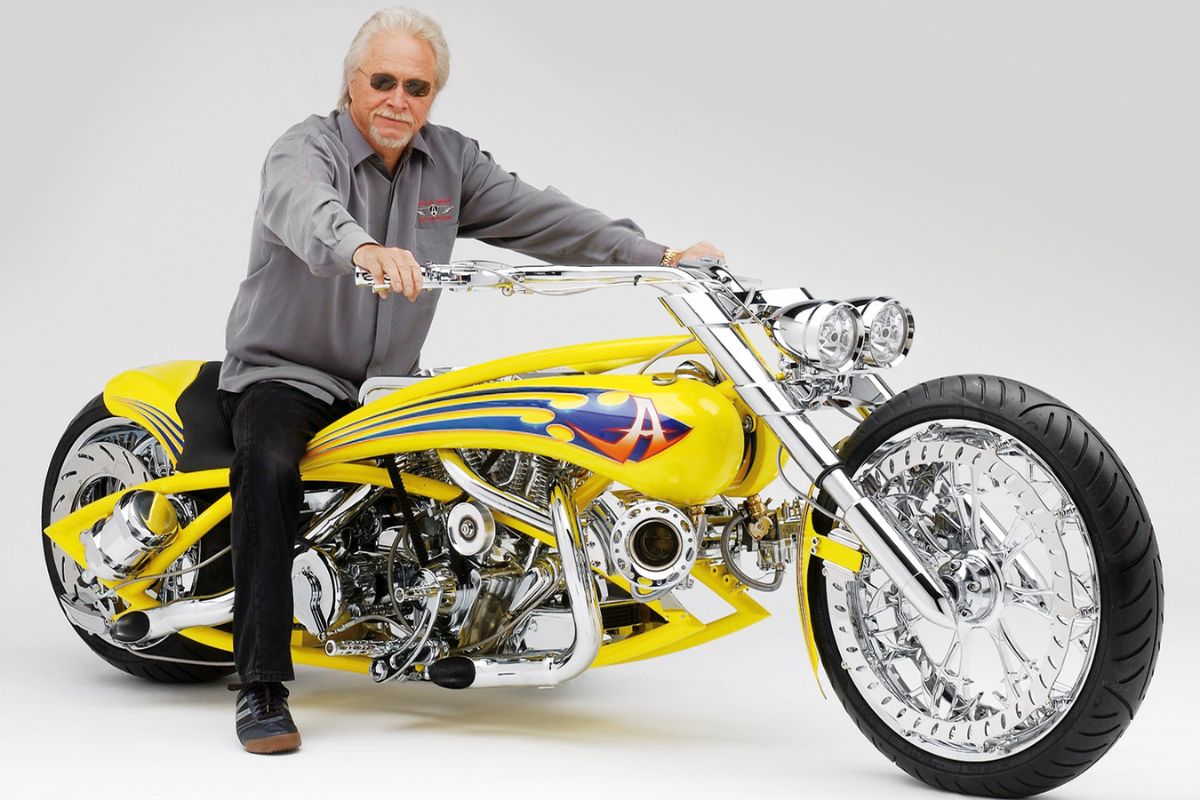
By 2026, the Ness name has become synonymous with a specific design language characterized by "flow." In the world of custom choppers, flow refers to the visual continuity from the front tire to the rear fender. While many builders of the 1970s were focused on "chopping" (cutting and welding existing frames), Ness moved toward creation. He began fabricating his own frames, tanks, and fenders to ensure that no single component looked like an afterthought.
The transition from a small shop to a global empire was fueled by Arlen’s unique ability to blend the aesthetics of 1950s lead sleds with the aggressive stance of drag bikes. This cross-pollination of automotive and motorcycle cultures is what defines the "Ness Look." It isn't just about the chrome; it is about the geometry of the machine and how every line serves a purpose, either functional or visual.
The "Digger" Style: Defining a Movement
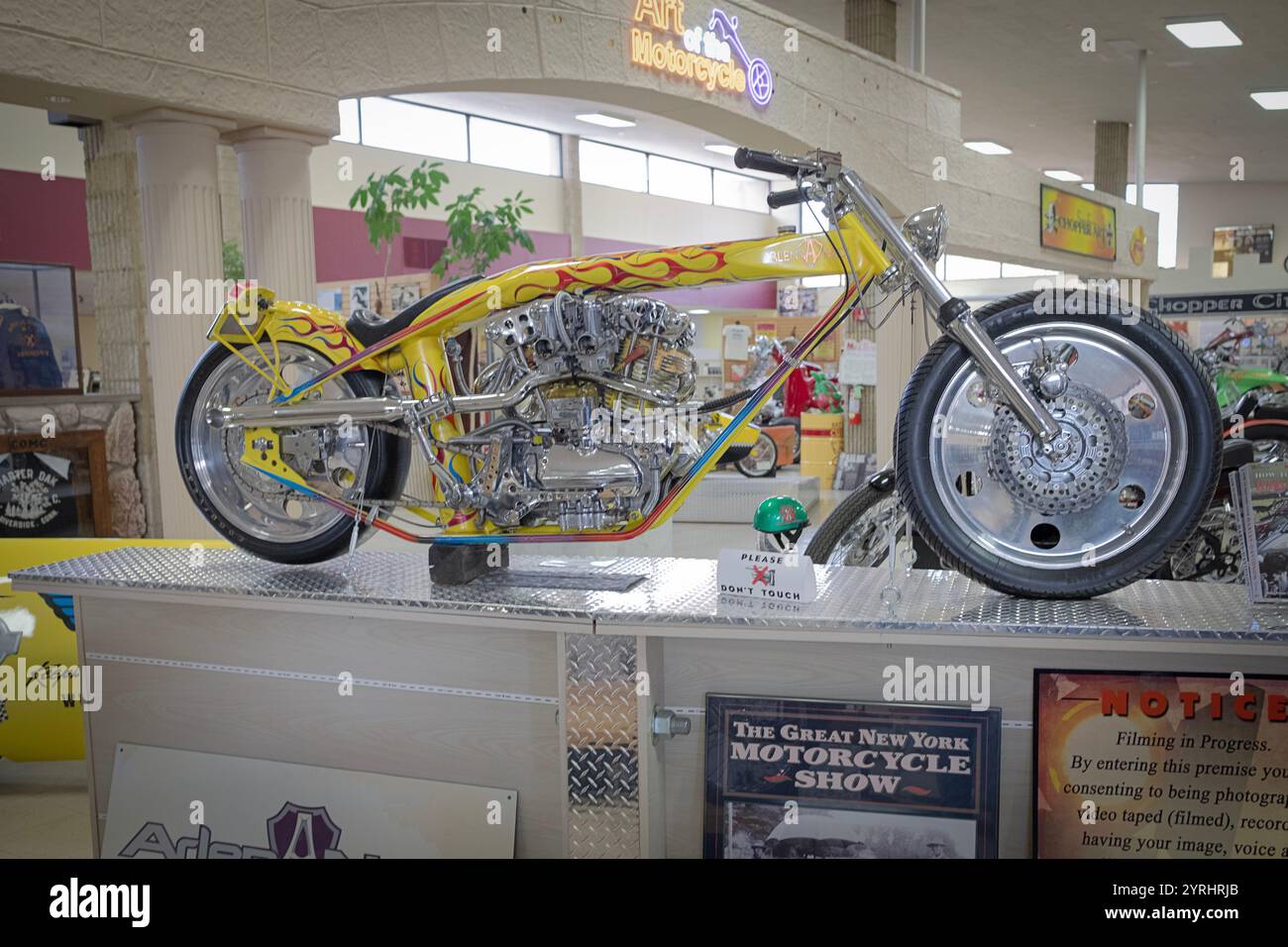
One cannot discuss Arlen Ness without analyzing the "Digger" style. This specific aesthetic dominated the custom scene in the 1970s and remains a cornerstone of the Ness portfolio. A Digger is a long, low motorcycle that draws inspiration from top-fuel dragsters. Unlike the high-neck "Frisco" style choppers of the same era, Diggers sat closer to the ground.
Technical Characteristics of the Digger
The Digger style utilized several specific engineering choices that separated it from standard choppers:
- Prism Tanks: These were angular, diamond-shaped fuel tanks that sat low on the frame's backbone.
- Sportster Powerplants: While many choppers used Big Twin engines, the Digger often employed the narrower Harley-Davidson Sportster engine to maintain a slim profile.
- Intricate Ironhead Work: The engines were often heavily engraved, polished, and chrome-plated, making the mechanical heart of the bike as much a piece of jewelry as a motor.
- Extended Rake and Low Trail: The front forks were stretched out (raked) significantly, but the frame height was kept minimal to give the impression of speed even when stationary.
The art here was found in the balance. Stretched bikes often look gangly or unstable, but Ness mastered the proportions so that the length of the bike complemented its height. He often used "Webbed" frames, where the junctions of the steel tubes were filled with metal and sanded smooth to create a molded, singular look.
Innovation Through Materials: The Billet Era
As the 1980s and 90s arrived, Arlen Ness moved the industry into what is now called the "Billet Era." This was a massive shift in the technical depth of custom bike building. Before this period, builders relied on cast parts or modified stock components. Ness, along with his son Cory Ness, began using CNC (Computer Numerical Control) machining to carve parts out of solid blocks of aluminum (billet).
This allowed for a level of detail that was previously impossible. Grips, footpegs, mirrors, and even entire wheels could now be designed with intricate patterns that matched the overall theme of the bike. This era saw the birth of bikes like "Smoothness" and "Top Banana," which looked more like futuristic prototypes than traditional motorcycles.
The use of billet aluminum also allowed for better performance. It was lighter than steel and more durable than cast alloys. This period marked the professionalization of the custom industry. Arlen Ness Enterprises began mass-producing these parts, allowing garage builders to incorporate a piece of the Ness aesthetic into their own projects. By 2026, these vintage billet parts have become highly sought-after collector's items, representing a specific high-tech moment in motorcycle history.
Masterpieces of Design: Case Studies in Ness Artistry
To truly appreciate the art of Arlen Ness custom chopper design, one must examine the specific builds that broke the mold. These bikes are currently housed in the Arlen Ness Museum in Dublin, California, and they serve as blueprints for the custom industry.
The Untouchable
As mentioned, this 1947 Knucklehead was the bike that started it all. It features a heavy "lead sled" influence with deep, wrap-around fenders and a paint job that utilized "cobwebbing"—a technique where paint is sprayed in a way that creates a web-like texture. This bike proved that a motorcycle could be as sophisticated as a custom Cadillac.
Ness-Stalgia (The '57 Chevy Bike)
Perhaps the most famous example of Ness's ability to blend worlds is the "Ness-Stalgia." Built to evoke the lines of a 1957 Chevrolet Bel Air, this bike features iconic "fins" and a headlight nacelle that screams mid-century Americana. The technical challenge was making these automotive cues work on a two-wheeled chassis without looking kitschy. The result was a seamless integration of bodywork that remains one of the most photographed bikes in history.
Smoothness
Built in the 1990s, "Smoothness" represented the peak of the molded-bodywork trend. The entire bike appears to be one continuous piece of metal. The transition from the fuel tank to the seat and down into the rear fender is entirely fluid. This required hundreds of hours of hand-forming metal and expert-level fiberglass work to ensure that no seams were visible to the eye.
Technical Specifications and Design Comparison
The following table compares the three primary design eras of Arlen Ness bikes, highlighting the technical shifts in frame construction, engine choice, and aesthetic focus.
| Feature | The Digger Era (1970s) | The Billet Era (1990s) | The Modern Bagger Era (2020s-2026) |
|---|---|---|---|
| Frame Type | Rigid, "Webbed" Steel Tube | Molded, Hidden-Shock Softail | Modified Touring (FLH) Platforms |
| Primary Engine | Harley Sportster / Ironhead | S&S Cycle V-Twin / Evo Style | Milwaukee-Eight / Indian Thunderstroke |
| Wheels | Narrow Spokes / Invader Wheels | Large Diameter Billet Aluminum | 26" to 30" Front "Big Wheels" |
| Paint Style | Flakes, Candies, Cobwebbing | Solid Monochromatic / Deep Clear | 3D Graphics and Carbon Fiber Accents |
| Key Aesthetic | Low, Lean, Drag-Inspired | Fluidity and Integrated Bodywork | Aggressive Stance and High Performance |
The Role of Paint and Finish in Ness Designs
In the art of custom choppers, the paint is the "skin" that brings the skeleton to life. Arlen Ness was, first and foremost, a painter. His early work with candies, pearls, and metal flakes set a standard for the industry. A Ness paint job is characterized by its depth. It isn't uncommon for a Ness bike to have 15 to 20 layers of clear coat over the base graphics.
By 2026, the techniques Arlen pioneered have evolved into high-tech coatings, but the core philosophy remains: the paint must accentuate the lines of the frame. If a frame has a beautiful curve, the pinstriping or "fades" in the paint should lead the eye along that curve. Ness often used "ghost graphics"—subtle designs that are only visible in direct sunlight—to add a layer of mystery to the machine.
Furthermore, the "Ness Look" often incorporates a heavy contrast between polished chrome and dark, rich paint. This creates a visual "pop" that makes the mechanical components stand out against the bodywork. The attention to detail extends to the smallest bolts, which are often chrome-plated or replaced with decorative hardware to ensure no "dead spots" in the design.
Engineering the Ride: Form Meets Function
A common critique of custom choppers is that they are "trailer queens"—bikes designed to be looked at but not ridden. Arlen Ness fought this perception by ensuring his bikes were mechanically sound. He frequently used S&S Cycle engines, known for their reliability and high horsepower, to ensure his creations could handle the road.
The geometry of a Ness bike, while radical, is carefully calculated. The "rake and trail" (the angle of the front forks and the distance of the tire's contact patch from the steering axis) are engineered to prevent high-speed wobbles, a common issue in poorly built choppers. Even the most extreme "Big Wheel" baggers produced by the Ness shop in 2026 utilize specialized triple trees (the component that holds the forks) to maintain proper handling characteristics.
This technical foresight is what allowed Arlen Ness to move from a custom builder to a manufacturer. When you buy a Ness part or a Ness-designed bike, you are buying into a legacy of engineering that understands how a motorcycle moves through a corner, not just how it looks in a photograph.
The Legacy of Cory and Zach Ness
The art of Arlen Ness custom chopper design continues through his son, Cory Ness, and his grandson, Zach Ness. Each generation has added its own flair to the family legacy. Cory is often credited with refining the "Pro-Street" look—bikes that are wider, more muscular, and focused on high-performance components. Zach has brought a younger, more "urban" aesthetic to the brand, incorporating elements of cafe racers and trackers into the custom chopper world.
In 2026, Arlen Ness Enterprises remains at the forefront of the industry by adapting to new platforms. While the company still honors the classic chopper, they have become leaders in the "Performance Bagger" movement. This involves taking heavy touring bikes from Harley-Davidson and Indian Motorcycle and stripping them down, adding high-end suspension, carbon fiber parts, and massive power upgrades. It is a new form of the "art of custom," focusing on speed and agility as much as visual style.
Frequently Asked Questions
What is the most famous Arlen Ness bike?
The "Untouchable" is widely considered his most famous and historically significant build. It established his reputation in the 1970s and showcased the "lead sled" influence that would define his career. However, the "Ness-Stalgia" (the '57 Chevy bike) is arguably the most recognizable to the general public.
How much does an original Arlen Ness custom bike cost in 2026?
Original bikes built by Arlen himself are considered blue-chip collectibles. Depending on the provenance and the specific build, prices can range from $100,000 to well over $500,000 at high-end auctions. Modern customs produced by the Ness shop for clients typically start at $50,000 and go up based on complexity.
Can I still buy Arlen Ness parts for my own bike?
Yes. Arlen Ness Enterprises is one of the largest aftermarket motorcycle parts manufacturers in the world. They produce everything from air cleaners and exhaust systems to full body kits for Harley-Davidson, Indian, and Victory motorcycles. Their parts are designed to be "bolt-on," allowing riders to achieve a custom look without permanent modifications to their frames.
Where is the Arlen Ness Museum located?
The museum is located within the Arlen Ness Enterprises headquarters in Dublin, California. It houses over 40 of Arlen’s most famous builds, along with various awards, memorabilia, and historical photographs documenting the evolution of the custom chopper industry.
What defined the "Ness Look" compared to other builders like Jesse James?
While builders like Jesse James focused on a "West Coast" aesthetic that was raw, industrial, and often featured exposed welds and matte finishes, the "Ness Look" is about elegance, polish, and seamless integration. Ness bikes are generally more colorful, more heavily chromed, and possess a "show bike" finish that looks like a factory-perfect prototype.
Final Recommendation
For those looking to explore the art of custom chopper design, the best next step is to study the concept of "visual flow." Whether you are building your own bike or purchasing custom parts, look for components that complement the existing lines of your motorcycle rather than fighting them.
If you find yourself in Northern California, a visit to the Arlen Ness Museum is essential. Seeing these machines in person allows you to appreciate the depth of the paint and the complexity of the hand-formed metal in a way that photographs cannot capture. For the practical builder, starting with a signature Ness part—such as the "Big Sucker" air cleaner or "Deep Cut" floorboards—is an accessible way to bring a piece of this design history to your own garage in 2026.