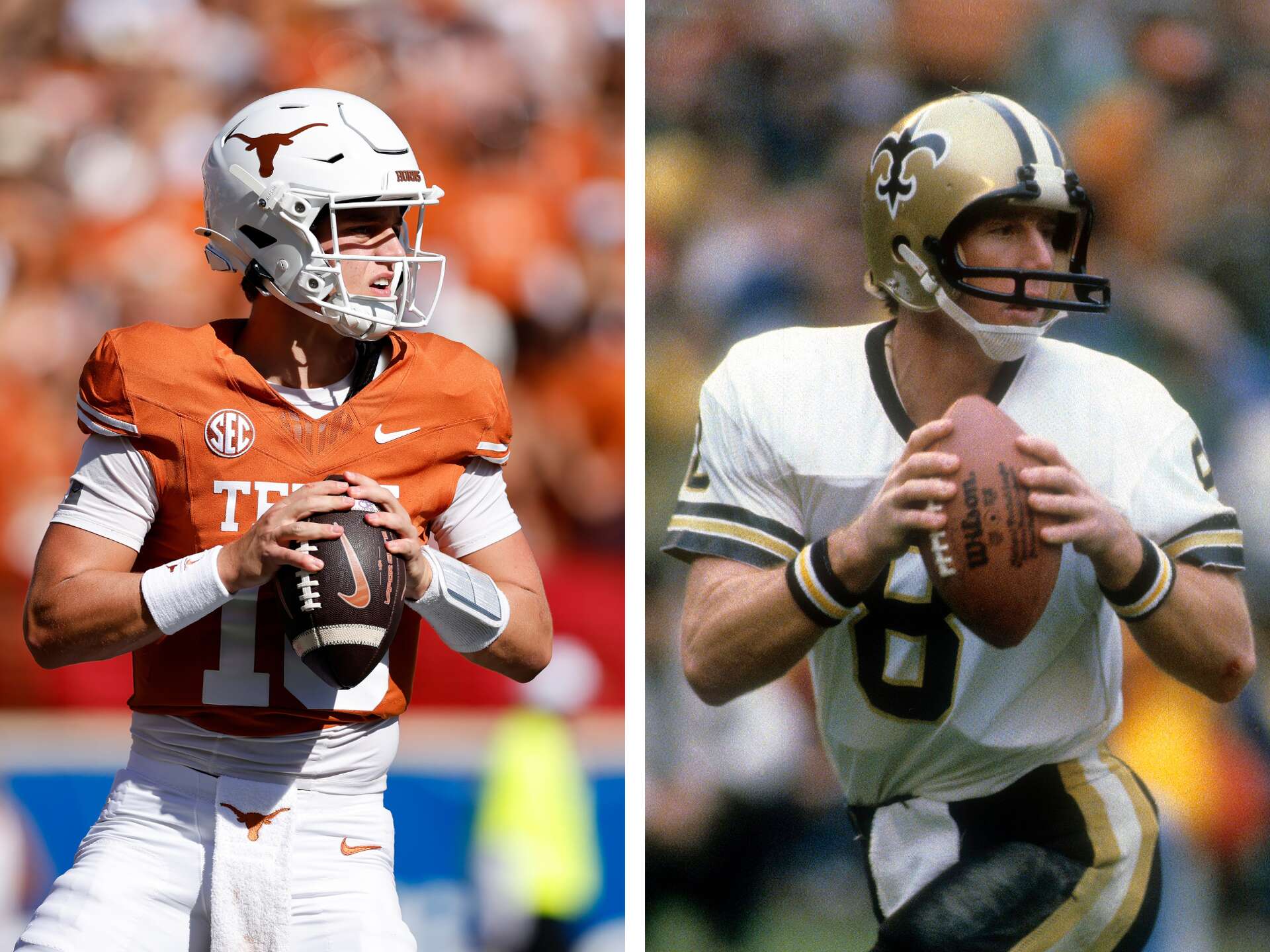
Archie Manning’s Texas quarterback legacy is defined by the high-profile arrival and development of his grandson, Arch Manning, at the University of Texas. By 2026, this legacy represents a successful fusion of the Manning family’s classic pocket-passing fundamentals with modern athletic versatility, revitalizing the Longhorns' standing in the SEC.
The Manning name has long been synonymous with quarterback excellence, rooted in the career of patriarch Archie Manning at Ole Miss and in the NFL. However, the "Texas chapter" of this story was written by the third generation. When Arch Manning committed to the University of Texas, he did more than just choose a school; he brought a multi-generational blueprint for quarterback play to Austin. As of 2026, we can clearly analyze how the "Archie Manning legacy" transitioned from Mississippi and the NFL into the heart of Texas football, altering the trajectory of the program and the standards for the position.
The Patriarchal Influence: From Archie to Arch
To understand the legacy at Texas, one must first understand the foundation laid by Archie Manning. At Ole Miss, Archie was a dual-threat pioneer long before the term became a standard scouting report entry. His ability to move outside the pocket and create plays under pressure became the stuff of legend in the SEC. This "scrambler's DNA" skipped a generation with Peyton and Eli Manning, who were traditional, elite-level pocket passers.
However, the legacy revealed at Texas shows that the youngest Manning, Arch, has reclaimed the mobility of his grandfather. Scouting reports and performance data from the 2024 and 2025 seasons highlight a quarterback who possesses the cerebral processing power of his uncles but the escapability of Archie Sr. This blend of traits is what experts refer to when discussing the "revealed" legacy: it is a return to the athletic roots of the family, refined by decades of high-level NFL IQ.
The patriarch’s role in the Texas legacy was not just genetic. Archie Manning’s involvement in the Manning Passing Academy and his quiet guidance during the recruitment process ensured that the Texas coaching staff, led by Steve Sarkisian, understood the specific developmental needs of a Manning quarterback. The legacy is as much about professional preparation as it is about on-field statistics.
The Recruitment and the "Texas Fit"
The decision for a Manning to attend the University of Texas was a pivotal moment in college football history. For decades, the Mannings were an "SEC family" with deep ties to Ole Miss, Tennessee, and LSU. The legacy at Texas began with a calculated choice to join a program transitioning into the SEC.
Archie Manning and the family prioritized two factors: coaching stability and an NFL-caliber offensive system. Steve Sarkisian’s reputation as a "quarterback whisperer" was the primary draw. The Manning legacy at Texas is inextricably linked to Sarkisian’s offensive architecture, which emphasizes:
- Pro-style progressions: Requiring the quarterback to scan the entire field rather than relying on "half-field" reads.
- Vertical stretch concepts: Utilizing the arm strength that has been a hallmark of the Manning family for fifty years.
- RPO Integration: Adapting to the modern game by using Arch’s mobility—a trait Archie Sr. championed in the late 1960s.
By choosing Texas over traditional family strongholds, the Mannings signaled that their legacy was evolving. They weren't just looking for a school with a history; they were looking for a program that could handle the immense pressure of the Manning brand while providing the technical tools to succeed at the next level.
Developing the Manning Standard in Austin
A major component of the legacy revealed at Texas is the concept of the "slow burn." In an era of the transfer portal and immediate gratification, the Mannings chose a path of patience. Arch Manning’s decision to remain at Texas behind Quinn Ewers during the early stages of his career became a masterclass in developmental strategy.
This patience is a direct reflection of Archie Manning’s philosophy on quarterback maturation. The "legacy" at Texas isn't just about winning games; it's about the refusal to skip steps. By 2026, the results of this approach are evident. Arch Manning entered the starting lineup with a level of footwork and defensive recognition usually reserved for fifth-year seniors or NFL rookies.
Technical Milestones of the Texas Legacy
- Pocket Presence: Maintaining a calm "climb" in the pocket under pressure, a trait shared by Archie, Peyton, and Eli.
- Ball Security: A rigorous focus on high-carriage ball placement to minimize turnovers, a technical detail emphasized by the family.
- Leadership Dynamics: Managing a locker room filled with high-level recruits without allowing the "Manning" fame to create friction.
Comparative Legacy: The Manning Generations
To fully grasp the scope of the legacy at Texas, it is helpful to compare the collegiate foundations of the Manning quarterbacks. While each had a unique path, the Texas era represents the most modern iteration of the family's football philosophy.
| Feature | Archie Manning (Ole Miss) | Peyton Manning (Tennessee) | Eli Manning (Ole Miss) | Arch Manning (Texas) |
|---|---|---|---|---|
| Primary Era | 1968–1970 | 1994–1997 | 2000–2003 | 2023–Present (as of 2026) |
| Play Style | Scrambler / Playmaker | Elite Pocket Passer | Tactical Pocket Passer | Modern Dual-Threat |
| Conference | SEC (Legacy) | SEC | SEC | SEC (Transitioned) |
| Recruitment Focus | Local / Heritage | National | Heritage / Fit | Systematic / Coaching |
| Key Attribute | Creativity | Preparation | Mental Toughness | Total Package (Speed/IQ) |
The table illustrates that the Texas legacy is a culmination of the previous three. Arch Manning at Texas represents the "Total Package," combining the physical tools of the modern game with the traditional Manning preparation.
The Impact on Texas Football and the SEC
The "revealed" legacy at Texas has had a profound impact on the program's culture. Before the Manning arrival, Texas often struggled with the weight of expectations. The Manning family brought a "business-like" approach to the quarterback room that permeated the entire roster.
In the SEC, the Manning name carries a specific type of gravity. As Texas integrated into the conference, having a Manning under center provided an immediate sense of legitimacy. It wasn't just a Texas brand versus an SEC brand; it was the Manning brand returning to its roots in a new jersey.
The legacy also manifested in recruiting. High-level wide receivers and offensive linemen were drawn to Austin specifically to play with a quarterback who had the "Manning seal of approval." This "gravity effect" helped Steve Sarkisian build a roster depth that hadn't been seen in Austin since the mid-2000s.
Technical Analysis: The "Archie" Mobility in the Modern Era
One of the most discussed aspects of the legacy in 2026 is the technical revival of Archie Manning’s mobility. During his time at Ole Miss, Archie was known for his ability to make defenders miss in the open field. For years, the Manning name was associated with "statuesque" pocket passing.
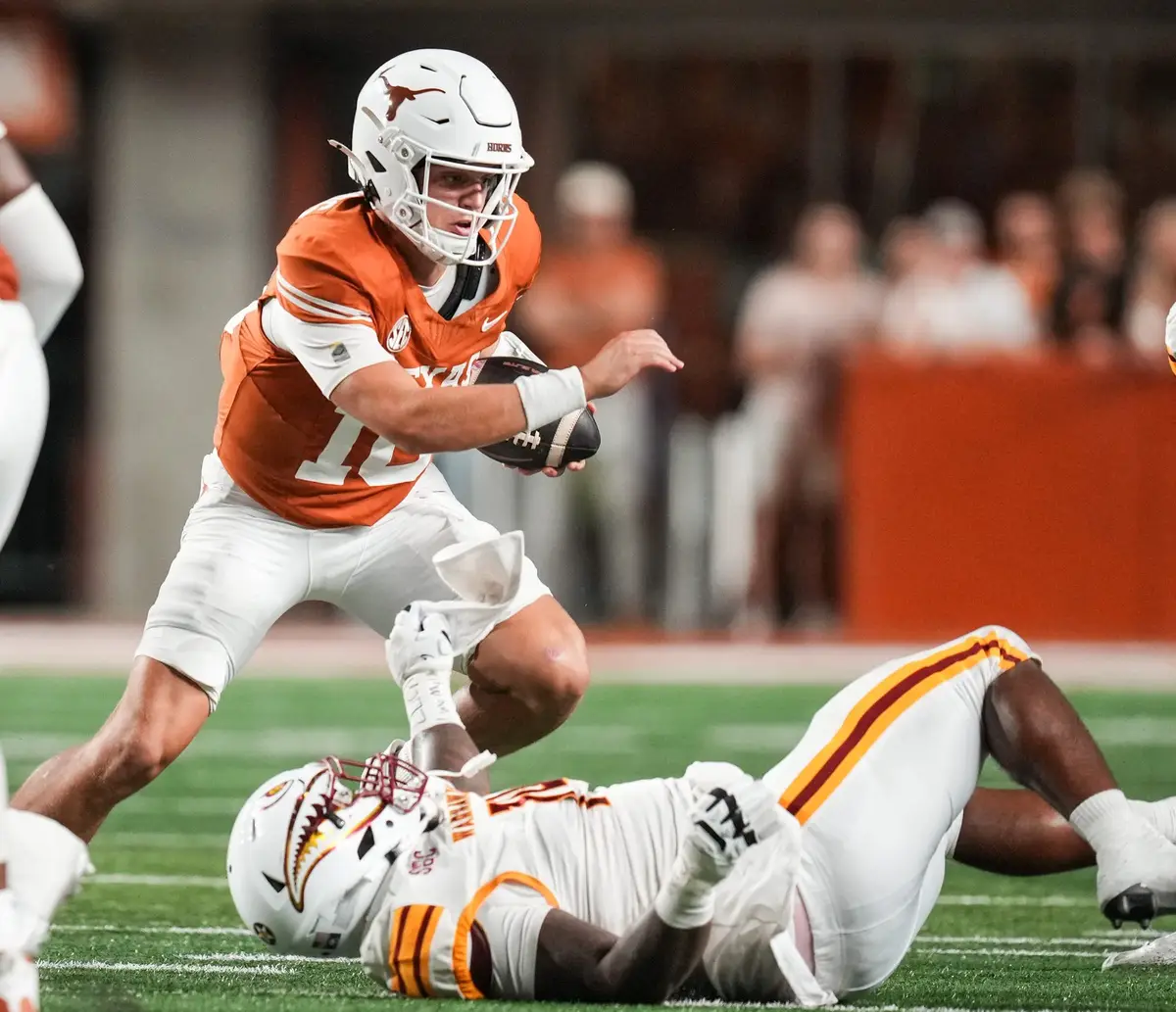
At Texas, Arch Manning has revealed a 4.6-second 40-yard dash speed that has forced defensive coordinators to change their game plans. This isn't just "scrambling for life" like Archie Sr. had to do; it is "calculated mobility."
- Off-Platform Throws: Arch’s ability to square his shoulders while moving left or right—a technical skill honed at the Manning Passing Academy.
- Designed QB Runs: Texas utilized Arch in zone-read schemes, something that would have been unthinkable for Peyton or Eli, but perfectly natural for the grandson of Archie.
- Second-Reaction Plays: The "reveal" of the Texas legacy is often found in the "broken" play where Arch uses his legs to extend the down, much like his grandfather did in the 1960s.
Challenges and Overcoming the "Name" Pressure
The legacy at Texas was not without its hurdles. The primary challenge was the astronomical expectation placed on a teenager carrying the most famous name in football. The "revealed" part of this legacy is how the family and the university insulated Arch from the "hype machine."
Archie Manning’s influence was key here. He famously advocated for a "quiet" recruitment and a focused collegiate experience. By limiting media access and focusing entirely on internal development, the legacy at Texas became one of substance over style. In 2026, when analysts look back at his early years, the defining characteristic is the lack of "drama" despite the immense potential for it.
The Future of the Legacy: Beyond 2026
As we look at the state of the Texas program in 2026, the Manning legacy is firmly established. It serves as a bridge between the tradition of the past and the technology of the future. The "Texas quarterback legacy" is now a standard of efficiency, where completion percentages are expected to be high, and turnovers are expected to be low.
For the University of Texas, the Manning era provided the stability needed to compete at the top of the SEC. For the Manning family, it proved that their "system" for producing elite quarterbacks remains valid in the 21st century. The legacy revealed is one of adaptation; the Mannings didn't just bring their old playbook to Austin—they evolved it.
Frequently Asked Questions
How does Arch Manning’s style compare to his grandfather Archie?
While Archie Manning was a playmaker by necessity due to the era's play styles and team structures, Arch Manning uses his mobility as a tactical weapon within a highly structured offense. Both share an innate ability to feel pressure and escape the pocket, but Arch’s game is more refined in terms of intermediate passing accuracy and pre-snap recognition.
Did Archie Manning influence the decision for Arch to attend Texas?
Archie Manning, along with Peyton and Eli, acted as a sounding board rather than a decision-maker. The family focused on finding a coach who could prepare Arch for the NFL. Steve Sarkisian’s history with NFL offenses and his "quarterback-centric" approach were the deciding factors that Archie Sr. reportedly valued most.
How has the Manning legacy affected Texas's SEC performance?
Since joining the SEC, the presence of a Manning at quarterback has given Texas an immediate competitive edge in both "brand" and "execution." It has allowed Texas to match the blue-blood programs of the SEC in terms of talent acquisition and tactical sophistication.
What is the most "revealed" aspect of the Manning legacy at Texas in 2026?
The most significant revelation is the successful integration of modern athleticism with the family’s traditional "cerebral" approach. For years, critics wondered if a Manning could thrive in an era of mobile, dual-threat quarterbacks. The Texas legacy proved that the family could evolve without losing its core identity.
Does the Manning legacy at Texas include any national championships?
By 2026, the legacy is measured by consistent College Football Playoff appearances and a return to national relevance. While specific trophy counts vary by season, the "legacy" is defined by the program's elevated floor and its status as a perennial contender for the national title.
Practical Recommendations for Following the Manning Legacy
To truly appreciate the depth of the Manning legacy at Texas, fans and analysts should look beyond the highlight reels. Observe the pre-snap adjustments and the communication between the quarterback and the offensive line. These are the "hidden" parts of the Archie Manning legacy—the meticulous preparation that has been passed down through three generations.
For those tracking the NFL transition, pay attention to how Arch Manning handles complex defensive shells. The hallmark of a Manning quarterback, as revealed at Texas, is the ability to make the game look "slow" by knowing where the ball should go before it is even snapped. This is the ultimate gift of the Archie Manning legacy to the University of Texas.