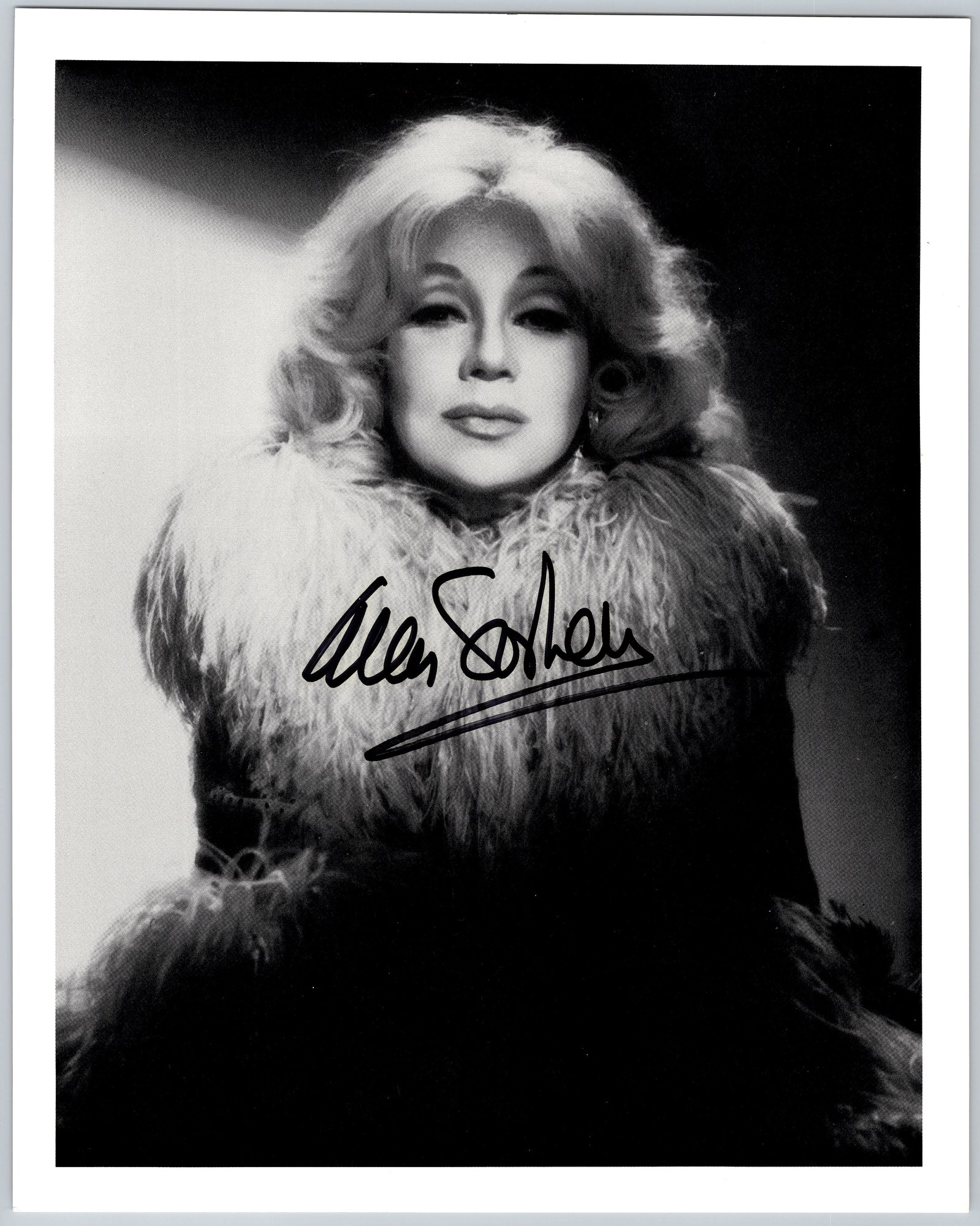
Legendary Hollywood actress Ann Sothern died on March 15, 2001, at the age of 91 from heart failure at her home in Ketchum, Idaho. Her extraordinary career spanned six decades, encompassing Broadway musicals, 10 popular MGM "Maisie" feature films, pioneering 1950s television sitcoms, and a late-career Oscar nomination for The Whales of August.
The Circumstances of Ann Sothern's Death in 2001
Ann Sothern passed away peacefully on Thursday, March 15, 2001, at her residence in Ketchum, Idaho, just one week shy of her 92nd birthday. Local authorities and public representatives confirmed that her death was due to natural causes stemming from heart failure.
Having retired from screen acting in the late 1980s, Sothern spent her final years enjoying the tranquil surroundings of Idaho’s Sun Valley region. Her passing marked the loss of one of the few remaining performers who had transitioned seamlessly through every major era of modern American entertainment: from silent-era stage work and the dawn of sound pictures to the golden age of studio film, network television sitcoms, and modern independent cinema.
Sothern was survived by her daughter, actress Tisha Sterling, and her granddaughter, Heidi Bates Hogan. Following her death, private services were held in Idaho, where she was buried at Ketchum Cemetery, leaving behind a body of work that continues to be studied and celebrated by film historians and television scholars.
Health Challenges and Later Years in Idaho
While Ann Sothern maintained a vibrant, energetic persona on screen, her later years were significantly shaped by severe physical health setbacks that impacted her personal life and career trajectory.
During the late 1940s and 1950s, Sothern contracted hepatitis, which caused severe health complications and forced her to pause her studio contracts. Though she recovered sufficiently to conquer television in the mid-1950s, a far more devastating physical blow occurred in 1974.
While performing in a stage production of Everybody Loves Opal in Jacksonville, Florida, a piece of heavy stage scenery—a wooden tree prop—collapsed and fell directly onto her back. The accident left her with severe spinal injuries, fractured vertebrae, and permanent nerve damage.
1974 Stage Accident Impact:
- Severe spinal column compression
- Chronic, debilitating pain
- Restricted mobility (requiring canes/wheelchairs)
- Forced semi-retirement from screen acting
The physical trauma required prolonged hospitalizations, multiple surgeries, and years of physical therapy. It also led to forced inactivity, significant weight gain, and permanent mobility restrictions. For the remainder of her life, Sothern managed severe chronic pain. Despite these agonizing physical limits, she demonstrated remarkable resilience, returning to the screen for select character roles when her health permitted.
In the mid-1980s, seeking relief from the frantic pace of Los Angeles, Sothern permanently relocated to Ketchum, Idaho. The mountain climate and close-knit community provided her with a quiet retreat where she could paint, write, and focus on her health during her twilight years.
Early Life and the Transformation into Ann Sothern
Ann Sothern was born Harriette Arlene Lake on March 22, 1909, in Valley City, North Dakota. Her family was steeped in music and performance: her mother, Annette Yde-Lake, was an accomplished concert singer and vocal coach, while her father, Walter Lake, worked in business.
After her parents separated, Harriette spent much of her youth in Minneapolis, Minnesota. Raised primarily by her mother, she developed a high-caliber singing voice and became an accomplished pianist, winning statewide high school music competitions. Her musical training laid the groundwork for her entry into show business.
From Harriette Lake to Ann Sothern
In the late 1920s, Harriette moved to New York City to pursue a stage career. She quickly landed chorus work and featured roles in Broadway musicals, including America's Sweetheart (1931) and Everybody's Welcome (1931). Her stage presence caught the eye of studio talent scouts, leading to early film contracts with Warner Bros. and Columbia Pictures under her birth name.
However, Columbia executive Harry Cohn insisted that "Harriette Lake" sounded too conventional for a leading lady. In 1933, she adopted the stage name Ann Sothern:
- "Ann" was chosen to honor her mother, Annette.
- "Sothern" was selected in tribute to E. H. Sothern, one of the most celebrated American Shakespearean stage actors of the late 19th and early 20th centuries.
Rebranded with short blonde hair and sharp comedic timing, Sothern immediately established a distinct screen persona: quick-witted, self-reliant, sophisticated, yet warm-hearted.
Hollywood Stardom and the "Maisie" Legacy
Ann Sothern’s career achieved major commercial success when she signed with Metro-Goldwyn-Mayer (MGM) in the late 1930s. At MGM, studio executives were looking for a starring vehicle to replace a project originally planned for Jean Harlow prior to Harlow’s tragic death in 1937. That project was Maisie (1939).
Sothern was cast as Maisie Ravier (born Mary Anastasia O'Connor), a fast-talking, street-smart, soft-hearted Brooklyn showgirl who continuously found herself embroiled in comic misadventures across various settings, from ranches to luxury liners.
Key Elements of the "Maisie" Formula:
- Sharp, fast-paced comedic dialogue
- Working-class resourcefulness and moral integrity
- Romantic subplots featuring leading studio actors
- Consistently high box-office returns during WWII
The film was a surprise box-office hit, prompting MGM to launch a full-fledged movie franchise. Between 1939 and 1947, Sothern starred as Maisie in ten feature films, establishing her as one of MGM's most reliable and profitable stars.
The 10 "Maisie" Feature Films
- Maisie (1939)
- Congo Maisie (1940)
- Gold Rush Maisie (1940)
- Ringside Maisie (1941)
- Maisie Was a Lady (1941)
- Maisie Gets Her Man (1942)
- Swing Shift Maisie (1943)
- Maisie Goes to Reno (1944)
- Up Goes Maisie (1946)
- Undercover Maisie (1947)
The popularity of the films was so immense that Sothern also voiced the character in a hit radio series, The Adventures of Maisie, which aired from 1945 to 1953 across the CBS and Mutual networks.
Dramatic and Musical Versatility
While the Maisie series made Sothern a household name, it sometimes overshadowed her dramatic range. She broke out of the B-picture mold with critically acclaimed performances in major prestige productions:
- ** A Letter to Three Wives (1949):** Directed by Joseph L. Mankiewicz, this Oscar-winning drama featured Sothern as Rita Phipps, a radio soap opera writer struggling to balance her career ambitions with her marriage to an intellectual schoolteacher (played by Kirk Douglas). Sothern’s layered, nuanced performance earned widespread critical praise.
- ** Cry 'Havoc' (1943):** A harrowing World War II drama depicting red cross nurses under siege in Bataan, highlighting Sothern’s dramatic depth alongside Margaret Sullavan and Joan Blondell.
- ** Words and Music (1948):** An all-star MGM musical revue featuring Sothern singing and dancing alongside classic studio stars.
Television Pioneer: Private Secretary and The Ann Sothern Show
As studio feature contracts shifted during the 1950s, Sothern recognized the power of the emerging medium of television earlier than many of her film contemporaries. Rather than viewing television as a step down from movie stardom, she leveraged her comedic mastery to become one of TV's earliest female powerhouses.
Private Secretary (1953–1957)
In 1953, Sothern starred as Susie McNamara in the CBS sitcom Private Secretary. Playing an efficient, well-meaning executive secretary at a New York theatrical agency, Sothern delivered five seasons of sharp physical comedy and verbal banter.
Private Secretary was a major ratings hit. Sothern’s performance earned her four Primetime Emmy Award nominations for Best Actress in a Continuing Series, establishing her as a central figure in early television history alongside stars like Lucille Ball and Gracie Allen.
The Ann Sothern Show (1958–1961)
Following a dispute with producer Jack Chertok over profit participation in Private Secretary, Sothern launched a new vehicle tailored specifically to her talents: The Ann Sothern Show.
In this series, Sothern played Katy O'Connor, the capable assistant manager of the fictional Bartley House Hotel in New York City. The show brought back several familiar faces, including her friend Lucille Ball, who made guest appearances. Sothern also exercised significant behind-the-scenes influence over casting, script development, and production choices—a rare level of control for an actress in late-1950s network television.
Guest Roles and Voice Acting
Throughout the 1960s, Sothern remained a constant presence on small screens:
- ** My Mother the Car (1965–1966):** Sothern provided the uncredited voice of the titular character—a reincarnated 1928 Porter automobile—opposite Jerry Van Dyke.
- ** The Lucy Show:** Sothern made several high-profile recurring guest appearances as Countess Framboise, continuing a lifelong friendship and comedic partnership with Lucille Ball.
The Oscar-Nominated Comeback: The Whales of August
Following her devastating spinal injury in 1974, Sothern took on few acting roles. However, in 1987, director Lindsay Anderson offered her a role that provided the ultimate artistic capstone to her long career: The Whales of August.
Filmed on location in Cliff Island, Maine, the movie explored the quiet dynamics between aging sisters spending a summer in their family cottage. The film featured an extraordinary ensemble cast of cinema legends:
- Lillian Gish as Sarah Webber
- Bette Davis as Libby Strong
- Ann Sothern as Tisha Doughty (the energetic, vibrant neighbor)
- Vincent Price as Mr. Maranov
Sothern’s portrayal of the cheerful, bright-eyed Tisha offered a delicate contrast to the somber tension between the characters played by Davis and Gish.
Despite undergoing filming while dealing with significant mobility limits and pain, Sothern delivered a standout performance. At age 78, she received her first and only Academy Award nomination for Best Supporting Actress. The nomination stood as a poignant tribute from the Academy of Motion Picture Arts and Sciences, recognizing not only her performance in the film but her enduring legacy across six decades of American entertainment.
Career Summary & Key Historical Milestones
| Year Period | Title / Milestone | Format / Medium | Significance / Key Notes |
|---|---|---|---|
| 1927–1933 | Broadway Musicals (America's Sweetheart) | Stage / Theater | Early career performing under her birth name, Harriette Lake. |
| 1933 | Adoption of Stage Name "Ann Sothern" | Film / Rebranding | Adopted the name while signing with Columbia Pictures. |
| 1939–1947 | The Maisie Film Series (10 Films) | MGM Motion Pictures | Starred as showgirl Maisie Ravier; established her as an MGM marquee star. |
| 1945–1953 | The Adventures of Maisie | Network Radio | Extended her famous screen character to weekly national radio broadcasts. |
| 1949 | A Letter to Three Wives | Motion Picture | Critically praised dramatic turn as radio writer Rita Phipps. |
| 1953–1957 | Private Secretary | Television (CBS) | Starred as Susie McNamara; earned 4 Primetime Emmy nominations. |
| 1958–1961 | The Ann Sothern Show | Television (CBS) | Starred as Katy O'Connor; exerted executive control over production. |
| 1965–1966 | My Mother the Car | Television (NBC) | Provided the iconic voice of the reincarnated 1928 Porter. |
| 1974 | Stage Accident (Everybody Loves Opal) | Theater Production | Suffered a severe spinal fracture that impaired her long-term mobility. |
| 1987 | The Whales of August | Feature Film | Final film role; nominated for Academy Award for Best Supporting Actress. |
| March 15, 2001 | Passing at Age 91 | Historical Event | Died of heart failure at her home in Ketchum, Idaho. |
Personal Life, Marriages, and Family
Ann Sothern’s personal life off-screen often attracted media interest, though she managed her public profile with characteristic dignity.
Marriages
- Roger Pryor (m. 1936–1943): Sothern married bandleader and actor Roger Pryor in 1936. The couple were popular figures in Hollywood social circles, but the demands of their respective touring and filming schedules put a strain on the marriage, leading to divorce in 1943.
- Robert Sterling (m. 1943–1949): Shortly after her divorce from Pryor, Sothern married actor Robert Sterling. Sterling served as a pilot in the U.S. Army Air Forces during World War II, during which time Sothern continued her film career and radio broadcasts. The couple divorced in 1949.
Family and Descendants
From her marriage to Robert Sterling, Sothern had one daughter, Patricia Ann Sterling (born 1944), who pursued an acting career under the name Tisha Sterling.
Tisha Sterling had a notable screen career of her own, appearing in numerous television series throughout the 1960s, 1970s, and 1980s. In a poignant cinematic casting choice, Tisha Sterling played the younger version of her mother’s character, Tisha Doughty, in flashback scenes for The Whales of August (1987).
Through Tisha, Sothern had one granddaughter, Heidi Bates Hogan. In her later years in Ketchum, Sothern enjoyed a close relationship with her daughter and granddaughter, who visited her regularly at her Idaho mountain retreat.
Frequently Asked Questions
When and where did Ann Sothern die?
Ann Sothern died on March 15, 2001, at her home in Ketchum, Idaho. She was 91 years old at the time of her passing.
What was the official cause of Ann Sothern's death?
Sothern died from heart failure due to natural causes associated with advanced age. Her passing was peaceful at her residence in Sun Valley, Idaho.
Did Ann Sothern ever win an Academy Award?
While Ann Sothern never won a competitive Oscar, she received an Academy Award nomination for Best Supporting Actress for her final film role in The Whales of August (1987).
What was Ann Sothern's real name?
She was born Harriette Arlene Lake in Valley City, North Dakota. She adopted the stage name Ann Sothern in 1933 while under contract with Columbia Pictures.
What injury forced Ann Sothern to limit her acting career in later years?
In 1974, during a stage performance in Jacksonville, Florida, a heavy wooden tree prop collapsed and landed on Sothern's back. The accident resulted in fractured vertebrae, nerve damage, chronic pain, and permanent mobility restrictions, which curtailed her ability to take on full-time screen roles.
How many "Maisie" movies did Ann Sothern make?
Ann Sothern starred as Maisie Ravier in 10 feature films for Metro-Goldwyn-Mayer (MGM) between 1939 and 1947, alongside a long-running radio adaptation.
Legacy and Remembering Ann Sothern
Ann Sothern’s passing in 2001 marked the end of an era, but her legacy remains deeply woven into the fabric of American entertainment history. Two stars on the Hollywood Walk of Fame honor her contributions: one for Motion Pictures at 1612 Vine Street, and another for Television at 1634 Vine Street.
Film historians remember Sothern as a key comedic architect of early 20th-century cinema. Her portrayal of Maisie Ravier provided an empowering model of a working-class woman who maintained independence, humor, and moral clarity during the Great Depression and World War II. Later, her work in television established a blueprint for female-led sitcoms that influenced generations of creators.
For fans and scholars interested in discovering or revisiting her work, classic film channels like Turner Classic Movies (TCM) regularly broadcast her MGM pictures and dramatic turns such as A Letter to Three Wives. Her television legacy remains accessible through archival home media releases and television preservation archives. Exploring her filmography offers a look into the versatility, wit, and resilience of one of classic Hollywood's most durable talents.