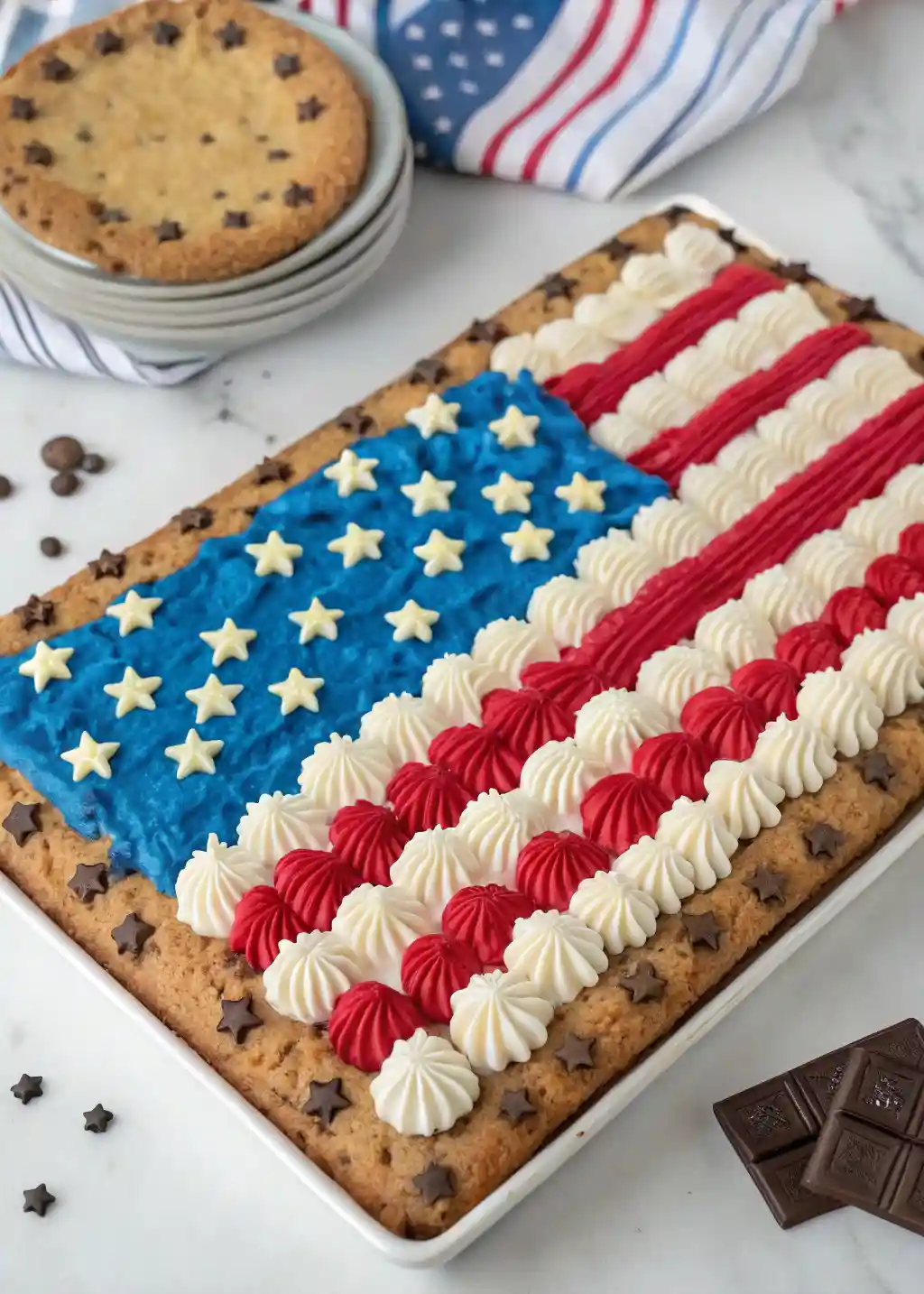
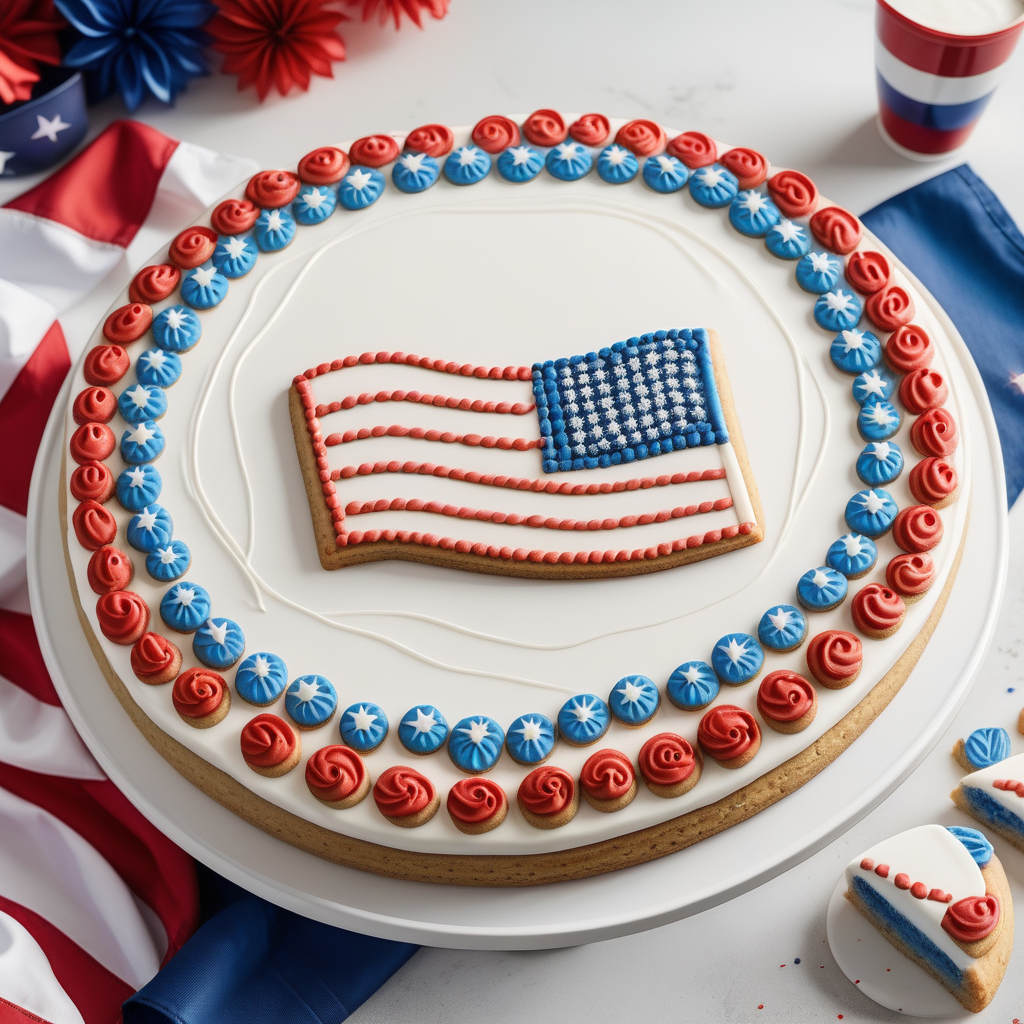
An American flag cookie cake is a large-format dessert featuring a dense, chewy chocolate chip cookie base decorated with vanilla frosting, blue-tinted stars, and red-tinted stripes. It is a staple for holidays like Independence Day and Memorial Day, offering a crowd-pleasing alternative to traditional cakes that is easier to transport and serve.
The Evolution and Appeal of the Cookie Cake in 2026
The cookie cake has transitioned from a 1980s mall-culture novelty into a sophisticated centerpiece for modern American celebrations. By 2026, the demand for "shared experiences" in dining has elevated the cookie cake to new heights. Unlike traditional layered sponges, the cookie cake offers a structural integrity that makes it ideal for outdoor gatherings, picnics, and high-traffic parties where delicate frostings might fail.
The "American Flag" variation is particularly iconic. It utilizes the natural rectangular shape of a sheet pan to mimic the dimensions of the U.S. national flag. This design is not only visually striking but also serves as a functional template for portioning. The stripes and stars provide natural "cut lines," making it simple for hosts to serve uniform pieces to a large group. Furthermore, the combination of a buttery, semi-sweet chocolate base with a slightly salty buttercream remains one of the most universally liked flavor profiles in contemporary baking.
The Foundation: Crafting the Superior Cookie Base
The success of an American flag cookie cake rests entirely on the texture of the base. It must be sturdy enough to be sliced and held by hand, yet soft enough to remain "gooey" in the center. Achieving this balance requires an understanding of the relationship between fats, sugars, and leavening agents.
Ingredient Selection and Chemistry
To achieve the professional-grade texture seen in high-end bakeries in 2026, the choice of ingredients is paramount:
- The Fat Ratio: Using a combination of salted butter and a small amount of vegetable shortening can improve the "shelf life" and softness of the cookie. However, for the best flavor, high-fat European-style butter (82% milkfat or higher) is recommended. The butter should be softened to approximately 65°F (18°C) to allow for proper aeration during the creaming process.
- The Sugar Balance: A higher ratio of brown sugar to granulated sugar is the secret to a chewy cookie. Brown sugar contains molasses, which is hygroscopic, meaning it attracts and holds onto moisture. This prevents the cookie from becoming crisp and brittle.
- The Role of Cornstarch: Adding a tablespoon of cornstarch to the dry ingredients interferes with gluten formation. This results in a "tender" crumb that mimics the bite of a traditional cake while maintaining the flavor of a cookie.
- Chocolate Inclusion: For a flag design, mini semi-sweet chocolate chips are preferable to full-sized chips or chunks. Mini chips distribute more evenly throughout the dough, ensuring that when you pipe the frosting "stripes" later, you aren't fighting against large lumps of chocolate on the surface.
Preparing the Dough
The creaming method is the standard for this recipe. You must beat the butter and sugars together for at least three to five minutes until the mixture is pale and fluffy. This process creates tiny air pockets that will expand in the oven. When adding the eggs, do so one at a time, ensuring each is fully incorporated before adding the next. This creates a stable emulsion.
Once the dry ingredients are added, the mixer should be turned to the lowest setting. Over-mixing at this stage leads to gluten development, which will turn your cookie cake into a tough, bread-like slab. Stop the mixer as soon as the last streaks of flour disappear.
Baking Science and Pan Selection
For an American flag design, a rectangular pan is essential. A standard 9x13-inch baking pan works for smaller gatherings, while a 12x17-inch half-sheet pan is the gold standard for parties of 20 or more.
Pan Preparation
Properly lining the pan is non-negotiable. Use parchment paper, leaving an overhang on the long sides (often called a "sling"). This allows you to lift the entire cooled cookie out of the pan before decorating, providing a clean surface for piping and making it easier to slice without scratching your bakeware.
Temperature and Timing
In 2026, most modern convection ovens provide very even heat, but for a cookie cake, a standard bake at 350°F (175°C) is usually best. The goal is "carry-over cooking." You should remove the cookie from the oven when the edges are golden brown and starting to pull away from the sides, but the center still looks slightly underbaked and soft. The residual heat from the pan will finish cooking the center while it cools, resulting in that coveted "soft-baked" texture.
| Feature | Standard Cookie Cake | Professional "Flag" Spec |
|---|---|---|
| Pan Shape | Round (Pizza Pan) | Rectangular (Sheet Pan) |
| Dough Depth | 0.5 inches | 0.75 to 1 inch |
| Bake Time | 18–22 minutes | 25–30 minutes |
| Cooling Time | 30 minutes | 2 hours (Minimum) |
| Frosting Style | Border only | Full surface coverage |
| Stability | Low (crumbles easily) | High (dense and sliceable) |
Mastering the Patriotic Frosting
The decoration is what transforms a standard chocolate chip cookie into an American flag cookie cake. This requires a stable frosting that won't melt in the summer heat, especially if the event is outdoors.
Buttercream vs. Cream Cheese Frosting
While cream cheese frosting is delicious, it is notoriously unstable at room temperature. For a flag cake, an American Buttercream is the preferred choice. It consists of butter, powdered sugar, heavy cream, and vanilla. To increase stability for 2026 outdoor events, you can replace 10% of the butter with high-quality vegetable shortening, which has a higher melting point.
Achieving Deep Pigmentation
The most common mistake in flag cakes is "pink" stripes or "baby blue" cantons. To achieve the deep, patriotic hues of the U.S. flag, you must use gel food coloring rather than liquid drops. Liquid coloring adds too much moisture and can cause the frosting to "weep" or break.
- Pro Tip: Make your red and blue frosting 24 hours in advance. The pigments in gel coloring deepen and intensify as they sit in the fat-rich environment of the buttercream.
- The White Base: To get a truly white frosting (rather than ivory), use clear vanilla extract and a tiny drop of violet food coloring to neutralize the yellow tones of the butter.
Decorating the American Flag
Decorating requires a systematic approach to ensure the proportions look correct.
- The Blue Canton: Start by marking out a rectangle in the top-left corner. This should occupy about one-quarter of the cake's width and extend down through the first seven stripes. Fill this area using a small open star tip (like a Wilton 18 or 16) to create "stars" or simply pipe small rosettes.
- The Stripes: The U.S. flag has 13 stripes (7 red, 6 white). On a cookie cake, you may need to simplify this to 7 total stripes depending on the size of your pan. Always start and end with a red stripe. Use a large petal tip or a simple round tip to pipe straight lines across the length of the cake.
- The Stars: Once the blue canton is filled, you can pipe small white stars on top. If you find piping stars difficult, white star-shaped sprinkles or small fondant cutouts are excellent alternatives that provide a professional finish.
Logistics: Storage, Transportation, and Service
A cookie cake is significantly more durable than a traditional cake, but it still requires care.
Transportation
If you are taking the cake to a 4th of July BBQ, keep it in the pan for the journey. The high sides of the sheet pan protect the edges and prevent the frosting from getting smudged by plastic wrap. In 2026, specialized "cake carriers" designed for sheet pans are widely available and are a worthy investment for frequent entertainers.
Temperature Control
Keep the cake in a cool, shaded area. While the buttercream is stable, direct sunlight can cause the butter to separate, leading to "greasy" frosting. If the cake has been refrigerated, bring it to room temperature for about 30 minutes before serving. A cold cookie cake is often too hard to bite through comfortably, whereas room temperature allows the fats to soften for the perfect mouthfeel.
Slicing Techniques
For the cleanest slices, use a long, thin-bladed serrated knife. Wipe the knife clean with a damp cloth between every single cut. This prevents the red and blue frosting from smearing into the white sections, keeping the flag design crisp for every guest.
Troubleshooting Common Issues
Even experienced bakers encounter hurdles. Here is how to handle the most frequent problems with cookie cakes:
- The "Sink Hole": If the center of your cookie sinks significantly as it cools, it likely means the butter was too warm when you started or you used too much leavening agent. You can "fix" this by filling the depression with extra frosting to level the surface before piping the flag design.
- Color Bleeding: If your red stripes are bleeding into the white frosting, it’s usually due to humidity or the frosting being too soft. Keep the cake in a low-humidity environment. If you notice bleeding, you can sometimes "absorb" the excess moisture by very gently dabbing the area with a corner of a paper towel.
- Hard Edges: If the edges of the cookie are too crunchy to cut, cover the cake with foil (not touching the frosting) and let it sit for a few hours. The moisture from the frosting will naturally migrate into the cookie, softening the edges.
Frequently Asked Questions
Can I make the cookie cake in advance?
Yes, the cookie base can be baked up to two days in advance. Store it at room temperature, tightly wrapped in plastic. However, for the best visual results, you should frost the cake on the day you plan to serve it to ensure the colors are bright and the frosting texture is optimal.
How do I make a gluten-free version?
A cookie cake is one of the easiest desserts to convert to gluten-free. Use a high-quality 1:1 gluten-free flour blend that includes xanthan gum. Because gluten-free flours can be grittier, let the dough rest in the fridge for 30 minutes before baking to allow the rice flours to hydrate fully.
What size pan do I need for 24 people?
A standard half-sheet pan (approximately 12x17 inches) is perfect for 24 to 30 people. This allows for generous rectangular slices of approximately 2x3 inches each.
Why is my frosting sliding off the cookie?
This happens if the cookie is not completely cool. The internal temperature of the cookie must be below 75°F (24°C) before you apply buttercream. If the cookie feels even slightly warm to the touch, the base layer of frosting will melt, causing the entire flag design to slide.
Can I use store-bought dough?
While homemade dough provides the best flavor and structural integrity, you can use 3-4 rolls of refrigerated store-bought cookie dough for a 9x13 pan. Be aware that store-bought dough often has a higher fat content and may spread more, potentially leading to a thinner, crispier cake.
Final Recommendation for 2026 Bakers
For the best results in 2026, prioritize the quality of your extracts and fats. A high-quality Madagascar vanilla bean paste in the buttercream will provide those beautiful black flecks and a depth of flavor that offsets the sweetness of the powdered sugar. If you are aiming for a professional aesthetic, take the time to map out your flag stripes with a toothpick on the surface of the cookie before you start piping. This small step ensures your "Stars and Stripes" are perfectly aligned and proportional, resulting in a centerpiece that looks as good as it tastes.