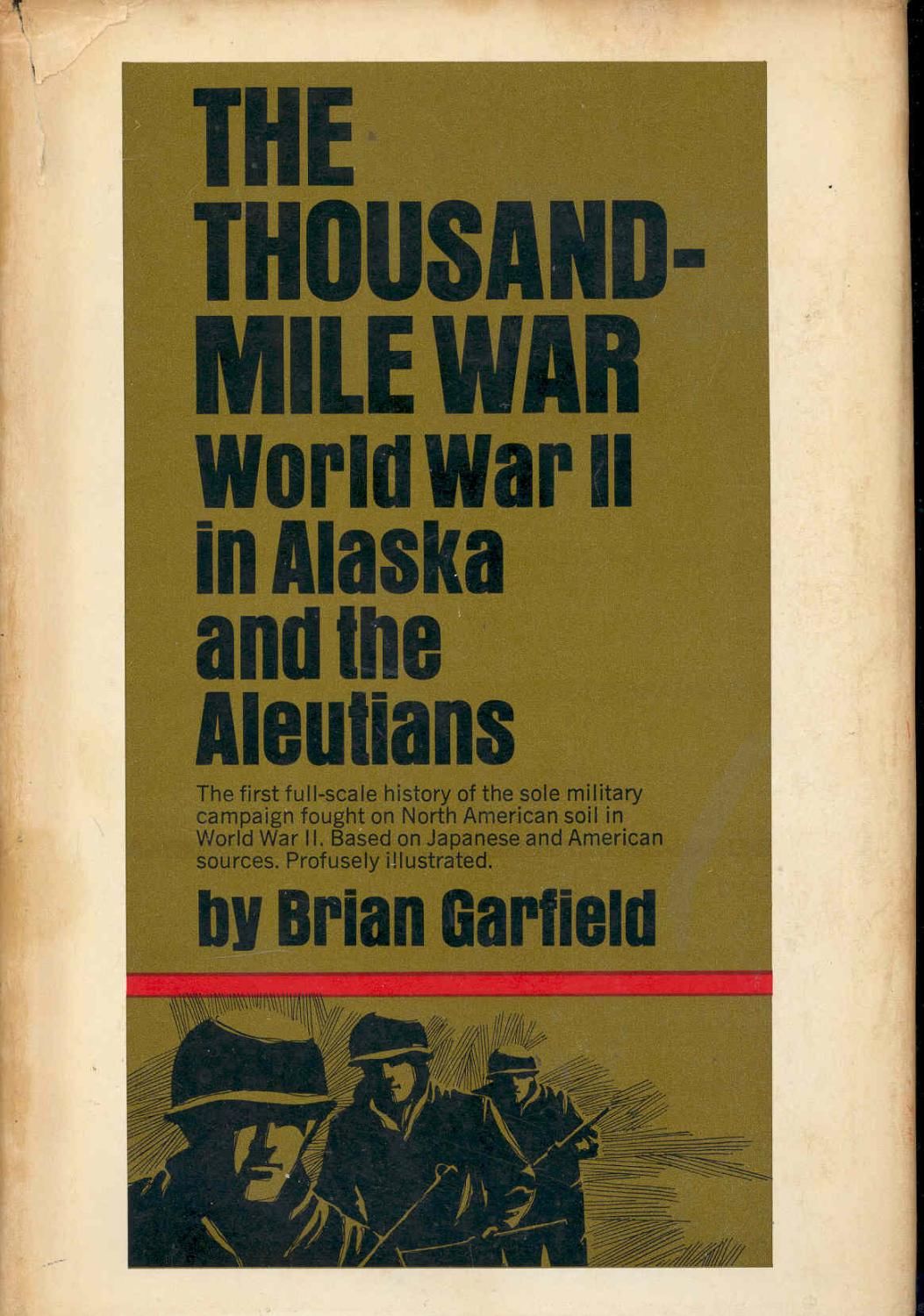
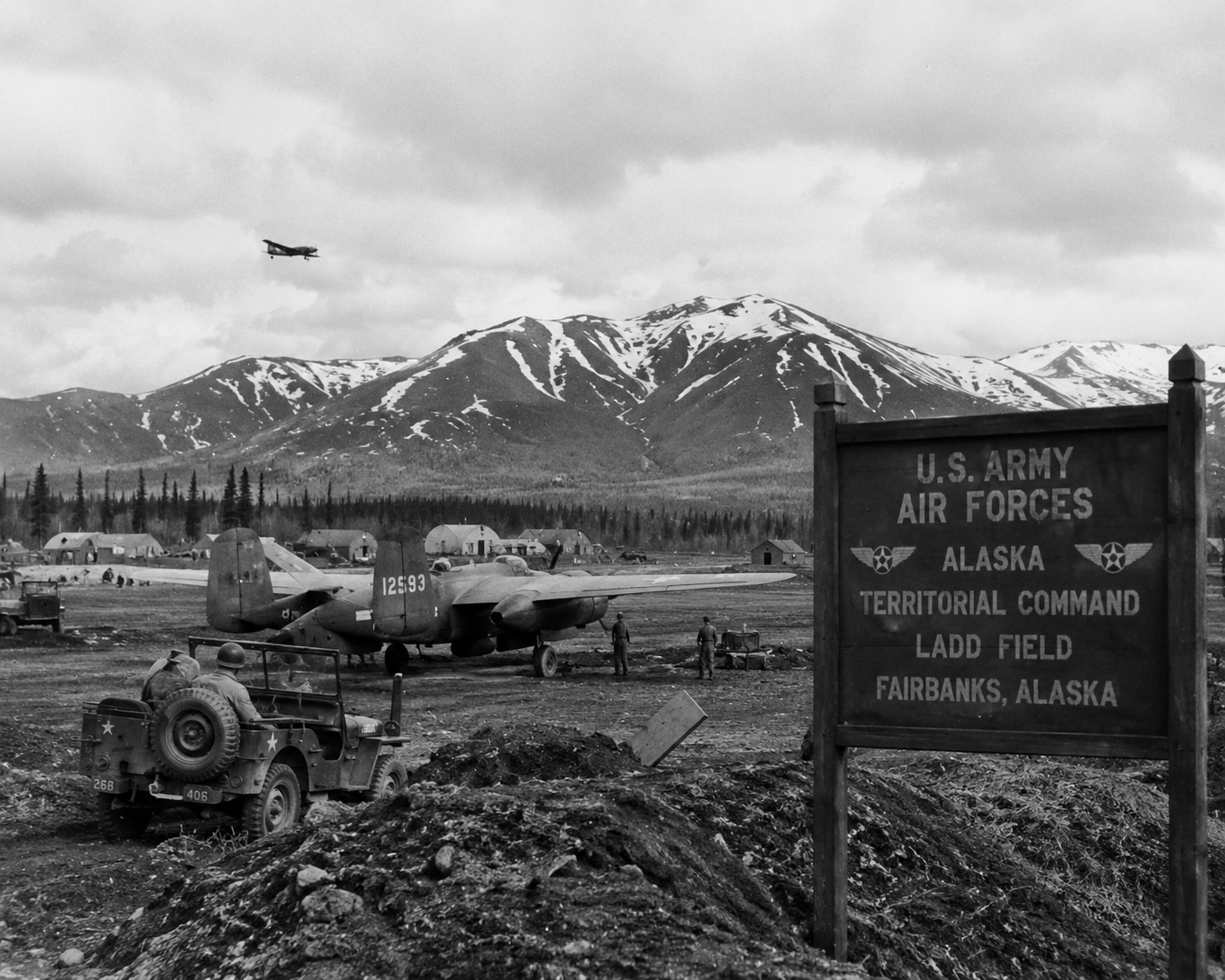
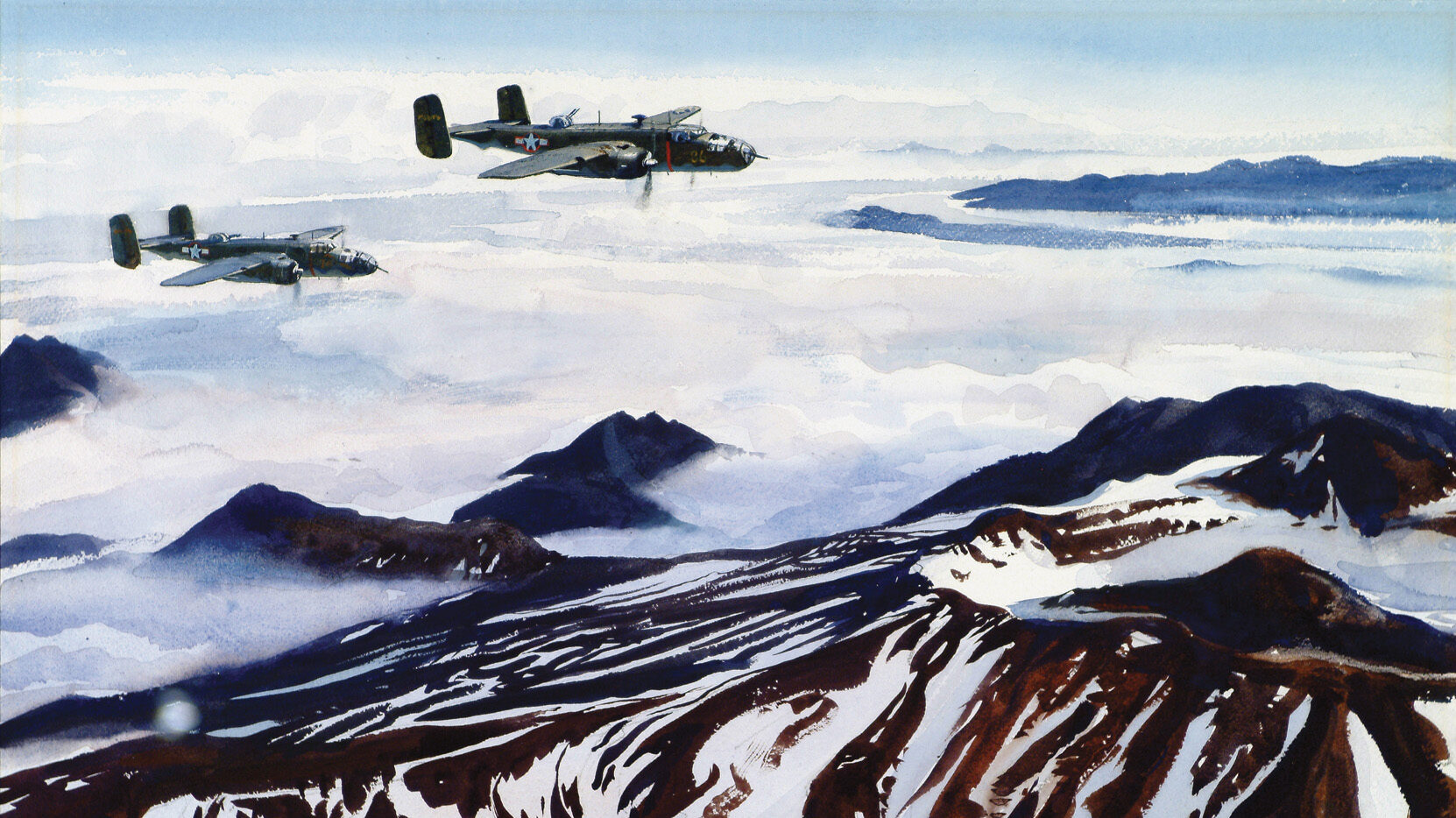
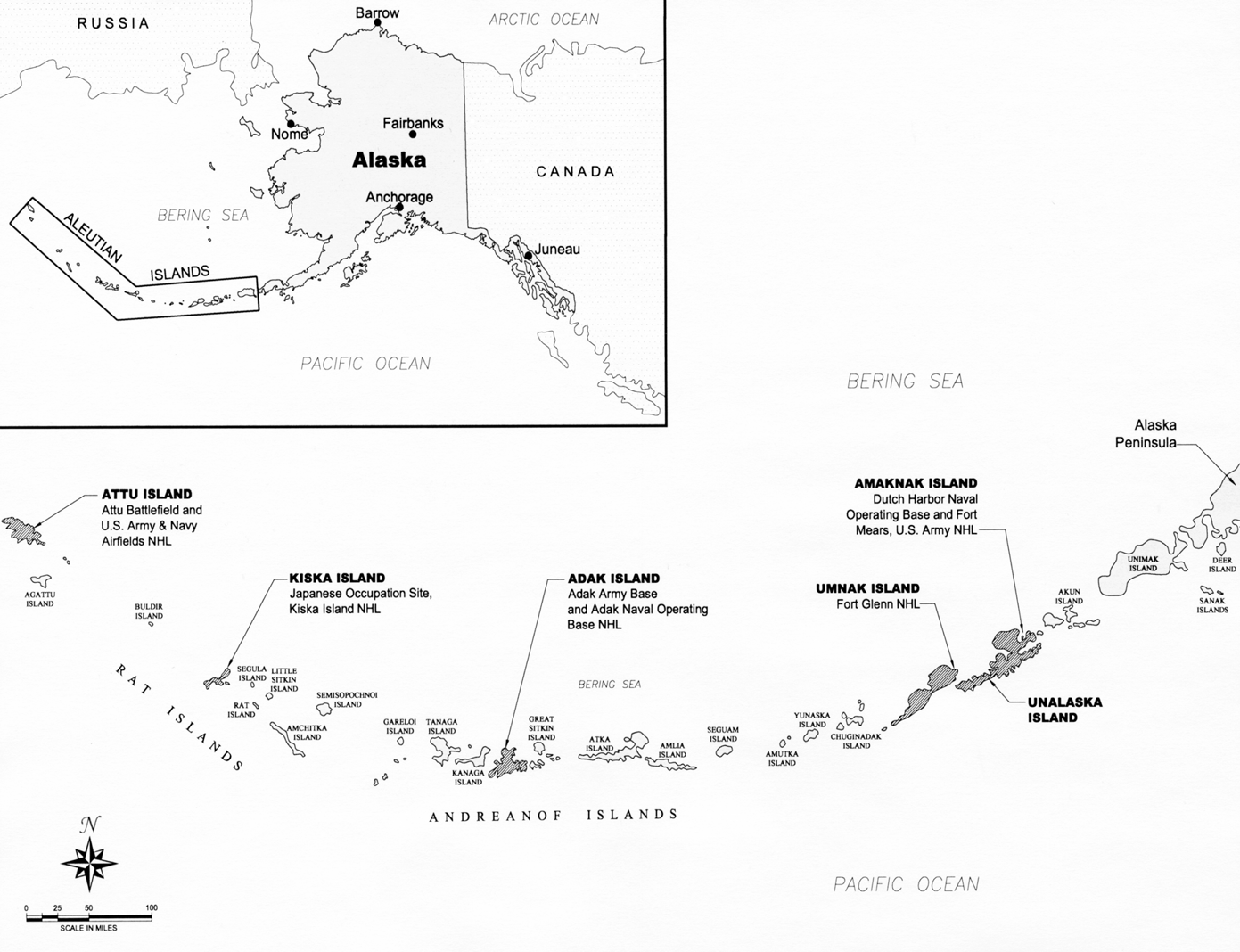
The Aleutian Islands Campaign of World War II was a strategic yet brutal military confrontation fought on remote, fog-shrouded American soil from June 1942 to August 1943. While overshadowed by major European and Pacific theater operations, this North Pacific conflict marked the only battle fought on incorporated territory of the United States during the war, forcing a joint American and Canadian force to dislodge an entrenched Imperial Japanese garrison under some of the most punishing weather conditions on earth.
Strategic Importance and the Japanese Invasion of 1942
The remote chain of volcanic islands stretching westward from the Alaskan mainland assumed sudden, critical importance following the outbreak of the Pacific War. For Imperial Japan, capturing positions in the Aleutians served a dual purpose: it acted as a strategic diversion to draw United States naval forces away from the central Pacific before the pivotal Battle of Midway, and it established a forward defensive perimeter that could potentially block American air routes to the Japanese home islands.
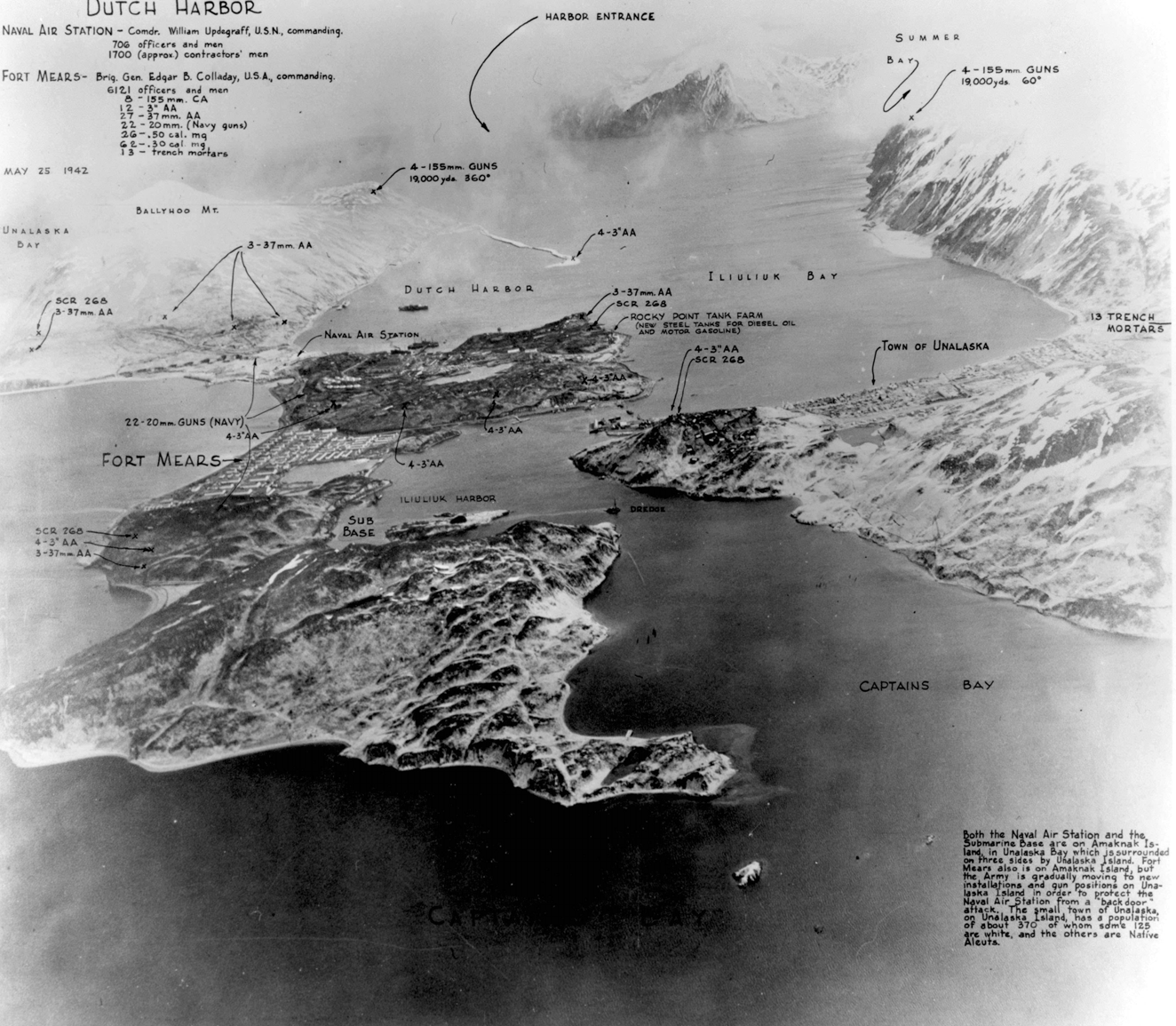
In early June 1942, concurrent with the Midway offensive, Japanese forces executed simultaneous operations in the North Pacific. A naval bombardment struck Dutch Harbor on Unalaska Island on June 3 and June 4, followed days later by amphibious landings that seized the remote, sparsely populated islands of Attu and Kiska. The occupation of these American territories sent shockwaves through the United States public and military leadership, who recognized that an enemy foothold in the Western Hemisphere posed an unacceptable threat to North American security and morale.
The inhospitable geography of the theater immediately dictated the nature of the conflict. The Aleutians are characterized by treacherous Williwaw winds, freezing rain, dense and persistent fog, and rugged, tundra-covered terrain devoid of natural harbors or established infrastructure. Both the invading Japanese and the counter-attacking Allied forces faced an adversary as formidable as the opposing army: the elements themselves.
The Environment and Logistical Challenges
Operating in the Aleutian chain demanded a complete reassessment of military tactics, clothing, shelter, and logistics. Combat engineers and supply officers confronted extreme maritime conditions that routinely grounded aircraft, trapped surface vessels in pack ice or heavy swells, and exposed troops to trench foot, frostbite, and severe psychological strain.
Extreme Weather Dynamics
The climate of the Aleutian Islands is defined by the convergence of cold Arctic air masses and warm Pacific currents. This meteorological collision produces high winds, sudden squalls, and visibility that can drop to near-zero within minutes. Airfields constructed hastily on tundra surfaces turned into quagmires of mud or froze solid, making takeoffs and landings exceptionally hazardous. More American aircraft and personnel were lost to weather-related accidents and navigational hazards than to direct enemy combat action.
Logistical Innovation and Supply Lines
Supplying troops thousands of miles from industrial centers required robust maritime corridors and specialized engineering feats. The U.S. military had to build docks, fuel depots, communication networks, and all-weather airfields from scratch. The construction of the Alaska Highway, running from British Columbia through the Yukon Territory to interior Alaska, became a vital overland link, though heavy freight still relied heavily on the perilous North Pacific convoy routes guarded by the United States Navy and the Royal Canadian Navy.
Key Operations: The Recapture of Attu and Kiska
The Allied counter-offensive began with a prolonged aerial and naval bombing campaign against the occupied islands, designed to isolate the garrisons and cut off their resupply lines. However, liberating the territory required direct amphibious assaults against heavily fortified defensive positions.
| Operation / Battle | Date | Allied Forces Involved | Outcome |
|---|---|---|---|
| Bombardment of Dutch Harbor | June 3–4, 1942 | US Army, US Navy | Japanese carrier aircraft attacked local facilities; triggered US fortification of Alaska. |
| Operation Landcrab (Attu) | May 11–30, 1943 | US 7th Infantry Division | Recaptured after bitter mountain combat and a massive Japanese banzai charge. |
| Operation Cottage (Kiska) | August 15, 1943 | US 7th Infantry Division, Canadian 13th Brigade | Island found abandoned; Japanese had secretly evacuated under cover of dense fog. |
Operation Landcrab: The Battle of Attu
On May 11, 1943, the U.S. Army's 7th Infantry Division landed on Attu Island with the objective of annihilating the Japanese garrison commanded by Colonel Yasuyo Yamasaki. Initially expecting light resistance, the American forces instead encountered a well-prepared defense staged deep within the mountainous interior rather than directly on the beaches.
The battle degenerated into a brutal war of attrition fought across snow-covered ridges, freezing bogs, and steep cliffs. The fighting on Attu culminated on May 29, 1943, when the remaining Japanese forces launched a massive, desperate banzai charge that penetrated deep into American rear-echelon medical areas before being crushed. The battle resulted in heavy casualties: over 500 American soldiers were killed and more than 1,100 wounded, while the Japanese garrison was almost entirely wiped out, with only 28 prisoners taken out of a force of roughly 2,500.
Operation Cottage: The Liberation of Kiska
Buoyed by the lessons of Attu, Allied planners prepared a massive amphibious assault for Kiska Island, scheduled for August 1943. A joint force of nearly 35,000 American and Canadian troops, supported by a heavy naval bombardment fleet, landed on the island expecting fierce resistance from an estimated 10,000 Japanese defenders.
To the complete astonishment of the invading force, the island was entirely deserted. Under the cover of persistent Aleutian fog, Japanese naval vessels had successfully slipped through the blockade weeks earlier on July 28 and evacuated the entire garrison without Allied detection. Despite the absence of enemy combatants, friendly fire accidents, unexploded ordnance, and booby traps during the landing and occupation still resulted in over 300 Allied casualties.
Strategic Impact and Legacy
Though smaller in scale than the major amphibious campaigns of the Central and Southwest Pacific, the Aleutian Islands Campaign yielded important strategic benefits and military lessons:
- Air Power Prototyping: The campaign demonstrated the viability of long-range heavy bomber operations across northern routes, laying conceptual groundwork for postwar strategic deterrence and early warning systems.
- Cold Weather Doctrine: The harsh operational environment forced the U.S. military to develop specialized cold-weather clothing, rations, lubricants, and survival gear that directly influenced later operations in Korea and Europe.
- Bases for Future Operations: Securing the Aleutians neutralized the northern threat to the North American mainland and established forward bases from which American bombers could launch harassment raids against the Japanese Kuril Islands.
The veterans of the Aleutian campaign endured some of the most punishing physical conditions of the Second World War. Today, historical preservation efforts at sites such as the Aleutian World War II National Historic Area on Dutch Harbor preserve the physical remnants of hangars, bunkers, and memorials, ensuring that this grueling chapter of North American military history remains documented for future generations.
Frequently Asked Questions
Why did Japan invade the Aleutian Islands?
Imperial Japan seized Attu and Kiska in June 1942 primarily as a strategic diversion to pull U.S. naval assets away from Midway Island. Additionally, Japanese military planners sought to establish a defensive barrier in the North Pacific to prevent potential American air attacks against the Japanese mainland via the Alaskan route.
Were Canadian troops involved in the Aleutian campaign?
Yes, Canadian forces participated significantly in the campaign, most notably contributing the 13th Infantry Brigade to the invasion force during Operation Cottage on Kiska Island in August 1943, alongside elements of the Royal Canadian Navy.
How many casualties occurred during the Aleutian Islands Campaign?
The campaign was exceptionally costly relative to the troop numbers involved. The Battle of Attu alone resulted in over 500 American deaths and more than 1,100 wounded or injured by weather, while nearly the entire Japanese garrison of roughly 2,500 men was killed. During the Kiska landing, over 300 Allied casualties occurred due to friendly fire, accidents, and booby traps despite the absence of enemy troops.
Why is the Aleutian campaign often called the "Forgotten Theater"?
The campaign occurred concurrently with major, high-profile offensives in Europe, North Africa, and the tropical Pacific. Because the Aleutians involved remote islands with small populations and sparse media coverage, the grueling fog-bound battles quickly faded from public consciousness compared to iconic engagements like Guadalcanal or D-Day.
What are the main physical remnants of World War II left in the Aleutians today?
Visitors and researchers can still find deteriorating military infrastructure, including concrete bunkers, rusted anti-aircraft emplacements, runway foundations, and aircraft wreckage scattered across islands like Unalaska (Dutch Harbor), Attu, and Kiska, many of which are protected under historical preservation statutes.
Conclusion and Next Actions
Understanding the Aleutian Islands Campaign requires examining both the tactical military engagements and the severe logistical hurdles imposed by North Pacific geography. For researchers, historians, and travelers interested in exploring this theater further, consulting official military histories published by the U.S. Army Center of Military History or visiting the Aleutian World War II National Historic Area archives provides verified, comprehensive documentation of this unique chapter in World War II history.