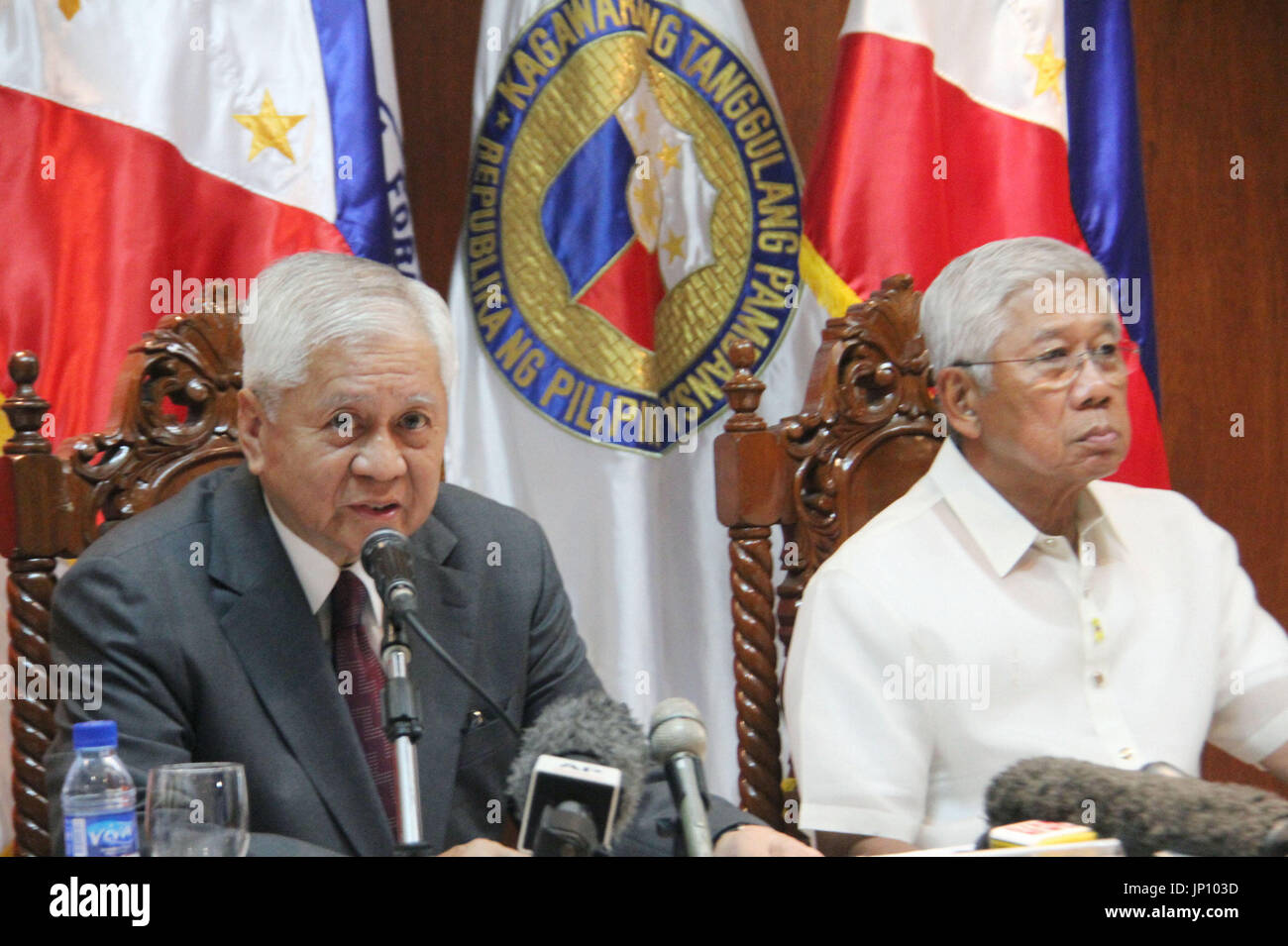
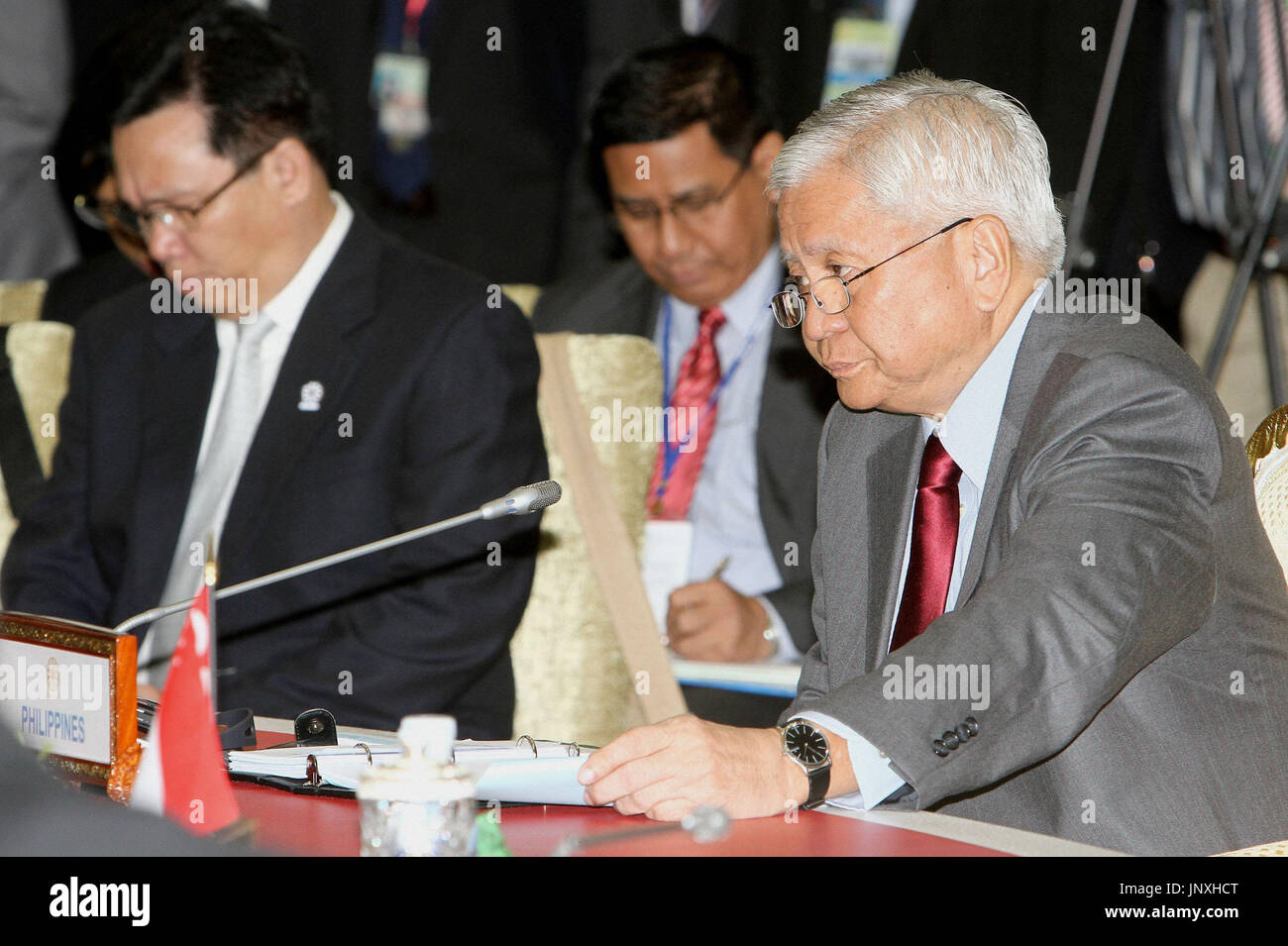
Albert Del Rosario was a preeminent Philippine diplomat and statesman who served as the Secretary of Foreign Affairs from 2011 to 2016. He is best known for leading the Philippines' historic legal challenge against China’s maritime claims in the South China Sea, resulting in the landmark 2016 Arbitral Ruling that invalidated the "nine-dash line."
As we look back from the vantage point of 2026, the impact of Albert Del Rosario on international law and Philippine sovereignty remains a cornerstone of Southeast Asian geopolitics. His transition from a successful business career to the pinnacle of diplomacy defined an era of "principled foreign policy," where the rule of law was positioned as the "great equalizer" between a small nation and a global superpower. Del Rosario’s tenure was characterized by a staunch defense of national territory, the professionalization of the Department of Foreign Affairs (DFA), and a commitment to protecting the rights of millions of Overseas Filipino Workers (OFWs).
Early Life and the Foundation of a Business Titan
Before becoming the face of Philippine diplomacy, Albert Ferreros Del Rosario established himself as a formidable leader in the private sector. Born on November 14, 1939, in Manila, he pursued his education with a focus on economics and management. He attended Xavier High School in New York City and graduated from New York University with a Bachelor of Science degree in Economics.
His background in economics provided him with a unique lens through which to view international relations. For decades, Del Rosario held executive positions in various industries, ranging from insurance and banking to telecommunications and real estate. Most notably, he served on the board of directors of the Philippine Long Distance Telephone Company (PLDT) and was involved with the Metro Pacific Investments Corporation.
This corporate rigor would later translate into his diplomatic style—one that was data-driven, strategic, and focused on tangible outcomes. He viewed foreign policy not merely as a series of ceremonial gestures but as a vital tool for national development, often referring to "economic diplomacy" as a pillar of his strategy.
Diplomatic Ascent: Ambassador to the United States
Del Rosario’s formal entry into the world of high-level diplomacy occurred in 2001, when he was appointed as the Philippine Ambassador to the United States by President Gloria Macapagal-Arroyo. His tenure in Washington (2001–2006) coincided with a transformative period in global security following the September 11 attacks.
During this time, he was instrumental in revitalizing the Philippines-US alliance. He secured significant military and economic assistance for the Philippines, framing the relationship as a partnership based on shared democratic values and mutual security interests. His ability to navigate the complexities of Capitol Hill and the White House earned him a reputation as a sophisticated negotiator. However, his stint as ambassador ended in 2006 when he resigned due to policy disagreements with the Arroyo administration—a move that foreshadowed his career-long commitment to principle over political convenience.
Secretary of Foreign Affairs: The Aquino Years
In February 2011, President Benigno "Noynoy" Aquino III appointed Del Rosario as the Secretary of Foreign Affairs. He took the helm at a time when regional tensions in the South China Sea (referred to by the Philippines as the West Philippine Sea) were escalating rapidly.
Del Rosario’s leadership at the DFA was defined by three main pillars:
- National Security: Protecting the territorial integrity of the Philippines.
- Economic Diplomacy: Promoting the Philippines as an investment destination and securing trade agreements.
- Assistance to Nationals: Ensuring the welfare of the Filipino diaspora.
He was known as the "gentleman-diplomat," famous for his impeccable suits, soft-spoken demeanor, and unwavering resolve. Under his watch, the DFA underwent significant modernization, including the streamlining of passport services and the expansion of diplomatic presence in key global regions.
The South China Sea Arbitration: A David vs. Goliath Victory
The defining moment of Albert Del Rosario’s career—and arguably of 21st-century Philippine history—was the decision to take China to court. Following the 2012 Scarborough Shoal standoff, where Chinese vessels blocked Philippine ships from entering their traditional fishing grounds, Del Rosario concluded that bilateral talks had reached a dead end.
The Rationale for Legal Action
Del Rosario believed that the Philippines could never match China’s military or economic might. Therefore, the only viable arena for contestation was the legal one. In January 2013, the Philippines formally initiated arbitration proceedings under the United Nations Convention on the Law of the Sea (UNCLOS) at the Permanent Court of Arbitration (PCA) in The Hague.
The decision was controversial and risky. Critics argued it would provoke Beijing and damage economic ties. However, Del Rosario remained steadfast, famously stating, "The rule of law is the great equalizer among nations." He worked closely with a team of international legal experts, including Paul Reichler, to build a case that focused on maritime entitlements rather than sovereignty over land features, ensuring the court had jurisdiction.
The 2016 Ruling and Its Global Impact
On July 12, 2016, the PCA released its final award. The ruling was a total victory for the Philippines. The tribunal found that:
- China’s "nine-dash line" had no legal basis under international law.
- None of the features in the Spratly Islands were "islands" capable of generating an Exclusive Economic Zone (EEZ).
- China had violated the Philippines' sovereign rights in its EEZ by interfering with fishing and petroleum exploration and constructing artificial islands.
While Del Rosario had stepped down for health reasons just months before the ruling was announced, the victory was universally credited to his vision and persistence. The award became a landmark precedent for maritime law globally, cited by other nations facing similar territorial encroachments.
Economic Diplomacy and Global Engagement
Beyond maritime disputes, Del Rosario was a staunch advocate for the "Third Pillar" of Philippine foreign policy: the protection of OFWs. During the Arab Spring and various conflicts in the Middle East, he personally flew to high-risk zones, such as Libya and the Iraq-Syria border, to oversee the repatriation of thousands of Filipino workers. His hands-on approach earned him deep respect within the migrant worker community.
On the economic front, he leveraged his business background to enhance the Philippines' credit ratings and attract foreign direct investment. He viewed the DFA as the country's primary marketing arm, directing embassies to prioritize trade missions and bilateral economic agreements that supported the Aquino administration’s "Daang Matuwid" (Straight Path) agenda.
Post-Government Advocacy and the ADR Stratbase Institute
After leaving public office in 2016, Del Rosario did not retreat into a quiet retirement. He became a leading voice of the "principled opposition" during the administration of President Rodrigo Duterte, who sought a warmer relationship with Beijing at the expense of the arbitral ruling.
Del Rosario co-founded and chaired the Stratbase ADR Institute, a think tank dedicated to strategic studies and international relations. Through this platform, he continued to advocate for the enforcement of the 2016 ruling, publishing papers and organizing international forums to keep the issue on the global agenda.
In 2019, in another bold move, Del Rosario and former Ombudsman Conchita Carpio-Morales filed a "communication" with the International Criminal Court (ICC), accusing Chinese officials of "crimes against humanity" for environmental destruction in the South China Sea that deprived Filipino fishermen of their livelihoods. Though the ICC later stated it lacked jurisdiction, the move highlighted Del Rosario’s refusal to let the issue fade into obscurity.
Key Milestones in the Career of Albert Del Rosario
| Year | Event | Significance |
|---|---|---|
| 1939 | Birth in Manila | Beginning of a life dedicated to service and business. |
| 2001 | Appointed Ambassador to the US | Strengthened the PH-US security alliance post-9/11. |
| 2011 | Appointed Secretary of Foreign Affairs | Shifted PH foreign policy toward a more assertive stance on sovereignty. |
| 2012 | Scarborough Shoal Standoff | Triggered the decision to pursue legal action against China. |
| 2013 | Filing of the PCA Case | First time a nation challenged China’s maritime claims in court. |
| 2016 | Resignation from the DFA | Stepped down due to health reasons (spinal issues). |
| 2016 | PCA Arbitral Award | Historic legal victory invalidating the "nine-dash line." |
| 2023 | Passing of Albert Del Rosario | Marked the end of an era for Philippine diplomacy. |
Challenges and Criticisms
Despite his accolades, Del Rosario’s tenure was not without challenges. His assertive stance toward China was criticized by some as "provocative," leading to the loss of effective control over Scarborough Shoal in 2012. Within the Philippines, political shifts often resulted in his policies being sidelined or openly questioned by subsequent administrations.
Furthermore, his background as a member of the economic elite led to occasional criticism that his foreign policy was too aligned with Western interests. However, supporters argue that his alignment with the US was purely pragmatic, based on the reality of the Philippines' defensive capabilities and its commitment to a rules-based international order.
International Recognition and Legacy in 2026
By 2026, Albert Del Rosario is remembered as a "Patriot of the Highest Order." He received numerous awards throughout his life, including the Order of Lakandula with the rank of Grand Cross (Bayani) and the Legion of Honor. Internationally, he was recognized by various organizations for his contribution to the law of the sea and regional stability.
His legacy is not just the 2016 ruling itself, but the institutionalization of a "Philippine style" of diplomacy: one that is professional, legally grounded, and unyielding on matters of sovereignty. He proved that a medium-sized power could shape global norms and hold superpowers accountable through the rigorous application of international law.
FAQs
What is Albert Del Rosario's most significant contribution to the Philippines?
His most significant contribution was the initiation and successful pursuit of the 2016 Arbitral Ruling against China's claims in the South China Sea. This provided the Philippines and the international community with a definitive legal victory that invalidated the "nine-dash line" and affirmed the maritime rights of coastal states under UNCLOS.
Why did Albert Del Rosario resign as Secretary of Foreign Affairs?
He resigned in early 2016, shortly before the end of the Aquino administration, primarily due to health reasons. He suffered from back and spinal issues that made the rigorous international travel required of a foreign secretary increasingly difficult.
What was his role after leaving the Department of Foreign Affairs?
Following his government service, he chaired the ADR Stratbase Institute, a think tank that continues to influence Philippine foreign policy research. He remained an active critic of policies that undermined the 2016 Arbitral Award and continued to advocate for Philippine maritime rights on the international stage.
How did his business background influence his diplomacy?
His background in economics and corporate leadership led to the prioritization of "economic diplomacy." He viewed foreign relations as a way to secure investments, trade deals, and jobs for Filipinos, applying corporate efficiency to the bureaucratic processes of the DFA.
Did the 2016 ruling actually change anything?
While China refused to formally recognize the ruling, it has become a fundamental piece of international law. It is used by the United States, the European Union, Australia, and many ASEAN nations as the legal basis for demanding "freedom of navigation" and "rule-based order" in the region. It essentially "legalized" the Philippines' claims in the eyes of the world.
Conclusion and Recommended Next Actions
The life of Albert Del Rosario serves as a blueprint for modern diplomacy in an era of geopolitical competition. His transition from the boardroom to the world stage demonstrated that leadership is defined by clarity of purpose and the courage to act on principle. For those looking to understand the current state of the West Philippine Sea disputes, studying Del Rosario’s legal strategy is essential.
Recommended Next Actions:
- Read the 2016 Arbitral Award: To fully appreciate Del Rosario’s impact, review the executive summary of the PCA ruling to understand the legal foundations he helped build.
- Follow the ADR Stratbase Institute: For ongoing analysis of Philippine foreign policy in 2026, the institute remains a primary source of expert commentary.
- Support Maritime Awareness: Engage with educational programs that highlight the importance of the UNCLOS and the protection of the Philippine EEZ.