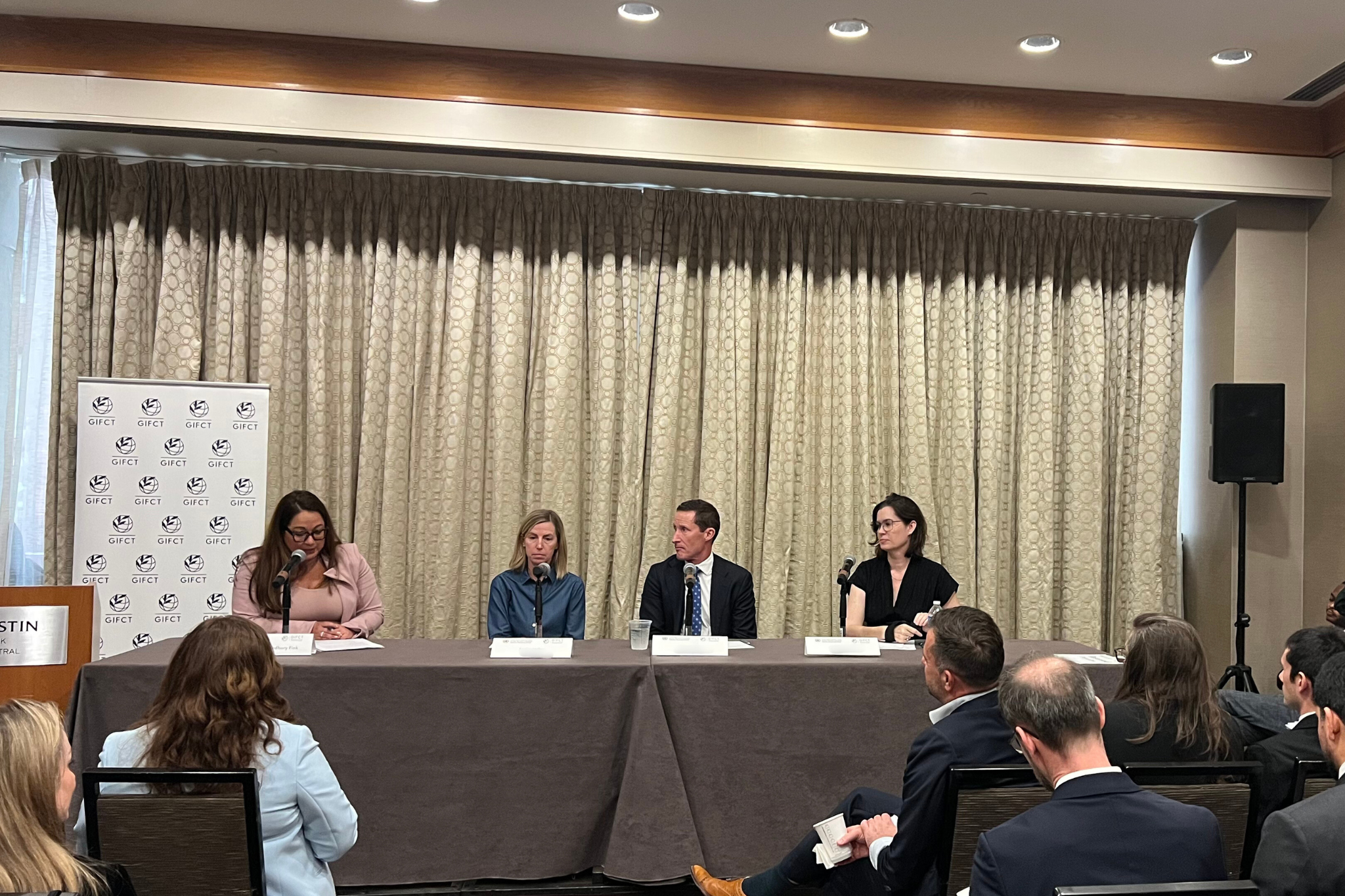
Alastair Graham, through his leadership at Highnote and his influence on the payments sector, champions a "compliance-first" approach to fintech infrastructure. In 2026, his work emphasizes that successful fintech regulation now relies on embedded systems that automate oversight, allowing firms to scale while meeting rigorous global financial standards and evolving consumer protection laws.
The Evolution of Regulatory Expectations in the Fintech Sector
The period leading into 2026 has marked a definitive end to the "move fast and break things" era of financial technology. Historically, fintech firms operated on the periphery of traditional banking regulations, often utilizing "regulatory arbitrage" to launch products faster than incumbent institutions. However, a series of high-profile failures in the Banking-as-a-Service (BaaS) sector and increasing scrutiny from agencies like the Office of the Comptroller of the Currency (OCC) and the Consumer Financial Protection Bureau (CFPB) have fundamentally shifted the landscape.
Alastair Graham has been a vocal proponent of moving away from fragmented, legacy-based systems toward unified infrastructures. In the current 2026 environment, regulators no longer distinguish between a "tech company providing financial services" and a "financial institution." The expectation is now one of regulatory parity. This means that if a fintech offers a card, a loan, or a ledger, it must meet the same standards for Anti-Money Laundering (AML), Know Your Customer (KYC), and capital adequacy as a Tier 1 bank.
This shift has created a significant hurdle for startups that lack deep regulatory expertise. The complexity of modern regulation—encompassing data privacy (GDPR/CCPA), real-time fraud monitoring, and cross-border payment standards (ISO 20022)—requires a level of technical sophistication that legacy platforms cannot provide. Graham’s insights suggest that the only way to navigate this landscape is through embedded compliance, where the regulatory requirements are written into the code of the financial product itself, rather than being an administrative layer added after the fact.
Alastair Graham’s Philosophical Approach to Fintech Infrastructure
As the founder and CEO of Highnote, Alastair Graham has focused on the "plumbing" of the financial world. His philosophy centers on the idea that infrastructure debt is the single greatest risk to fintech innovation. Many early fintech successes were built on "wrapper" technology—new user interfaces sitting on top of 40-year-old core banking systems. While this allowed for quick launches in 2015, by 2026, these systems have become liabilities.
Graham argues that to survive the current regulatory climate, companies must utilize a ledger-of-record that is both real-time and immutable. Traditional systems often rely on batch processing, which creates a lag between a transaction and its reflection in the ledger. In a regulatory environment that now demands real-time reporting and instant fraud intervention, batch processing is no longer viable. Graham’s approach emphasizes a modular architecture, allowing fintechs to swap out specific components—such as KYC providers or credit scoring engines—without rebuilding their entire stack.
Furthermore, Graham highlights the importance of programmatic control. In the 2026 landscape, the "shifting landscape" is characterized by hyper-personalization. Regulators are increasingly concerned with how automated decisions (AI-driven lending or spending limits) affect protected classes. Graham’s advocacy for transparent, rule-based infrastructure allows companies to prove to regulators exactly why a transaction was approved or a card was blocked, providing an audit trail that is essential for modern compliance.
The Shift Toward Embedded Compliance and "Compliance-as-Code"
The term "Compliance-as-Code" has moved from a buzzword to a fundamental requirement in 2026. This concept, central to the ecosystem Graham operates within, involves translating complex legal requirements into executable scripts. Instead of a compliance officer manually reviewing a spreadsheet of transactions at the end of the month, the system itself prevents non-compliant transactions from ever occurring.
Key Components of Embedded Compliance:
- Just-in-Time (JIT) Funding: This allows for precise control over when and how funds are moved, ensuring that collateral requirements are met at the exact moment of a transaction.
- Atomic Transactions: Ensuring that a payment and its associated regulatory check (such as a sanctions screen) happen as a single, inseparable unit. If the check fails, the payment does not exist.
- Dynamic KYC/KYB: Moving beyond one-time onboarding to continuous monitoring. As Graham has noted in industry forums, a customer who was "low risk" yesterday may become "high risk" today based on updated global sanctions or behavioral changes.
By 2026, the regulatory landscape has also been shaped by the EU’s PSD3 and the US CFPB’s Rule 1033, which have codified open banking and data portability. Graham’s work in card issuance is particularly relevant here, as these regulations demand that consumers have more control over their data while maintaining high security. The "shifting landscape" requires infrastructure that can handle these data requests securely and instantaneously, a task Graham asserts is only possible with modern, API-first architecture.
Navigating the 2026 Global Regulatory Framework
The global nature of fintech means that players must navigate a "patchwork quilt" of regulations. In 2026, we see a divergence in how different regions approach fintech oversight, though the underlying goal of financial stability remains constant.
In the United States, the focus has shifted toward Third-Party Risk Management (TPRM). Regulators have placed the burden of oversight squarely on the shoulders of the partner banks that sponsor fintech programs. Alastair Graham has frequently pointed out that this puts fintechs in a position where they must be "bank-grade" to even enter a partnership. This has led to a "flight to quality," where only fintechs with robust, transparent infrastructure can secure the banking relationships necessary to operate.
In Europe, the landscape is dominated by the maturity of the Markets in Crypto-Assets (MiCA) regulation and the transition from Open Banking to Open Finance. Here, the regulation is more prescriptive than in the US. Companies must navigate strict rules regarding capital reserves and operational resilience (DORA). Graham’s emphasis on modularity allows firms to adapt to these regional differences without having to maintain entirely separate codebases for every jurisdiction.
| Regulatory Feature | Legacy Approach (Pre-2022) | Modern Landscape (2026) | Graham’s Integrated Model |
|---|---|---|---|
| Data Reporting | Monthly/Quarterly Batch | Real-time / On-demand | API-driven continuous streams |
| Compliance Layer | Manual/Post-transaction | Automated/Proactive | Embedded in the ledger core |
| Risk Management | Sampling and audits | 100% transaction monitoring | AI-assisted anomaly detection |
| Partner Integration | Rigid "One-size-fits-all" | Deep technical oversight | Modular "Plug-and-play" agility |
| Customer Data | Siloed and static | Portable (Open Banking) | Secure, permissioned access |
Overcoming the "Bank-Fintech Divide"
One of the most significant shifts in the landscape Graham navigates is the closing of the "Bank-Fintech Divide." In the early 2020s, banks and fintechs often viewed each other as adversaries or, at best, uneasy partners. By 2026, the relationship has become symbiotic, driven largely by regulatory necessity.
Banks provide the license and the balance sheet, while fintechs—supported by infrastructure like Graham’s—provide the agility and user experience. However, this symbiosis is only possible if both parties speak the same "regulatory language." The current landscape requires fintechs to provide banks with real-time visibility into their operations.
Graham has argued that the "black box" model of fintech—where a bank simply sees a bulk movement of funds at the end of the day—is dead. Regulators now require banks to see "through" the fintech to the end consumer. This level of transparency requires a sophisticated ledger system that can tag every cent to a specific user, a specific merchant, and a specific regulatory check. For Graham, this isn't just a technical challenge; it's a prerequisite for the survival of the fintech industry.
Practical Guidance for Fintech Firms in 2026
For companies operating in this shifting landscape, the lessons from Alastair Graham’s career and the development of Highnote offer a roadmap for sustainable growth. The primary takeaway is that compliance is a competitive advantage, not a cost center.
- Prioritize the Ledger: Your ledger-of-record is your source of truth for regulators. If your ledger cannot provide a real-time, granular view of every transaction, you are at risk of regulatory intervention.
- Invest in "RegTech" Early: Do not wait until you hit a certain scale to automate compliance. The cost of retrofitting a manual system into an automated one is significantly higher than building it correctly from the start.
- Vet Your Infrastructure Partners: In 2026, your regulators will hold you responsible for the failures of your vendors. Ensure that your infrastructure providers (like card issuers or payment processors) have the same commitment to regulatory excellence as you do.
- Prepare for Open Finance: With the full implementation of data portability rules, your systems must be able to share data securely with third parties while maintaining strict consent protocols.
The shifting landscape is also moving toward sustainability and ethical finance. While not strictly "regulatory" in the legal sense, consumer demand and ESG (Environmental, Social, and Governance) reporting requirements are becoming part of the standard fintech audit. Systems must now be capable of tracking the carbon footprint of transactions or ensuring that lending algorithms are free from bias, further complicating the technical requirements of the platform.
Common Mistakes to Avoid:
- Treating Compliance as a "Silo": Compliance teams must work hand-in-hand with engineering. If your developers don't understand the "Why" behind a regulatory requirement, the "How" will inevitably be flawed.
- Over-reliance on "Wrappers": Avoid building on top of legacy cores that cannot handle the speed and volume of 2026 financial markets.
- Ignoring Cross-Border Nuance: Even if you are a local player, the interconnectedness of the 2026 financial system means you may inadvertently fall under the jurisdiction of foreign regulators (e.g., through a global payment network).
FAQ
How has Alastair Graham influenced the "Compliance-as-Code" movement?
Graham has been a pioneer in advocating for financial infrastructure that treats compliance as a primary engineering function. By building platforms that integrate KYC, AML, and ledgering into a single API-driven workflow, he has demonstrated that regulatory requirements can be automated, reducing human error and increasing speed to market.
What are the biggest regulatory hurdles for fintechs in 2026?
The most significant hurdles include the transition to Open Finance (requiring complex data portability), the increased scrutiny of Bank-Fintech partnerships (TPRM), and the requirement for real-time fraud and sanctions screening. Additionally, navigating the AI Act (in the EU) and similar AI-oversight frameworks in the US has become a major focus for fintechs using automated decisioning.
Is the "BaaS" (Banking-as-a-Service) model still viable in 2026?
Yes, but it has evolved. The "unregulated" BaaS models of the early 2020s are gone. In 2026, BaaS is characterized by deep integration, where the sponsor bank has real-time oversight and direct access to the fintech's ledger. This "BaaS 2.0" requires the kind of sophisticated infrastructure Graham champions.
How does Alastair Graham's work at Highnote address card issuance regulation?
Highnote provides a platform that manages the entire lifecycle of a card—from issuance to ledgering to compliance. By centralizing these functions, Graham’s platform ensures that every card transaction is checked against regulatory rules in real-time, providing both the fintech and the sponsoring bank with a high level of confidence and a clear audit trail.
What role does AI play in the shifting landscape of fintech regulation?
AI is a double-edged sword in 2026. Regulators use AI to detect market manipulation and systemic risks more efficiently. Conversely, fintechs use AI to enhance fraud detection and personalize financial products. However, Graham and other leaders emphasize that AI must be "explainable" to satisfy regulators who demand to know how automated decisions are made.
Practical Recommendation: Implementing a Compliance-First Strategy
To thrive in the environment Alastair Graham describes, fintech leaders must shift their perspective from "how do we get around regulation" to "how do we use regulation to build a better product." The first step is to perform a comprehensive audit of your technical stack. Identify any areas where manual processes or legacy systems create a "black box" that could hide regulatory risks.
Next, prioritize the integration of your compliance and engineering teams. Every new feature should undergo a "regulatory impact assessment" during the design phase, not after the code is written. Finally, choose infrastructure partners who demonstrate a commitment to transparency and real-time data access. In the shifting landscape of 2026, the firms that win will be those that can prove their integrity through their infrastructure, rather than just their marketing.