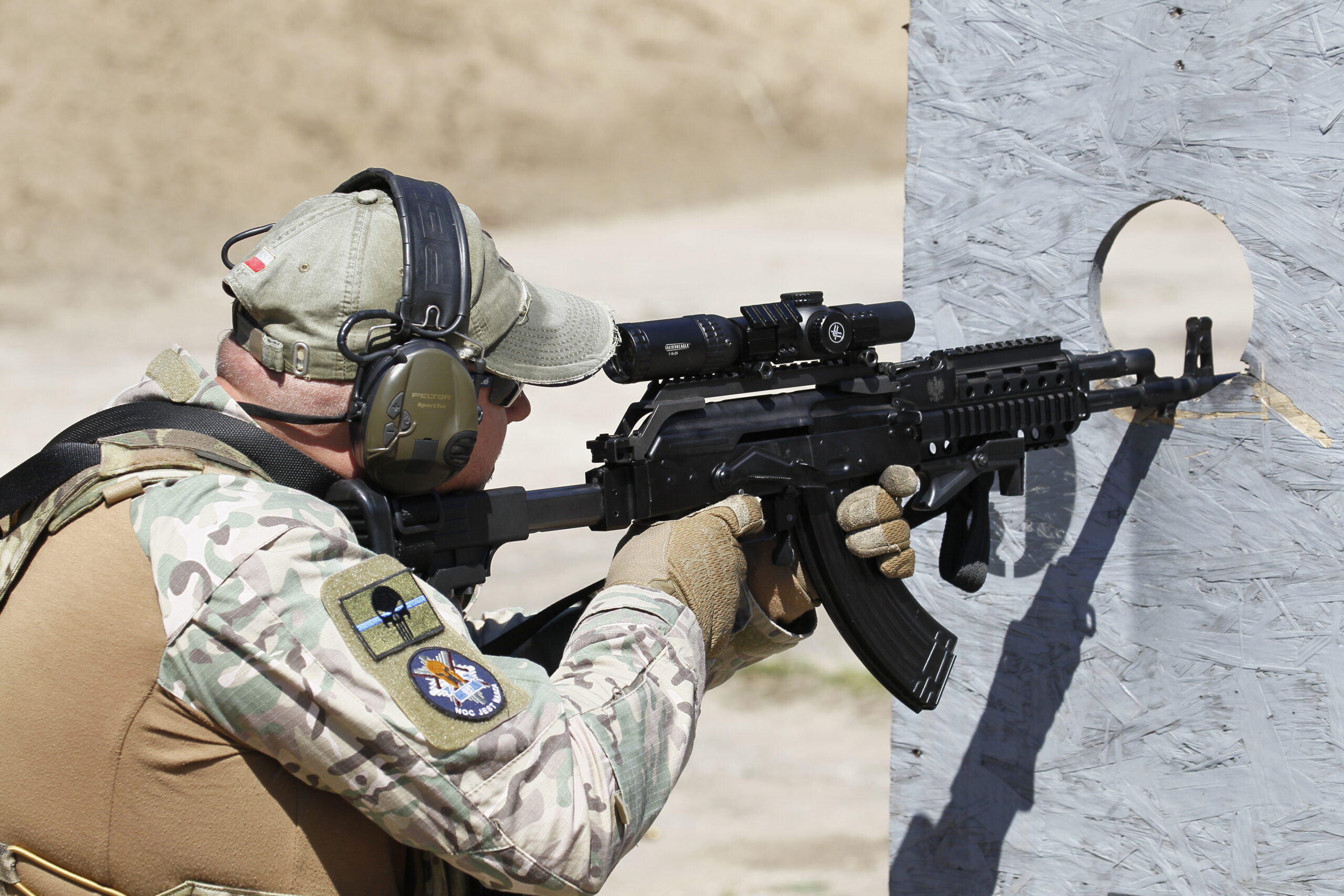
The AK-47 is widely considered the most deadly gun in the world not because of its individual ballistic power, but due to its unprecedented proliferation, reliability, and ease of use. Since 1947, an estimated 75 to 100 million units have been produced, contributing to more combat-related deaths than any other firearm in history.
The Genesis of the Avtomat Kalashnikova
The history of the AK-47 begins in the closing years of World War II. Mikhail Kalashnikov, a Soviet tank commander wounded in the 1941 Battle of Bryansk, began designing a weapon that would combine the fire rate of a submachine gun with the range and power of a rifle. The Soviet Union sought a weapon capable of functioning in the extreme environments of the Eastern Front—mud, freezing temperatures, and grit.
By 1947, the design was finalized, and by 1949, it became the standard-issue assault rifle for the Soviet Army. The weapon was a response to the German StG 44, the world's first true assault rifle. However, Kalashnikov’s design emphasized simplicity and loose mechanical tolerances, ensuring that the weapon could be manufactured by semi-skilled laborers and operated by soldiers with minimal training.
As of 2026, the original AK-47 design remains the foundational blueprint for modern infantry weapons in dozens of nations. While the Russian military has moved on to more modern iterations like the AK-12, the original 1947 patterns and their 1959 successor, the AKM (Avtomat Kalashnikova Modernizirovanniy), continue to dominate global conflict zones due to their near-indestructible nature.
Engineering Simplicity: Why the AK-47 Never Fails
The primary reason the AK-47 is often labeled the "deadliest" is its legendary reliability. In the world of small arms, "deadly" is synonymous with "functional." A weapon that jams in a high-stress environment is useless; a weapon that fires every time the trigger is pulled, regardless of maintenance, is a dominant force.
The Long-Stroke Gas Piston System
The AK-47 utilizes a long-stroke gas piston system. When a round is fired, high-pressure gases are tapped from a hole in the barrel and pushed against a piston attached to the bolt carrier. Because the piston and bolt carrier move as a single heavy unit, the system generates immense kinetic energy. This energy is usually sufficient to overcome any carbon buildup, sand, or mud that might have entered the action.
Loose Tolerances and Over-Gassing
Unlike Western rifles like the AR-15, which are built with tight tolerances for precision, the AK-47 is built "loose." The internal components have significant gaps between them. While this decreases the rifle’s intrinsic accuracy at long ranges (beyond 300 meters), it allows the gun to function even when filled with debris. Furthermore, the AK is "over-gassed," meaning it directs more gas than necessary to cycle the action, ensuring that even under-powered ammunition or a dirty barrel won't stop the cycle of fire.
Ease of Maintenance
The AK-47 consists of approximately 80 parts, but it can be field-stripped into its major components—the receiver cover, return spring, bolt carrier, and bolt—in seconds without tools. This simplicity means that a child or an untrained insurgent can learn to maintain and operate the weapon in less than an hour. This accessibility has fueled its use in asymmetric warfare and revolutions for over eight decades.
Terminal Ballistics: The Power of the 7.62x39mm Round
To understand why the AK-47 is lethal, one must examine the ammunition it fires. The 7.62x39mm cartridge was a revolutionary "intermediate" round. Before its introduction, rifles used full-power cartridges (like the .30-06 or 7.62x54mmR) which were powerful but produced heavy recoil, making full-auto fire uncontrollable.
The 7.62x39mm offers a balance. It provides enough stopping power to be lethal at standard engagement distances (100-300 meters) while keeping recoil manageable for a shoulder-fired weapon. The bullet itself is heavy (typically 123 grains) and possesses significant "barrier blindness," meaning it can penetrate wood, car doors, and light masonry more effectively than the lighter 5.56mm NATO rounds used by Western forces.
When the 7.62x39mm round enters soft tissue, it tends to travel straight for about 25 to 30 centimeters before it begins to "yaw" or tumble. This tumbling action creates massive internal trauma and permanent wound cavities. In the 2020s, despite the advent of advanced body armor, the AK-47 remains a high-threat weapon because many insurgent forces utilize "armor-piercing" variants of the 7.62mm round that can defeat Level III ballistic plates at close range.
Global Proliferation and Economic Impact
The AK-47 is not just a gun; it is a global commodity. During the Cold War, the Soviet Union did not just export the rifles; they exported the factories. Nations like China, Poland, Romania, East Germany, and Yugoslavia were given the technical data packages to produce their own versions.
As of 2026, the "Kalashnikov economy" is a major factor in global defense markets. Because so many countries produce the rifle and its ammunition, it is the cheapest effective firearm available on the black market. In some regions of sub-Saharan Africa, an AK-47 can be purchased for the price of a goat or a few bags of grain.
The sheer volume of these weapons means they are the primary cause of death in small-scale conflicts, tribal wars, and organized crime. While nuclear weapons and long-range missiles hold the world’s attention, the AK-47 has killed more people than any other weapon system combined. This "death by a million cuts" is what earns it the title of the world's most deadly firearm.
Technical Comparison: AK-47 vs. M16/M4 Platform
To provide perspective on the AK-47's capabilities as of 2026, it is often compared to the M16/M4 platform used by the United States and NATO allies.
| Feature | AK-47 / AKM | M16 / M4 (NATO) |
|---|---|---|
| Cartridge | 7.62x39mm | 5.56x45mm NATO |
| Action | Long-stroke gas piston | Direct impingement |
| Standard Magazine | 30 Rounds (Steel/Polymer) | 30 Rounds (Aluminum/Polymer) |
| Effective Range | 300 – 400 Meters | 500 – 600 Meters |
| Weight (Unloaded) | ~3.5 kg (7.7 lbs) | ~2.9 kg (6.4 lbs) |
| Reliability | Exceptional in harsh conditions | High (requires regular cleaning) |
| Accuracy | Moderate (2-4 MOA) | High (1-2 MOA) |
| Ease of Manufacture | Low-tech (Stamped steel) | High-tech (Machined aluminum) |
While the M16/M4 platform is objectively more accurate and ergonomic, the AK-47 wins in terms of ruggedness and lifecycle costs. In a 2026 battlefield environment where logistical chains are often disrupted, the ability of a weapon to function without specialized lubricants or frequent cleaning is a massive tactical advantage.
Evolution: From the AK-47 to the AK-12
The "AK-47" is often used as a catch-all term for the entire Kalashnikov family. However, the design has evolved significantly. In 1974, the Soviet Union introduced the AK-74, which switched to a smaller, high-velocity 5.45x39mm round to match the ballistics of the American 5.56mm.
By 2026, the Russian Federation has standardized the AK-12. This modern version addresses many of the original's shortcomings:
- Picatinny Rails: Allows for the mounting of modern optics, lasers, and lights.
- Improved Ergonomics: Adjustable stocks and better fire selectors.
- Free-Floating Handguards: Increases accuracy by ensuring the barrel doesn't touch the furniture.
- Muzzle Devices: Advanced compensators that significantly reduce muzzle climb during rapid fire.
Despite these advancements, the core "heart" of the weapon—the gas system and rotating bolt—remains virtually identical to Kalashnikov's 1947 prototype. This speaks to the perfection of the original engineering logic.
The Humanitarian and Sociopolitical Shadow
The "deadliness" of the AK-47 extends beyond the battlefield. It has become a symbol of revolution, liberation, and oppression simultaneously. It appears on the national flag of Mozambique and the coat of arms of Zimbabwe. It is the chosen weapon of both the freedom fighter and the terrorist.
The proliferation of the AK-47 has fundamentally changed the nature of conflict. Before the AK-47, training an army took months. With the AK-47, a paramilitary group can arm and train a civilian population in days. This has led to the tragic rise of child soldiers in various conflicts, as the weapon is light enough and simple enough for a child to handle effectively.
From a technical SEO and safety perspective, it is important to note that the AK-47 is a regulated firearm in almost every jurisdiction. In the United States, for example, true "select-fire" (automatic) AK-47s are heavily restricted under the National Firearms Act (NFA), while semi-automatic versions are subject to various state and federal laws as of 2026.
Common Myths and Misconceptions
Several myths surround the AK-47 that contribute to its "deadly" reputation. One common myth is that the AK-47 can fire underwater or after being buried for years. While the AK is incredibly resilient, firing a weapon with a barrel full of water or packed with mud can still lead to a catastrophic failure (a "kaboom").
Another myth is that the AK-47 is inaccurate. While it is not a sniper rifle, a well-maintained AKM is more than capable of hitting a man-sized target at 300 meters. The reputation for poor accuracy usually stems from poorly manufactured clones or the use of worn-out "surplus" ammunition.
FAQs
Is the AK-47 still used by major militaries in 2026?
Yes, dozens of militaries, including those of Russia, China (Type 56 variant), Vietnam, and various nations across Africa and the Middle East, continue to use the AK platform as their primary service rifle. Even some specialized units in Western countries utilize the AK-47 for "deniable" operations or when operating in environments where 7.62x39mm ammunition is the only available supply.
Why is the AK-47 considered more deadly than an M16?
The "deadliness" refers to the cumulative death toll over decades. Because there are more AK-47s in more hands in more conflict zones than any other firearm, it has killed more people. Ballistically, the M16’s 5.56mm round is often more lethal at short range due to fragmentation, but the AK-47’s reliability ensures it is always present where fighting is occurring.
Can an AK-47 penetrate body armor?
Standard 7.62x39mm "ball" ammunition can be stopped by Level III or Level IV hard armor plates. However, it easily penetrates "soft" body armor (Level IIIA) worn by many police forces. Furthermore, specialized armor-piercing (AP) rounds developed for the AK platform are capable of defeating many types of modern ceramic plates.
Is it legal to own an AK-47?
Legality depends entirely on your jurisdiction. In many parts of the world, private ownership is banned. In the United States, semi-automatic versions are legal in many states but require a background check and adherence to the Gun Control Act. Fully automatic AK-47s are extremely rare, expensive, and require a federal tax stamp and extensive vetting by the ATF.
How much does an AK-47 cost in 2026?
In the United States, a high-quality semi-automatic AK variant (such as those from Zastava or K-USA) typically costs between $1,000 and $1,800 as of 2026. On the international black market, prices vary wildly, from $50 in war-torn regions to several thousand dollars in areas with strict border controls.
Final Recommendation for Researchers and Enthusiasts
When studying the AK-47, it is vital to distinguish between the historical 1947 model and the various modernized variants available today. For those interested in the technical history, visiting the Kalashnikov Museum or reviewing documentation from the Small Arms Survey provides the most accurate data. For shooters and collectors, prioritizing "milled" or high-quality "stamped" receivers from reputable manufacturers ensures a safe and reliable experience. Always verify local firearm regulations before attempting to purchase or handle any variant of the Kalashnikov rifle, as laws regarding magazine capacity and cosmetic features are subject to frequent change.