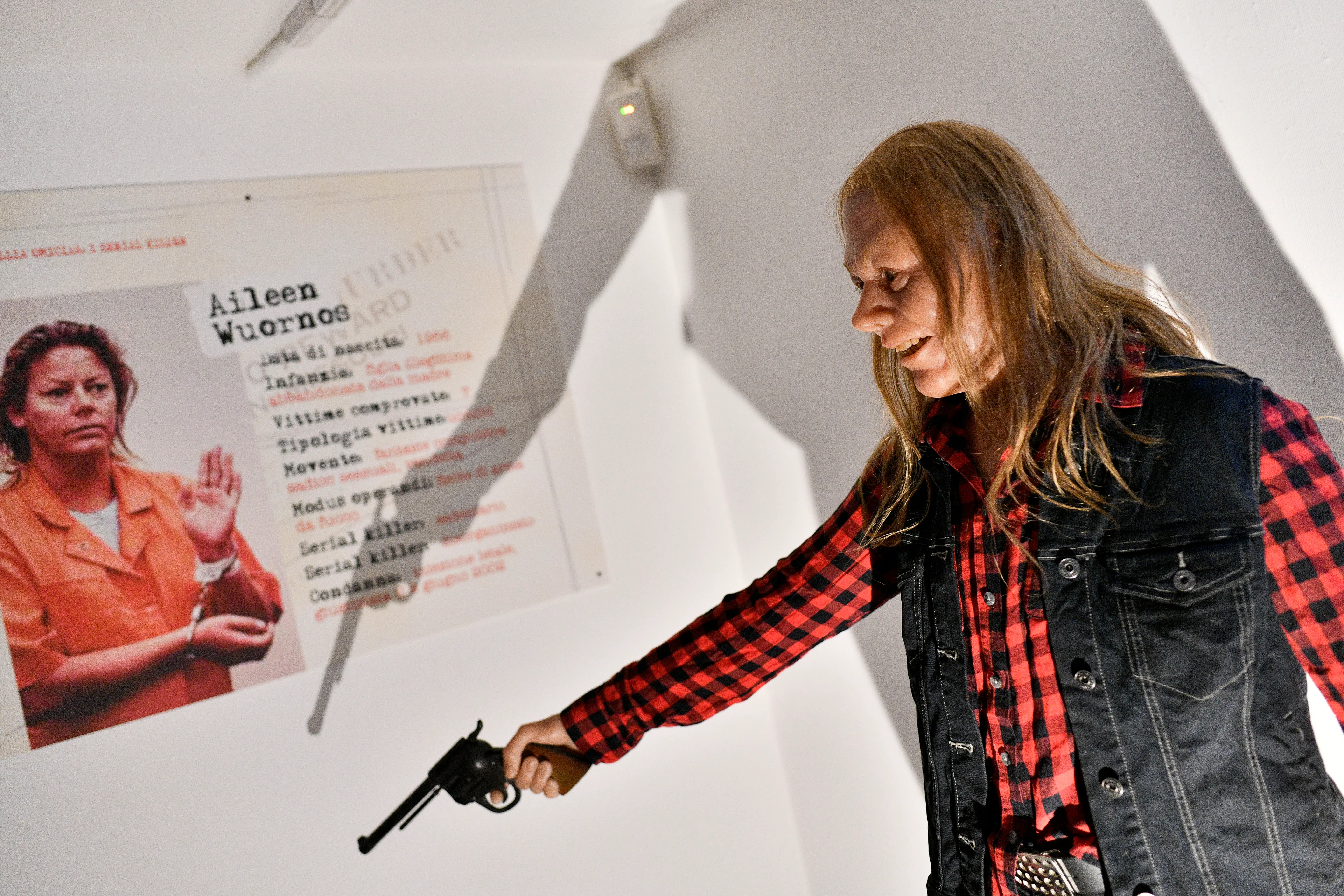
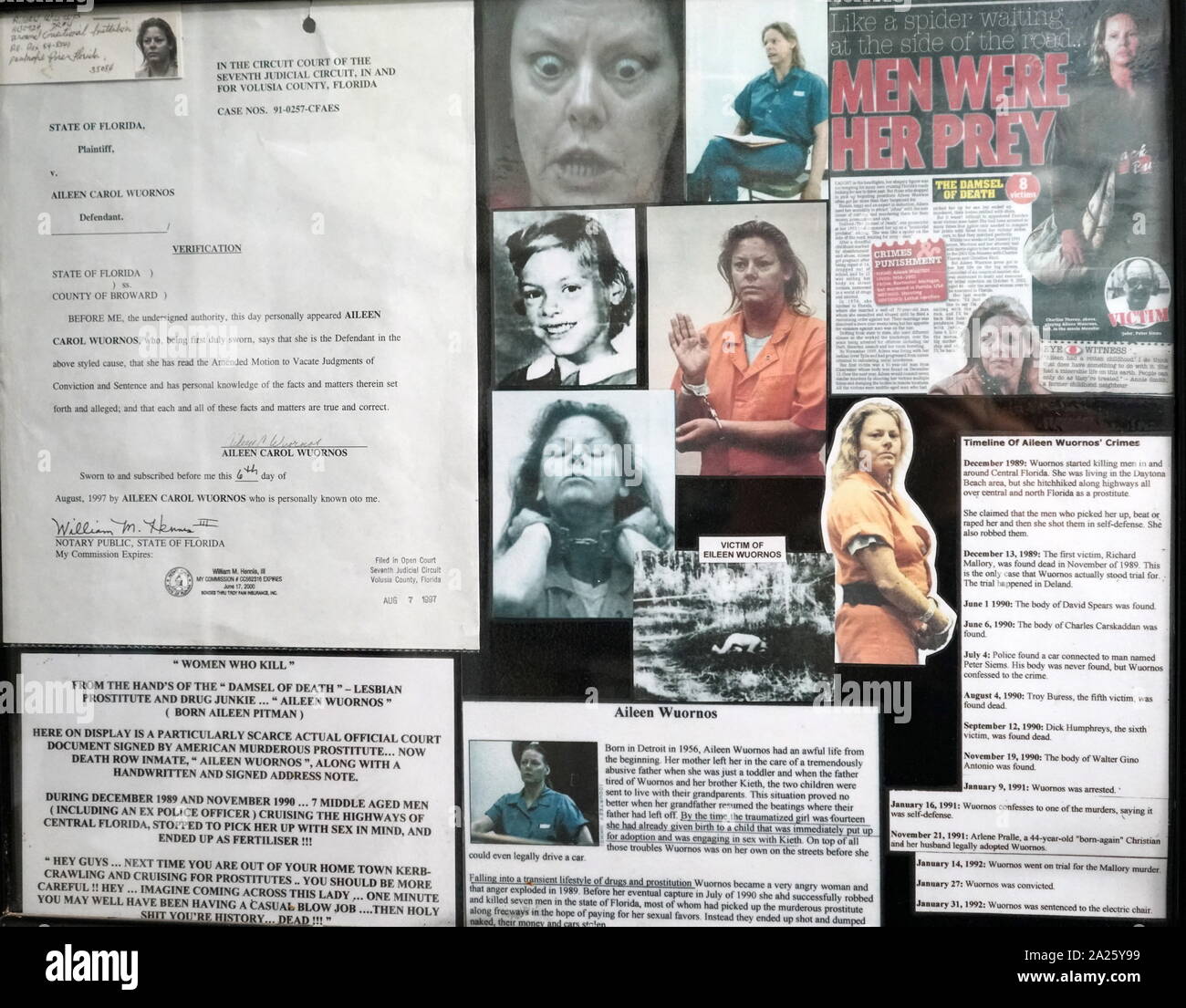
The Aileen Wuornos police sketch refers to the composite drawing generated by law enforcement in early 1990 during the investigation into the string of murders occurring along Florida highways. While the sketch was a critical tool for detectives at the time, it eventually became a subject of historical scrutiny regarding how forensic artwork interfaces with witness testimony and the eventual identification of the suspect.
The Role of Forensic Composites in Criminal Investigations
Forensic sketching serves as a bridge between the subjective memory of witnesses and the objective reality of a criminal suspect. In the case of the investigation that would eventually identify Aileen Wuornos, the process was complicated by the nature of the crimes themselves. The victims were found along Florida’s interstate system, specifically within Volusia, Marion, and Citrus counties. Because the crimes occurred in rural or isolated areas, the pool of potential eyewitnesses was limited.
Law enforcement agencies, including the Florida Department of Law Enforcement (FDLE) and various local sheriff’s offices, relied heavily on the memories of those who had reported interactions with a woman matching Wuornos's description. The resulting sketch was an attempt to consolidate these disparate accounts into a single, cohesive visual representation. Unlike photographic evidence, which provides a definitive record, a police sketch is an interpretive tool. It relies on the accuracy of human memory, which can be affected by trauma, environmental conditions at the time of sighting, and the subjective nature of the artist's interaction with the witness.
The Evolution of the Investigation in 1990
By early 1990, the authorities were dealing with the discovery of multiple bodies, all matching a specific profile of middle-aged men found along central Florida highways. The task force assigned to the case operated under immense pressure to prevent further fatalities. The composite sketch was distributed to the public through media outlets and posted in locations frequented by long-haul truckers and roadside travelers.
The effectiveness of such sketches is often debated in criminal psychology. While they provide a starting point for law enforcement, they can also create "tunnel vision," where investigators might subconsciously disregard suspects who do not closely resemble the published composite. In the case of the investigation into Wuornos, the sketch served as a catalyst for public awareness, prompting numerous tips to the task force. This volume of information necessitated a rigorous verification process, as detectives had to sift through reports of individuals who might have appeared similar to the sketch but had no connection to the homicides.
Technical Challenges in Sketching and Identification
Constructing an accurate composite involves more than artistic talent; it requires a structured interview technique. Investigators must guide witnesses through a recall process without inadvertently implanting false memories—a phenomenon known as the misinformation effect. In the 1990 context, before the widespread adoption of advanced computer-generated facial composite software, the process was largely reliant on the manual skill of a forensic artist.
The artist would interview witnesses to capture key facial features: jawline structure, nose shape, eyebrow position, and any distinct markings. In the investigation of Wuornos, the difficulty lay in the fact that the suspect reportedly changed her appearance and presentation depending on the context of her interactions. A police sketch captures a static moment or a generalized impression; it struggles to account for someone who adopts different personas or stylistic choices, which was a documented trait of the suspect in this case.
Comparison of Investigative Tools Used in the 1990 Case
The following table outlines the various tools and methods utilized by investigators during the search for the suspect, contextualizing the police sketch alongside other forensic efforts.
| Investigative Tool | Purpose | Primary Benefit | Limitation |
|---|---|---|---|
| Forensic Sketch | Visual identification | Rapid distribution to public | Dependent on witness memory |
| Ballistics Analysis | Weapon identification | Links crimes to same firearm | Requires recovered evidence |
| DNA/Serology | Biological profiling | Absolute suspect identification | Technology limitations in 1990 |
| Fingerprint Analysis | Physical verification | Direct suspect link | Requires suspect to have a record |
| Witness Statements | Investigative leads | Provides narrative context | Subjective and prone to bias |
Forensic Accuracy and the "Witness Bias" Factor
One of the most persistent issues in criminal justice is the inherent subjectivity of eyewitness testimony. When a sketch is released to the media, the public often assumes it is an accurate portrait of the perpetrator. However, researchers in forensic psychology have long noted that the mere act of viewing a composite can alter how a witness remembers the actual person.
In the investigation of the highway murders, the sketch was just one of many variables. The ultimate capture of the suspect involved a combination of forensic ballistics, witness reports, and the eventual tracking of pawn shop records where the suspect had offloaded items belonging to the victims. By late 1990, the physical evidence began to override the utility of the initial police sketches. While the sketches helped build the profile and generated public leads, it was the forensic examination of tangible items—such as the recovery of the firearm and the matching of serial numbers on personal effects—that provided the legal foundation for the prosecution.
Historical Perspective on the 1990s Investigative Landscape
The year 1990 represented a transitional period in American law enforcement. While the basics of investigation—gathering witness accounts, building composites, and tracking physical evidence—remained consistent with previous decades, the integration of multi-jurisdictional task forces was becoming more sophisticated. The investigation into the highway murders required significant coordination between various Florida counties, a feat of organization that was essential for the successful resolution of the case.
The police sketch, therefore, remains a historical artifact of this era. It serves as a reminder of a time when the "human element" of investigation was the primary engine for solving complex crimes, long before the ubiquity of high-definition surveillance, digital facial recognition, and rapid-turnaround DNA database matching.
Frequently Asked Questions
1. How were police sketches produced in 1990? In 1990, police sketches were largely produced by trained forensic artists who interviewed witnesses. The artist would translate verbal descriptions into a drawing, often using erasable media to adjust features in real-time based on the witness's feedback during the session.
2. Was the police sketch the primary reason for Aileen Wuornos's capture? No. While the sketch increased public awareness, the suspect's arrest resulted from an extensive investigation involving ballistics matching, the tracking of victims' belongings at local pawn shops, and the identification of a vehicle associated with the crimes.
3. Why do police sketches sometimes fail to match the suspect accurately? Sketches are filtered through the witness's perception and memory. Trauma, poor lighting, the passage of time, and the tendency of the brain to fill in "gaps" with stereotypical features can all contribute to discrepancies between the sketch and the actual suspect's appearance.
4. What is the standard procedure for verifying tips received from a sketch? When the public provides tips based on a sketch, investigators must cross-reference these reports with other evidence. This includes checking for alibis, verifying past criminal history, and looking for corroborating physical evidence like DNA or fingerprints before identifying a suspect.
Recommendations for Further Study
For those researching the history of this investigation, it is recommended to focus on primary source documents from the Florida Department of Law Enforcement and archived legal transcripts from the subsequent court proceedings. These documents provide the most accurate account of how specific forensic tools—including sketches, ballistics, and trace evidence—were utilized by the state to build their case. Always prioritize official reports over secondary media dramatizations to ensure the highest level of factual accuracy regarding the investigative timeline and methods used.