The Advanced Encryption Standard (AES) is a symmetric-key block cipher algorithm established by the U.S. National Institute of Standards and Technology (NIST) in 2001. It secures sensitive data globally by using the same cryptographic key for both encryption and decryption across 128-, 192-, or 256-bit lengths.
Introduction to Modern Cryptography and the Birth of AES
In the late 20th century, the digital landscape faced a looming security crisis. The aging Data Encryption Standard (DES), established in the 1970s, had become dangerously vulnerable to brute-force attacks due to rapid advancements in computing power. Recognizing that a more robust, computationally efficient, and mathematically sound replacement was required, the National Institute of Standards and Technology (NIST) initiated a multi-year public competition in 1997. The goal was to select a new cryptographic standard capable of protecting sensitive government and commercial information for decades to come.
From a field of 15 competing international submissions, NIST ultimately selected the Rijndael cipher, designed by Belgian cryptographers Joan Daemen and Vincent Rijmen. Formally published as Federal Information Processing Standards (FIPS) Publication 197 in 2001, Rijndael became known worldwide as the Advanced Encryption Standard (AES). Unlike its predecessor, AES was engineered to be exceptionally flexible and efficient across both hardware and software platforms, ranging from lightweight smart cards to high-performance enterprise servers.
Today, understanding the AES definition and key characteristics is essential for anyone involved in cybersecurity, software development, network architecture, or system administration. As cyber threats evolve and data privacy regulations tighten, AES remains a cornerstone of modern digital trust, securing everything from personal messaging apps to top-secret government communications.
Core Definition of AES
At its mathematical core, the Advanced Encryption Standard is a symmetric-key block cipher. To fully grasp this definition, one must break down its constituent cryptographic concepts:
- Symmetric-Key: The algorithm uses the exact same cryptographic key to transform plaintext (readable data) into ciphertext (encrypted data) and to reverse the process back into plaintext. This requires secure key distribution channels between communicating parties.
- Block Cipher: Unlike stream ciphers that encrypt data bit by bit or byte by byte, AES operates on fixed blocks of data. Specifically, AES processes data in blocks of 128 bits (16 bytes).
- Substitution-Permutation Network (SPN): AES is built upon a repeating series of mathematical transformations known as a substitution-permutation network. It combines substitution (replacing data values based on a lookup table) and permutation (shuffling data positions) to achieve high levels of confusion and diffusion.
The transformation process treats the 128-bit data block as a $4 \times 4$ array of bytes, referred to as the "State." Throughout the encryption rounds, operations are performed directly on this matrix. Because of its elegant algebraic structure, AES resists differential and linear cryptanalysis far more effectively than older symmetric ciphers.
Key Characteristics and Architectural Specifications
The strength and versatility of AES stem from several defining structural characteristics. These specifications dictate how the algorithm processes data and manages security margins against sophisticated attacks.
Key Lengths and Security Tiers
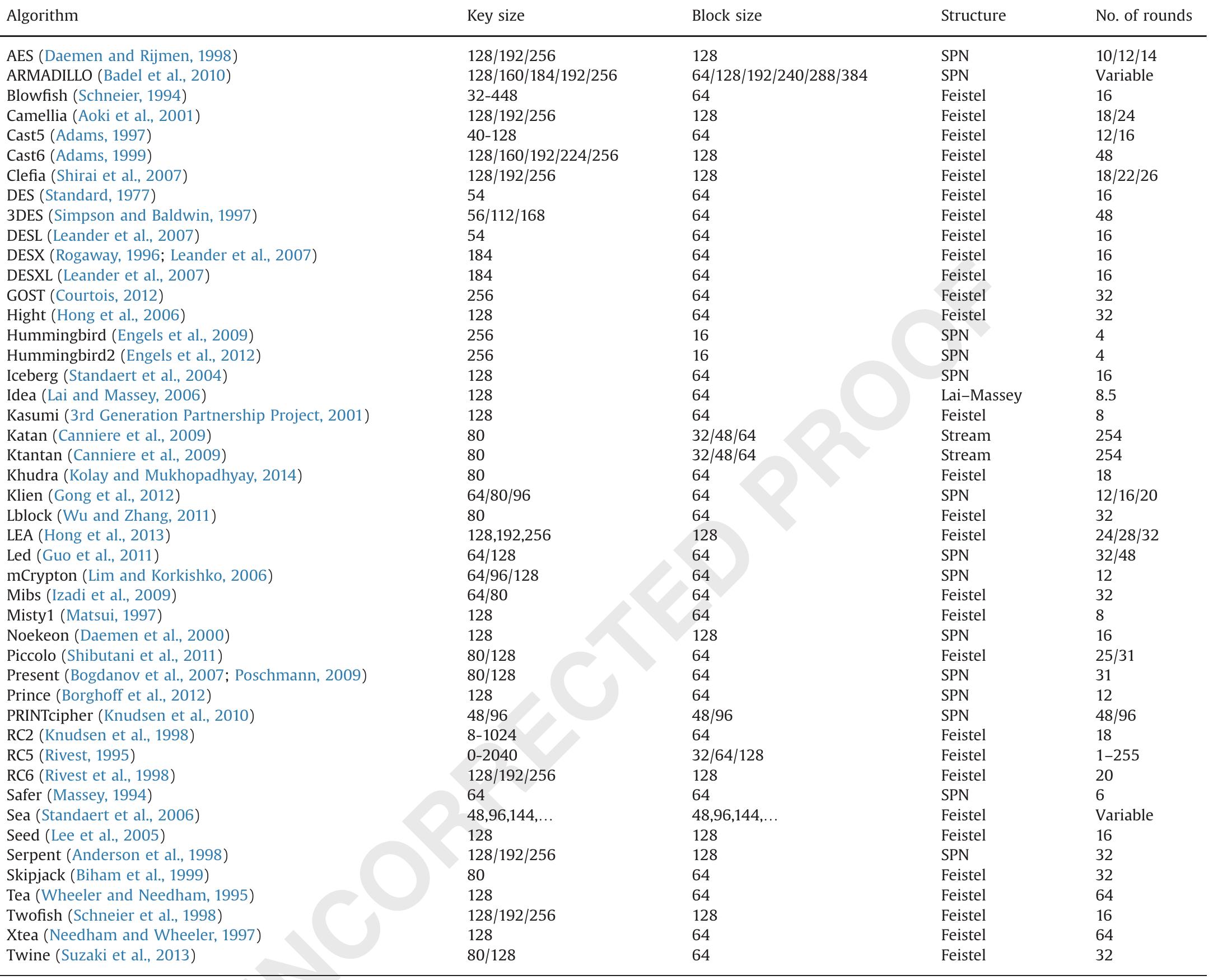
While AES always operates on a fixed 128-bit block size, it supports three distinct key lengths: 128 bits, 192 bits, and 256 bits. Each key size offers a different balance between performance and cryptographic strength:
- AES-128: Utilizes a 128-bit key and executes 10 transformation rounds. It provides a high baseline of security and optimal performance, making it the default choice for resource-constrained environments.
- AES-192: Utilizes a 192-bit key and executes 12 transformation rounds. It provides an intermediate security tier for applications requiring heightened defense margins.
- AES-256: Utilizes a 256-bit key and executes 14 transformation rounds. It offers the highest level of security available in the standard, frequently mandated for classified government data and high-value financial assets.
The Four Core Transformation Rounds
Within each round of encryption (except the final round), the AES algorithm applies four distinct mathematical operations to the State matrix:
- SubBytes: A non-linear substitution step where each byte of the State is replaced with another byte according to a predefined lookup table known as the Rijndael S-box. This introduces confusion, obscuring the mathematical relationship between the key and the ciphertext.
- ShiftRows: A transposition step where the rows of the $4 \times 4$ State matrix are cyclically shifted to the left by varying offsets. This ensures that bytes are dispersed across different columns, preventing structural patterns from leaking.
- MixColumns: A linear mixing operation operating on the columns of the State, combining the four bytes in each column using finite field arithmetic. This step, omitted in the final round, provides diffusion by ensuring that changing a single bit in the input alters multiple bits in the output.
- AddRoundKey: A step where a subkey derived from the main encryption key via the key expansion schedule is combined with the State using a bitwise XOR operation.
| Key Length | Block Size | Number of Rounds | Key Schedule Complexity | Primary Use Cases |
|---|---|---|---|---|
| AES-128 | 128 bits | 10 rounds | Moderate | General web traffic, VPNs, Wi-Fi security (WPA2/WPA3) |
| AES-192 | 128 bits | 12 rounds | High | Enterprise networks, legacy government systems |
| AES-256 | 128 bits | 14 rounds | Very High | Top-secret government data, financial vaults, high-security storage |
Operational Modes and Implementation Considerations
Encrypting a single 128-bit block is rarely sufficient for real-world applications, which typically handle files, streams, or databases spanning gigabytes. To secure arbitrary lengths of data, AES must be deployed within specific modes of operation. These modes dictate how multiple blocks interact and prevent attackers from identifying patterns in identical plaintext blocks.
Popular Modes of Operation
- Electronic Codebook (ECB): The simplest mode, where each plaintext block is encrypted independently with the same key. ECB is insecure for most applications because identical plaintext blocks yield identical ciphertext blocks, visually revealing patterns in data like images or uncompressed graphics.
- Cipher Block Chaining (CBC): Each block of plaintext is XORed with the previous ciphertext block before being encrypted. This introduces a chaining mechanism, ensuring that identical plaintexts yield entirely different ciphertexts. CBC requires an Initialization Vector (IV) and is widely used, though it requires padding for data not aligned to block boundaries.
- Counter Mode (CTR): Converts the block cipher into a stream cipher by encrypting a sequence of successive counter values to generate a keystream, which is then XORed with the plaintext. CTR allows for parallel processing, significantly accelerating performance on multi-core processors.
- Galois/Counter Mode (GCM): Combines Counter mode encryption with Galois message authentication. GCM provides both confidentiality and data integrity (authenticated encryption), making it the gold standard for modern secure communications such as TLS 1.3 and HTTPS.
Practical Advantages and Inherent Limitations
Like any cryptographic technology, AES presents a specific trade-off profile that engineers and security professionals must evaluate before deployment.
Advantages
- Robust Security Margin: Decades of intense academic scrutiny have yielded no practical, scalable attacks against correctly implemented AES. Even the longest-running brute-force projections against AES-256 exceed the estimated lifespan of the universe.
- Hardware Acceleration: Modern computer processors—including Intel, AMD, and ARM architectures—feature dedicated hardware instructions (such as AES-NI) that execute encryption and decryption operations directly on the CPU silicon, drastically reducing performance overhead.
- Global Standardization: As an open, rigorously tested standard supported by major regulatory bodies worldwide, AES ensures seamless interoperability across diverse software ecosystems and hardware platforms.
Limitations
- Symmetric Key Distribution Challenge: Because the same key encrypts and decrypts data, safely sharing that key between parties over an untrusted network requires out-of-band protocols, often solved by combining AES with asymmetric algorithms like RSA or Elliptic-Curve Cryptography (ECC) during an initial handshake.
- Vulnerability to Implementation Flaws: The mathematical integrity of AES does not protect against poor implementation practices, such as weak random number generation for Initialization Vectors, insecure key storage, or side-channel attacks (monitoring power consumption or electromagnetic emissions during processing).
Frequently Asked Questions
Can AES be cracked using quantum computers?
While quantum computing poses a theoretical threat to modern cryptography, AES is notably resilient. Grover’s algorithm, a quantum search method, can theoretically reduce the effective security of AES by half—meaning AES-128 would offer strength equivalent to a 64-bit key. However, AES-256 remains secure against quantum attacks, as doubling the key length restores the full security margin.
What is the difference between AES-128 and AES-256?
The primary differences lie in the key length, the number of transformation rounds, and the computational complexity. AES-128 uses a 128-bit key and 10 rounds, whereas AES-256 uses a 256-bit key and 14 rounds. While AES-256 offers a higher security margin for classified data, AES-128 is faster and more than sufficient for standard commercial and consumer applications.
Is AES patented or restricted for commercial use?
No. The Rijndael cipher was adopted by NIST as a federal standard and placed into the public domain for worldwide royalty-free use. Any individual, developer, or enterprise can implement AES in commercial software or hardware without paying licensing fees.
How does AES handle data blocks larger than 128 bits?
AES itself does not natively support block sizes other than 128 bits. To secure larger volumes of data, applications rely on operational modes like CBC or GCM, which chain or stream blocks together, rather than altering the underlying block cipher definition.
Why is AES considered superior to DES?
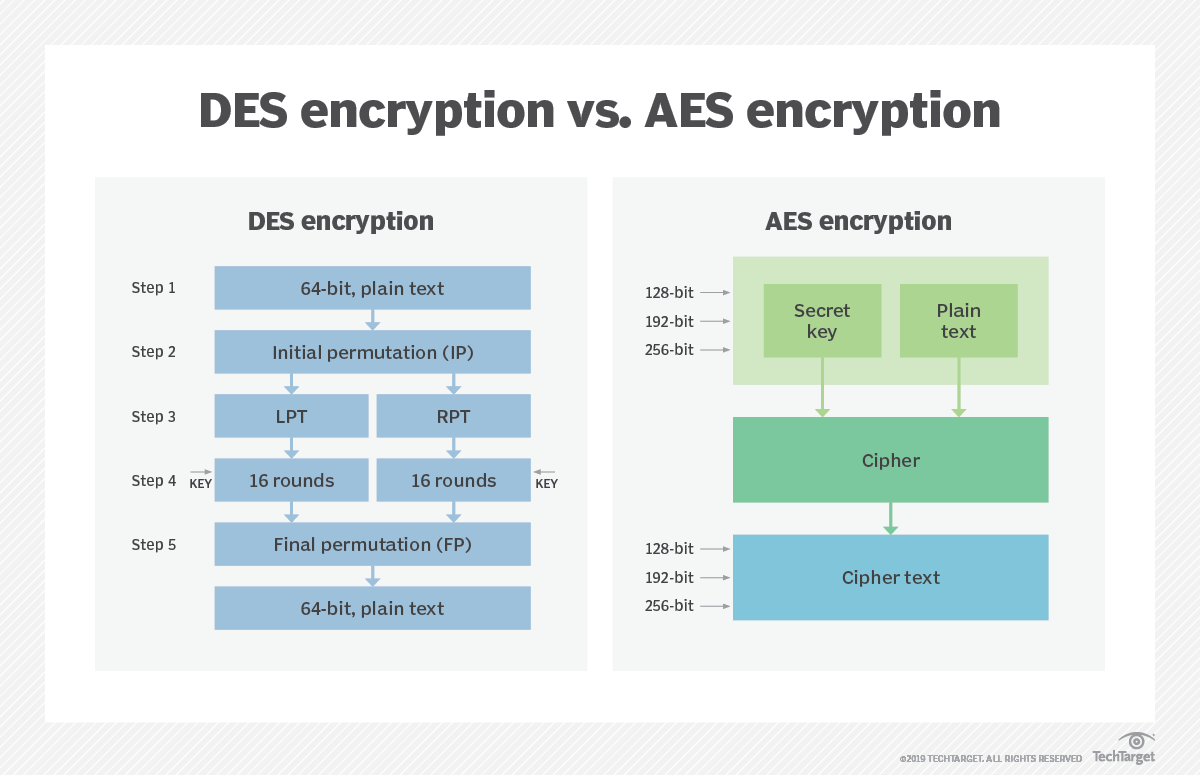
AES replaced DES primarily because DES utilized a critically short 56-bit key, making it vulnerable to brute-force attacks by modern computing standards. Furthermore, AES features a much larger block size (128 bits versus DES's 64 bits), mitigating risks associated with block collision vulnerabilities like the sweet32 attack.
Conclusion and Next Actions
The Advanced Encryption Standard remains the undisputed benchmark for symmetric cryptography. Its combination of mathematical rigor, flexible key lengths, and hardware-accelerated efficiency ensures that it will protect digital infrastructure for the foreseeable future. When designing secure systems or evaluating software solutions in 2026, verify that implementations utilize authenticated encryption modes like AES-GCM, ensure secure key management lifecycles, and leverage hardware acceleration instructions wherever possible to maintain optimal performance without sacrificing security.