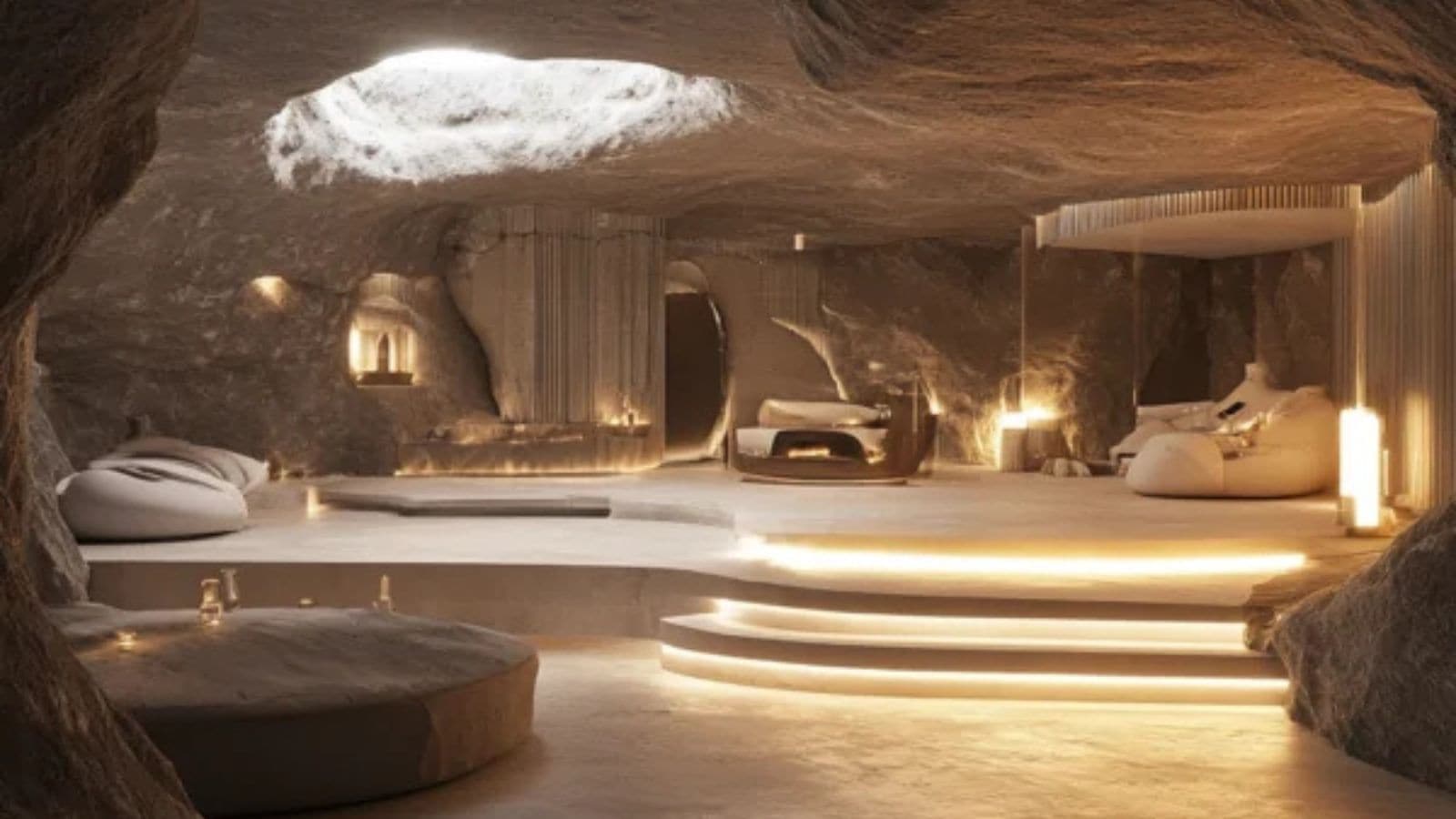
The Aerie bunker luxury survival habitat represents the pinnacle of high-end, autonomous protective architecture, designed to provide long-term life support and physical security against global catastrophes. Integrating advanced NBC filtration, sustainable energy systems, and elite interior design, these habitats offer a self-sustaining sanctuary for those prioritizing safety without compromising on the comforts of modern high-society living.
Redefining the Luxury Survival Paradigm
As we navigate 2026, the concept of a "fallout shelter" has been fundamentally transformed. No longer relegated to damp, cramped concrete cells, the modern luxury survival habitat—specifically the Aerie model—is a marvel of engineering that functions more like a subterranean five-star estate than a tactical retreat. The term "Aerie" traditionally refers to the nest of a bird of prey built on a high, inaccessible place. In the context of survival architecture, it signifies a position of strategic advantage, superior visibility, and elite isolation.
The primary distinction between a standard bunker and a luxury habitat like the Aerie lies in the concept of psychological sustainability. Surviving an event is a matter of engineering; thriving through one is a matter of design. Technical experts in the field of "defensive architecture" emphasize that the human mind requires natural light (or its perfect simulation), open spaces, and aesthetic stimulation to prevent the onset of "subterranean malaise"—a psychological condition characterized by depression, cognitive decline, and irritability common in long-term isolation.
The Aerie habitats address these needs through high ceilings, "virtual windows" that utilize 8K live-feed cameras from the surface, and sophisticated circadian lighting systems that mimic the natural movement of the sun. These features ensure that residents can maintain a sense of time and normalcy, which is critical for long-term mental health during extended periods of sheltering-in-place.
Structural Integrity and Ballistic Engineering
The foundation of any Aerie survival habitat is its structural resilience. These units are typically constructed using high-performance concrete (HPC) reinforced with carbon fiber and volcanic basalt rebar, which offers superior tensile strength and corrosion resistance compared to traditional steel. In 2026, the standard for a luxury tier habitat is the ability to withstand a direct strike from a 2,000-pound "bunker buster" munition or a close-proximity seismic event measuring 9.0 on the Richter scale.
Blast Doors and Entry Protocols
The entry point of an Aerie habitat is a multi-stage process. The primary external door is usually a stealth-integrated blast hatch, camouflaged to match the surrounding topography—whether that be a mountain face, a forest floor, or an unassuming residential basement. Beneath the surface, residents encounter a series of naval-grade pneumatic blast doors. These doors are designed to create an airtight seal, preventing the ingress of toxic gases or overpressure from external explosions.
Internal security is managed via an airlock decompression chamber. This space serves a dual purpose: it acts as a final barrier against physical intruders and functions as a decontamination zone. Advanced sensors in the airlock scan for chemical, biological, and radiological (CBR) particulates before the inner door allows access to the main living quarters. This "defense-in-depth" strategy ensures that the interior remains a pristine environment regardless of the chaos on the surface.
Advanced Life Support Systems (ALS)
The "living" aspect of the Aerie habitat is powered by a complex network of Life Support Systems (LSS) that rival those found on the International Space Station. For a habitat to be truly "luxury," it must be completely autonomous, requiring zero input from the outside world for durations ranging from five to ten years.
NBC Air Filtration and Positive Pressure
The heart of the habitat is the Nuclear, Biological, and Chemical (NBC) filtration system. These systems utilize a series of HEPA and ULPA filters, combined with activated carbon banks, to scrub the air of 99.99% of known pathogens and radioactive dust. To ensure total safety, the habitat maintains positive air pressure. By keeping the internal air pressure slightly higher than the external atmosphere, the habitat naturally pushes air out of any microscopic cracks or when doors are opened, preventing contaminated air from leaking in.
Water Independence and Recirculation
Water is the most critical resource in any survival scenario. Aerie habitats typically employ a three-tier water strategy:
- Deep-Aquifer Wells: A private, onsite well drilled deep enough to avoid surface-level contamination.
- Atmospheric Water Generators (AWG): These devices extract humidity from the air, providing a backup source of potable water even if the groundwater is compromised.
- Closed-Loop Reclamation: Every drop of water within the habitat—from showers, sinks, and even humidity—is captured, treated through multi-stage reverse osmosis and UV sterilization, and recycled for greywater or irrigation use.
Energy Autonomy: The Micro-Grid
In 2026, the Aerie habitats have moved away from loud, fuel-dependent diesel generators. Instead, they utilize solid-state battery arrays coupled with redundant power sources. Many elite installations favor geothermal heat pumps for consistent climate control and modular molten salt batteries for long-term energy storage. If the surface environment allows, low-profile solar arrays or wind turbines are used, but the core "survival" energy usually comes from redundant, vibration-isolated backup systems hidden deep underground.
Interior Design: The Convergence of Safety and Elegance
An Aerie habitat is defined by its refusal to look like a bunker. The interiors are often handled by world-class architectural firms specializing in "biophilic design." This involves integrating natural elements like indoor hydroponic vertical gardens, which provide both fresh oxygen and a psychological connection to the living world.
The Great Room and Living Quarters
The central living area, or "Great Room," usually features high-vaulted ceilings to eliminate the feeling of being underground. Wood veneers, stone finishes, and high-end fabrics are used throughout, but they are all treated with fire-retardant and antimicrobial coatings. Furniture is often modular, allowing the space to be reconfigured from a lounge to a briefing room or a dining hall.
Medical and Wellness Facilities
A luxury habitat is incomplete without a dedicated medical suite. Given that professional medical help may be unavailable during a crisis, Aerie habitats often include:
- Telemedicine Hubs: High-bandwidth satellite links for remote consultations.
- Automated Diagnostics: AI-driven medical pods capable of performing blood analysis, imaging, and basic surgical assistance.
- Fitness Centers: Specialized equipment for maintaining bone density and cardiovascular health in a confined environment.
Security and Defense Protocols
While the physical structure provides the shield, the Aerie's integrated security system provides the sword. The 2026 iterations of these habitats feature autonomous perimeter monitoring. AI-driven cameras with thermal and infrared capabilities monitor the surrounding terrain for miles, using motion-tracking algorithms to distinguish between local wildlife and potential human threats.
Passive and Active Countermeasures
Security for an Aerie habitat focuses on low-signature operations. The best defense is being invisible. However, if the habitat is discovered, it is equipped with tiered countermeasures. This can include non-lethal acoustic deterrents, strobe-light arrays to disorient intruders, and reinforced ballistic glass that can withstand sustained small-arms fire. All security functions are managed from a centralized "Command Center" within the bunker, which also monitors the health of the life support systems and the status of the food stores.
Cost Considerations and Investment Value
Investing in an Aerie luxury survival habitat is not merely a purchase; it is a legacy real estate transaction. As of 2026, these properties are increasingly seen as "insurance for the ultra-wealthy," holding their value as both a habitable residence and a specialized asset class.
| Feature | Standard Shelter | Aerie Luxury Habitat |
|---|---|---|
| Air Filtration | Basic HEPA / Manual Crank | Dual-Redundant NBC / AI-Managed |
| Water Supply | Storage Tanks (Finite) | Deep Well + Closed-Loop Reclamation |
| Power Duration | 2-4 Weeks (Diesel) | 5-10 Years (Geothermal/Solid-State) |
| Psychological Design | Industrial/Cramped | Biophilic/Spacious/Virtual Windows |
| Security | Manual Locks/Camouflage | AI-Perimeter Defense/Biometric Access |
| Estimated Cost (2026) | $50,000 - $250,000 | $3.5 Million - $25 Million+ |
The wide range in cost for the Aerie habitat is due to the degree of customization. Factors such as the geological difficulty of the site (e.g., solid granite vs. soft soil), the depth of the installation, and the level of interior luxury (e.g., private cinemas, wine cellars, or swimming pools) can significantly influence the final price.
Common Misconceptions About Survival Habitats
There are several myths regarding luxury bunkers that are important to address for potential investors or researchers:
- "Bunkers are only for nuclear war." In reality, most modern owners purchase these habitats as protection against civil unrest, pandemics, or extreme weather events caused by climate instability.
- "You will run out of oxygen." Modern NBC systems are more than capable of scrubbing CO2 and replenishing O2 indefinitely, provided there is a power source.
- "They are illegal." While building permits can be complex, especially regarding deep-earth excavation and "off-grid" utilities, these are legal private residences in most jurisdictions, provided they meet local safety and structural codes. You can find more information on emergency building standards through FEMA’s Safe Room guidelines.
FAQs About Aerie Survival Habitats
How long can a family realistically live in an Aerie habitat?
Most Aerie habitats are provisioned for a minimum of one year of total isolation, but the life support systems are engineered for a 10-year operational lifespan. With the inclusion of hydroponic food production and indefinitely renewable energy (like geothermal), the theoretical limit is governed more by the lifespan of the mechanical components than by resource depletion.
Is the location of the bunker kept secret?
For the highest tier of Aerie habitats, location security is paramount. The manufacturers often use non-disclosure agreements (NDAs) and specialized transport for construction crews to ensure the exact coordinates remain confidential. However, for "residential" luxury bunkers, they are often located on existing private estates with the bunker entrance hidden within a primary home.
What kind of maintenance is required for these systems?
Like a high-performance aircraft, a survival habitat requires regular maintenance. This includes periodic testing of the NBC filters, battery health checks, and "cycling" the water systems to prevent stagnation. Many Aerie owners opt for a "White Glove" maintenance contract where cleared technicians perform quarterly inspections.
Can I bring pets into the habitat?
Yes, but it requires planning. Aerie habitats can be equipped with specialized pet waste management systems and dedicated "green patches" for animals. However, the air filtration load must be calculated to account for the additional biological load and dander.
Are these habitats protected against EMPs?
Yes. Aerie luxury habitats are built with integrated Faraday cages. The structural concrete is often embedded with a conductive copper mesh that redirects Electromagnetic Pulse (EMP) energy around the interior space, protecting sensitive electronics, medical equipment, and the micro-grid controllers.
Strategic Recommendation for 2026
For those considering the acquisition of an Aerie luxury survival habitat, the first step is a geological and threat-assessment audit. It is essential to choose a location that is geologically stable and outside of major flood zones or projected sea-level rise areas.
Work with an architectural firm that understands both the aesthetics of luxury and the cold mathematics of survival. The ultimate goal is to create a space that you would enjoy living in today, which happens to be capable of protecting you tomorrow. If you are beginning your research, consult the American Society of Heating, Refrigerating and Air-Conditioning Engineers (ASHRAE) for standards on indoor air quality in confined spaces to understand the technical requirements of your potential sanctuary.