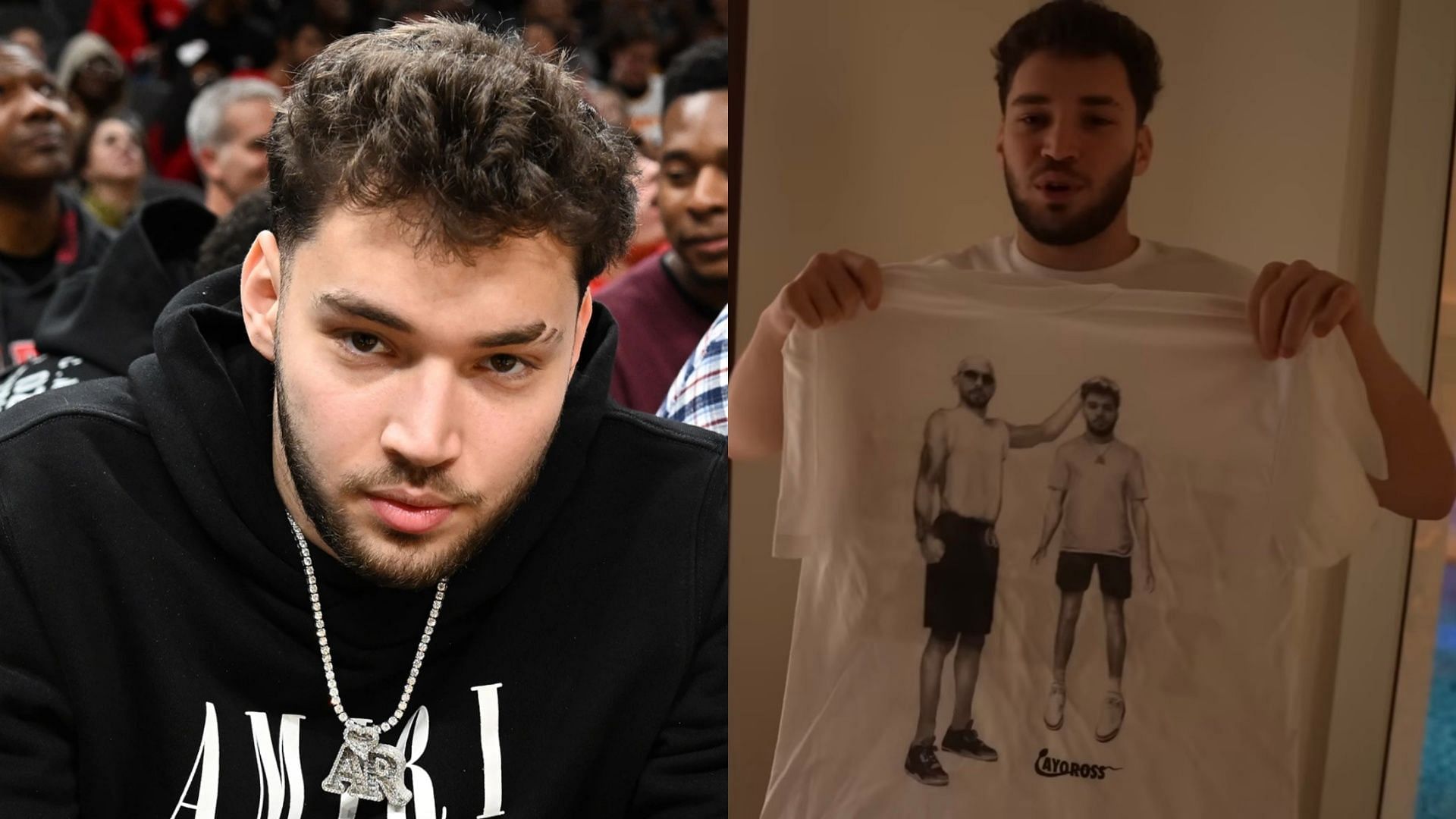
Adin Ross achieved significant financial success primarily through consistent long-form live streaming on major platforms, supplemented by high-value brand sponsorships and strategic cross-platform content distribution. His income model relies on a combination of platform-specific monetization, direct partnership deals, and the ability to leverage massive audience engagement to attract corporate interest.
The professional trajectory of Adin Ross serves as a definitive case study in the modern creator economy. By analyzing the mechanics of his revenue generation, it becomes clear that his financial growth was not the result of a single viral moment, but rather the execution of a multi-channel monetization strategy. To understand how he built his wealth, one must examine the intersection of platform engagement, direct audience monetization, and corporate brand integration.
The Foundation: Platform-Based Monetization
The primary engine of Adin Ross’s early career was live streaming. The fundamental mechanism here involves generating revenue through platform-native tools. On platforms such as Twitch, and later Kick, creators monetize their viewership through three primary avenues: subscriptions, advertisements, and virtual gifts.
Subscriptions and Membership Models
Subscriptions represent the most stable form of income for a streamer. When viewers pay a monthly fee to access exclusive perks—such as custom emotes, badge flair, and ad-free viewing—the streamer receives a percentage of that fee. In the early stages of a career, this creates a predictable baseline of monthly income. As an audience grows into the hundreds of thousands, the volume of subscribers can sustain a significant baseline revenue, even before factoring in other income streams.
Ad Revenue and Engagement Metrics
Ad revenue is a byproduct of high concurrent viewership. Platforms utilize pre-roll and mid-roll advertisements to monetize the audience. For a creator with the scale of Adin Ross, the value lies in the "CPM" (cost per mille, or cost per thousand impressions). Advertisers pay a premium to reach demographic segments that are typically difficult to capture through traditional television, specifically the 18-34 age bracket. By maintaining high engagement levels, Ross maximizes the frequency of these ad deployments, turning casual viewers into revenue-generating impressions.
The Shift to Brand Deals and Partnerships
While platform monetization provides a steady stream, high-net-worth individual growth in the streaming space is almost always accelerated by brand partnerships. Unlike ad revenue, which is platform-controlled, brand deals are direct contracts negotiated between the creator and the company.
The Dynamics of Sponsorships
Brand sponsorships in the streaming industry generally fall into three categories: direct product placements, integrated content segments, and multi-month ambassadorships.
- Product Placements: The creator uses or displays a product during a stream.
- Integrated Segments: The creator dedicates a portion of a broadcast to demonstrating or discussing a sponsor’s service, often with a unique discount code to track conversion.
- Ambassadorships: A long-term commitment where the creator becomes the face of a brand, often involving appearances at events, social media posts, and exclusive, brand-specific broadcasts.
For Ross, the transition toward high-end sponsorship deals was facilitated by his ability to generate "cultural moments." When a creator can move the needle on product adoption or app downloads within a few hours of live airtime, their leverage during contract negotiations increases exponentially.
Strategic Platform Migration
One of the most significant financial shifts in Ross’s career occurred during his migration between streaming platforms. In the creator economy, moving to a new platform is often accompanied by a "signing bonus" or an exclusive contract. These deals are calculated based on the audience size a creator brings with them and the projected growth they will drive for the new platform.
By strategically choosing where to host his content, Ross moved beyond simple passive income (subscriptions/ads) into the realm of equity-style compensation and high-value contracts. This move highlighted the value of "platform portability"—the ability to command a massive, loyal audience that is willing to follow a creator regardless of the technological infrastructure being used to host them.
Comparing Monetization Models
The following table outlines the differences between the primary revenue streams typically utilized by top-tier streamers.
| Revenue Stream | Nature of Income | Predictability | Primary Driver |
|---|---|---|---|
| Subscriptions | Recurring | High | Fan loyalty/Community |
| Platform Ads | Variable | Low/Medium | Concurrent viewership |
| Brand Deals | Contractual | High | Brand alignment/Reach |
| Platform Exclusivity | Fixed/Stipend | Very High | Audience size/Migration |
The Role of Viral Content and Cross-Platform Distribution
Success in streaming is rarely contained within a single platform. The "funnel" approach is a critical component of maximizing income. This involves using short-form content platforms—such as TikTok, Instagram Reels, and YouTube Shorts—to drive traffic back to the primary live-streaming platform.
By clipping highlights from his long-form streams and distributing them across various social channels, Ross created a constant acquisition loop. New viewers discover him through viral clips, follow him on social media, and are eventually converted into viewers on his primary live-streaming platform. This cross-pollination increases the aggregate value of his brand, as sponsors are interested not just in live-stream impressions, but in the total reach across all digital touchpoints.
Prerequisites for Scaling a Streaming Business
To replicate the financial model seen in top-tier streaming careers like that of Adin Ross, specific prerequisites must be met. These are not merely technical but operational and personal.
- Audience Retention: It is not enough to get viewers; they must return. This requires consistent scheduling and content that feels authentic to the community.
- Infrastructure Investment: High-quality streaming requires professional-grade hardware, including high-bitrate encoding setups, professional lighting, and audio fidelity that keeps viewers engaged for multi-hour sessions.
- Negotiation Leverage: As a creator matures, they must hire representation to manage the legalities of high-value brand deals. Understanding the value of one's own data—such as audience demographics and average watch time—is essential for securing favorable contracts.
- Risk Management: Public-facing careers are subject to platform policies. Diversifying income streams ensures that a decline in one area (e.g., a dip in platform ad rates) does not result in a total loss of income.
Common Challenges and Operational Limitations
While the financial rewards are significant, the streaming industry is subject to high volatility. Platform guidelines (Terms of Service) evolve frequently, and a violation can result in demonetization or temporary bans, which directly impact the creator's bottom line.
Furthermore, the "burnout" factor is a tangible operational limitation. Streaming is a high-pressure environment that requires the creator to perform while maintaining active, real-time engagement. This constant state of performance can limit the longevity of a career unless the creator successfully transitions into other business ventures, such as production, talent management, or physical product lines.
Frequently Asked Questions
Did Adin Ross make his money solely from Twitch?
No. While Twitch was his primary platform during his rise to prominence, he also diversified into other streaming platforms and leveraged brand deals that were independent of his Twitch revenue. His income is an aggregate of several sources.
How do brand deals change a streamer's income compared to platform ads?
Brand deals provide a fixed, guaranteed income based on contract terms, whereas platform ads are variable and fluctuate based on viewership numbers and platform-wide ad-market conditions. Brand deals offer stability in an otherwise volatile industry.
What is the most important factor in a streamer's earning potential?
Audience reach and engagement are the most critical factors. High viewership drives ad revenue, but deep engagement (a loyal audience) drives the conversion rates that make a creator valuable to high-paying sponsors.
Is streaming a sustainable long-term business?
It can be, provided the creator evolves. Most successful streamers move from being "employees" of a platform to "entrepreneurs," starting their own brands, investing in other ventures, and moving away from relying purely on ad-share revenue.
How do streamers handle the taxes on their earnings?
Professional streamers are typically classified as independent contractors or small business owners. They are responsible for managing their own taxes, business expenses, and potentially payroll if they maintain a production team, requiring professional accounting and legal support.
Final Action: Professionalizing Your Content Strategy
If you are a creator looking to build a career based on the model of streaming and brand deals, your next action should be to treat your content as a business entity rather than a hobby. Begin by auditing your current audience analytics. Understand who your viewers are, where they are located, and what content triggers the highest engagement. Once you have this data, invest in professional outreach to brands that align with your content niche. Avoid mass-emailing generic media kits; instead, create a case study showing how your engagement can lead to tangible results for a specific brand.