Acts of bullying in American schools are defined as unwanted, aggressive behaviors involving a real or perceived power imbalance that is repeated over time. These behaviors range from physical violence and verbal harassment to social exclusion and sophisticated cyberbullying, significantly impacting student mental health, academic performance, and the overall school climate across the United States.
Defining the Core Components of Bullying
To address bullying effectively within the American education system, one must first distinguish it from general conflict or peer disagreement. As of 2026, educators and school psychologists adhere to a rigorous definition that separates bullying from "rough play" or isolated incidents of unkindness. For an act to be classified as bullying, it generally must satisfy three specific criteria.
First, there is an imbalance of power. This power differential is not always physical; it can involve social standing, access to embarrassing information, or numerical superiority. A student who uses their popularity to alienate a peer is exercising power just as much as a student who uses physical size to intimidate others. In the modern classroom, this power may also manifest through technological proficiency, where one student uses digital tools to harass another who lacks the means to defend themselves online.
Second, the behavior is characterized by repetition. While a single aggressive act is problematic and may require discipline, bullying is defined by its persistent nature. It is a pattern of behavior that happens more than once or has a high likelihood of being repeated. This repetition creates a state of constant hyper-vigilance in the victim, which is often more damaging than the individual acts themselves.
Third, there is intent to harm. Unlike an accidental injury during a sports game, acts of bullying are calculated. The goal of the perpetrator is to cause physical pain, emotional distress, or social degradation. Understanding this intent is crucial for administrators when determining the appropriate level of intervention and whether the behavior constitutes a violation of civil rights.
The Spectrum of Bullying Behaviors in 2026
The methods by which students target one another have evolved alongside technology and social norms. In 2026, we categorize these acts into four primary domains, each presenting unique challenges for identification and remediation.
Physical Bullying
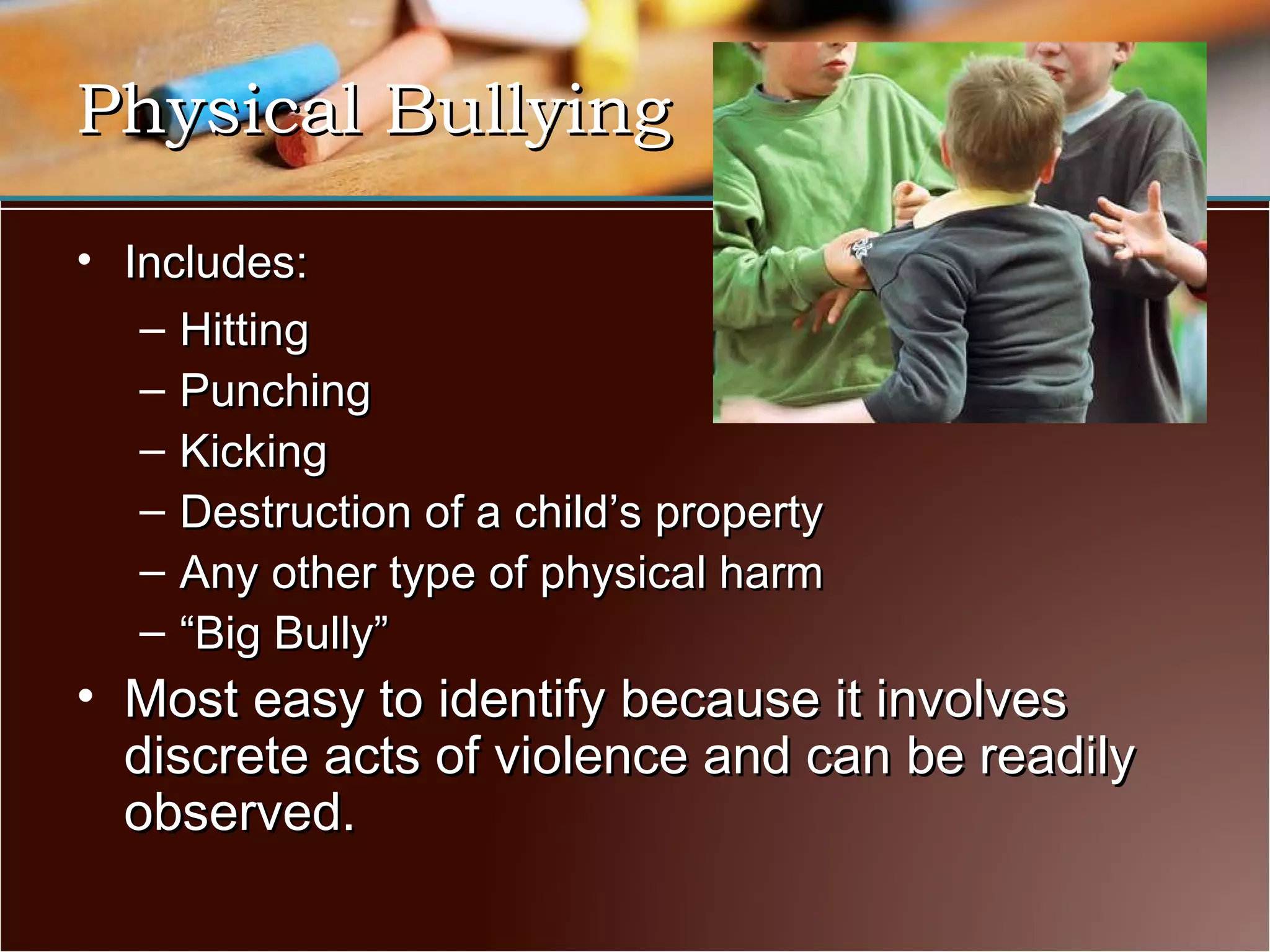
Physical bullying remains the most visible form of harassment. It involves hurting a person’s body or damaging their possessions. Common acts include hitting, kicking, tripping, pushing, and taking or breaking someone's property. While many schools have implemented zero-tolerance policies regarding physical violence, these acts often occur in "blind spots" such as locker rooms, hallways during transition periods, or on school buses where adult supervision may be less direct.
Verbal Bullying
Verbal bullying involves saying or writing mean things. This includes teasing, name-calling, inappropriate sexual comments, taunting, and threatening to cause harm. Because verbal bullying leaves no physical scars, it is frequently dismissed as "just words." However, the cumulative effect of verbal abuse can lead to severe psychological trauma. In the U.S. school system, verbal bullying that targets a protected class (such as race, religion, or disability) may elevate the incident to a "harassment" claim under federal law.
Social and Relational Bullying
Often referred to as "covert bullying," social bullying is designed to hurt someone’s reputation or relationships. Acts include leaving someone out on purpose, telling other students not to be friends with someone, spreading rumors, and embarrassing someone in public. Relational aggression is particularly prevalent in middle school environments and can be more difficult for teachers to detect because it often relies on subtle social cues and "whisper campaigns" rather than overt aggression.
Cyberbullying: The Digital Frontier
By 2026, cyberbullying has become perhaps the most pervasive form of harassment due to the ubiquity of mobile devices and social media integration in learning. Unlike traditional bullying, cyberbullying does not end when the school bell rings; it follows the student home. Acts of cyberbullying include:
- Posting hurtful or defamatory content on social media platforms.
- The use of deepfake technology or AI-generated imagery to create non-consensual, embarrassing, or sexually explicit content of peers.
- Exclusion from digital social groups or gaming platforms.
- "Doxing," or the unauthorized release of private information to encourage wider harassment.
The persistence and potential anonymity of digital acts make them especially damaging, as the audience for the bullying can reach hundreds or thousands of people instantly.
The Legal Landscape: Federal and State Obligations
In the United States, there is no single federal "anti-bullying" law. Instead, bullying is addressed through a patchwork of state statutes and federal civil rights laws. As of 2026, all 50 states have passed anti-bullying legislation, though the requirements and definitions vary significantly by jurisdiction.
Federal Civil Rights and Title IX
When bullying is based on a student's race, color, national origin, sex, disability, or religion, it may overlap with "discriminatory harassment." Under federal laws enforced by the U.S. Department of Education’s Office for Civil Rights (OCR), schools are legally obligated to address harassment that creates a hostile environment.
If a school receives a report of harassment, they are required to take immediate and appropriate action to investigate what happened. If the investigation reveals that discriminatory harassment occurred, the school must take steps to end the harassment, prevent its recurrence, and, as appropriate, remedy its effects. Title IX specifically protects students from harassment based on sex, which includes sexual orientation and gender identity.
State-Level Requirements
Most state laws require school districts to develop and implement formal anti-bullying policies. These policies typically include:
- A clear definition of prohibited behavior.
- Procedures for reporting incidents (including anonymous reporting).
- Timelines for investigations.
- Standardized disciplinary consequences.
- Support services for both the victim and the perpetrator.
| Type of Bullying | Common Examples | Primary Setting | Legal/Policy Context |
|---|---|---|---|
| Physical | Hitting, theft, destruction of property | Hallways, playgrounds, buses | School code of conduct; potential criminal assault |
| Verbal | Name-calling, threats, taunting | Classrooms, cafeterias | First Amendment limits; harassment policies |
| Social | Rumor spreading, social exclusion | Social media, lunchrooms | Relational aggression; school climate standards |
| Cyber | Deepfakes, harassment via apps, doxing | Off-campus (digital) | State cyber-harassment laws; "nexus" to school disruption |
The Psychological and Academic Impact
The consequences of bullying in American schools are profound and long-lasting. For the victim, the experience often triggers a cascade of mental health challenges. Research from the Centers for Disease Control and Prevention (CDC) consistently links bullying to increased risks for depression, anxiety, sleep difficulties, and lower academic achievement.
Impact on the Victim
Students who are bullied are more likely to experience "school avoidance," where they fake illness or skip classes to avoid their tormentors. Academically, the stress of bullying impairs cognitive function and focus, leading to a decline in GPA and standardized test scores. In the most severe cases, persistent bullying has been a contributing factor in instances of self-harm and youth suicide.
Impact on the Perpetrator
It is a common misconception that bullies are simply "mean" children. Often, those who engage in bullying behavior are at higher risk for substance abuse, academic failure, and involvement in the criminal justice system later in life. In 2026, many school districts have moved toward a "supportive discipline" model that seeks to address the underlying trauma or behavioral issues driving the bully's actions, rather than relying solely on suspension or expulsion.
Impact on the Bystander
The "silent majority" of students who witness bullying are also affected. Bystanders often report feeling guilty for not intervening or fearful that they will be the next target. This creates a culture of fear that erodes the educational environment for everyone, not just those directly involved in the conflict.
Prevention and Intervention Strategies
Effective prevention requires a multi-tiered approach that involves students, parents, administrators, and the community. By 2026, the focus in U.S. schools has shifted from reactive punishment to proactive culture-building.
Social-Emotional Learning (SEL)
Many schools have integrated SEL into their core curriculum. These programs teach students how to manage emotions, set and achieve positive goals, feel and show empathy for others, and establish and maintain positive relationships. By fostering empathy, schools can reduce the likelihood of students resorting to bullying to resolve conflicts or gain social status.
Restorative Justice Practices
Rather than traditional punitive measures, some districts utilize restorative justice. This involves bringing the victim and the perpetrator together (when safe and appropriate) with a trained facilitator to discuss the harm caused and how to make things right. This process emphasizes accountability and healing over mere punishment.
Digital Citizenship Training
Given the rise of cyberbullying, digital citizenship has become a mandatory component of school health and technology classes. This training teaches students the ethics of online interaction, the permanence of their digital footprint, and how to identify and report digital harassment or AI-generated misinformation.
Reporting Mechanisms
For a reporting system to be effective, students must trust that their concerns will be taken seriously and handled with discretion. Schools in 2026 frequently use anonymous reporting apps and dedicated safety hotlines, such as those promoted by StopBullying.gov, to ensure that the fear of retaliation does not prevent students from coming forward.
Frequently Asked Questions
What is the difference between bullying and harassment?
While the terms are often used interchangeably, "bullying" is a general term for aggressive behavior with a power imbalance. "Harassment" typically refers to bullying that is based on a protected characteristic, such as race, sex, religion, or disability. Harassment often triggers specific legal obligations for schools under federal civil rights laws that general bullying may not.
Can a school be held liable for bullying that happens off-campus?
Yes, in many jurisdictions. If off-campus bullying—particularly cyberbullying—creates a "substantial disruption" to the educational environment or interferes with a student's ability to participate in school, the administration has the authority, and often the obligation, to intervene. This was reinforced by several landmark court cases involving student speech and digital harassment.
How can parents identify if their child is being bullied?
Warning signs include unexplained physical injuries, lost or destroyed personal items, frequent headaches or stomachaches, changes in eating habits, difficulty sleeping, declining grades, and a sudden loss of friends or avoidance of social situations. A child who is being cyberbullied may become unusually upset or secretive after using their phone or computer.
What should a parent do if the school fails to act?
If a school does not adequately address a bullying report, parents should escalate the matter to the district superintendent or the local board of education. If the bullying involves discrimination based on a protected class, a formal complaint can be filed with the U.S. Department of Education’s Office for Civil Rights. Documentation of all incidents and communications with the school is essential during this process.
Are "Zero-Tolerance" policies effective against bullying?
Most educational experts and organizations, including the National Association of School Psychologists, argue that zero-tolerance policies are often ineffective. These policies can lead to disproportionate discipline and do not address the root causes of the behavior. Modern best practices favor a combination of clear consequences and behavioral support services.
Recommended Actions for Parents and Educators
If you suspect a student is involved in acts of bullying, immediate documentation is the first priority. Keep a detailed log of dates, times, locations, and any witnesses to the incidents. For cyberbullying, take screenshots of the offensive content immediately, as digital evidence can be easily deleted.
Schedule a formal meeting with the school counselor or principal rather than relying on informal emails. Request a copy of the school's anti-bullying policy to ensure they are following their own established procedures. Finally, focus on the psychological well-being of the student; professional counseling can be a vital tool in helping a victim regain their confidence and sense of safety within the American school system.