The prevalence of killings in Acapulco is primarily driven by violent competition between fragmented criminal organizations vying for control over drug trafficking routes and local extortion rackets. While the city remains a major tourism hub, systemic security challenges persist in 2026, necessitating high levels of traveler vigilance and a deep understanding of the local socio-political landscape.
Acapulco, a city that once defined international luxury and Hollywood glamour, has undergone a profound and often tragic transformation over the last two decades. The "Acapulco killings" is a term that encompasses a complex web of cartel warfare, localized gang disputes, and the socio-economic fallout of natural disasters. To understand the current security situation in 2026, one must look beyond the headlines and examine the structural causes of violence, the evolution of criminal groups, and the effectiveness of government interventions.
The Evolution of Violence in Acapulco (2006–2026)
The surge in homicides in Acapulco is not a recent phenomenon but the result of a long-term destabilization of the criminal underworld. The turning point is widely considered to be 2006, when the Mexican federal government launched its intensified military offensive against drug cartels. Acapulco, as a strategic port city on the Pacific coast, became a primary battleground.
For years, the city was under the relatively stable control of the Beltrán Leyva Organization (BLO). However, the killing of Arturo Beltrán Leyva in 2009 by Mexican Marines triggered a massive internal fracture. This "atomization" of criminal groups replaced a single, disciplined hierarchy with dozens of smaller, more aggressive cells. These groups, lacking the international reach of their predecessors, turned toward "predatory" crimes against the local population, such as kidnapping and extortion, which significantly increased the homicide rate.
By the early 2020s, Acapulco consistently ranked among the most violent cities in the world per capita. The violence was no longer confined to remote mountain areas or poor peripheries; it began to spill into the "Zona Dorada" (Golden Zone), affecting businesses and occasionally tourists. In 2026, the city continues to grapple with these historical scars while attempting to rebuild its reputation as a safe destination.
Primary Drivers of the Conflict
The "killings" are rarely random acts of street crime. Instead, they are typically targeted executions or the result of territorial disputes. Understanding the drivers is essential for contextualizing the risk.
Territorial Control and "Plazas"
In the terminology of Mexican organized crime, a "plaza" is a specific territory or city used for illegal activities. Acapulco is a vital plaza because of its coastal location, providing access to maritime routes for precursor chemicals coming from Asia and a transit point for South American cocaine heading north. Groups fight for control of the port and the highway corridors (such as the Autopista del Sol) that connect the coast to Mexico City.
The Extortion Economy
Perhaps more than drug trafficking, extortion (locally known as "cobro de piso") is the primary driver of daily violence and small-scale killings in Acapulco. Criminal groups demand weekly or monthly payments from everyone—from luxury hotel owners and restaurateurs to tortilla vendors and taxi drivers. Failure to pay often results in targeted killings or the burning of the business. This creates a cycle of violence that is difficult for local police to break, as many victims are too intimidated to testify.
Fragmented Criminal Groups
As of 2026, the criminal landscape in Guerrero state is highly fragmented. Major players like the Cartel Jalisco Nueva Generación (CJNG) and the Sinaloa Cartel maintain a presence, but much of the violence is attributed to local factions such as the Independent Cartel of Acapulco (CIDA) and remnants of the Los Rojos or Los Ardillos. Because these groups are smaller and often poorly funded, they are more prone to volatile shifts in leadership and frequent, violent skirmishes over small neighborhoods.
The Impact of Hurricane Otis (2023) and Its Long-term Effects
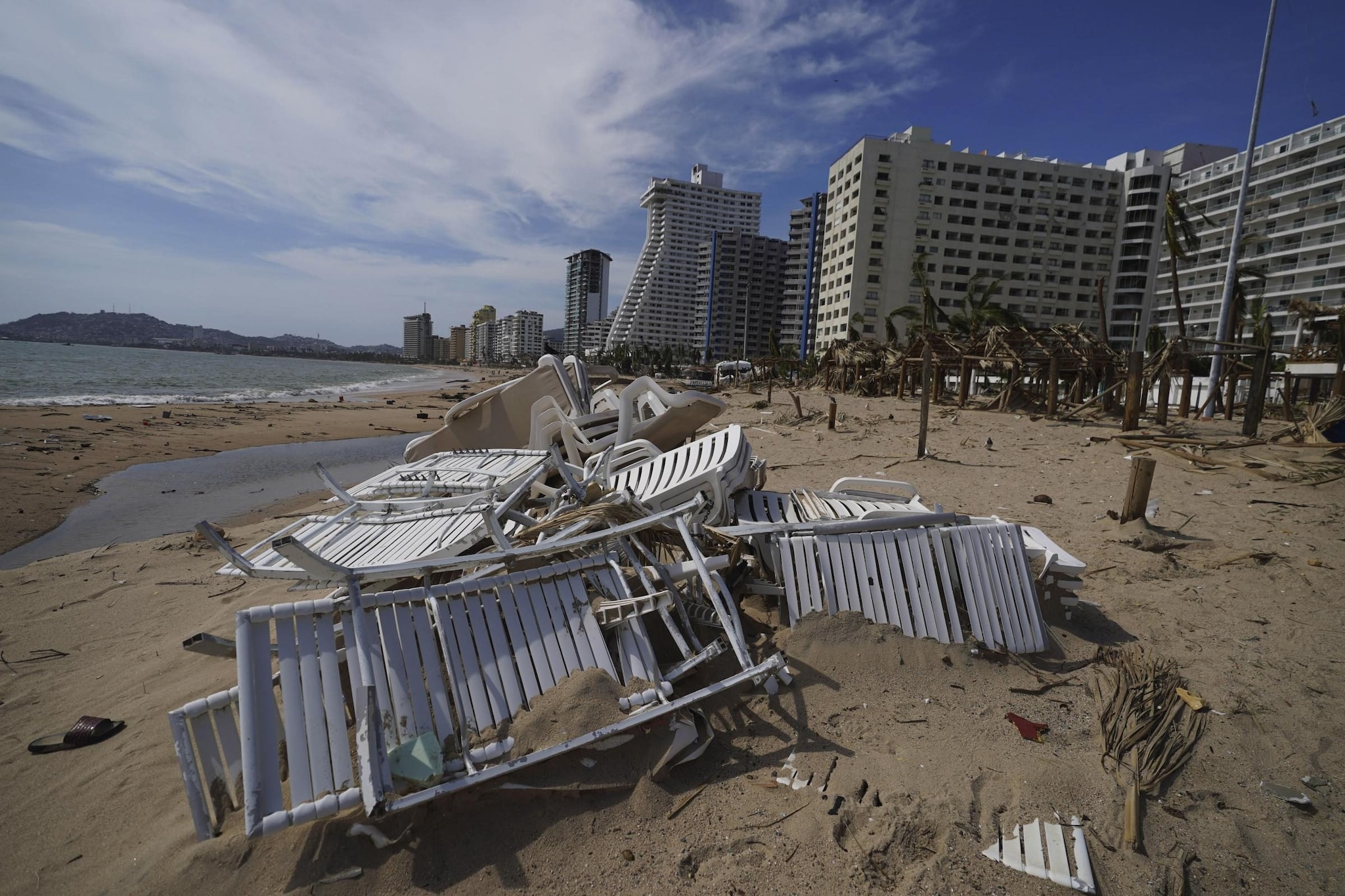
Any analysis of Acapulco in 2026 must account for the devastating impact of Hurricane Otis, which struck in October 2023 as a Category 5 storm. The hurricane did more than destroy infrastructure; it fundamentally altered the security dynamic.
In the immediate aftermath, the total collapse of communications and the power grid led to a temporary vacuum of authority. While the federal government deployed thousands of National Guard members to prevent looting, the long-term reconstruction period (2024–2026) provided new opportunities for criminal exploitation. Reports indicate that criminal groups have attempted to extort reconstruction contracts and supply chains for building materials. The socio-economic desperation caused by the storm also served as a recruitment tool for gangs, as many young residents lost their legitimate livelihoods in the tourism sector.
Government Response and Militarization
The strategy of the Mexican federal government in 2026 continues to lean heavily on militarization. The National Guard (Guardia Nacional) remains the primary security force in the city.
- Permanent Deployment: Large-scale barracks have been established within the city limits to ensure a 24/7 presence in high-risk zones.
- Patrols in Tourist Areas: The "Golden Zone" and "Acapulco Diamante" are heavily patrolled by armed personnel in an effort to protect the tourism revenue that the state of Guerrero desperately needs.
- Intelligence-Led Operations: There has been a shift toward targeting the financial structures of these groups, though the localized nature of extortion makes this extremely difficult to execute effectively.
Despite these efforts, critics argue that the military presence acts only as a "band-aid," suppressing violence in specific areas while it migrates to others. The lack of a robust, uncorrupted local civilian police force remains the "Achilles' heel" of Acapulco's security strategy.
Safety Comparison and Metrics
The following table provides a generalized comparison of the security environment in Acapulco relative to other major Mexican regions as of early 2026, based on reported trends and travel advisories.
| Region/Zone | Primary Risk Level | Dominant Security Concern | Security Presence |
|---|---|---|---|
| Acapulco (General) | High | Extortion, Inter-gang violence | High (Military/National Guard) |
| Acapulco Diamante | Moderate | Petty crime, targeted theft | Very High (Private & Federal) |
| Zona Dorada (Tourism) | Moderate-High | Collateral violence, theft | High (National Guard) |
| Cabo San Lucas | Low-Moderate | Petty theft, alcohol-related incidents | Moderate (Tourist Police) |
| Cancún/Riviera Maya | Moderate | Cartel fragmentation, drug sales | High (Militarized Police) |
| Mexico City (Polanco/Roma) | Low | Petty theft, scams | High (Civilian Police) |
Advice for Travelers and Residents in 2026
For those visiting or living in Acapulco in 2026, safety is largely a matter of location and behavior. While the "killings" rarely target tourists directly, the risk of being in the wrong place at the wrong time remains present.
Stay Within Established Zones
The "Diamante" area and the traditional "Golden Zone" are significantly safer than the outlying colonias (neighborhoods) such as Ciudad Renacimiento or Zapata. The vast majority of violent incidents occur in these inland neighborhoods where tourists have no reason to visit.
Avoid Road Travel at Night
The highways connecting Acapulco to other parts of Guerrero can be dangerous after dark due to illegal checkpoints or "robos." If driving, stick to the "Autopista del Sol" (toll road) and ensure all travel is completed during daylight hours.
Monitor Official Advisories
The U.S. Department of State and other international bodies frequently update their travel advisories for Guerrero. Historically, Guerrero has been on the "Do Not Travel" list for government employees, and this remains a critical benchmark for private citizens as well.
Don't Engage in Illegal Activity
The most common way for a visitor to become a target of violence is to engage in the local drug trade. Purchasing narcotics puts you in direct contact with the criminal elements responsible for the city's instability and marks you as a target for both criminals and law enforcement.
Socio-Economic Consequences of Persistent Violence
The human cost of the killings extends beyond the loss of life. It has led to "internal displacement," where thousands of residents have fled their homes to escape extortion or the threat of violence. This creates "ghost neighborhoods" and stalls economic development.
Furthermore, the "brain drain" from Acapulco is significant. Educated professionals and entrepreneurs often move to Mexico City, Queretaro, or even the United States, leaving the city with fewer resources to rebuild its social fabric. The 2026 recovery efforts are as much about restoring social trust as they are about rebuilding hotels and roads.
Frequently Asked Questions
Are tourists targeted in the Acapulco killings?
Generally, no. Most homicides are the result of disputes between rival criminal factions or are related to the extortion of local businesses. However, tourists can be affected by "collateral damage"—violence that occurs in public spaces. In 2026, while the risk to tourists is statistically low compared to residents, it is higher than in other Mexican resort towns like Puerto Vallarta.
Is it safe to visit Acapulco in 2026?
Safety is subjective and depends on your risk tolerance. For many, staying at a gated resort in Acapulco Diamante is considered safe. For others, the high visibility of the National Guard and the underlying crime statistics are a deterrent. It is essential to check current local news and travel advisories before booking.
What is the Mexican government doing to stop the killings?
The government has deployed thousands of National Guard troops to patrol the city and has increased surveillance in tourist corridors. There are also ongoing efforts to improve the judicial system and professionalize local law enforcement, though progress in these areas is slow and often hampered by corruption.
How did Hurricane Otis affect the crime rate?
Initially, there was a spike in looting and opportunistic crime. In the years following (2024–2026), the crime rate has been influenced by "reconstruction extortion," where gangs target the massive influx of federal aid and private investment meant for rebuilding the city.
Which areas of Acapulco are the most dangerous?
The inland neighborhoods (colonias) like Renacimiento, Zapata, and the hillsides surrounding the bay are historically the most dangerous. The primary tourist areas along the beach (Costera Miguel Alemán) and the newer Diamante district are much more secure due to the heavy presence of security forces.
Final Recommendations for 2026
If you are planning to visit Acapulco in 2026, the best approach is one of informed caution. Prioritize staying in the Acapulco Diamante district, use only authorized transportation (such as hotel-arranged cars or verified apps), and strictly avoid exploring the city's outskirts.
The "Acapulco killings" are a symptom of deep-seated structural issues that will take years, if not decades, to fully resolve. While the city’s natural beauty remains undiminished, its security reality requires a sophisticated understanding of where the risks lie. Staying updated through reputable sources like Insight Crime for security analysis or the Guerrero State Government for local updates is highly recommended for anyone with interests in the region.