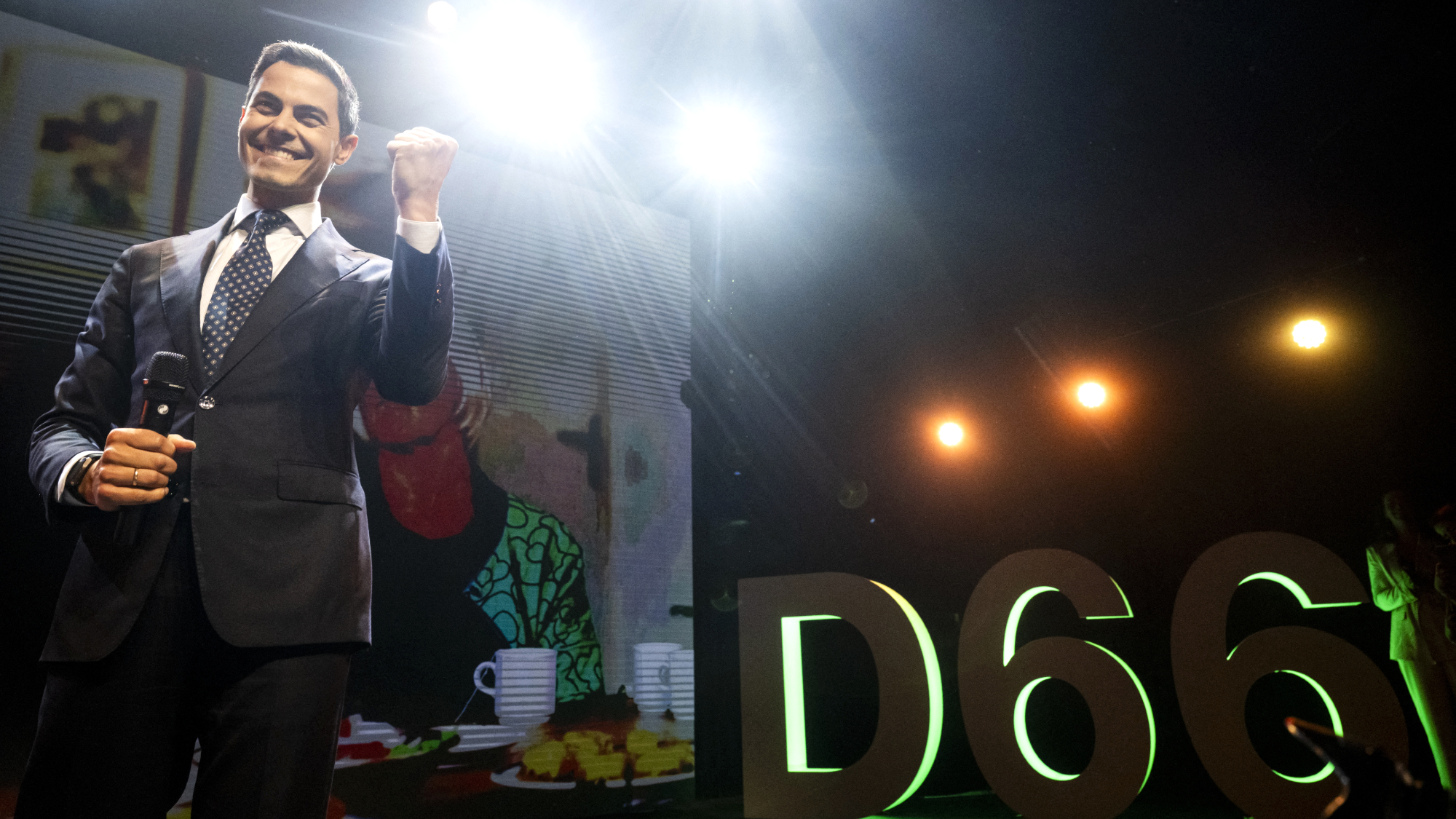
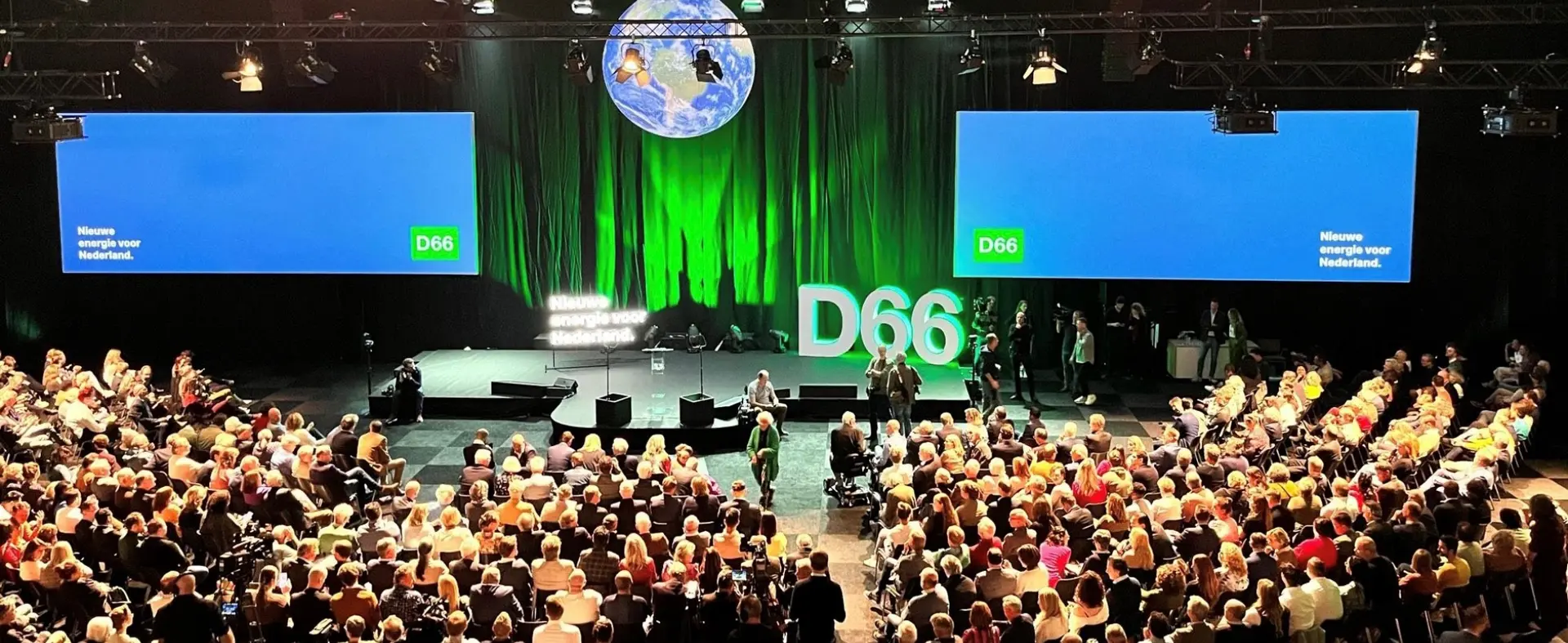
Democrats 66 (D66) emerged from the political upheaval of the 1960s to fundamentally challenge the rigid, pillarized structure of Dutch governance. By advocating for direct democracy, electoral reform, and progressive social policies, the party transformed from a radical protest movement into a cornerstone of the Dutch political establishment, consistently shaping national coalitions through its distinct focus on education, civil liberties, and European integration.
The Genesis: 1966 and the Demand for Change
To understand the rise of D66, one must first recognize the political climate of the Netherlands in the mid-1960s. The country was defined by "verzuiling" (pillarization), a system where social, political, and religious life was segmented into rigid Catholic, Protestant, Socialist, and Liberal blocs. Political discourse was managed by elite consensus, leaving little room for citizens to influence the executive branch directly.
On October 14, 1966, a group of intellectuals, journalists, and young professionals—led by Hans van Mierlo—announced the formation of "D66." Their initial manifesto was a direct assault on the status quo. They did not merely seek a seat at the table; they sought to dismantle the table entirely. Their primary demand was the introduction of a prime ministerial election by popular vote and a move toward a district-based electoral system, which they argued would hold politicians more accountable to their constituents.
The name "Democrats 66" itself served as a declaration of intent. It signified a temporal commitment: the party intended to achieve its constitutional reforms or dissolve itself entirely. While they eventually abandoned the goal of automatic self-dissolution as they integrated into the parliamentary system, the sense of urgency and systemic critique remained the party’s identifying mark.
From Protest Movement to Parliamentary Force
In the 1967 general elections, D66 stunned the political establishment by winning seven seats in the Tweede Kamer (House of Representatives). This was an unprecedented result for a newcomer in a proportional representation system that typically favored entrenched parties.
The party’s success was fueled by the "provos" and the rising student movements of the era, which rejected the paternalistic leadership of the established parties. D66 provided an institutional channel for this frustration. They communicated through sophisticated media campaigns and grassroots debates, appealing to the "modernized" voter—someone who was highly educated, secular, and interested in individual self-determination.
Throughout the 1970s and 1980s, the party transitioned from an external critic to a coalition partner. This shift necessitated a pragmatic approach to governance. While the core ideal of democratic reform remained, D66 began to develop robust policy platforms on education, environmental protection, and social liberalism. They became the "third way," bridging the gap between the traditional PvdA (Labour) and the VVD (People's Party for Freedom and Democracy).
Core Ideological Pillars of D66
The endurance of D66 is rooted in a specific ideological framework that differentiates it from both the conservative right and the socialist left. Their platform centers on three primary pillars:
1. Radical Democratization
D66 remains the most vocal advocate for the "corrective referendum" and the direct election of the mayor and the prime minister. Their philosophy posits that the legitimacy of the state relies on the active participation of the citizen, not just the periodic casting of a ballot for a party list.
2. Social Liberalism
D66 champions individual freedom—not only in economic terms, as classical liberals do, but also in personal and social spheres. This includes strong support for the legalization of euthanasia, marriage equality, and progressive drug policy. They view the state as a facilitator that should protect individual autonomy while ensuring equality of opportunity.
3. Investment in Knowledge
Since the 1990s, the slogan "Education, Education, Education" has become synonymous with D66. The party views human capital as the primary driver of the Dutch economy and societal well-being. This focus has consistently driven their policy agenda, leading to significant pushes for increased funding for primary and secondary schooling, as well as scientific research.
Comparison of Political Positions
The following table highlights the unique positioning of D66 relative to its major counterparts in the current Dutch political spectrum as of 2026.
| Issue Area | D66 Position | Traditional Right (VVD) | Traditional Left (PvdA/GL) |
|---|---|---|---|
| Electoral System | Direct democracy & reforms | Status quo (proportional) | Reformist, less focused |
| Education | Heavy state investment | Market-driven/efficiency | High state intervention |
| Environment | Aggressive transition | Economic-centered goals | State-led regulation |
| Civil Rights | Highly progressive | Moderate/Liberal | Highly progressive |
| EU Stance | Pro-European integration | Pragmatic/Skeptic balance | Generally supportive |
The Role of Leadership and Internal Dynamics
The history of D66 is deeply linked to the personalities of its leaders. Hans van Mierlo, the founder, cast a long shadow, establishing a tradition of charismatic, articulate leadership. Subsequent leaders like Jan Terlouw, Els Borst, and more recently, Sigrid Kaag, have evolved the party’s image while maintaining its reputation as a "think tank" party.
The party’s internal culture is notoriously meritocratic and occasionally fractious. Because D66 draws its membership from academic, legal, and professional circles, internal debates are often highly intellectualized. While this creates high-quality policy drafting, it can also lead to perceptions of "elitism." Successfully navigating the tension between their academic roots and the broader base of voters has been the party’s greatest electoral challenge throughout the 21st century.
Challenges and Governance Limitations
Being a "middle party" comes with distinct operational hazards. D66 frequently finds itself in the position of a "kingmaker" in coalition negotiations. This status provides significant influence—allowing them to secure cabinet positions like the Ministry of Education or the Ministry of Foreign Affairs—but it also makes them a lightning rod for criticism.
When D66 enters a coalition, they are often forced to compromise on their reformist ideals to maintain cabinet stability. This has historically led to "voter fatigue," where their core supporters feel betrayed by the concessions made to more conservative coalition partners. Furthermore, as a pro-EU, urban-centric party, D66 faces increasing pushback from rural areas and voters who feel neglected by the party's focus on technological and cosmopolitan progress.
Current Standing and Future Outlook (2026)
As of 2026, D66 maintains a stable presence in the Tweede Kamer. The party has evolved from a disruptive force into a mature institutional player. Their focus has shifted toward the intersection of climate change and economic sustainability, advocating for a "green growth" strategy that leverages Dutch innovation to lead the European energy transition.
The primary obstacle for the party remains the fragmentation of the Dutch political landscape. With a higher number of parties represented in parliament, building stable coalitions has become increasingly difficult. D66’s challenge is to continue advocating for constitutional reform—such as electoral system changes—without appearing to act against the stability of the parliamentary system they now help to operate.
Frequently Asked Questions
Why is D66 called "Democrats 66"?
The name originates from the year the party was founded, 1966. The "Democrats" reflects their fundamental belief in democracy and the urgency of restoring power to the citizen rather than the political elite.
Does D66 still want to abolish itself?
No. While the original manifesto contained a clause that the party should dissolve once its reform goals were achieved, this became practically irrelevant as the party integrated into the Dutch parliamentary system and expanded its platform to include broad societal issues.
Is D66 considered a liberal party?
Yes, but with a qualifier. They are defined as "social liberals." Unlike traditional liberals (who prioritize economic deregulation), social liberals like D66 advocate for a strong, active state to ensure equal opportunities, high-quality public education, and environmental protection.
What is the stance of D66 on the European Union?
D66 is consistently one of the most pro-European parties in the Netherlands. They advocate for deeper political and economic integration, viewing a strong EU as essential for addressing global challenges such as climate change, migration, and geopolitical security.
How does D66 influence Dutch policy if they aren't always the largest party?
Through their role as a coalition partner. Because the Dutch system requires multi-party coalitions to reach a parliamentary majority, D66 often occupies the "swing" position. This allows them to trade their support for specific cabinet portfolios and the inclusion of their core policy priorities in the coalition agreement.
Next Steps for Understanding the Party
To gain a deeper understanding of D66’s current platform, individuals should consult the party’s most recent election manifesto and their current parliamentary voting record. Reviewing their contributions to the "Coalition Agreement" (Regeerakkoord) will provide the most accurate insight into how they are currently exercising power within the executive branch. By examining these documents, voters and analysts can differentiate between the party's theoretical ideals and its practical implementation in the 2026 political landscape.