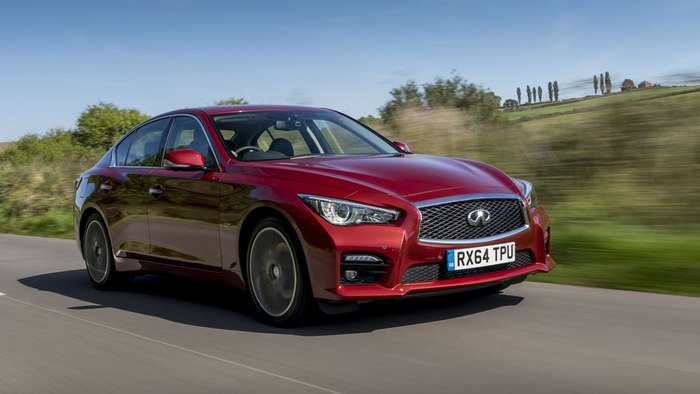
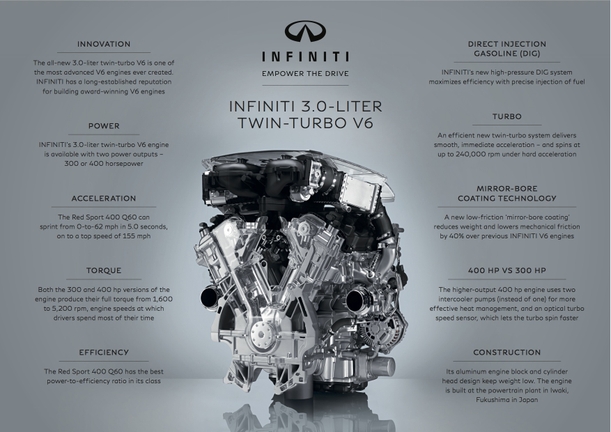
The 300-horsepower, 3.0-liter twin-turbocharged V6 engine in the Infiniti Q50—commercially designated as the VR30DDTT—is a purpose-built powerplant designed to deliver smooth, responsive power delivery, broad torque bands, and modern efficiency to luxury sport sedans.
Introduction to the Infiniti VR30DDTT Engine Architecture
The automotive landscape shifted significantly when Infiniti introduced its VR-series engine family to replace the venerable, naturally aspirated VQ-series V6 engines. At the center of this engineering transition is the VR30DDTT, a 3.0-liter (2,997 cc) 60-degree V6 engine utilizing dual turbochargers, direct gasoline injection, and advanced electronic controls. Within the Infiniti Q50 lineup, this engine serves two distinct states of tune: a standard 300-horsepower variant found in trims like the Luxe and Pure, and a high-output 400-horsepower variant reserved for the Red Sport 400.
While the Red Sport 400 often captures enthusiast headlines, the 300-horsepower iteration represents the volume seller and the baseline for modern Infiniti performance. It bridges the gap between traditional naturally aspirated smoothness and modern turbocharged efficiency. To fully appreciate this engine, one must examine its mechanical architecture, thermodynamic management systems, driving dynamics within the Q50 chassis, and its long-term maintenance realities.
Mechanical Specifications and Core Design
The VR30DDTT engine is an all-aluminum design featuring a lightweight block and cylinder heads, designed to reduce front-end vehicle weight and improve the front-to-rear weight distribution of the Infiniti Q50. Understanding its baseline specifications clarifies how it achieves its performance characteristics:
- Displacement: 2.997 liters (182.9 cubic inches)
- Configuration: 60-degree V6
- Valvetrain: DOHC (Double Overhead Camshaft) with four valves per cylinder and electronic intake valve timing (VTC)
- Induction: Parallel twin turbochargers with integrated exhaust manifolds
- Fuel Delivery: Direct Gasoline Injection (DIG)
- Bore x Stroke: 86.0 mm × 86.0 mm (square configuration)
- Compression Ratio: 10.3:1
- Horsepower: 300 hp @ 6,400 RPM
- Torque: 295 lb-ft @ 1,600–5,200 RPM
This square bore-and-stroke design yields an optimal balance between high-RPM horsepower potential and low-end torque responsiveness. The broad torque curve—peaking at just 1,600 RPM and holding flat all the way to 5,200 RPM—ensures that the Q50 responds immediately to throttle inputs without requiring the driver to wring out the engine to high revs.
Induction, Cooling, and Thermal Management
Turbocharged engines live and die by their thermal management systems. Excessive intake air temperatures (IATs) lead to ignition timing retardation, reduced power output, and potential mechanical stress. Infiniti engineered several notable solutions into the VR30DDTT to manage heat and maintain consistent output.
Water-Cooled Intercooler System
Unlike traditional air-to-air intercoolers that rely solely on vehicle speed and front-end airflow, the 300-hp VR30DDTT utilizes a liquid-cooled intercooler system integrated directly into the intake tract. A dedicated low-temperature coolant circuit circulates fluid through heat exchangers mounted near the front radiators, rapidly pulling heat away from the compressed air charge before it enters the combustion chambers. This compact routing reduces turbo lag by minimizing the physical volume of the intake piping.
Electronic Wastegates and Turbo Speed Sensors
The twin turbochargers on the 300-hp model are electronically controlled via step-motor-driven wastegates. This allows for precise, instantaneous boost pressure regulation under varying loads. Furthermore, a built-in turbo speed sensor monitors rotational velocity, allowing the engine control unit (ECU) to optimize boost delivery while protecting the turbine wheels from over-speeding conditions.
Comparison: 300 HP vs. 400 HP VR30DDTT Variants
A common question among prospective buyers and enthusiasts is how the 300-horsepower version of the 3.0L twin-turbo V6 differs mechanically from the 400-horsepower Red Sport variant. While they share the same core engine block, rotating assembly, and displacement, key supporting components account for the power disparity.
| Feature / Component | 300 HP Variant (Luxe / Pure) | 400 HP Variant (Red Sport 400) |
|---|---|---|
| Max Horsepower | 300 hp @ 6,400 RPM | 400 hp @ 6,400 RPM |
| Max Torque | 295 lb-ft @ 1,600–5,200 RPM | 350 lb-ft @ 1,600–5,200 RPM |
| Turbocharger Sensors | Standard Boost Control | Integrated Turbo Speed Sensor + Dual Sensors |
| Intercooler Cooling | Standard Liquid-Cooled Circuit | Dual-Pump / Enhanced Capacity Heat Exchanger |
| Exhaust System | Standard Dual Exhaust | Sport-Tuned Dual Exhaust with Active Valves |
| ECU Calibration | Conservative Boost Curve (approx. 9.5 psi) | Aggressive Boost Curve (approx. 14.7 psi) |
As shown in the table, the primary differences lie in factory ECU tuning, boost thresholds, and auxiliary thermal capacity rather than heavy internal engine modifications. This structural baseline explains why the 300-hp model shares a robust foundation for balanced daily driving.
Real-World Driving Dynamics in the Infiniti Q50
In daily operation, the 300-hp 3.0L twin-turbo V6 transforms the character of the Infiniti Q50 compared to the older 3.7-liter VQ engine it replaced.
Power Delivery and Transmission Pairing
The engine is paired exclusively with a 7-speed automatic transmission (RE7R01B). Because peak torque arrives at just 1,600 RPM, the Q50 pulls away from stops with effortless authority. There is virtually no perceptible turbo lag during normal acceleration. The transmission shifts smoothly in urban environments, though it can feel slightly hesitant to kick down into lower gears unless the driver selects Sport mode via the Drive Mode Selector.
Fuel Efficiency and Cruising Range
Despite packing two turbochargers, the VR30DDTT is designed to meet strict modern efficiency standards. Operating with direct injection and a relatively high 10.3:1 compression ratio, rear-wheel-drive Q50 models equipped with this engine typically achieve EPA ratings of around 20 mpg city and 29 mpg highway, with all-wheel-drive variants seeing a slight reduction of approximately 1 to 2 mpg on the highway. On long interstate journeys, the engine settles into a quiet, low-RPM cruise, making the Q50 an effective grand tourer.
Maintenance Considerations and Common Reliability Factors
While the VR30DDTT is generally robust when maintained properly, understanding its mechanical sensitivities helps owners prevent premature wear or expensive repairs.
Oil Change Intervals and Quality
Direct-injection turbocharged engines place high shear stress on engine oil. Dilution from fuel blow-by can occur during frequent short trips. Utilizing high-quality, full-synthetic oils meeting manufacturer specifications—and shortening oil change intervals from the factory-recommended 10,000 miles down to 5,000 to 7,500 miles—significantly extends the lifespan of the turbocharger bearings and timing chain components.
Serpentine Belt and Pulley Maintenance
The accessory drive system operates under high loads due to the dual-pump configurations and high-output electrical demands of the Q50. Regular inspection of the belt tensioner, idler pulleys, and serpentine belt prevents premature slippage or accessory bearing failure.
Coolant Circuit Maintenance
Because the intercooler system relies on a secondary, low-temperature coolant loop distinct from the primary engine coolant, owners and service technicians must ensure both reservoirs are properly filled, bled, and maintained. Air pockets in the intercooler circuit can cause elevated intake temperatures and trigger protective timing retardations.
Troubleshooting Common Symptoms
When addressing anomalies in a twin-turbocharged luxury sedan, diagnosing symptoms accurately prevents unnecessary parts replacement.
- Delayed Throttle Response or Sluggish Acceleration: If the Q50 feels uncharacteristically slow, check for boosted air leaks at the intercooler piping connections or verify that the electronic wastegate actuators are operating without binding.
- Intermittent Power Loss in Hot Weather: High ambient temperatures combined with a heat-soaked intercooler system can cause the ECU to pull timing. Inspect the auxiliary intercooler heat exchanger for debris, bent fins, or low coolant levels in the secondary reservoir.
- P0299 Underboost Codes: This diagnostic trouble code points to a discrepancy between requested and actual boost pressure. Common culprits include loose vacuum/boost control lines, a failing electronic wastegate actuator, or a minor tear in a silicone intake coupler.
Frequently Asked Questions
Can the 300 HP Infiniti Q50 be easily upgraded to Red Sport power levels?
Yes, because the physical engine block, turbos, and core architecture are nearly identical, many owners utilize aftermarket ECU tunes (flash tuning) to surpass the 400-horsepower mark. However, doing so increases thermal stress, requires premium fuel, and typically voids the factory powertrain warranty.
Does the 3.0L twin-turbo V6 require premium gasoline?
Yes, Infiniti specifies premium unleaded gasoline (91 octane or higher) for the VR30DDTT engine. While the knock sensors and ECU can adjust timing to run on regular 87 octane fuel in an emergency, doing so results in a noticeable reduction in power output and lower fuel efficiency.
What is the timing mechanism on the VR30DDTT?
The engine uses high-durability timing chains rather than a rubber timing belt. With proper oil maintenance, these chains are designed to last the lifetime of the engine, though periodic inspection of the chain guides and tensioners is recommended during major service intervals.
How does the 3.0T compare to the older 3.7L V6 in the Q50?
The older 3.7-liter VQ engine required high RPMs (peaking at 7,000 RPM for horsepower) to feel fast, whereas the 3.0-liter twin-turbo V6 delivers its peak torque almost instantly at 1,600 RPM. This makes the modern turbo engine feel significantly faster and more effortless in everyday driving conditions.
Conclusion and Next Actions
The 300-horsepower 3.0-liter twin-turbo V6 in the Infiniti Q50 represents a sophisticated blend of responsive low-end torque, modern thermal management, and daily drivability. For prospective owners or current drivers, ensuring long-term reliability comes down to adhering to strict oil change intervals, monitoring the dual coolant loops, and utilizing high-octane fuel. To verify the health of a specific vehicle, request a complete service history verifying oil change frequencies, inspect the intake and intercooler piping for signs of wear, and perform a professional diagnostic scan to check for stored boost-related trouble codes before committing to purchase or modification.