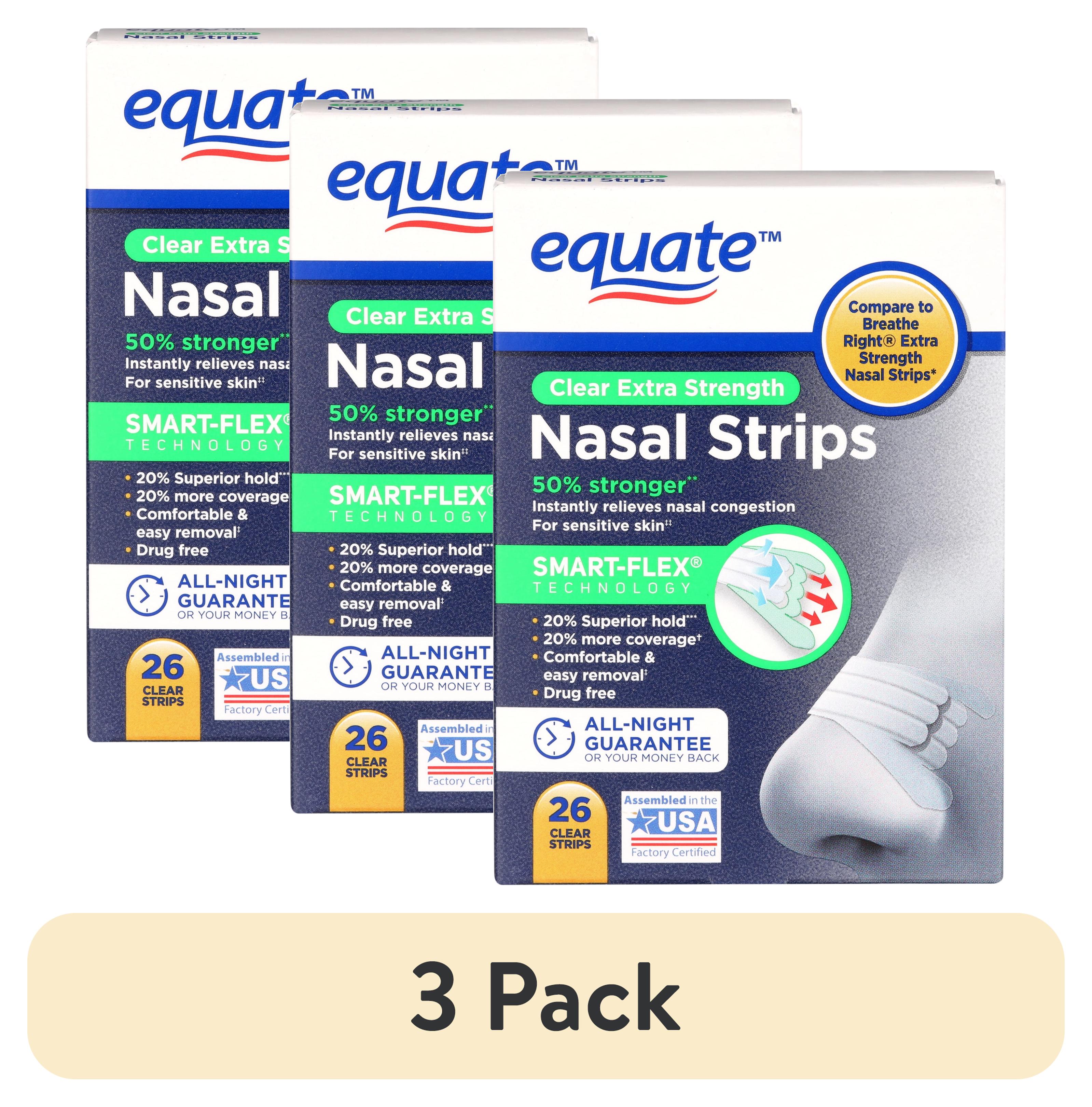
The best nasal strips for clear breathing in 2026 are Breathe Right Extra Strength, Clear Passage Sensitive Skin, and Hostage Tape High-Performance Nasal Strips. These products effectively widen the nasal passages by mechanically lifting the side walls of the nose, providing immediate relief from congestion and snoring caused by restricted airflow.
Understanding the Mechanics of Nasal Dilation
To understand why certain nasal strips outperform others, it is essential to understand the anatomy of the nasal airway. The narrowest part of the human respiratory tract is the nasal valve, located in the lower half of the nose. When this area is restricted due to inflammation, a deviated septum, or naturally narrow anatomy, breathing through the nose becomes difficult, often leading to mouth breathing, snoring, and poor sleep quality.
Nasal strips are external dilators. They consist of flexible, "spring-like" bands embedded within an adhesive pad. When applied correctly across the bridge of the nose, these bands attempt to straighten back to their original shape. This outward force pulls the wings of the nostrils (the alae nasi) upward and outward. By increasing the cross-sectional area of the nasal valve, the strips reduce airflow resistance, making it significantly easier to inhale without the collapse of the nasal walls.
In 2026, the technology behind these strips has evolved primarily in two areas: adhesive chemistry and tension calibration. While the fundamental physics remains the same, modern strips offer better "stay-put" power without the skin damage that was common in earlier iterations.
1. Breathe Right Extra Strength: The Industry Standard
Breathe Right remains the most recognized name in the industry, and their Extra Strength variant continues to be the benchmark for mechanical dilation. These strips utilize a triple-band design that provides approximately 50% more lift than their original tan versions.
Structural Integrity and Tension
The "spring" in Breathe Right Extra Strength is achieved through three robust plastic bands. This design is specifically engineered for individuals with significant nasal congestion or those who have a higher degree of nasal wall collapse. The tension is consistent throughout the night, ensuring that the airway remains open even during deep REM sleep when muscle tone decreases.
Adhesive Performance
One of the most critical aspects of a nasal strip is its ability to remain attached despite facial oils and perspiration. Breathe Right uses a specialized acrylic adhesive that forms a strong bond with the epidermis. In the 2026 market, these adhesives have been refined to minimize "edge lift," a common failure point where the corners of the strip peel away during the night, rendering the tension ineffective.
Best Use Cases
- Severe Congestion: Ideal for use during colds or peak allergy seasons.
- Snoring Reduction: Effective for those whose snoring originates from nasal constriction rather than the soft palate.
- Athletic Recovery: Frequently used by athletes to maximize oxygen intake during low-to-medium intensity training.
2. Clear Passage Sensitive Skin: The Choice for Daily Users
For many individuals, the primary barrier to using nasal strips every night is skin irritation. Traditional adhesives can be harsh, leading to redness, dryness, or even "skin stripping" upon removal. Clear Passage Sensitive Skin strips address this by utilizing a different approach to both material and bonding.
The "Smart-Flex" Technology
Clear Passage strips often feature what they term "Smart-Flex" technology. Instead of three stiff bands, they use a more localized tension system that focuses the lift directly over the nasal valve while allowing the rest of the strip to be more flexible. This reduces the "tugging" sensation on the bridge of the nose, which many users find uncomfortable.
Hypoallergenic Bonding
The adhesive used in the sensitive version is typically a hydrocolloid-friendly or low-trauma acrylic. It is designed to release more easily when dampened with warm water, making it far safer for individuals with thin or reactive skin. Despite the "sensitive" label, the mechanical lift is comparable to standard-strength strips, making it a viable long-term solution for chronic congestion.
Best Use Cases
- Nightly Sleep Maintenance: Best for those who need airway support every night but want to avoid skin damage.
- CPAP Users: Many CPAP patients use nasal strips to lower the pressure settings required on their machines; the sensitive version prevents additional skin irritation under the CPAP mask.
- Dry Climates: Individuals in dry environments often have more fragile skin and benefit from the gentler adhesive.
3. Hostage Tape High-Performance Nasal Strips: Maximum Airflow for Athletes and Mouth-Tapers
A significant trend in 2026 is the rise of high-performance nasal strips that cater to the "breathwork" and athletic communities. Hostage Tape (and similar high-grip brands) has gained popularity for providing the strongest mechanical lift currently available on the retail market.
Increased Surface Area
Unlike traditional strips that are narrow, these high-performance strips often have a larger surface area. By covering more of the nose, they distribute the tension across a wider patch of skin, allowing for much stronger internal bands without causing the strip to snap off. This results in a "wide-open" sensation that is noticeably more dramatic than standard pharmacy brands.
Sweat-Proof Durability
Originally designed to work in conjunction with mouth taping (to ensure the nose is fully functional before the mouth is sealed), these strips are built to withstand heavy perspiration. The adhesive is medical-grade and intended for "active" sleep or high-intensity exercise. If you find that standard strips fall off after two hours, this is the category of product you require.
Best Use Cases
- Mouth Taping Integration: Essential for those practicing mouth taping to ensure a clear emergency airway.
- High-Intensity Sports: Used by cyclists, runners, and weightlifters who require maximal oxygenation under physical stress.
- Deviated Septum Support: The extreme tension can help pull open even severely restricted airways that weaker strips cannot move.
Technical Comparison of Top Nasal Strips
The following table compares the physical characteristics and performance metrics of the top three choices to help you determine which fits your specific needs.
| Feature | Breathe Right Extra Strength | Clear Passage Sensitive | Hostage Tape Performance |
|---|---|---|---|
| Primary Goal | Maximum nightly relief | Long-term skin health | Maximum airflow capacity |
| Tension Level | High (3 Bands) | Medium (2-3 Bands) | Ultra-High (Reinforced) |
| Adhesive Type | Standard Acrylic | Hypoallergenic / Gentle | High-Tack Medical Grade |
| Durability | 8-10 Hours | 6-8 Hours | 12+ Hours |
| Skin Type | Normal to Oily | Sensitive / Dry | Normal / Athletic |
| Visibility | Tan or Clear | Clear | Black or Tan (Large Profile) |
Proper Application and Removal Protocol
The efficacy of any nasal strip—regardless of brand—is 90% dependent on proper application. If the strip is placed too high (on the bone) or too low (on the flare of the nostril), it will fail to dilate the nasal valve.
How to Apply for Maximum Lift
- Degrease the Skin: This is the most skipped step. Use a mild soap or a cotton pad with a small amount of rubbing alcohol to remove oils from the bridge and sides of the nose.
- Locate the Valve: Feel for the spot where the bone ends and the soft cartilage begins. This is where the center of the strip should sit.
- Pressure Application: Remove the backing, center the strip, and press down firmly from the center outward to the ends. Hold it in place for 10-15 seconds to allow the adhesive to bond with the warmth of your skin.
Safe Removal Techniques
To avoid redness and "skin stripping," never rip a nasal strip off like a bandage. In 2026, many dermatologists recommend removing the strip during your morning shower. The combination of warm water and steam softens the adhesive. Gently lift the edges and peel slowly, or use a drop of facial oil to dissolve the bond if you have particularly sensitive skin.
When Nasal Strips Are Not Enough
While nasal strips are highly effective for mechanical obstructions, they are not a cure-all. It is important to distinguish between "nasal valve collapse" and other respiratory issues.
- Internal Obstructions: If your breathing difficulty is caused by nasal polyps or significant turbinate hypertrophy (swelling of the internal tissues), external strips may provide only marginal relief.
- Sleep Apnea: Nasal strips can reduce snoring, but they do not treat Obstructive Sleep Apnea (OSA), which involves the collapse of the airway in the throat, not the nose. If you experience daytime sleepiness or gasping for air at night, consult a sleep specialist.
- Allergic Rhinitis: If your nose is completely blocked by mucus, a strip will widen the "pipe," but the pipe remains clogged. In these cases, strips should be used in conjunction with saline rinses or intranasal steroids (as directed by a physician).
Frequently Asked Questions
Can I use nasal strips every night?
Yes, you can use nasal strips every night, provided your skin does not show signs of irritation. If you plan on long-term nightly use, it is highly recommended to rotate between "Extra Strength" and "Sensitive" versions or use a skin barrier cream (specifically designed for adhesives) to protect the epidermis.
Why do my nasal strips keep falling off during the night?
The most common reason is residual skin oil or the use of nighttime moisturizers before application. Ensure the nose is completely dry and oil-free. If the problem persists, you may need a "high-tack" strip like Hostage Tape or an athletic-grade variant designed for moisture resistance.
Do nasal strips help with a deviated septum?
They can provide symptomatic relief. A deviated septum is a structural issue where the wall between your nostrils is crooked. A nasal strip cannot "fix" the septum, but it can widen the overall space in the nasal passage, making the obstruction feel less restrictive.
Are there "internal" versions of nasal strips?
Yes, these are called Internal Nasal Dilators. They are small silicone or plastic devices inserted into the nostrils. While some users prefer them because they are invisible and don't use adhesive, others find them uncomfortable or prone to falling out during sleep.
Can athletes benefit from nasal strips?
Research suggests that while nasal strips do not necessarily increase VO2 max (maximum oxygen uptake), they significantly reduce the "perceived effort" of breathing. This allows athletes to maintain nasal breathing longer before switching to less efficient mouth breathing during exercise.
Practical Recommendation
For the vast majority of users, Breathe Right Extra Strength provides the best balance of price, availability, and mechanical tension. It is the reliable "workhorse" of the industry. However, if you find that your skin becomes irritated after three or four nights of consecutive use, you should immediately transition to Clear Passage Sensitive Skin to allow your skin barrier to recover while still maintaining an open airway. For those who are serious about "nose breathing" optimization—particularly athletes or those who use mouth tape—the Hostage Tape High-Performance Strips offer a level of structural support that standard pharmacy strips simply cannot match.