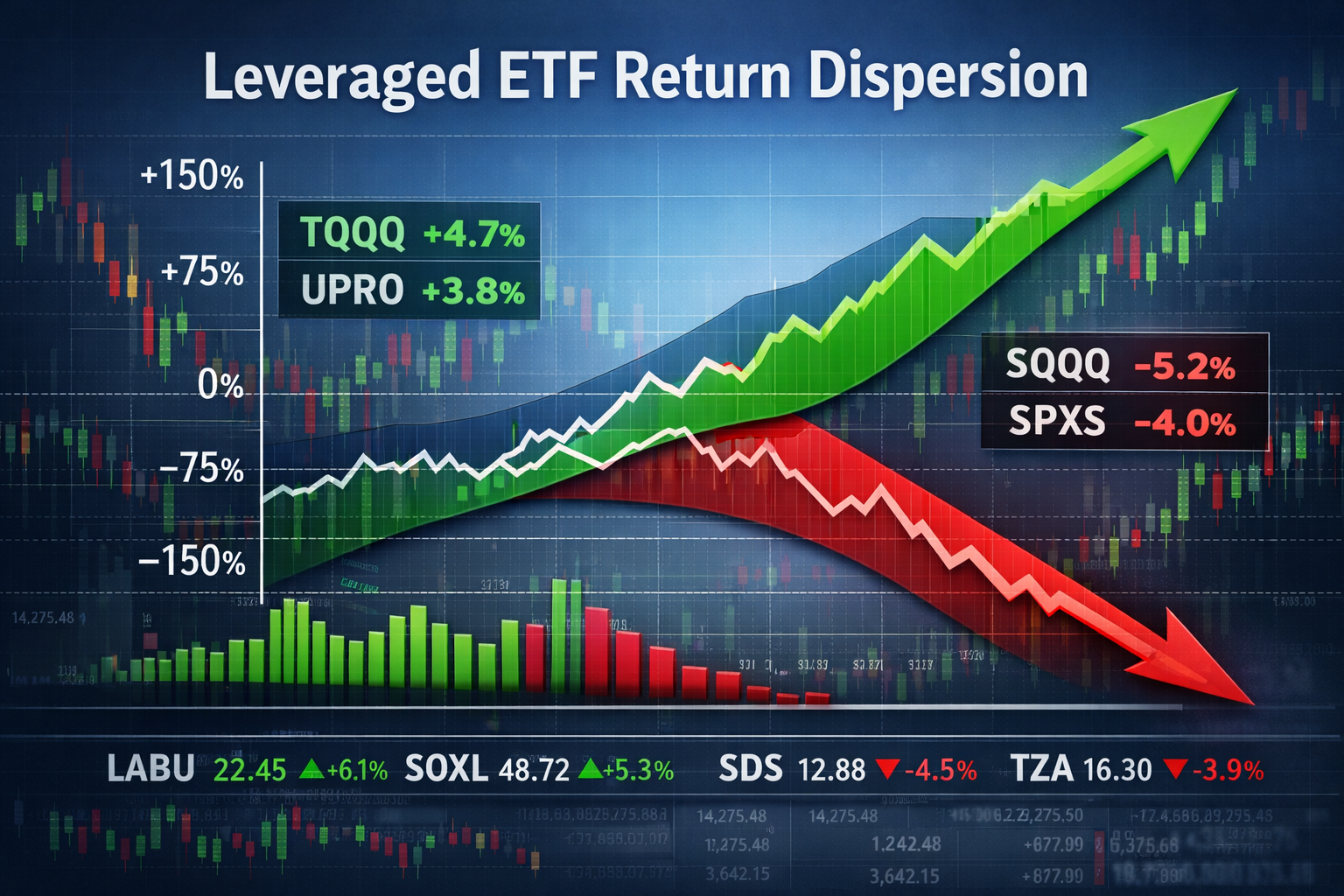
A 2x long leveraged Exchange-Traded Fund (ETF) is a financial instrument designed to produce daily investment results that correspond to twice the daily performance of a specific underlying index. While these funds offer the potential for amplified gains in bullish markets, they are complex instruments that use financial derivatives and daily rebalancing, which causes their long-term returns to deviate significantly from a simple doubling of the index's cumulative return.
Leveraged ETFs have become a staple for sophisticated traders and institutional investors seeking to express short-term market convictions without the need for a margin account. However, as we look at the market landscape in 2026, the misunderstanding of how these "2x" returns are calculated remains a primary cause of investor losses. To use these tools effectively, one must look beyond the "2x" label and understand the mathematical engine driving the fund’s Net Asset Value (NAV).
The Fundamental Objective: Daily vs. Long-Term Results
The most critical distinction to understand about 2x long ETFs is their time horizon. Nearly every prospectus for a leveraged fund—such as those offered by ProShares or Direxion—explicitly states that the fund seeks a multiple of the daily return.
If an underlying index like the S&P 500 rises by 1% in a single trading session, a 2x long S&P 500 ETF is designed to rise by approximately 2% that same day, before fees and expenses. If the index falls by 1%, the ETF should fall by 2%.
The "trap" for many investors is the assumption that if the S&P 500 rises 10% over a year, the 2x ETF will rise exactly 20%. In reality, due to the effects of compounding and daily rebalancing, the 2x ETF could be up 25%, up only 15%, or even down for the year, depending on the path the index took to reach that 10% gain.
How 2x ETFs Achieve Leverage: The Role of Derivatives
A standard ETF typically holds the physical stocks or bonds that comprise its benchmark. A 2x leveraged ETF operates differently. To achieve 200% exposure, the fund manager cannot simply buy twice as many shares with the cash provided by investors; they must use leverage.
Swaps and Futures Contracts
The primary tools used are Over-the-Counter (OTC) derivatives, specifically total return swaps. In a swap agreement, the ETF provider enters into a contract with a counterparty (usually a large investment bank). The bank agrees to pay the ETF the return of the index, multiplied by two, in exchange for a fee and the interest on the collateral.
Additionally, many funds utilize Futures contracts. These are standardized agreements traded on exchanges to buy or sell the underlying index at a future date. By posting a small amount of margin, the fund can control a much larger notionally valued position, effectively creating the 2x multiplier.
The Rebalancing Mechanism
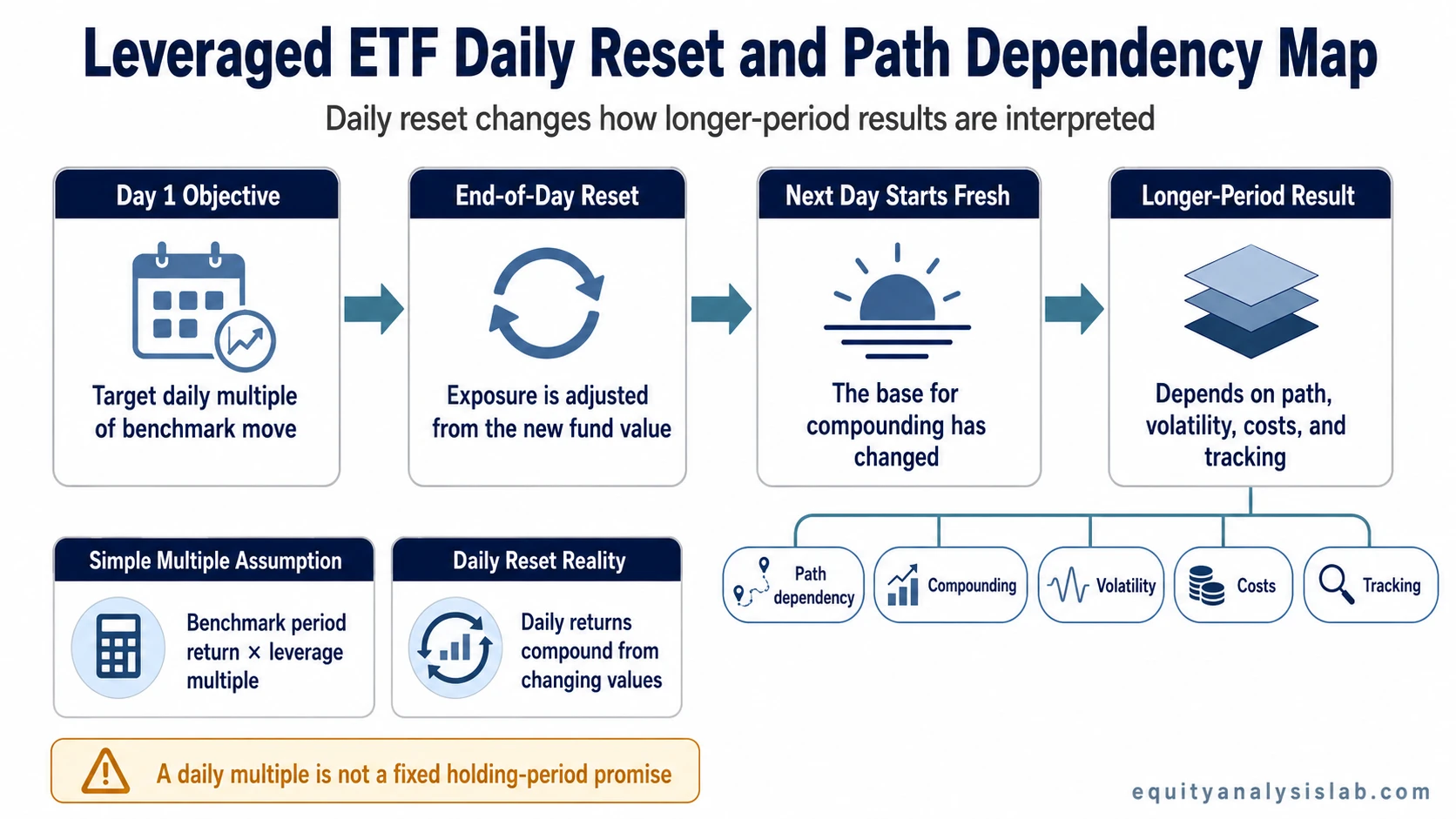
To maintain a constant leverage ratio of 2:1, the fund must rebalance its exposure every single day.
- On a winning day: If the index goes up, the fund’s exposure increases beyond the 2x target relative to its new, higher NAV. The manager must "buy more" (increase swap or futures positions) at the end of the day to stay at 2x for the next day.
- On a losing day: If the index goes down, the fund’s exposure shrinks. The manager must "sell" (reduce positions) to prevent the leverage ratio from ballooning higher than 2:1 on the following day.
This "buy high, sell low" mechanic is inherent to the daily rebalancing process and is the primary driver of what is known as "volatility decay."
The Mathematics of Compounding and Volatility Decay
To understand why 2x returns diverge over time, we must examine the difference between arithmetic and geometric returns. Daily rebalancing creates a compounding effect that works in favor of the investor in trending markets but works against them in choppy or volatile markets.
Scenario A: The Trending Bull Market (Positive Compounding)
Imagine an index starts at 100.
- Day 1: Index rises 10% to 110. The 2x ETF rises 20%, moving from 100 to 120.
- Day 2: Index rises another 10%. 110 + 10% = 121. The 2x ETF rises 20%. 120 + 20% = 144.
In this scenario, the index is up 21% total. A "simple" 2x return would be 42%. However, the leveraged ETF is up 44%. In a consistent upward trend, the 2x ETF actually outperforms its daily target over the long term because it is compounding gains on an increasingly larger base.
Scenario B: The Volatile/Sideways Market (Volatility Decay)
Now, imagine a market that fluctuates but ends where it started.
- Day 1: Index rises 10% to 110. The 2x ETF rises 20% to 120.
- Day 2: Index falls 9.09% to return to 100.
- The 2x ETF Calculation: The 2x ETF must fall twice that percentage: 18.18%.
- Final Value: 120 minus 18.18% equals 98.18.
Despite the underlying index being flat (0% return), the 2x long ETF has lost nearly 2% of its value. This phenomenon is known as volatility decay or "slippage." The more volatile the path, the more value is "leaked" during the daily rebalancing process.
Performance Comparison: 1x vs. 2x Leveraged Exposure
The following table illustrates how different market environments impact the returns of a 2x long ETF compared to a standard 1x index fund over a 5-day period.
| Market Condition | Day 1 Index | Day 2 Index | Day 3 Index | Day 4 Index | Day 5 Index | 1x Cumulative Return | 2x Cumulative Return |
|---|---|---|---|---|---|---|---|
| Consistent Bull | +2% | +2% | +2% | +2% | +2% | +10.41% | +21.90% |
| High Volatility | +5% | -5% | +5% | -5% | +5% | +4.64% | +8.07% |
| Consistent Bear | -2% | -2% | -2% | -2% | -2% | -9.61% | -18.46% |
| Extreme Seesaw | +10% | -10% | +10% | -10% | +5% | +3.45% | -1.95% |
Note: Data is for illustrative purposes and assumes no fees or interest costs.
As shown, in the "Extreme Seesaw" environment, the 1x index finished positive by 3.45%, yet the 2x long ETF actually finished in the red (-1.95%). This is the most dangerous scenario for a leveraged ETF holder and explains why they are generally unsuitable for "buy and hold" strategies.
Costs and Operational Headwinds
Beyond the mathematical decay, 2x long ETFs carry higher internal costs than their non-leveraged counterparts. These costs are subtracted from the NAV daily, further dragging down performance.
1. Expense Ratios
While a standard S&P 500 index fund might have an expense ratio as low as 0.03%, a 2x leveraged ETF typically charges between 0.90% and 1.05% annually. This fee covers the complex management of derivatives and the daily turnover required to maintain the leverage target.
2. Financing Costs
Because the fund is effectively "borrowing" to achieve 2x exposure, it must pay interest. In 2026, with interest rates serving as a critical component of swap pricing, these financing costs can be substantial. When the federal funds rate is high, the cost of the "leverage" in the swap agreement increases, which is passed on to the ETF shareholders in the form of lower daily returns.
3. Counterparty Risk
Since 2x ETFs rely on swap agreements with banks, there is a theoretical risk that the bank (the counterparty) may fail to meet its obligations. While modern regulations (like the SEC Rule 18f-4) require these funds to maintain strict risk management frameworks and collateral, the risk is higher than holding the physical underlying stocks.
Strategic Implementation: When to Use 2x ETFs
Given the risks of decay and high fees, 2x long ETFs are primarily used as tactical tools rather than core portfolio holdings.
Intra-day and Swing Trading
Traders use 2x ETFs to capitalize on short-term momentum. If a trader expects a strong market reaction to an earnings report or an economic data release, a 2x ETF allows them to double their exposure for that specific session without using a margin account or risking more than their initial investment (unlike futures or short selling).
Tactical Hedging and Overweighting
An investor who is temporarily "under-invested" or holding a large cash position might use a 2x long ETF to maintain their desired market exposure with less capital. This "capital efficiency" allows them to keep cash on the sidelines for other opportunities while the 2x ETF keeps them fully exposed to the market's upside.
Risk Management: The "Stop Loss" Reality
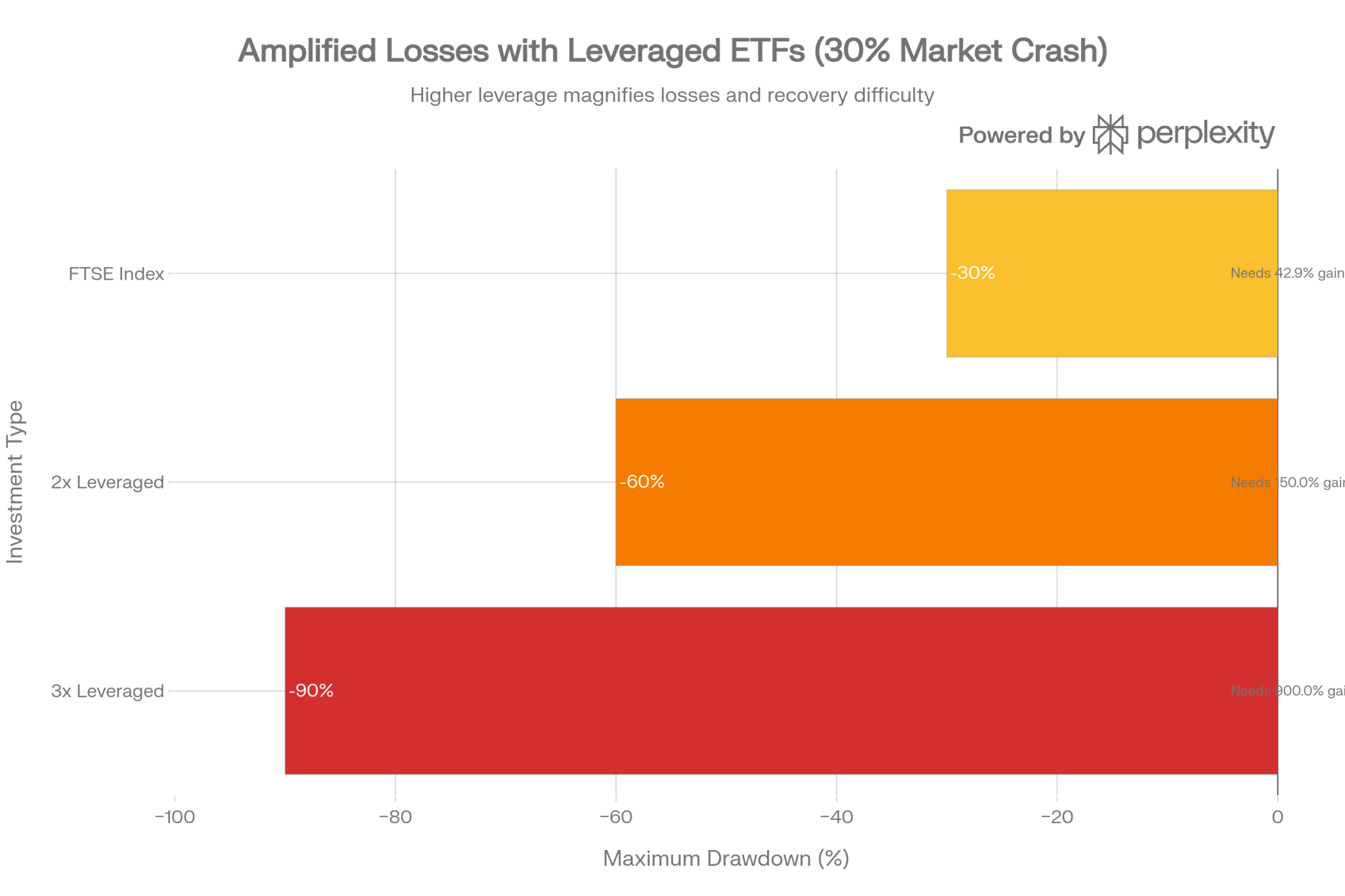
One advantage of a 2x ETF over trading on margin is that you cannot lose more than you invest. In a margin account, a 50% drop in a 2x leveraged position could result in a total loss plus a margin call. In a 2x ETF, even if the index drops 50% in one day (which would theoretically wipe out the ETF), the structure of the fund prevents the investor from owing additional money to the broker.
Regulatory and Suitability Considerations in 2026
Regulatory bodies like FINRA and the SEC have consistently issued warnings regarding leveraged ETFs. In 2026, most brokerage platforms require investors to sign a "complex products" disclosure or pass a short knowledge quiz before being allowed to trade 2x or 3x leveraged instruments.
These regulations are designed to ensure that investors understand that:
- The funds are designed for daily monitoring.
- The long-term performance will likely differ from the benchmark return.
- The risk of a total loss of principal is significantly higher than in standard ETFs.
Common Mistakes to Avoid
- Holding During High Volatility: Holding a 2x long ETF during a "choppy" market where the index moves up and down 2% daily but ends flat. The volatility decay will erode your principal even if the market doesn't go anywhere.
- Averaging Down: In a standard stock, "buying the dip" can lower your cost basis. In a 2x leveraged ETF, averaging down into a sustained bear market is extremely dangerous, as the 2x multiplier applies to the losses, and the fund must "sell" its exposure at the bottom of each day to maintain its ratio.
- Ignoring the Prospectus: Many 2x ETFs track niche indices or sectors (e.g., 2x Long Junior Gold Miners). These underlying indices are already volatile; adding 2x leverage to a high-volatility sector creates an instrument with extreme risk.
Frequently Asked Questions
Can a 2x long ETF go to zero?
Yes, theoretically. If the underlying index drops by 50% or more in a single trading session, a 2x long ETF would lose 100% of its value. While major indices like the S&P 500 have "circuit breakers" to prevent such a massive single-day drop, niche or sector-specific indices are more vulnerable to catastrophic single-day declines.
Why doesn't my 2x ETF show exactly double the monthly return of the index?
This is due to the compounding effect and daily rebalancing. Over a month, the "path" the index took matters. If the index moved in a straight line up, the ETF might show more than 2x. If the index fluctuated wildly to get to the same result, the ETF will show less than 2x due to volatility decay.
Are 2x ETFs better than 3x ETFs?
"Better" depends on your risk tolerance. A 2x ETF has less volatility decay and a lower risk of total wipeout than a 3x ETF. However, it also provides less "pop" on winning days. For most tactical traders, 2x is considered a "middle ground" that offers amplified returns with slightly more resilience to decay than 3x funds.
Do 2x ETFs pay dividends?
Most 2x long ETFs do not pay traditional dividends to shareholders. Because they use swaps and futures rather than holding the underlying stocks, they do not collect dividends from the companies in the index. Any "distributions" made by the fund are usually capital gains distributions resulting from the rebalancing of derivative contracts.
Is it ever okay to hold a 2x ETF for more than a day?
While designed for daily use, investors do hold them for several days or weeks during a strong, low-volatility trending market. However, this requires active monitoring. If the trend breaks or volatility spikes, the position must be re-evaluated immediately to avoid the compounding of losses.
Practical Recommendation for Investors
If you are considering a 2x long ETF, the first step is to perform a "path analysis" on the underlying index. Look at the historical volatility of the benchmark. If the index frequently swings more than 2-3% daily, the decay factor will be high.
For those looking to use these funds in 2026, treat them as trading vehicles, not investments. Use them to express a view on a specific market catalyst, and always have a pre-defined exit strategy. If you find yourself holding a 2x long ETF for more than a few days, compare its performance to a simple 1x version of the same index. If the 2x version is not significantly outperforming its 1x counterpart, the "volatility tax" is likely working against you, and it may be time to move back to a non-leveraged position.
Financial Disclaimer: This article is for informational purposes only and does not constitute financial, investment, or legal advice. Leveraged ETFs involve significant risk and are not suitable for all investors. Past performance is not indicative of future results. Consult with a qualified financial advisor before making any investment decisions.