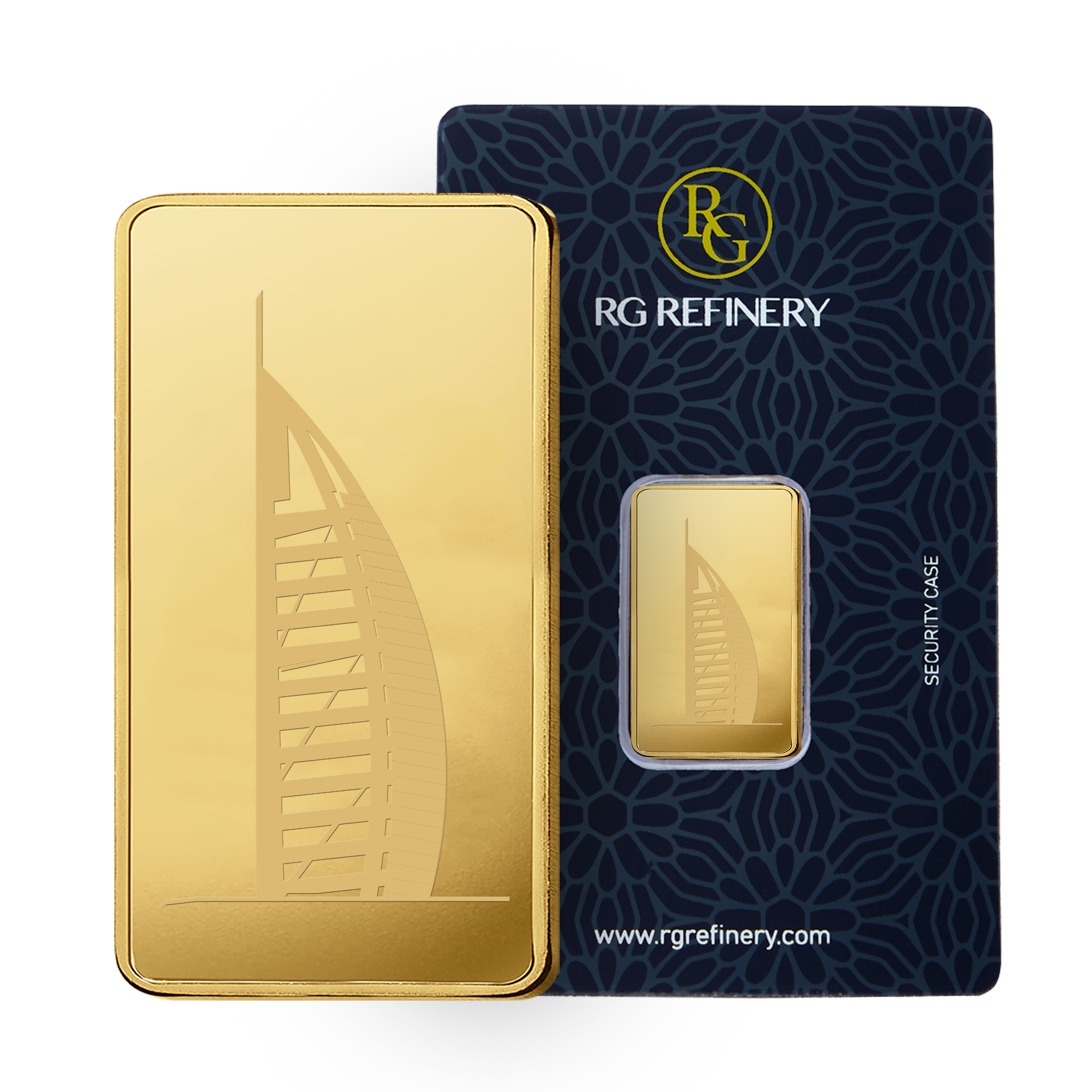
24 karat gold represents the highest level of gold purity, characterized by 99.9% or greater gold content. Often referred to as "pure" or "fine" gold, it is defined by its characteristic soft, malleable nature and deep, vibrant yellow luster. Understanding its properties is essential for investors and collectors to distinguish genuine investment-grade bullion from jewelry and alloyed gold products.
Defining 24 Karat Gold Purity
In the world of precious metals, gold purity is measured in karats (k), a unit that represents the proportion of pure gold relative to other metals in an alloy. The scale is based on 24 parts, meaning that 24 karat (24k) gold is technically 24/24 parts gold. In practical manufacturing and refining terms, this equates to a minimum purity of 99.9%. Some specialized mints produce "four nines" fine gold, which reaches a purity of 99.99%, or even "five nines" at 99.999%, which is considered the absolute peak of industrial refinement.
The reason 24 karat gold is rarely 100% pure is due to the practical limitations of refining technology. While gold can be purified to near-absolute levels, trace elements are often present at a molecular level. Anything less than 99.9% purity is typically classified as 22k, 18k, or lower, depending on the volume of base metals—such as copper, silver, or zinc—added to the mix.
Physical Characteristics and Limitations
The most notable characteristic of 24k gold is its physical softness. Because gold is a transition metal with a face-centered cubic crystal structure, its atoms can slide past one another relatively easily. When gold is in its pure state, it lacks the structural reinforcement provided by harder metals like copper or nickel.
This softness has significant implications for how 24k gold is utilized:
- Malleability and Ductility: Pure gold can be hammered into gold leaf so thin that light can pass through it. This extreme ductility makes it unsuitable for heavy-duty jewelry prone to daily wear, as it will scratch, bend, or deform easily.
- Color Profile: 24k gold exhibits a distinct, rich, orange-yellow hue. As base metals are added to create lower-karat gold, the color changes; for instance, adding copper results in rose gold, while adding silver or palladium can lighten the tone to a pale yellow or white.
- Corrosion Resistance: One of the primary reasons gold is prized is its status as a noble metal. It does not oxidize or tarnish when exposed to air or moisture. While base metals in lower-karat gold may react to chemicals or skin acidity over time, 24k gold remains chemically inert.
24k Gold as an Investment Vehicle
For investors, 24k gold is the standard for bullion coins, bars, and ingots. When you purchase 24k gold, you are paying for the intrinsic value of the metal itself, rather than the craftsmanship or the aesthetic design associated with high-end jewelry.
Bullion Coins and Bars
National mints, such as the United States Mint (American Buffalo) or the Royal Canadian Mint (Gold Maple Leaf), produce coins from .9999 fine gold. These coins are intended for capital preservation and portfolio diversification. Because the gold is soft, these coins must be handled with care; they are often sold in protective plastic capsules to prevent "bag marks" or surface abrasions, which can technically lower the aesthetic desirability of the coin.
The Cost of Purity
The price of 24k gold is pegged directly to the "spot price" of gold on global commodities markets. When buying 24k bullion, you will generally pay the spot price plus a "premium." This premium covers the costs of minting, marketing, distribution, and the dealer’s margin. It is important to note that you do not pay for labor in the way you would with a piece of jewelry, making 24k bullion one of the most efficient ways to acquire the metal.
Comparison: 24k vs. Lower Karat Gold
The distinction between 24k gold and other common purities is primarily a trade-off between metallic value and physical durability.
| Karat | Gold Content (%) | Primary Use | Physical Properties |
|---|---|---|---|
| 24k | 99.9% - 99.99% | Investment, Central Bank Reserves | Soft, highly malleable, non-tarnishing |
| 22k | 91.6% | Cultural jewelry, high-end coins | Durable enough for wear, still high value |
| 18k | 75.0% | Luxury watches, fine jewelry | High hardness, excellent for gemstone settings |
| 14k | 58.3% | Everyday jewelry, engagement rings | High scratch resistance, durable |
How to Verify Purity
Verification is a critical step when purchasing gold, especially in the secondary market. Because 24k gold is exceptionally heavy (high density) and soft, it can be tested using several non-destructive methods.
- Specific Gravity Test: Gold is much denser than most common metals. By measuring the volume of water displaced by a gold item and comparing it to the item's weight, one can calculate its density. If the density deviates significantly from 19.32 g/cm³, it is likely an alloy or a plated base metal.
- Ultrasonic Testing: This is a professional-grade method used by bullion dealers to check the internal consistency of bars. Since gold has a specific sound transmission velocity, ultrasonic sensors can detect if a bar has been filled with a cheaper metal, such as tungsten (which has a density very close to gold).
- X-Ray Fluorescence (XRF): An XRF spectrometer analyzes the surface composition of the metal by bombarding it with X-rays. While this is highly accurate for surface purity, it may not detect deep-set counterfeits, which is why it is often used in combination with other tests.
- Magnetism: Pure gold is diamagnetic, meaning it is not attracted to magnets. If a piece of "24k gold" shows strong attraction to a neodymium magnet, it is either a different metal or contains significant iron/nickel impurities.
Common Misconceptions
A frequent error among new investors is the belief that 24k gold is the "best" gold for every purpose. In reality, it is only the best for bullion and wealth storage. For jewelry that must withstand the rigors of daily wear, 24k gold is often unsuitable because it lacks the necessary hardness. A 24k gold ring worn daily will lose its shape and detail rapidly.
Another misconception involves the color. Consumers sometimes assume that the paler, lighter yellow of 14k or 18k gold is "less real." In truth, the change in color is simply a result of the necessary alloying agents required to provide structural integrity to jewelry. The gold content within the alloy remains "real" gold; it is simply not in its pure state.
Frequently Asked Questions
Is 24 karat gold the same as pure gold?
Yes, 24 karat gold is the industry standard term for pure gold. It denotes that the metal is 99.9% or higher pure gold by weight. While it is not 100% pure due to the trace elements present after standard refining, it is the highest purity commercially available.
Can I wear 24k gold jewelry daily?
It is generally not recommended to wear 24k gold jewelry for daily activities. Because it is highly malleable, it is prone to bending, scratching, and losing its shape over time. Most fine jewelry intended for daily use is crafted from 14k or 18k gold to ensure durability.
Does 24k gold tarnish over time?
No. Because 24k gold is chemically inert, it does not react with oxygen or sulfur in the air. While it may accumulate surface dirt or oils from the skin, it will not tarnish or corrode. If it loses its luster, it can be easily cleaned with warm water and mild soap.
Why is 24k gold more expensive than other karats?
The price of gold is determined by its mass. 24k gold contains the highest concentration of gold per gram. When you purchase 18k gold, you are paying for 75% gold and 25% other metals. Therefore, a piece of 24k gold will always be more valuable than an equivalent weight of 18k gold.
How do I store 24k gold bullion?
24k gold bullion should be stored in a cool, dry, and secure environment. Ideally, items should be kept in protective capsules or assay cards provided by the mint to prevent surface scratches. For large quantities, a regulated safe-deposit box or a professional bullion vault is recommended.
Final Recommendations
If your objective is to preserve wealth or diversify your investment portfolio, 24k gold bullion remains a reliable, universally recognized asset. When acquiring 24k gold, always source from reputable mints or established dealers who provide assay documentation. Avoid purchasing loose gold items from unverified secondary sellers, as the physical characteristics that make 24k gold desirable—its softness and weight—can also be exploited by counterfeiters using tungsten-core plating. If you are buying jewelry, prioritize the 14k to 18k range for longevity, and reserve 24k gold strictly for investment and display.