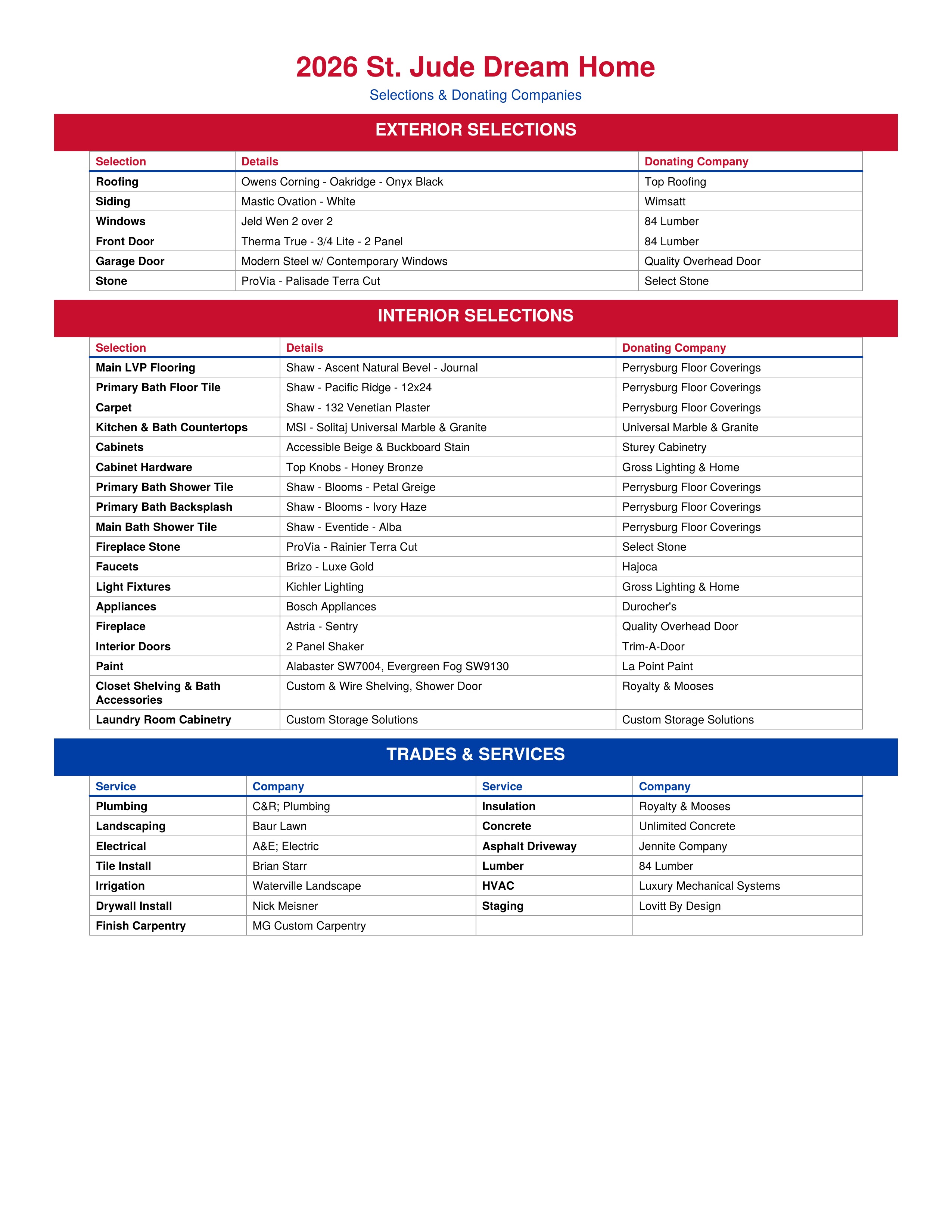
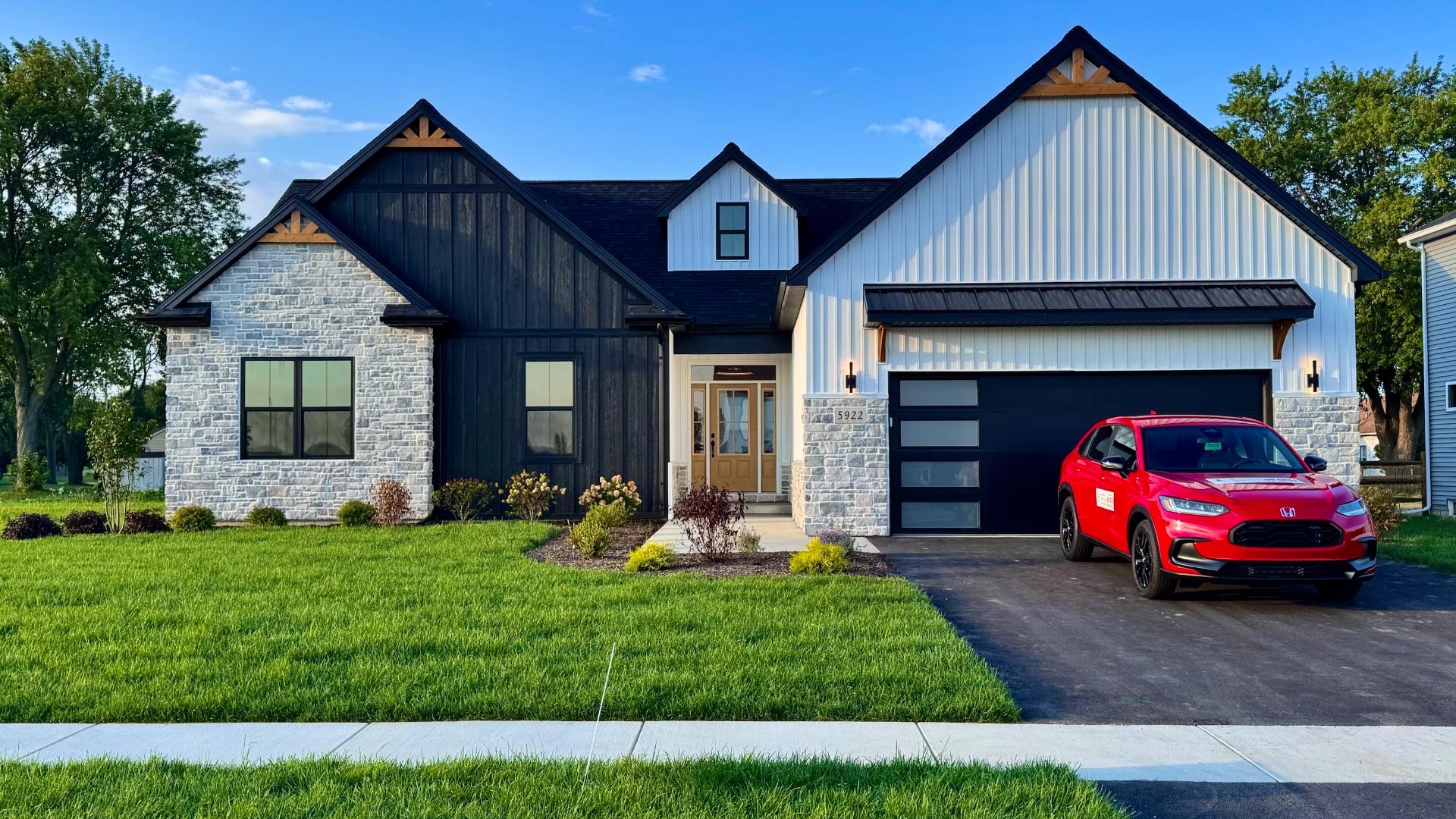
The 2026 St. Jude Dream Home Giveaway offers participants the opportunity to win a newly constructed custom home valued between $400,000 and $1,000,000+ while funding pediatric cancer research. Standard tickets cost $100 each in limited quantities across approximately 40 participating regional markets, with draws accompanied by early-bird secondary prizes and strict IRS tax-withholding compliance mandates.
What Is the St. Jude Dream Home Giveaway?
The St. Jude Dream Home Giveaway is an annual charitable gaming campaign managed by ALSAC, the fundraising and awareness organization for St. Jude Children’s Research Hospital. First established in Shreveport, Louisiana, in 1991, the program has grown into one of the largest single-event charitable housing initiatives in the United States.
Through this program, general contractors, subcontractors, building material suppliers, and national corporate sponsors donate their labor, land, and products to construct brand-new single-family residences. Tickets are sold to the public for a fixed price—traditionally $100 per entry—and 100% of the proceeds directly support St. Jude’s operating model.
Because the hospital covers all costs related to treatment, travel, housing, and food for pediatric patients suffering from catastrophic diseases, charitable initiatives like the Dream Home campaign are foundational to its annual operational budget.
Unlike commercial lotteries or sweepstakes that operate with broad national pools, the Dream Home Giveaway operates primarily as a federation of distinct regional raffles. Each participating metropolitan area or market constructs its own dedicated home, establishes its own prize drawing timeline, and complies with individual state charitable gaming statutes.
Key 2026 Campaign Operational Structure and Pricing
While each local market operates on its own dedicated schedule, the baseline mechanics across all 2026 campaigns adhere to uniform national guidelines managed by ALSAC.
Ticket Cost and Availability
- Ticket Price: Tickets across almost all markets are priced at $100 each.
- Caps on Availability: Every market imposes an absolute ceiling on total tickets sold. Typical limits range from 7,000 tickets in smaller metro areas to upwards of 25,000 or 30,000 tickets in high-demand markets like Memphis, St. Louis, or Denver. Once the allocation is exhausted, ticket sales close immediately, regardless of how much time remains before the drawing date.
- Payment Methods: Major credit cards (Visa, MasterCard, Discover, American Express) and debit cards are standard. Cash or checks are accepted in specific in-person scenarios or through mail-in order blanks where state raffle regulations mandate traditional tender.
National Sponsors and Material Standards
The homes built for the campaign adhere to high-grade residential construction standards. St. Jude partners with select national sponsors who furnish materials across every regional build:
- Brizo: High-end architectural plumbing fixtures, kitchen faucets, and luxury bath collections.
- Shaw Floors: Hardwood flooring, premium carpeting, and custom tile installations.
- Trane: Energy-efficient heating, ventilation, and air-conditioning (HVAC) systems.
- Bosch: High-efficiency kitchen appliances, including smart wall ovens, cooktops, and ultra-quiet dishwashers.
Because these national trade partners furnish the critical mechanical and interior systems, winners receive homes with commercial-grade warranties and modern architectural appointments.
The 2026 Typical Campaign Timeline
The campaign in any given market typically progresses through five structured phases. While southern markets often draw in spring and Midwest or northern markets hold drawings in late summer or autumn, the chronological progression remains consistent across all regions.
Campaign Phases:
- Ticket Reserve / Launch
- Early Bird Milestones
- Open House Previews
- Final Deadline
- Telethon Drawing Day
1. The Launch and Reserve Phase
Local broadcast television partners announce the market's campaign launch. During this period, consumers can reserve their tickets before the public opening, often qualifying for exclusive kickoff incentives such as tickets to major sporting events, gift certificates, or home technology packages.
2. Early Bird Incentive Draws
To encourage early capital deployment, the campaign schedules tiered secondary drawings. Anyone purchasing a ticket prior to an early deadline remains eligible for that incentive prize and is automatically retained in the pool for all subsequent prizes, including the grand prize home. These include:
- Tickets in a Day / Early Bird Prize: Often includes high-value consumer goods, such as a new vehicle, brand-new golf cart, or a $5,000 to $10,000 shopping spree at local regional furniture outlets.
- Bonus Prize: Major leisure rewards, like trips, high-end outdoor kitchen sets, or a year of free groceries.
- Last Chance Prize: Merchandise awarded to purchasers who buy within the final hours of open inventory.
3. Public Open Houses
Several weeks before the final televised drawing, St. Jude and the local homebuilder open the residence to the public for free walkthroughs on select weekends. Visitors can evaluate floor plans, inspect materials, and purchase paper tickets on-site if allocations have not already sold out online or by phone.
4. Cut-Off Date
Sales automatically end either when the ticket ceiling is reached or on the published sales deadline—usually a few days prior to the live television event to facilitate legal data auditing and state gaming board oversight.
5. Drawing Day and Telethon
The grand prize and all secondary prizes are drawn during a live broadcast produced by the participating market’s affiliate television station (such as local NBC, ABC, CBS, or Fox affiliates). Winning names are pulled through certified, monitored mechanical or digital random-selection procedures overseen by independent accounting firms.
Eligibility, Legal Rules, and Purchase Restrictions
Charitable raffles are governed strictly by state gaming commissions and federal prize regulations. Consequently, participating in the St. Jude Dream Home Giveaway requires adherence to several baseline legal parameters:
- Age Requirement: Entrants must be at least 18 years of age at the time of ticket purchase. In jurisdictions where the legal age for charitable gaming or lotteries is higher (such as 19 or 21 in select states or local municipal codes), the entrant must satisfy the local legal majority requirement.
- Geographic Restrictions: Purchasing tickets online or over the telephone is governed by the Interstate Wire Act of 1961 and localized state gaming legislation. In general, an individual must be physically located within the state or permissible multi-state television market holding the raffle at the time the order is processed. For example, some states require physical in-person sales or strict residency declarations, preventing out-of-state transactions over the internet.
- Ineligible Entities: Direct employees of ALSAC and St. Jude Children’s Research Hospital, as well as immediate family members living in the same household, are strictly barred from winning the grand prize or subsidiary promotional drawings. Additionally, key principals of the primary general contractor and the independent auditing firm supervising the draw are excluded to maintain procedural integrity.
- Ticket Transferability: Tickets are non-refundable and non-transferable once officially registered with the audit platform. The individual named on the official entry slip is legally recognized as the potential titleholder.
2026 Market Comparison Across Major Build Regions
The following table outlines the operational details typical of major long-standing regional markets participating in the St. Jude Dream Home Giveaway:
| Regional Market | Typical Builder Partner | Approx. Home Value | Typical Ticket Cap | Broadcast Affiliate | Primary Timeline Focus |
|---|---|---|---|---|---|
| Memphis, TN | Southern Serenity Homes | $800,000 – $1,200,000 | 25,000 – 35,000 | WMC-TV (NBC) | Spring / Early Summer |
| Baton Rouge, LA | Alvarez Construction | $700,000 – $900,000 | 18,000 – 22,000 | WAFB-TV (CBS) | Spring |
| St. Louis, MO | Bridgewater Communities | $600,000 – $800,000 | 15,000 – 20,000 | KTVI (FOX) | Summer / Autumn |
| Richmond, VA | CraftMaster Homes | $550,000 – $750,000 | 12,000 – 16,000 | NBC12 (WWBT) | Summer |
| Denver, CO | Oakwood Homes | $800,000 – $1,100,000 | 20,000 – 28,000 | FOX31 / Channel 2 | Autumn |
| Spokane, WA | Condron Homes | $500,000 – $700,000 | 9,000 – 12,000 | KREM (CBS) | Spring / Summer |
| Shreveport, LA | Rogers Homes | $500,000 – $650,000 | 10,000 – 14,000 | KTBS (ABC) | Spring |
Note: Individual lot values, architectural styles (modern farmhouse, transitional brick, multi-story craftsmen), and specific floor plans vary based on local land availability and regional design aesthetics.
Critical Financial and Tax Realities for Grand Prize Winners
Winning a real property raffle introduces major tax obligations. Many participants fail to recognize that winning a real estate grand prize is not a purely free event; it triggers strict, immediate financial responsibilities under federal, state, and municipal revenue codes.
Federal Income Tax Withholding (IRS Form W-2G)
Under IRS guidelines regarding sweepstakes, lotteries, and raffles:
- Raffle winnings are categorized as ordinary taxable income, not capital gains.
- Because the fair market value (FMV) of the home exceeds $5,000, federal law mandates an upfront withholding rate—typically 24% for U.S. citizens and permanent residents with a valid Social Security Number or Taxpayer Identification Number.
- If a home is appraised at $750,000, the baseline 24% federal tax withholding equals $180,000.
- Crucial Rule: St. Jude Children’s Research Hospital / ALSAC does not hand over clear title or deed to the real estate until the winner proves they have the liquidity to satisfy the mandatory federal withholding tax liability or submits payment to satisfy the remittance.
State and Local Income Taxes
In addition to federal withholding, state income taxes apply in most jurisdictions where the prize is located. If you win a home in Missouri, Virginia, or Louisiana, you are subject to the respective state's non-wage gaming tax withholding rate, which generally adds another 4% to 9% to the total upfront tax burden. Conversely, winners in states without individual personal income tax (such as Tennessee or Washington) bypass the state-level income tax surcharge, though federal rules remain fully in effect.
Closing Costs, Recording Fees, and HOA Obligations
While the builder and sponsors generally deliver a home free of mechanics' liens and prior mortgages, the transfer of ownership carries practical real estate transaction costs:
- Title Transfer & Deed Recording: Municipal and county recording fees are often the responsibility of the winner.
- Property Taxes: Ad valorem real estate taxes are assessed based on the county’s official reappraisal. A $750,000 residence can easily command $6,000 to $18,000 annually in municipal property taxes, depending on the county tax rate.
- Homeowners Association (HOA) Fees: Many builds are located in planned communities featuring communal maintenance, clubhouse access, or shared detention ponds, requiring monthly or annual HOA assessments.
- Hazard & Flood Insurance: Property insurance must be secured immediately upon title transfer to protect the asset.
Can the Winner Take Cash Instead of the House?
Whether a "cash option" is available depends strictly on the legal rules published for your specific regional market.
In some markets, if the builder or title sponsors include a cash buyout provision in the official rules, a winner may select a smaller lump-sum cash prize (e.g., $300,000 to $500,000) in lieu of the physical real estate. However, in many markets, no cash option exists—the physical home is the sole grand prize.
If no cash option is offered and the winner lacks the liquid assets to pay the upfront 24% IRS withholding, winners routinely secure bridge financing, obtain a mortgage against the unencumbered equity of the home, or work with a real estate broker to place the home on the open market immediately following title transfer to liquidate the asset.
Step-by-Step: How to Secure a 2026 Dream Home Ticket
Navigating the ticket acquisition process requires speed and attention to regulatory nuances, as popular markets routinely sell out weeks before their scheduled deadlines.
- Step 1: Verify Regional Market Status & Open Dates
- Step 2: Review State-Specific Purchase Portals (Web, Phone, In-Person)
- Step 3: Enter Legal Contact Data & Tender $100 Payment
- Step 4: Receive Audit-Certified Ticket Number / Receipt
- Step 5: Track Secondary Drawings & Final Television Broadcast
Step 1: Identify Your Local Market
Visit the official St. Jude Dream Home portal (accessible directly via the main St. Jude Children's Research Hospital fundraising platforms). Review the list of active 2026 construction cities to find your geographic territory. Note the exact opening date for sales.
Step 2: Select a Compliant Purchasing Channel
Depending on the state in which your market resides, one or more of the following fulfillment channels will be available:
- Toll-Free Phone Order: ALSAC maintains a central telephone fulfillment system for each market (often heavily staffed on launch days).
- Direct Web Purchase: Permitted in states where internet charitable gaming transactions are legally codified.
- In-Person Physical Retailers: Certain grocery store partners, banks, or local model homes set up point-of-sale ticket reserve desks where entries can be filed in person.
Step 3: Complete Entry Information Accurately
Ensure the legal name, permanent residential address, phone number, and email address entered on the ticket match your government-issued photo ID. Tickets purchased under nicknames, business entities (unless expressly permitted by local market rules), or incomplete names can lead to operational delays or prize disqualification during independent audits.
Step 4: Archive Your Confirmation
After your payment clears, you will receive an official entry receipt displaying your allocated ticket number(s). Retain this digital document or physical paper stub. While ALSAC retains official electronic registration data and will directly contact any winner drawn even if the physical ticket is misplaced, retaining the ticket identifier simplifies early-bird prize verification.
Step 5: Follow Milestone Broadcasts
Keep an eye on the promotional schedule via your local TV affiliate. Even if your entry is not drawn for the initial vehicle or retail early-bird giveaways, your ticket is safely re-entered into the bin for the final grand prize home drawing.
Critical Pitfalls to Avoid When Entering
While participating in the St. Jude Dream Home Giveaway is an easy way to contribute to a worthy mission, entrants frequently encounter logistical misunderstandings:
1. Waiting for the Final Deadline
The most frequent error is postponing ticket purchases until the week of the drawing. High-density markets frequently sell out of their fixed 10,000–25,000 allocations within 24 to 72 hours of open sales. When inventory drops to zero, the ticketing system freezes permanently. Buying on launch day is the only reliable way to guarantee entry.
2. Violating Geolocation Restrictions
Attempting to bypass state gaming verification measures—such as using a VPN to purchase an online ticket for an out-of-state raffle—can invalidate your entry. State charitable gaming commissions hold final authority over raffle legitimacy. If an audit reveals that a purchase violated interstate lottery transport or local gaming eligibility laws, the ticket can be voided without refund.
3. Misunderstanding Group Purchases
Groups of coworkers or families frequently pool funds to purchase multiple $100 tickets. However, ALSAC issues the ticket in one legal name only. The organization recognizes only the designated individual as the sole claimant. If a group wins, the named individual is legally responsible for the IRS tax withholding and reporting.
To prevent internal conflicts:
- Draft a simple private written agreement among participants prior to buying the ticket.
- Specify how proceeds, taxes, or asset liquidation will be handled if the ticket wins.
- Consult a certified public accountant (CPA) on how to handle gift tax issues or partnership filings before transferring money among participants.
Frequently Asked Questions
What are the mathematical odds of winning the grand prize house?
Odds are determined strictly by the number of tickets made available in your regional market. For example, in a market where ticket sales are capped at 10,000 entries and every ticket sells out, each $100 ticket holds an exact 1 in 10,000 chance of winning the home. If a market caps sales at 20,000, your baseline odds are 1 in 20,000 per ticket. These odds are substantially better than multi-state lotteries (such as Powerball or Mega Millions), which feature odds exceeding 1 in 290 million.
Are ticket purchases tax-deductible as charitable contributions?
No. Under Internal Revenue Code regulations, the cost of raffle tickets, sweepstakes chances, or gaming entries purchased from a 501(c)(3) charitable organization is not tax-deductible. The IRS views the purchase as an exchange of value—the payment secures a mathematical chance to win a valuable prize—which disqualifies the $100 entry from qualifying as a charitable gift deduction.
What happens if not all tickets are sold by the draw date?
If a market does not exhaust its ticket allocation before the sales window closes, the drawing proceeds as scheduled with whatever volume of tickets was legitimately sold. Your individual odds improve under these circumstances, as fewer entries are present in the final drawing pool.
Can a winner request that St. Jude pay the federal withholding tax?
No. Neither ALSAC nor St. Jude Children’s Research Hospital pays the winner's federal or state tax burdens. All tax withholdings, conveyance fees, and ongoing property ownership liabilities are the exclusive legal responsibility of the person whose name is drawn. Failure to satisfy tax liabilities within the timeline mandated by the raffle rules results in forfeiture of the prize.
What happens if the drawn winner does not claim the prize or cannot pay the taxes?
Campaign rules outline a strict claim window—usually between 10 and 30 business days—during which the winner must formally execute acceptance documentation, verify their legal eligibility, and prove funding for the required tax withholding. If a winner declines the prize, cannot be reached after documented certified attempts, or fails to satisfy tax compliance requirements, an alternate winner is drawn from the validated secondary auditing pool.
Practical Next Steps for Prospective Entrants
To participate in the 2026 campaign effectively:
- Check Local Timelines Early: Identify your regional broadcast affiliate and monitor their local programming or the St. Jude portal to pinpoint your market's exact ticket release date.
- Purchase on Launch Day: Avoid disappointment by acquiring your entry the moment reservations go live, maximizing both your home entry and your automatic inclusion in all early-bird promotional draws.
- Establish a Financial Strategy: Review your liquidity beforehand. If you intend to accept the physical real estate upon winning, make sure you have a plan to meet the mandatory 24% IRS withholding obligation through personal savings, home equity, or pre-established credit facilities.