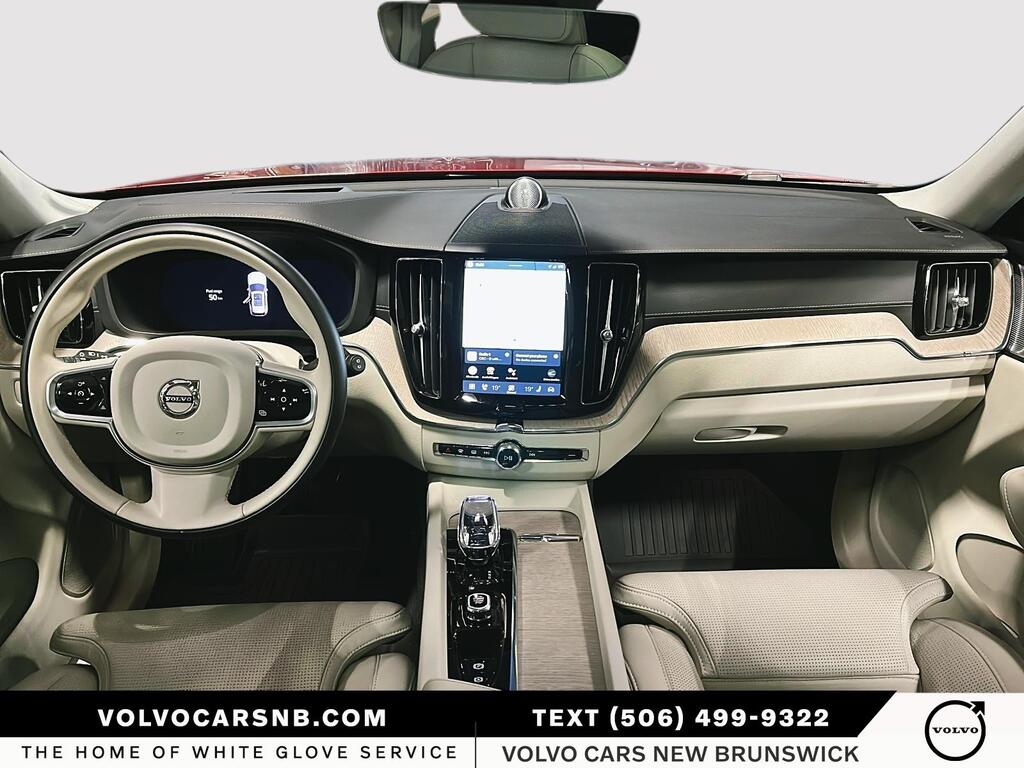
The 2024 Volvo B5 engine is a 2.0-liter turbocharged four-cylinder powertrain integrated with a 48-volt mild-hybrid system, producing 247 horsepower and 258 lb-ft of torque. Designed as the foundational "Core" engine for Volvo’s modern lineup, it balances fuel efficiency with smooth power delivery through an Integrated Starter Generator (ISG).
For those evaluating the 2024 Volvo lineup from the perspective of 2026, the B5 engine represents a pivotal moment in the brand’s transition toward full electrification. While Volvo has pushed aggressively toward its Recharge (Plug-in Hybrid) and fully electric EX models, the B5 remains the workhorse of the fleet. It provides a sophisticated entry point for drivers who require internal combustion range but desire the refinement and regenerative benefits of hybrid assistance. This overview examines the engineering, performance characteristics, and long-term viability of the 2024 B5 powertrain.
The Architecture of the B5: Engineering and Design
The "B" in B5 signifies "Battery," a nomenclature Volvo adopted to replace the older "T" (Turbocharged) and "D" (Diesel) designations. The 2024 B5 is part of the Volvo Engine Architecture (VEA) family, which focuses on modularity. This specific variant utilizes an all-aluminum block and head to minimize weight, contributing to better front-rear weight distribution in SUVs like the XC60 and sedans like the S60.
Internal Combustion Components
At its heart, the B5 is a 1,969cc inline-four engine. It utilizes high-pressure direct injection and a single twin-scroll turbocharger. The twin-scroll design is critical because it separates the exhaust pulses from the cylinders, allowing the turbo to spool up faster at lower RPMs. This effectively eliminates "turbo lag," providing a more linear acceleration curve that feels more like a larger displacement naturally aspirated engine than a small turbocharged one.
For the 2024 model year, Volvo refined the friction-reduction measures within the engine. This included specialized coatings on the piston rings and optimized oil pump flow, which, while minor on paper, contributed to the engine's reputation for longevity and smoothness as these vehicles reach higher mileage benchmarks in 2026.
The 48-Volt Mild-Hybrid System
The defining feature of the B5 is its 48-volt electrical architecture. Unlike a full hybrid (HEV) or a plug-in hybrid (PHEV), a mild hybrid cannot propel the car on electricity alone. Instead, it uses an Integrated Starter Generator (ISG) connected to the crankshaft via a belt.
The ISG serves three primary functions:
- Instantaneous Start-Stop: The traditional 12V starter motor is relegated to cold starts. For the frequent stop-start cycles in traffic, the 48V ISG spins the engine up to idle speed almost instantly and silently.
- Torque Fill: The electric motor provides an additional 13 horsepower and approximately 30 lb-ft of torque during initial acceleration. This "fills the gap" before the turbocharger reaches full boost.
- Energy Recuperation: During braking or coasting, the ISG acts as a generator, converting kinetic energy into electricity stored in a small 48V lithium-ion battery located in the trunk area or under the floor.
2024 Volvo B5 Performance Specifications
The B5 engine is tuned to provide a balance of "adequate" power for heavy luxury vehicles without the aggressive fuel consumption of higher-performance variants. In 2024, this engine was the standard offering for the XC40, XC60, S60, and V60 Cross Country.
| Feature | Specification |
|---|---|
| Engine Type | 2.0L Turbocharged Inline-4 |
| Hybrid System | 48V Mild Hybrid (ISG) |
| Horsepower | 247 hp @ 5,400 rpm |
| Torque | 258 lb-ft @ 1,800–4,800 rpm |
| Transmission | 8-Speed Geartronic Automatic |
| 0–60 MPH (XC60) | Approx. 6.6 Seconds |
| Fuel Requirement | Premium Unleaded (91+ Octane) |
| Valve Train | DOHC, 4 valves per cylinder |
Driveability and Transmission Integration
The B5 is paired exclusively with an 8-speed Geartronic automatic transmission. For the 2024 model year, Volvo shifted away from physical gear linkages in favor of "shift-by-wire" technology across more trims. This allows the transmission to communicate more effectively with the mild-hybrid system.
When the driver lifts off the accelerator, the system can disengage the engine from the transmission (coasting) more frequently than older non-hybrid models. This transition is managed by the transmission's control module to ensure that when the driver re-applies throttle, the engine is already rev-matched by the ISG for a seamless re-engagement.
Fuel Efficiency and Environmental Impact
The primary goal of the B5's mild-hybridization was to meet tightening global emissions standards without requiring owners to change their driving habits (i.e., no plugging in). In 2024, the B5-equipped vehicles generally saw a 5–10% improvement in city fuel economy compared to the previous T5 non-hybrid versions.
EPA Estimates vs. Real-World Performance
In a vehicle like the 2024 Volvo XC60 B5 AWD, the EPA estimated approximately 22 MPG city and 28 MPG highway. In real-world 2026 longitudinal data, drivers often report meeting or slightly exceeding these figures, particularly in suburban environments where the regenerative braking can frequently recharge the 48V battery.
The B5 engine also utilizes the Miller Cycle during low-load conditions. By leaving the intake valves open slightly longer during the compression stroke, the engine reduces pumping losses and improves thermal efficiency. This is a key reason why the B5 maintains respectable highway mileage despite the aerodynamic challenges of Volvo’s SUV lineup.
Comparative Analysis: B5 vs. B6 vs. T8 Recharge
Understanding the B5 requires positioning it within the 2024 hierarchy.
- B5 (Mild Hybrid): Single turbocharger. Ideal for daily commuting and drivers who prioritize value and simplicity.
- B6 (Mild Hybrid): Featured both a turbocharger and an electric supercharger. The B6 offered 295 hp and 310 lb-ft of torque. However, Volvo began phasing out the B6 in some markets in favor of the B5 or the T8, making the 2024 B5 the most common "internal combustion" choice.
- T8 Recharge (PHEV): A different beast entirely, combining the 2.0L engine with a much larger rear electric motor and a plug-in battery. It offers 455 hp and 35+ miles of electric-only range but at a significantly higher price point.
The B5 remains the "sweet spot" for many. It lacks the complexity of the B6’s supercharger and the high entry cost of the T8, while providing sufficient power for highway merging and towing (up to 3,500 lbs in the XC60).
Maintenance and Reliability into 2026
Now that the 2024 B5 engines have been on the road for two years, certain maintenance patterns have emerged. Because it is a sophisticated, high-compression turbocharged engine, adherence to the factory maintenance schedule is non-negotiable.
The 48V Battery Life
One of the most common questions regarding the B5 is the lifespan of the 48V mild-hybrid battery. Unlike the large batteries in EVs, the 48V unit is relatively small and does not face the same deep-discharge cycles. By 2026, reports of 48V battery failure in the 2024 MY remain rare. Volvo designed these systems to last the life of the vehicle, typically 150,000 to 200,000 miles, before significant degradation occurs.
Oil Specifications and Consumption
The B5 requires 0W-20 fully synthetic oil that meets the Volvo VCC RBS0-2AE standard. Using the wrong oil can lead to premature wear of the turbocharger bearings or issues with the variable valve timing system. Owners should also be aware that while Volvo's service intervals are every 10,000 miles, many technicians recommend 7,500-mile intervals for those driving in extreme climates or heavy stop-and-go traffic to preserve the turbocharger.
Belt-Driven Starter Generator (ISG)
Since the ISG is connected to the engine via a heavy-duty belt, this belt is a critical wear item. Unlike a standard serpentine belt, the ISG belt handles high torque loads every time the engine restarts. Inspection of this belt is a mandatory part of the 40,000-mile and 80,000-mile services.
Common Questions and Troubleshooting
The 2024 Volvo B5 is generally robust, but its complexity means that software updates are as important as mechanical repairs.
Is the B5 engine underpowered for the XC60?
For most drivers, the answer is no. While it doesn't provide the "neck-snapping" acceleration of the T8, the 258 lb-ft of torque is available very low in the rev range (1,800 rpm). This makes the vehicle feel responsive in city traffic. However, if you frequently drive with five passengers and a full cargo load in mountainous terrain, you may find the B5 working harder than a B6 or T8 would.
Can the auto start-stop be turned off?
In the 2024 models equipped with the Google-based infotainment system (Android Automotive OS), there is no physical button to disable the start-stop system. Volvo’s philosophy is that the 48V system makes the transition so seamless that a disable function is unnecessary. However, shifting the transmission into "Polestar Engineered" mode (if equipped) or "Dynamic" settings can sometimes alter the start-stop behavior.
Does the B5 require Premium fuel?
Yes. According to Volvo Cars Official Support, the B5 engine is optimized for 91 octane or higher. While the engine's knock sensors can adjust for lower octane fuel in an emergency, prolonged use of 87 octane will result in reduced performance, lower fuel economy, and potential long-term damage to the turbocharger and pistons due to pre-ignition.
FAQs
1. What is the difference between the Volvo B5 and T5 engines? The T5 was a pure internal combustion engine, whereas the B5 is a mild hybrid. The B5 replaces the traditional alternator and starter with a 48V Integrated Starter Generator. While the horsepower figures are similar (247 hp for B5 vs. 250 hp for T5), the B5 offers smoother start-stop transitions and slightly better fuel efficiency in city driving.
2. How does the mild-hybrid system improve performance? The system provides a "torque fill" during the milliseconds it takes for the turbocharger to spool up. When you press the gas from a standstill, the electric motor provides an immediate shove, making the car feel more responsive before the gasoline engine takes over the primary load.
3. Is the 2024 Volvo B5 engine reliable for long-term ownership? Based on the VEA architecture used since 2014, the B5 is a mature engine design. Most of the "teething" issues with Volvo's 2.0L engines (such as oil consumption in early 2015-2016 models) were resolved long before 2024. The 48V components add complexity, but the system is integrated more simply than a full plug-in hybrid.
4. Does the B5 engine use a timing belt or a chain? The Volvo B5 engine uses a timing belt. This is a critical maintenance item that typically requires replacement every 10 years or 150,000 miles, though some owners choose to do it earlier for peace of mind. It is quieter than a chain but requires periodic inspection.
5. Which 2024 Volvo models use the B5 engine? The B5 was the standard engine for the 2024 XC40, S60, XC60, and V60 Cross Country. In some models, like the XC60, it was the base powertrain, while in the XC40, it was the upgraded "High Output" option compared to the B4 available in other markets.
Final Recommendations for Owners
If you are looking at a 2024 Volvo B5 in the current 2026 market, it remains one of the most balanced powertrains in the luxury segment. To ensure its longevity, prioritize two things: high-quality synthetic oil and firmware updates. Because the 48V system is heavily reliant on software to manage the handover between electric and gas power, ensuring your vehicle has the latest version of Volvo’s software (often delivered Over-The-Air) is essential for maintaining that signature smoothness.
For those who drive primarily on the highway, the B5 is nearly as efficient as the more expensive hybrid variants. However, if your daily commute is under 30 miles and you have a place to charge, the T8 Recharge may be the better long-term financial play. For everyone else, the B5 represents the peak of Volvo’s internal combustion engineering.