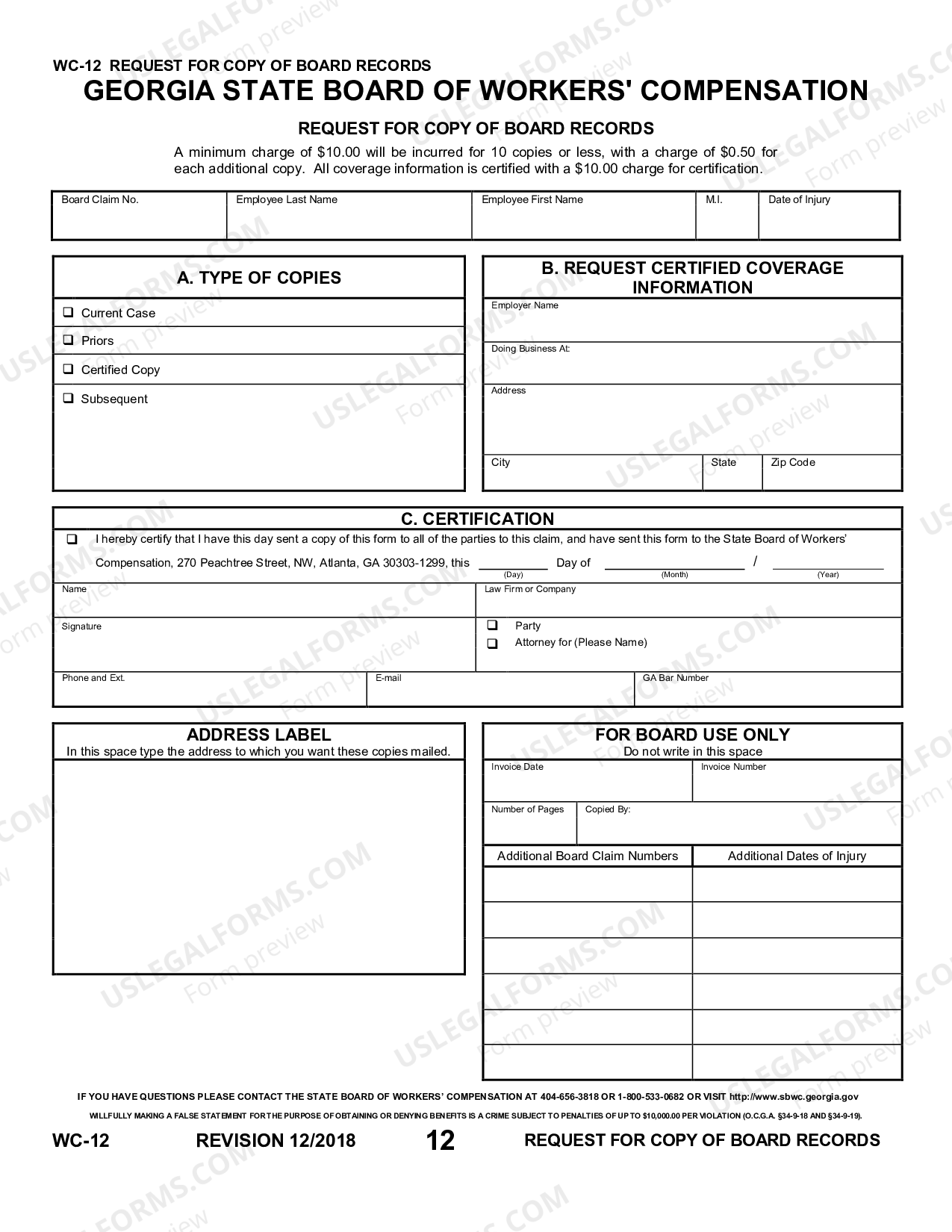
Workers' compensation rates for bus drivers in Georgia depend on specific classification codes, historical payroll benchmarks, and the nature of public or private passenger transport. While the Georgia State Board of Workers' Compensation does not publish a single flat statewide rate for individual occupations, employers utilize standardized classification codes and insurance carrier rate filings to determine premiums for drivers operating transit, school, or charter buses.
Navigating the landscape of workers' compensation insurance requires a detailed understanding of how risk is assessed, how rates are calculated, and what historical data reveals about commercial transportation sectors. For employers, insurance adjusters, and human resources professionals managing transit fleets in Georgia, examining the mechanics of these rates provides critical insight into liability, compliance, and cost management.
The Structure of Georgia Workers' Compensation Insurance
Workers' compensation is a form of business insurance designed to provide wage replacement and medical benefits to employees injured on the job. In exchange for these guaranteed benefits, employees relinquish their right to sue their employer for negligence. In Georgia, the system is overseen by the State Board of Workers' Compensation, but the actual insurance rates and classifications are heavily influenced by independent rating bureaus and private insurance carriers.
Unlike states with monopolistic state-fund workers' compensation systems, Georgia operates in an open competitive rating market. Insurance companies file their own rates with the Georgia Office of Insurance and Safety Fire Commissioner, subject to guidelines established by advisory organizations such as the National Council on Compensation Insurance (NCCI).
For transportation businesses, understanding this regulatory framework is the first step in calculating accurate coverage costs. Employers cannot simply pick a random percentage; they must apply specific mathematical formulas that factor in payroll, job classification risk, and employer loss history.
Role of the National Council on Compensation Insurance (NCCI)
The National Council on Compensation Insurance gathers data, analyzes historical injury trends, and develops standard job classification codes used across the United States, including Georgia. The NCCI assigns distinct four-digit classification codes to different industries to group workers with similar risk profiles.
When examining the 2018 Georgia workers' compensation rate for bus drivers, the primary mechanism of comparison is the classification code. Bus drivers do not fall under a single blanket code; rather, their classification depends heavily on the type of bus operation—whether it is a municipal transit system, a private school bus contractor, or an interstate charter company.
Insurance carriers use NCCI loss costs as a baseline and then apply their own expense constants, profit loads, and loss multipliers (known as company loss cost multipliers) to arrive at the final manual rate. This means that while two bus companies might use the same NCCI classification code, their final premium rates can vary depending on the insurance carrier they choose.
NCCI Classification Codes for Bus Drivers
Classification codes separate workers based on the hazards associated with their daily duties. For bus drivers operating in Georgia, several distinct codes typically apply depending on the operational model of the employer:
- Code 7382 (Bus Company: All Other Employees & Drivers): This code traditionally applies to bus companies engaged in scheduled route transportation, charter operations, or tour services. It covers drivers, mechanics, and terminal employees.
- Code 7370 (Taxicab or Limousine Company): Occasionally scrutinized if passenger transport blends into smaller vehicle fleets, though distinct from standard heavy buses.
- Code 9101 (School Bus Operations): Frequently used or cross-referenced when school districts or private contractors manage dedicated student transportation fleets, though specific state rules or municipal self-insurance arrangements often alter how these are administered.
Each classification code carries a specific advisory loss cost per $100 of payroll. For historical context, the 2018 manual rates reflected the economic and injury-frequency data compiled by the NCCI during preceding years, balancing macroeconomic trends in Georgia's labor market with commercial transit safety records.
Factors Influencing Workers' Compensation Premiums
The base rate determined by the classification code is only the starting point for calculating a bus company's actual insurance premium. Several dynamic factors influence the final cost associated with insuring bus drivers in Georgia:
Payroll Volume
Workers' compensation premiums are calculated per $100 of gross payroll. If a bus company employs 50 drivers earning an average annual salary of $40,000, the total payroll base is $2,000,000. The manual rate is multiplied by this payroll figure (divided by 100) to determine the baseline premium before adjustments.
Experience Modification Rate (Mod Rate)
The Experience Modification Rate is a critical multiplier based on an employer's past accident and injury history compared to the industry average. A business with a safe record and few claims will have an Experience Modification Rate below 1.00, granting them a premium discount. Conversely, a bus company with frequent or severe driver injuries will have a mod rate above 1.00, driving up insurance costs significantly.
Safety Programs and Premium Discounts
Georgia law and insurance carriers incentivize workplace safety. Employers who implement certified safety programs—such as defensive driving courses, routine vehicle maintenance protocols, and strict drug-testing policies—can qualify for premium credits under the Georgia Workers' Compensation Drug-Free Workplace program or safety-tier incentives.
Overview of 2018 Insurance Rating Environment
The year 2018 represented a period of relative stability in the Georgia workers' compensation market, characterized by modest downward trends in overall advisory loss costs. Statewide, the NCCI filed advisory rate decreases for multiple consecutive years leading up to and including 2018, driven by improved workplace safety, lower medical inflation growth rates in specific sectors, and declining overall claim frequencies.
For the transportation and trucking sectors, however, rate trends occasionally diverged from general manufacturing or office environments. Commercial driving involves inherent highway and passenger risks, meaning loss severities (the cost per individual claim when an accident occurs) tended to be higher. Consequently, while overall state workers' compensation rates dropped, transportation-specific classifications remained sensitive to litigation costs and major vehicular accident settlements.
Comparison of Transportation Risk Classifications
To understand how bus driver rates compare to other related driving occupations in Georgia, examine the following structured breakdown of typical classification categories and their operational risk factors.
| Classification Code | Industry Segment | Primary Risk Exposure | Rate Sensitivity |
|---|---|---|---|
| 7382 | Bus Lines (Intercity, Charter, Transit) | Highway collisions, passenger boarding/alighting slips, ergonomic strain | High sensitivity to traffic density and fleet size |
| 9101 | School Bus Operations | Student management distractions, loading zone hazards, weather conditions | Moderate-to-high sensitivity due to public safety oversight |
| 7219 | Trucking (General Freight) | Long-haul fatigue, heavy cargo handling, loading dock injuries | High severity due to interstate travel |
| 8742 | Salespersons / Outside Drivers | Low-speed urban driving, slip-and-fall | Low-to-moderate severity |
Common Misconceptions Regarding Bus Driver Workers' Compensation
Navigating workers' compensation requirements often leads to confusion among employers and independent operators. Clarifying these misconceptions prevents compliance failures and unexpected financial liabilities:
- Independent Contractor Misclassification: Some bus companies attempt to classify drivers as independent contractors rather than W-2 employees to avoid paying workers' compensation premiums. Under Georgia law, the state looks closely at the degree of control the company exerts over the driver's schedule, route, and equipment. Misclassifying drivers can lead to severe penalties, stop-work orders, and retroactive premium assessments.
- Exemption for Corporate Officers: In Georgia, corporate officers can elect to be exempt from workers' compensation coverage, but this exemption does not automatically extend to rank-and-file bus drivers. Operational staff driving buses must remain covered.
- State-Fund Misconceptions: Georgia does not operate a state-run workers' compensation fund for private employers (unlike monopolistic states). Employers must secure coverage through licensed private insurance carriers, group self-insurance funds, or qualify as individual self-insurers.
Compliance, Auditing, and Verification for Employers
Insurance carriers routinely conduct annual payroll audits to ensure that the estimated payroll used at the beginning of the policy year matches actual expenditures. For bus companies, these audits verify that driver payroll is accurately separated from administrative or clerical payroll.
Administrative personnel who never drive buses and work exclusively in an office environment fall under a different classification code (typically Code 8810), which carries a significantly lower rate than driving codes like Code 7382. Keeping meticulous records and clear job descriptions is essential during an audit to prevent clerical staff from being incorrectly billed at higher driving rates.
Employers must also display official notices of compliance in terminal breakrooms, informing drivers of their rights and the identity of their workers' compensation insurance carrier or designated medical provider network (such as a certified Managed Care Organization).
Frequently Asked Questions
What is the exact dollar rate for 2018 Georgia workers' compensation for bus drivers?
There is no single statewide dollar rate because insurance pricing is determined by individual private carriers based on NCCI advisory loss costs, company expense loads, and the employer's specific Experience Modification Rate. Employers must consult their policy declarations page or insurance agent for exact historical figures.
Are school bus drivers covered differently than charter bus drivers?
Yes, school bus operations often fall under distinct municipal rules, school district self-insurance pools, or specific NCCI codes like Code 9101, whereas private charter and transit bus companies typically utilize Code 7382. Coverage structures vary based on whether the employer is a public government entity or a private commercial enterprise.
How does an employer's safety record affect their bus driver insurance rates?
An employer's safety record directly impacts their Experience Modification Rate (Mod Rate). Fewer workplace injuries and lower claim costs keep the mod rate below 1.00, reducing the base premium. Frequent accidents drive the mod rate above 1.00, increasing overall premium costs.
Can bus drivers opt out of workers' compensation coverage in Georgia?
Generally, employees cannot waive workers' compensation coverage. In Georgia, employers with three or more regular employees are legally required to carry workers' compensation insurance. Failure to maintain coverage can result in criminal penalties and civil liability.
What should an employer do if a bus driver is injured on the job?
The employer must immediately provide medical attention, report the injury to their workers' compensation insurance carrier, and file the appropriate state forms (such as Form WC-1) with the Georgia State Board of Workers' Compensation in accordance with statutory deadlines.
Practical Next Actions and Recommendations
For employers, risk managers, or researchers analyzing historical 2018 data or current insurance obligations in Georgia, proactive management is essential. Always verify classification codes directly with your insurance carrier or broker, maintain comprehensive payroll records separating drivers from administrative staff, and invest in robust driver safety training programs to minimize injury frequencies and control long-term premium costs.