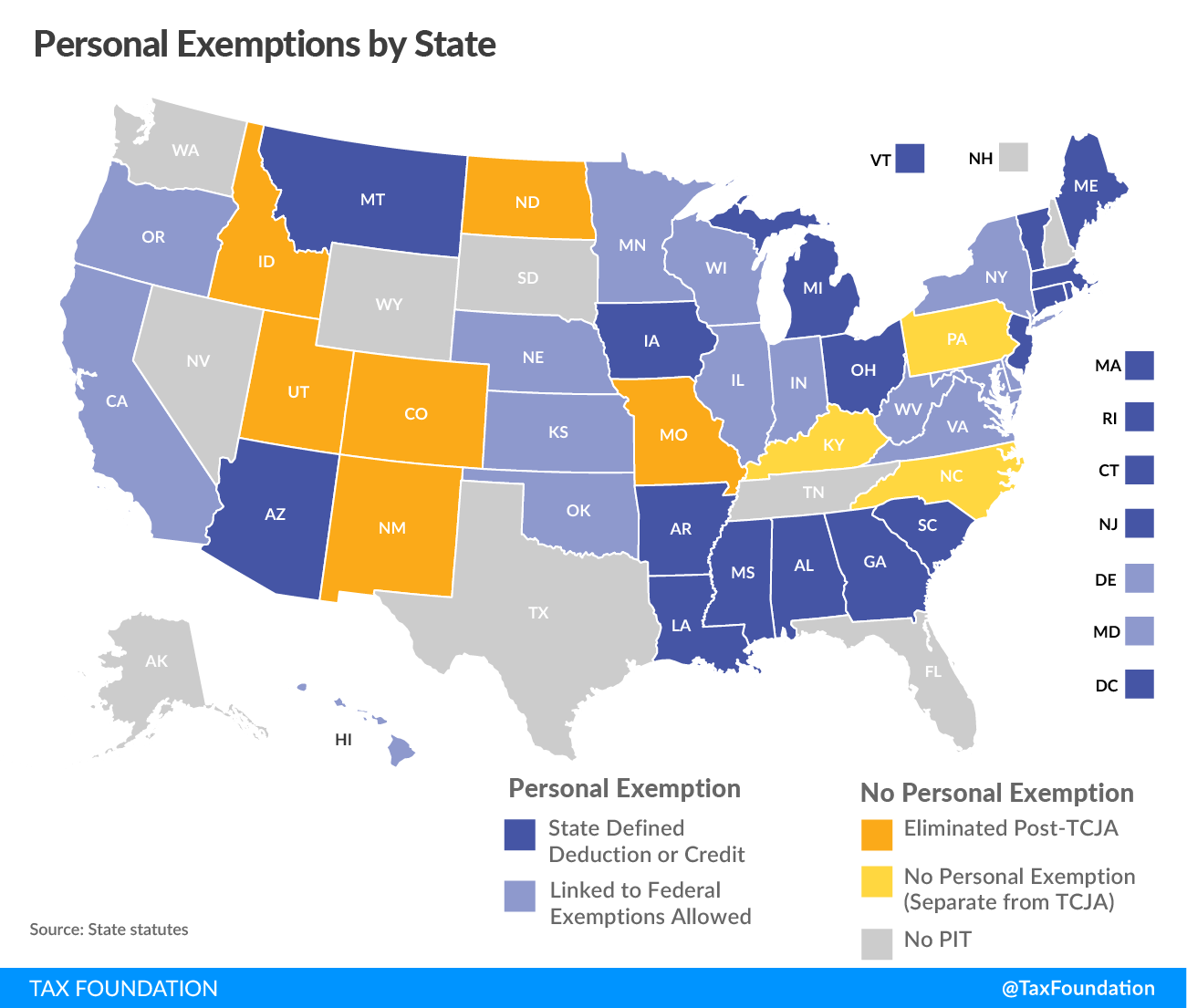
For tax year 2017, the personal exemption was a fixed tax deduction of $4,050 per eligible individual. Taxpayers could claim this deduction for themselves, their spouse, and qualified dependents to directly reduce their adjusted gross income (AGI) before calculating federal income tax liabilities.
The 2017 tax year represents a critical historical turning point in United States tax law. It was the final tax year in which personal and dependency exemptions were available before the Tax Cuts and Jobs Act (TCJA) suspended them starting in 2018. Understanding how the 2017 personal exemption operated is essential for reviewing historical tax filings, settling unfiled prior-year returns, navigating IRS audits, and evaluating the evolution of federal tax policy.
What Was the 2017 Personal Exemption?
Under the Internal Revenue Code (IRC) prior to the enactment of the TCJA, a personal exemption served as a statutory allowance that exempted a base amount of income from federal income taxation for every person supported by a tax return. For the 2017 tax year, the Internal Revenue Service (IRS) set the base personal exemption amount at $4,050, adjusted upward from $4,000 in 2016 for inflation under IRS Revenue Procedure 2016-55.
Unlike tax credits, which reduce a tax bill dollar-for-dollar, a personal exemption operated as an above-the-line deduction (specifically deducted on Line 42 of Form 1040 in 2017) that directly lowered tax-deductible taxable income.
How It Directly Reduced Taxable Income
To calculate federal taxable income in 2017, taxpayers followed a straightforward sequence:
- Calculate Gross Income from all taxable sources.
- Subtract adjustments to income (such as traditional IRA contributions or student loan interest deductions) to determine Adjusted Gross Income (AGI).
- Subtract either the Standard Deduction or itemized deductions (from Schedule A).
- Subtract total Personal Exemptions ($4,050 multiplied by the total number of eligible exemptions).
For example, a married couple filing jointly with two qualifying children in 2017 was eligible for four exemptions ($4,050 × 4 = $16,200). Combined with the 2017 standard deduction for married couples filing jointly ($12,700), this family could shield up to $28,900 of their income from federal income tax before applying marginal tax rates.
Who Qualified for Personal and Dependency Exemptions in 2017?
The IRS categorized exemptions into two distinct types: personal exemptions (for the primary taxpayer and spouse) and dependency exemptions (for qualifying children or qualifying relatives).
- 2017 Personal Exemptions
- Personal Exemptions
- Primary Taxpayer
- Taxpayer's Spouse (if MFJ or MFS meeting strict criteria)
- Dependency Exemptions
- Qualifying Child (Age, Relationship, Residency, Support tests)
- Qualifying Relative (Income < $4,050, Support, Relationship/Member test)
- Personal Exemptions
1. Taxpayer and Spouse Exemptions
- Primary Taxpayer: You were automatically allowed one exemption for yourself, provided you could not be claimed as a dependent on another taxpayer’s return. If another person was eligible to claim you as a dependent—even if they did not actually do so—you could not claim your own personal exemption.
- Spouse: On a joint return, both spouses received one exemption each. If filing under Married Filing Separately, a taxpayer could claim an exemption for their spouse only if the spouse had no gross income, was not filing a return, and could not be claimed as a dependent by any other taxpayer.
2. Dependency Exemptions: Qualifying Child
To claim a dependency exemption for a Qualifying Child in 2017, the child had to satisfy five statutory tests established by the IRS:
- Relationship Test: Must be your son, daughter, stepchild, eligible foster child, brother, sister, half-sibling, step-sibling, or a descendant of any of them.
- Age Test: Must be under age 19 at the end of 2017, OR a full-time student under age 24 at the end of the year, OR permanently and totally disabled regardless of age.
- Residency Test: Must have lived with you for more than half of the 2017 tax year (with specific exceptions for temporary absences such as college education, medical care, or military service).
- Support Test: The child must not have provided more than half of their own financial support during the year.
- Joint Return Test: The child could not file a joint return for 2017, unless it was filed solely to claim a refund of withheld income taxes or estimated tax paid.
3. Dependency Exemptions: Qualifying Relative
If an individual did not meet the definition of a qualifying child, they could still qualify as a Qualifying Relative under four tests:
- Not a Qualifying Child Test: The individual could not be your qualifying child or the qualifying child of any other taxpayer.
- Member of Household or Relationship Test: The individual must either live with you all year as a member of your household OR be related to you in a specified way (e.g., parent, grandparent, aunt, uncle, niece, nephew, or in-law).
- Gross Income Test: The individual’s gross income for 2017 must have been less than $4,050. Income from non-taxable Social Security benefits generally did not count toward this limit.
- Total Support Test: You must have provided more than 50% of the individual’s total financial support during the 2017 calendar year.
The 2017 Personal Exemption Phaseout (PEP) Mechanics
To prevent high-income taxpayers from deriving full tax benefit from personal exemptions, Congress enacted the Personal Exemption Phaseout (PEP). In 2017, if a taxpayer's AGI exceeded specific income thresholds based on their tax filing status, their total exemption claim was reduced incrementally.
2017 PEP Thresholds and Phaseout Limits
The table below outlines the 2017 AGI phaseout thresholds and full phaseout limits established by the IRS.
| Filing Status | Phaseout Begins (AGI Threshold) | Fully Phased Out Above (AGI Ceiling) |
|---|---|---|
| Single | $261,500 | $384,000 |
| Head of Household | $287,650 | $410,150 |
| Married Filing Jointly / Qualifying Widow(er) | $313,800 | $436,300 |
| Married Filing Separately | $156,900 | $218,150 |
Step-by-Step Calculation Formula
The reduction in personal exemptions followed a explicit mathematical formula:
- Calculate AGI Excess: Subtract the filing status threshold from your 2017 AGI.
- Determine Step Units: Divide the excess by $2,500 ($1,250 for Married Filing Separately). Round any fraction or remaining decimal up to the next whole integer.
- Calculate Percentage Reduction: Multiply the number of step units by 2%.
- Apply Reduction: Multiply your total exemption amount ($4,050 × number of dependents) by the calculated reduction percentage, and subtract that amount from your gross exemptions.
Formula:$\text{Step Units} = \lceil \frac{\text{AGI} - \text{Threshold}}{$2,500} \rceil$$\text{Reduction Percentage} = \text{Step Units} \times 2%$
Numerical Example of the PEP Calculation
Consider a Single taxpayer in 2017 with an AGI of $270,000 claiming one personal exemption ($4,050):
- Excess AGI: $$270,000 - $261,500 = $8,500$
- Step Units: $$8,500 / $2,500 = 3.4 \text{ - Round up to } 4$
- Reduction Percentage: $4 \times 2% = 8%$
- Exemption Reduction: $$4,050 \times 8% = $324$
- Allowed Personal Exemption: $$4,050 - $324 = \mathbf{$3,726}$
If this taxpayer's AGI had reached $384,000, the step count would reach 50 units ($50 \times 2% = 100%$), completely eliminating the exemption deduction.
Comparison: 2017 Personal Exemptions vs. Post-TCJA Tax Framework
The Tax Cuts and Jobs Act (TCJA), signed into law in December 2017, fundamentally altered the United States tax structure starting in tax year 2018. The TCJA reduced the personal exemption amount to $0 for tax years 2018 through 2025.
To offset the loss of the personal exemption, lawmakers roughly doubled the standard deduction and expanded the Child Tax Credit (CTC).
Structure Comparison: 2017 vs. TCJA Framework
| Tax Element | 2017 Tax Year (Pre-TCJA) | 2018–2025 Tax Years (TCJA Rules) |
|---|---|---|
| Personal Exemption Amount | $4,050 per eligible person | $0 (Suspended) |
| Single Standard Deduction | $6,350 | $12,000 (2018) / Index-Adjusted Higher |
| MFJ Standard Deduction | $12,700 | $24,000 (2018) / Index-Adjusted Higher |
| Head of Household Standard Deduction | $9,350 | $18,000 (2018) / Index-Adjusted Higher |
| Child Tax Credit (Maximum) | $1,000 per qualifying child | $2,000 per qualifying child |
| Child Tax Credit Phaseout Threshold (MFJ) | $110,000 AGI | $400,000 AGI |
| Credit for Other Dependents | None (Depended on $4,050 exemption) | $500 non-refundable credit |
| Pease Limitation on Itemized Deductions | Active above PEP thresholds | Suspended |
Winners and Losers of the Structural Shift
The elimination of the personal exemption combined with the doubling of the standard deduction created clear shifts in net tax benefits across different family sizes:
- Smaller Households and Non-Itemizers: Single filers and married couples without dependents generally benefited. For instance, a single individual with no dependents saw their combined exemption and standard deduction rise from $10,400 ($4,050 + $6,350) in 2017 to $12,000 in 2018.
- Large Families: Larger families with multiple older children (over age 16) or adult dependents experienced a net contraction in deductions. In 2017, a family of six (two parents, four kids) could claim six exemptions ($24,300) plus a standard deduction ($12,700), totaling $37,000 in tax-free base income. In 2018, that same family received only the $24,000 standard deduction, depending heavily on expanded Child Tax Credits to make up the difference.
Why Understanding the 2017 Personal Exemption Matters Today
While the 2017 tax year is in the past, historical exemption rules remain relevant for several practical tax and legal reasons:
1. Unfiled Prior-Year Tax Returns
Taxpayers who failed to file federal income tax returns for 2017 must utilize the exact tax forms, instructions, and statutory deduction rates applicable to 2017. When preparing a late Form 1040 for 2017, personal exemptions must be accurately calculated—including PEP adjustments—to compute correct back taxes, interest, and failure-to-file penalties.
2. IRS Audits and Tax Court Litigation
The IRS generally operates under a three-year statute of limitations for auditing tax returns. However, this period extends to six years if a taxpayer substantially omits more than 25% of gross income, and there is no statute of limitations for unfiled returns or fraudulent filings. Ongoing legal proceedings, administrative appeals, or tax liens involving tax year 2017 rely strictly on 2017 internal revenue codes.
3. Legislative Sunsets and Policy Evaluation
Under the provisions of the TCJA, many individual tax changes—including the suspension of personal exemptions and the expanded standard deduction—were enacted temporarily and were set to expire after December 31, 2025. Understanding the pre-2018 baseline allows tax professionals, policy analysts, and financial planners to prepare for potential returns to personal exemption models or evaluate compromise tax legislation.
How Personal Exemptions Interacted with Other 2017 Tax Rules
Personal exemptions did not exist in isolation; they directly impacted and interacted with several key areas of the 2017 tax return:
- 2017 Tax Return Interactions
- Itemized Deductions (Schedule A): Exemption available alongside itemized deductions
- Alternative Minimum Tax (AMT): Personal exemptions disallowed (added back)
- Filing Status & Credits: Dependency required for Head of Household & EITC
Itemized Deductions vs. Standard Deduction
Unlike itemized deductions (which competed against the standard deduction), personal exemptions were claimed in addition to whichever deduction option provided the higher tax benefit. Taxpayers who itemized mortgage interest, state and local taxes (SALT), and charitable donations on Schedule A still received their full personal exemptions (subject to PEP limits).
The Alternative Minimum Tax (AMT) Trap
Under the 2017 tax code, personal exemptions were categorized as a tax preference item for the Alternative Minimum Tax (AMT). When computing Alternative Minimum Taxable Income (AMTI) on Form 6251, personal exemptions were required to be added back to taxable income. Consequently, large families with high personal exemption counts were frequently pushed into paying the AMT, which effectively neutralized the statutory tax benefit of those exemptions.
Head of Household and Tax Credit Eligibility
To claim the advantageous Head of Household filing status in 2017, a taxpayer generally had to pay more than half the cost of keeping up a home for a qualifying child or relative for whom they were entitled to claim a dependency exemption. Furthermore, eligibility for tax benefits such as the Earned Income Tax Credit (EITC), the Child and Dependent Care Credit, and the American Opportunity Tax Credit (AOTC) was structurally tied to valid dependency claims.
Step-by-Step Historical Example: Preparing a 2017 Personal Exemption Claim
To illustrate how these components came together on Form 1040 for tax year 2017, consider the following comprehensive case study.
Taxpayer Profile (2017)
- Filing Status: Head of Household
- Dependents: Two qualifying children (ages 8 and 14)
- Adjusted Gross Income (AGI): $295,000
Step 1: Base Exemptions Count
- Self (1) + Child A (1) + Child B (1) = 3 Total Exemptions
- Gross Exemption Value = 3 × $4,050 = $12,150
Step 2: Check PEP Thresholds
- Filing Status: Head of Household
- 2017 PEP Threshold: $287,650
- AGI: $295,000
- Exceeds Threshold? YES ($295,000 > $287,650)
Step 3: Calculate Phaseout Reduction
- Excess AGI: $295,000 - $287,650 = $7,350
- Step Units: $7,350 / $2,500 = 2.94 - Round UP to 3
- Reduction Percentage: 3 × 2% = 6%
- Dollar Reduction: $12,150 × 6% = $729
Step 4: Final Exemption Deduction
- Allowed Deduction = $12,150 - $729 = $11,421
This $11,421 deduction was then subtracted from AGI alongside the Head of Household standard deduction ($9,350) or total Schedule A itemized deductions to arrive at taxable income.
Frequently Asked Questions
Can I still claim a 2017 personal exemption on a tax return filed today?
Yes, but only if you are submitting or amending an original tax return specifically for the 2017 tax year. You cannot claim historical 2017 personal exemptions on returns for later tax years (such as 2018 through present filings), as federal tax law requires using the rules in effect for the specific tax year being filed. Note that claiming a tax refund for 2017 is generally barred under the three-year statute of limitations unless special legal exceptions apply.
What was the main difference between a personal exemption and a dependency exemption in 2017?
A personal exemption was claimed for the primary taxpayer (and their spouse, if filing jointly). A dependency exemption was claimed for individuals supported by the taxpayer who met the IRS definition of a Qualifying Child or Qualifying Relative. Both types yielded the exact same deduction amount: $4,050 per person.
Why were personal exemptions eliminated after 2017?
The Tax Cuts and Jobs Act of 2017 suspended personal exemptions to simplify the tax code, broaden the tax base, and streamline deductions. Lawmakers balanced this elimination by roughly doubling standard deductions and increasing the Child Tax Credit to compensate most middle-income households.
Did state income tax returns also eliminate personal exemptions in 2018?
Not all states followed federal conformity. While the federal government suspended personal exemptions starting in tax year 2018, several states (such as California, New York, and Wisconsin) maintained their own state-level personal exemption deductions or personal tax credits on state income tax filings.
What was the gross income limit for a qualifying relative in 2017?
To claim a qualifying relative for a dependency exemption in 2017, the relative's gross taxable income for the year could not exceed $4,050. Certain types of tax-exempt income, such as tax-free Social Security benefits, disability benefits, or municipal bond interest, were generally excluded from this gross income test.
Practical Actionable Guidance for Taxpayers
If you are dealing with tax records, historical audits, or past-due returns from tax year 2017, take the following structured steps:
- Obtain Official 2017 IRS Forms and Instructions: Do not use modern tax software designed for current tax years to calculate 2017 liability. Secure historical PDF copies of Form 1040 (2017) and 2017 Instructions for Form 1040 directly from the IRS Forms and Publications Archive.
- Retrieve Official Wage and Income Transcripts: If original W-2s or 1099s from 2017 are missing, request a Wage and Income Transcript from the IRS using Form 4506-T or the official IRS online account portal.
- Verify Residency and Support Records: When claiming dependency exemptions on a delayed 2017 return, assemble support documentation such as school records, medical bills, lease agreements, or bank statements verifying that residency and support tests were satisfied.
- Consult a Qualified Tax Professional: Due to complex interactions with the Alternative Minimum Tax, PEP thresholds, and statute-of-limitations issues surrounding prior-year returns, work with a Certified Public Accountant (CPA) or Enrolled Agent (EA) specializing in IRS representation and historical tax backlogs.
Disclaimer: This article provides historical tax information for educational and reference purposes only and does not constitute formal accounting, legal, or tax advice. Tax laws change frequently, and historical tax applications depend on individual facts and administrative statutes. Consult a certified tax professional or legal counsel for guidance regarding your specific tax situation.