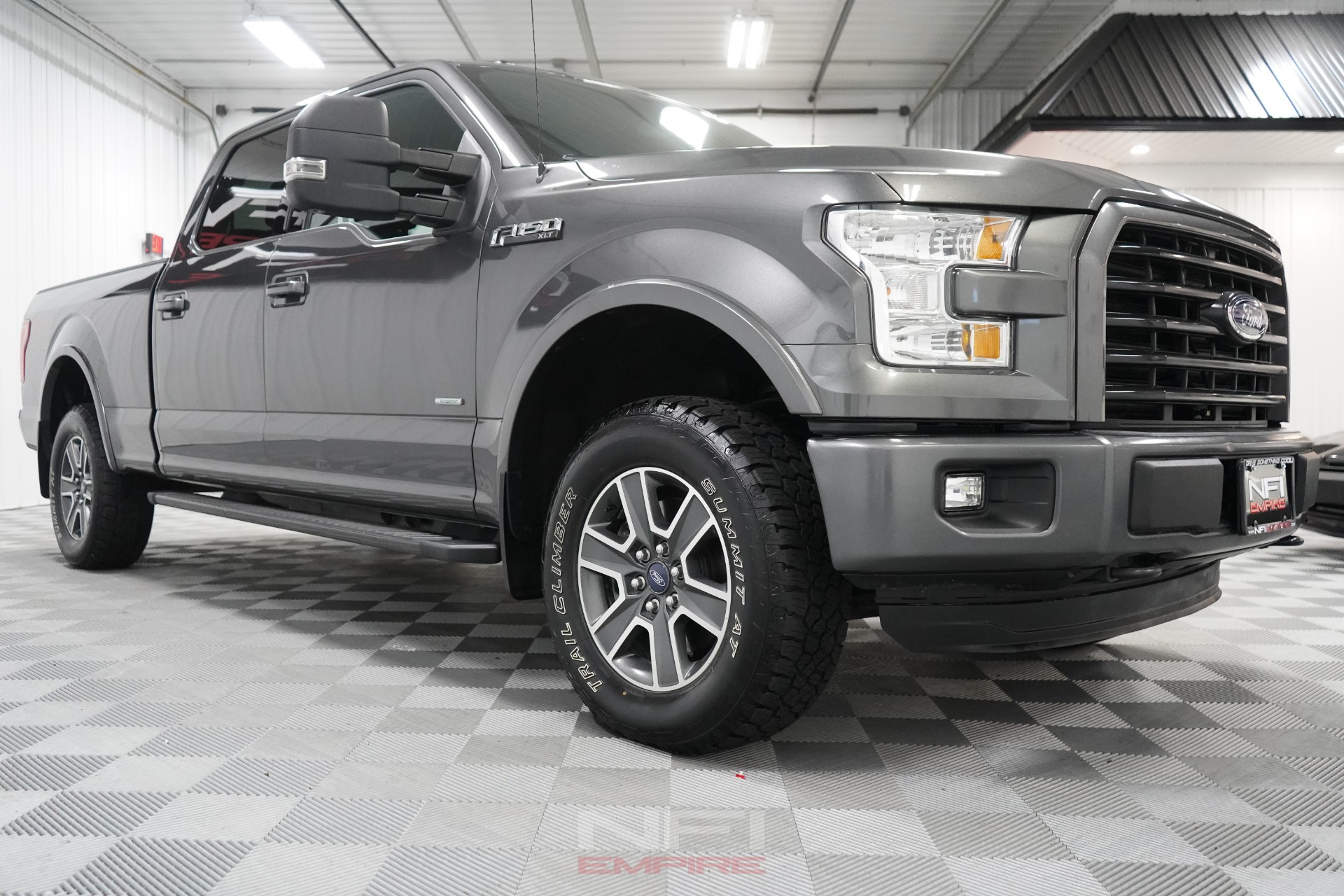
The 2015 Ford F-150 offers four distinct engine options—ranging from a naturally aspirated V6 to twin-turbocharged EcoBoost powerplants and a heavy-duty V8—producing between 283 and 385 horsepower depending on the selected configuration.
Introduction to the 2015 Ford F-150 Powertrain Lineup
The 2015 model year marked a monumental shift for the Ford F-150. Transitioning into its thirteenth generation, America’s best-selling pickup truck dropped hundreds of pounds of dead weight through the introduction of a high-strength, military-grade, aluminum-alloy body mated to a high-strength steel frame. This massive diet dramatically improved the truck's power-to-weight ratio, payload capacities, and fuel efficiency. However, the true heart of this transformation lay under the hood.
Ford completely revamped its engine architecture for 2015, phasing out the older 3.7-liter V6 and the massive 6.2-liter V8 in favor of a modernized, four-engine lineup. Understanding the horsepower ratings, torque curves, and mechanical engineering behind these powerplants is essential for anyone buying, selling, or maintaining a 2015 F-150 today. Whether you are looking for an economical daily commuter, a nimble light-duty work truck, or a heavy-hauling machine, the 2015 lineup delivered specific metrics designed to meet distinct operational demands.
The Base Engine: 3.5L Ti-VCT V6
Serving as the entry-level powerplant for the 2015 Ford F-150, the 3.5-liter Twin Independent Variable Camshaft Timing (Ti-VCT) V6 was engineered primarily for fleet operators, light-duty commercial use, and budget-conscious retail buyers who did not require heavy towing capabilities.
Performance and Specifications
- Horsepower: 283 hp at 6,500 RPM
- Torque: 253 lb-ft at 4,000 RPM
- Induction: Naturally Aspirated Port Fuel Injection
This naturally aspirated engine replaced the previous generation's 3.7-liter V6. Despite the smaller displacement, the engine utilized advanced valvetrain management to optimize combustion efficiency. It produced its peak 283 horsepower high in the rev range, requiring drivers to press deeper into the throttle to extract maximum acceleration.
Operational Realities
While the 3.5L Ti-VCT V6 provided ample power for unladen driving and light errand-running, it lacked the low-end grunt found in the EcoBoost alternatives. When paired with the F-150's lighter aluminum body, it felt adequately sprightly off the line, but towing capacity maxed out at lower thresholds compared to its siblings. It remains a reliable, mechanically straightforward choice for owners who prioritize low maintenance costs and simple, naturally aspirated longevity over heavy-duty hauling capability.
The Efficiency Champion: 2.7L EcoBoost V6
Perhaps the most technologically fascinating engine introduced for the 2015 model year was the 2.7-liter EcoBoost V6. Designed from a compacted graphite iron (CGI) engine block—the same material used in Ford's heavy-duty 6.7-liter Power Stroke diesel engines—this miniature powerhouse punched well above its weight class.
Performance and Specifications
- Horsepower: 325 hp at 5,750 RPM
- Torque: 375 lb-ft at 3,000 RPM
- Induction: Twin-Turbocharged Direct Injection
The 2.7L EcoBoost utilized dual turbochargers equipped with an integrated exhaust manifold and a wastegate control system designed to eliminate turbo lag. The result was a staggering 375 lb-ft of torque delivered at a very accessible 3,000 RPM. This low-end torque curve allowed the 2.7L engine to pull heavy loads from a dead stop with ease, outperforming many traditional V8 engines of the era in everyday drivability.
Practical Applications
This engine was designed for truck owners who wanted the fuel economy of a V6 combined with the mid-range towing power of a V8. It became exceptionally popular among light-duty contractors and recreational haulers. Furthermore, its inclusion of standard Auto Start-Stop technology (a rarity in trucks at the time) further reduced fuel consumption during heavy urban stop-and-go driving.
The Workhorse: 3.5L EcoBoost V6
For buyers requiring serious towing capacity and maximum turbocharged output, the 3.5-liter EcoBoost V6 served as the flagship performance engine of the 2015 lineup, outmuscling the traditional V8 in torque production.
Performance and Specifications
- Horsepower: 365 hp at 5,000 RPM
- Torque: 420 lb-ft at 2,500 RPM
- Induction: Twin-Turbocharged Direct Injection
Carried over and refined from the previous generation, the 3.5L EcoBoost V6 was tuned to deliver its massive 420 lb-ft of torque at an ultra-low 2,500 RPM. This flat, wide torque band meant that drivers did not need to rev the engine to high RPMs to maintain speed up steep grades while towing heavy trailers.
Heavy-Duty Capability
The 3.5L EcoBoost established the modern benchmark for half-ton towing capability in 2015. When properly equipped with the Max Trailer Tow Package, F-150s featuring this engine could achieve class-leading maximum towing capacities. The primary trade-off, however, was real-world fuel economy; while efficient under light loads, towing heavy trailers forced the turbochargers to work continuously, significantly increasing fuel consumption.
The Traditionalist Choice: 5.0L Ti-VCT V8
For purists who preferred traditional displacement, a linear power delivery, and the unmistakable rumble of an American V8, Ford retained the 5.0-liter Coyote V8 in the 2015 lineup.
Performance and Specifications
- Horsepower: 385 hp at 5,750 RPM
- Torque: 387 lb-ft at 3,850 RPM
- Induction: Naturally Aspirated Port Fuel Injection
The 5.0L V8 was the horsepower king of the 2015 F-150 stable, churning out 385 horsepower. It relied on twin independent variable camshaft timing and advanced intake manifold design to breathe efficiently across the rev range. While its torque figure (387 lb-ft) was slightly lower than the 3.5L EcoBoost, it peaked at a higher RPM, providing a classic, linear acceleration curve that many truck buyers preferred for predictable handling dynamics.
Durability and Payload Focus
The 5.0L V8 earned a strong reputation for mechanical durability and resistance to thermal stress during sustained high-load operations. It became the go-to engine for buyers who frequently carried heavy payload weights in the bed or operated in dusty, demanding environments where simplicity and robust block construction were paramount.
2015 Ford F-150 Engine Horsepower and Torque Comparison
| Engine Option | Displacement | Induction Type | Horsepower (hp) | Torque (lb-ft) | Primary Intended Use |
|---|---|---|---|---|---|
| 3.5L Ti-VCT V6 | 3.5 Liters | Naturally Aspirated | 283 @ 6,500 RPM | 253 @ 4,000 RPM | Fleet use, light commuting, economy |
| 2.7L EcoBoost V6 | 2.7 Liters | Twin-Turbocharged | 325 @ 5,750 RPM | 375 @ 3,000 RPM | Balanced daily driving and moderate towing |
| 3.5L EcoBoost V6 | 3.5 Liters | Twin-Turbocharged | 365 @ 5,000 RPM | 420 @ 2,500 RPM | Maximum towing capacity and heavy hauling |
| 5.0L Ti-VCT V8 | 5.0 Liters | Naturally Aspirated | 385 @ 5,750 RPM | 387 @ 3,850 RPM | Traditional V8 power, durability, payload |
Transmission Pairings and Axle Ratios
Horsepower figures tell only part of the story. In the 2015 Ford F-150, all four engines were exclusively paired with a 6-speed automatic transmission featuring SelectShift capability and progressive range select. This transmission was engineered with closely spaced gear ratios to keep each engine operating within its optimal powerband.
Furthermore, final-drive axle ratios played a critical role in how engine horsepower translated to the wheels. Buyers could select from various axle configurations—ranging from fuel-economy-focused highway gears (like 3.15 or 3.31) to heavy-duty towing ratios (like 3.55, 3.73, or electronic-locking variants). Selecting an engine with high horsepower and torque meant little if the axle ratio could not effectively multiply that force to move heavy cargo from a standstill.
Frequently Asked Questions
Which 2015 Ford F-150 engine has the most horsepower?
The 5.0-liter V8 engine offers the highest horsepower in the 2015 lineup, generating 385 horsepower at 5,750 RPM. However, the 3.5-liter EcoBoost V6 produces more torque (420 lb-ft) at a significantly lower RPM, making it a stronger choice for low-end pulling power despite its slightly lower horsepower rating of 365 hp.
Is the 2.7L EcoBoost powerful enough for towing?
Yes, the 2.7-liter EcoBoost produces 325 horsepower and 375 lb-ft of torque. Because its maximum torque arrives early at 3,000 RPM, it handles moderate towing tasks, utility trailers, and boats easily, though it is not rated for the maximum heavy-duty towing capacities achieved by the 3.5L EcoBoost.
How did the aluminum body affect 2015 F-150 horsepower performance?
The switch to a military-grade aluminum-alloy body reduced the truck's overall weight by up to 700 pounds depending on the configuration. This weight reduction effectively enhanced the power-to-weight ratio across all four engine options, resulting in quicker acceleration, improved braking response, and higher payload ratings without requiring an increase in base engine horsepower.
Which 2015 F-150 engine is best for fuel economy?
The 2.7-liter EcoBoost V6 was engineered specifically to maximize fuel economy while retaining forced-induction capability. When combined with the lighter aluminum frame and standard auto start-stop technology, it routinely achieved the highest EPA fuel economy estimates among the non-hybrid gasoline configurations in the 2015 lineup.
Do all 2015 F-150 engines use the same transmission?
Yes, every engine option in the 2015 Ford F-150 lineup was mated to a 6-speed automatic transmission with SelectShift manual shifting capability. Performance differences across trims were dictated entirely by engine output, axle ratios, and vehicle weight configurations rather than variations in transmission architecture.
Conclusion and Recommendations
Selecting the right 2015 Ford F-150 requires matching your daily driving habits and utility requirements to the specific power profile of each engine. If your primary goal is affordable commuting and light utility work, the base 3.5L V6 provides straightforward reliability. If you need a balanced daily driver with strong mid-range zip, the 2.7L EcoBoost is an engineering marvel. For maximum towing power, the 3.5L EcoBoost remains the undisputed champion of the lineup, while traditionalists seeking classic V8 durability and high peak horsepower will find the 5.0L Coyote V8 to be the ideal companion. Review your payload requirements, local fuel costs, and intended towing weights carefully before choosing your configuration.