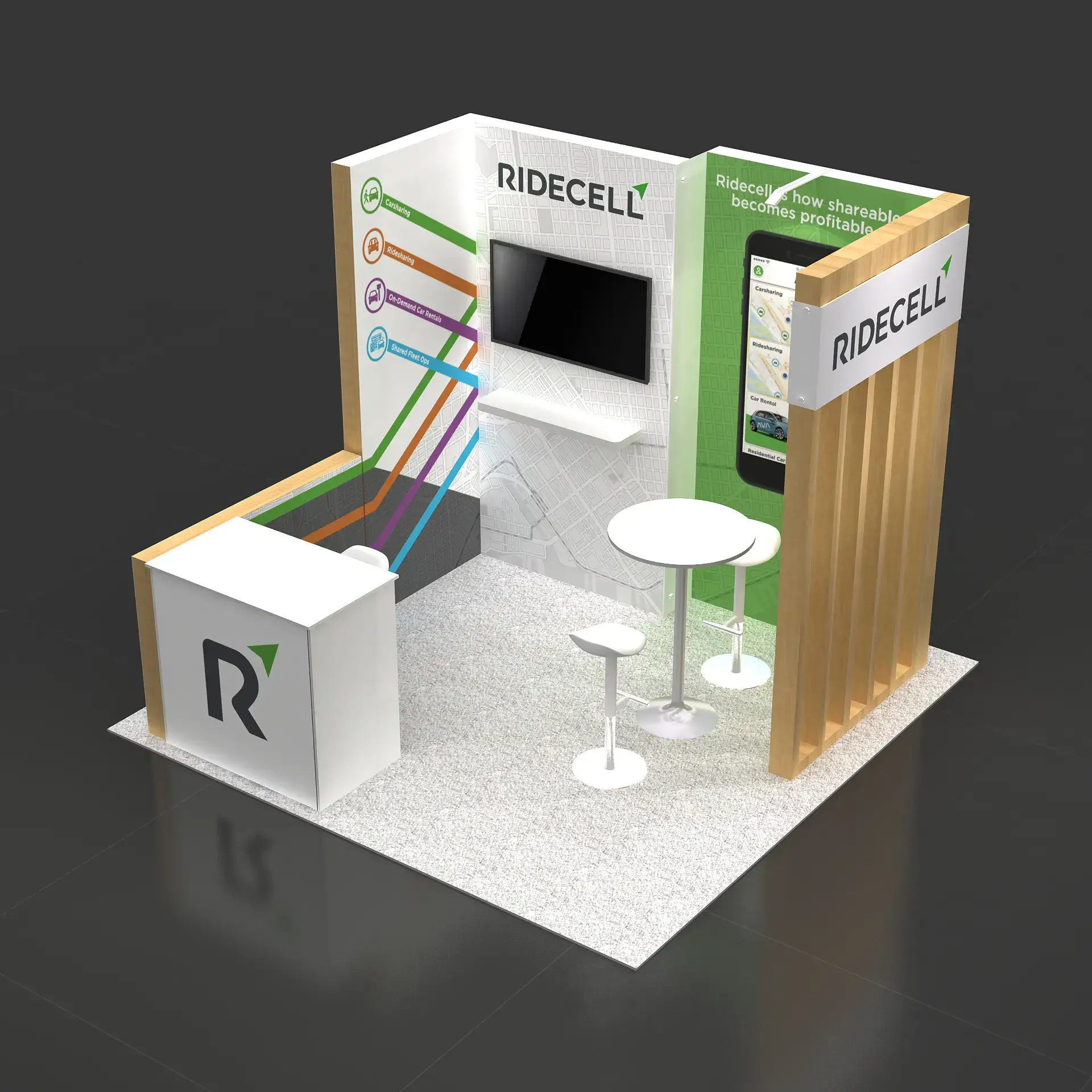
Designing a successful 10x10 trade show booth requires maximizing 100 square feet of floor space through vertical visual hierarchy, multi-functional modular displays, and clear visitor pathways that prevent congestion while driving high-value booth traffic.
Understanding the 10x10 Footprint Challenge
A 10x10 trade show booth is the most common footprint on the exhibition floor, meaning it is also the space where companies face the fiercest competition for attendee attention. With only 100 square feet to work with, every square inch must serve a strategic purpose. Exhibitors often make the mistake of treating a small booth like a miniature version of a larger island display, packing it with excessive furniture, bulky literature racks, and cluttered signage. This approach overwhelms visitors and restricts physical flow, ultimately reducing the number of meaningful engagements.
Mastering a 10x10 space requires adopting a mindset of intentional minimalism. You must prioritize vertical space, as trade show regulations typically allow back walls to reach heights of 8 feet. By drawing the eye upward with hanging banners, tall backlit backdrops, and vertical signage, you create a larger-than-life presence from across the exhibition hall. Simultaneously, keeping the floor clear creates an open, welcoming threshold that encourages passersby to step inside rather than browse from the aisle.
Structural Layouts and Design Configurations
Choosing the right structural layout dictates how attendees interact with your brand. Because a standard 10x10 space is usually a "linear" or "inline" booth—flanked by other exhibitors on two sides with only the front open to the aisle—your layout must pull people inward immediately.
The Open-Concept Perimeter
An open-concept layout eliminates physical barriers at the front of the booth. Instead of placing a heavy reception desk directly across the entrance, push your counters to the side or rear corners. This removes the psychological barrier of a gatekeeper and creates an unobstructed line of sight to your core messaging.
The Back-Wall Anchor
Your back wall serves as the primary billboard for your brand. Utilize a seamless tension fabric graphic or a modular backlit light box to anchor the space. High-contrast branding, a concise value proposition, and clean typography placed at eye level ensure that attendees walking down the aisle instantly understand what you do without needing to read blocks of text.
The Corner Booth Advantage
If you secure a corner 10x10 space, you gain an open side facing secondary aisle traffic. Capitalize on this by using a low-profile peninsula or L-shaped counter configuration. This allows you to engage traffic approaching from two directions simultaneously, effectively doubling your exposure compared to a standard inline booth.
Creative Visual and Display Concepts
Standing out in a sea of identical pop-up banners demands creative visual strategies that engage multiple senses.
Backlit and LED Light Boxes
Lighting is one of the most cost-effective ways to elevate a small booth. Traditional halogen or fluorescent overhead convention center lighting can wash out graphics. Investing in SEG (silicone edge graphic) backlit displays transforms your back wall into a luminous focal point. The vibrant illumination naturally draws the human eye, making your brand visible from down the aisle even in a dimly lit convention hall.
Dynamic Vertical Dimension
Do not let your design exist on a single flat plane. Incorporate varying depths by mounting shadow boxes, articulating monitor arms, or dimensional lettering directly onto your back wall panels. This creates architectural depth, making the compact 100-square-foot area feel more dynamic and sophisticated.
Sustainable and Eco-Friendly Materials
Many modern exhibitors prioritize sustainability to align with corporate social responsibility goals and appeal to eco-conscious attendees. Modular cardboard architecture, bamboo fixtures, and recycled PET tension fabrics offer lightweight, durable, and visually striking alternatives to traditional PVC and heavy wood displays. These materials are also significantly lighter, which can lower drayage and shipping fees.
Feature Comparison: Popular 10x10 Booth Display Types
| Display Type | Estimated Cost Range | Primary Advantages | Key Limitations | Best For |
|---|---|---|---|---|
| Pop-Up Displays | $1,500 – $4,000 | Highly portable, easy DIY assembly, cost-effective | Standardized look, less durable over heavy use | First-time exhibitors and tight budgets |
| Modular Truss Systems | $4,000 – $8,000 | Industrial aesthetic, highly customizable, rigid mounting for heavy monitors | Heavier shipping weight, complex initial assembly | Technology demonstrations and hardware showcases |
| Backlit SEG Fabric Systems | $3,500 – $10,000 | Maximum visual impact, seamless graphics, lightweight frames | Higher upfront investment, requires careful handling of LED components | Brand-focused campaigns and high-end aesthetic goals |
| Custom Wood & Laminate | $8,000 – $20,000+ | Completely unique architecture, premium finish, built-in storage | Expensive shipping, professional installation and dismantle required | Established brands seeking maximum prestige |
Technology and Interactive Engagement
In a 10x10 booth, physical space for large product displays is limited. Technology bridges this gap by allowing you to showcase an extensive product catalog, software suite, or service portfolio without cluttering your floor plan.
Digital Kiosks and Touchscreens
Replace bulky product brochures and static posters with interactive touchscreens or sleek tablet stands. Visitors can explore product configurations, watch video demonstrations, or self-register for a post-show prize drawing. This frees up your booth staff to have deep, uninterrupted conversations with qualified leads while passive browsers interact with your digital content.
Augmented and Virtual Reality (AR/VR)
If your company manufactures large industrial machinery, heavy equipment, or complex architectural systems that cannot fit on a trade show floor, AR and VR provide a compelling solution. Equipping your booth with a couple of headsets allows attendees to experience a life-sized virtual walkthrough of your product or facility, turning a tiny 10x10 space into an immersive product theater.
Operational Best Practices and Space Management
Design is only half the battle; how you manage operations inside a 10x10 booth dictates your return on investment.
Staffing Limits and Positioning
A common error in small booths is overcrowding. A 10x10 space comfortably accommodates a maximum of two staff members at any given time. More than that creates a claustrophobic environment and signals to attendees that there is no room for them to enter. Staff should stand near the front corners—not huddled in the back—ready to greet passersby with open body language and an engaging, low-pressure question rather than a aggressive sales pitch.
Concealed Storage Solutions
Clutter is the enemy of the small booth. Boxes, extra literature, coats, and personal belongings must be hidden from view. Choose reception counters with locking internal storage shelves, or utilize fabric skirts that conceal storage bins tucked neatly underneath tables. Maintaining a pristine environment projects professionalism and operational competence.
Frequently Asked Questions
What is the best layout for a 10x10 trade show booth?
An open-concept layout with a striking back wall anchor and side-positioned counters is generally the most effective. It removes physical barriers at the aisle threshold, encouraging attendees to step inside rather than browse from a distance.
How many staff members should work in a 10x10 booth?
Two staff members are ideal. This ensures coverage without overcrowding the 100-square-foot space, allowing visitors enough room to enter comfortably and engage in productive conversations.
Are hanging signs allowed in a 10x10 booth?
Most exhibition venues do not permit hanging signs (rigging from the ceiling) for standard linear 10x10 booths; they are usually restricted to island booths of 20x20 or larger. Always check your specific venue's exhibitor manual for height restrictions, which typically cap back walls at 8 feet.
How can I make a small booth look bigger?
Utilize vertical lines, bright LED backlit displays, light neutral color palettes, and minimal furniture. Keeping the floor space as open and uncluttered as possible creates an expansive visual effect.
What is the most cost-effective display option for first-time exhibitors?
Portable pop-up displays or modular tension fabric frames offer the best balance of affordability, ease of transport, and professional appearance for exhibitors working with a modest budget.
Next Steps for Planning Your Display
Begin your trade show preparation by auditing your marketing goals, verifying venue height restrictions, and requesting product samples or digital renderings from display fabricators. Early planning ensures timely delivery, avoids costly rush-shipping fees, and gives your team ample time to rehearse their engagement strategy before the exhibition doors open.