The history of hysterectomy spans thousands of years, evolving from an ancient, highly dangerous procedure used primarily to treat perceived uterine displacement to a refined, minimally invasive surgical intervention practiced globally today. This evolution reflects profound transformations in surgical technique, anatomical understanding, anesthesia, infection control, and patient safety.
Introduction to the Surgical Evolution of Uterine Removal
A hysterectomy—the surgical removal of the uterus, sometimes accompanied by the fallopian tubes and ovaries—is one of the most common major gynecological surgeries performed today. However, achieving the level of safety and precision seen in modern operating rooms required overcoming centuries of high mortality rates, poor anatomical knowledge, and the complete absence of effective anesthesia or antisepsis.
To understand how modern medicine approaches conditions such as uterine fibroids, endometriosis, prolapse, and gynecological cancers, it is necessary to examine the historical milestones that shaped the procedure. Each breakthrough built upon previous anatomical discoveries and technological inventions, gradually shifting the operation from a desperate last resort into a planned, elective procedure associated with high recovery rates.
Below is an overview of the ten defining milestones that transformed the hysterectomy from a perilous antiquity into a standard modern surgical technique.
1. Antiquity: Early Descriptions of Uterine Prolapse and Hysteria
The term hysterectomy derives from the Greek word hystera (meaning uterus) and ektome (meaning excision). In ancient medical texts, the uterus was viewed not merely as an organ of reproduction, but as an independent, sentient entity within the female body that could wander, causing physical and psychological distress—a concept known as "wandering womb" or hysteria.
While ancient physicians such as Soranus of Ephesus and Hippocrates documented various manipulations, bandages, and even attempts at partial excision of prolapsed uteri that had turned gangrenous, these early interventions were crude. They lacked any concept of asepsis or safe internal surgery, usually resulting in fatal hemorrhage or overwhelming infection. These early accounts are primarily historically significant because they established the uterus as a focal point of early anatomical and medical speculation.
2. The First Successful Planned Vaginal Hysterectomy (1813)
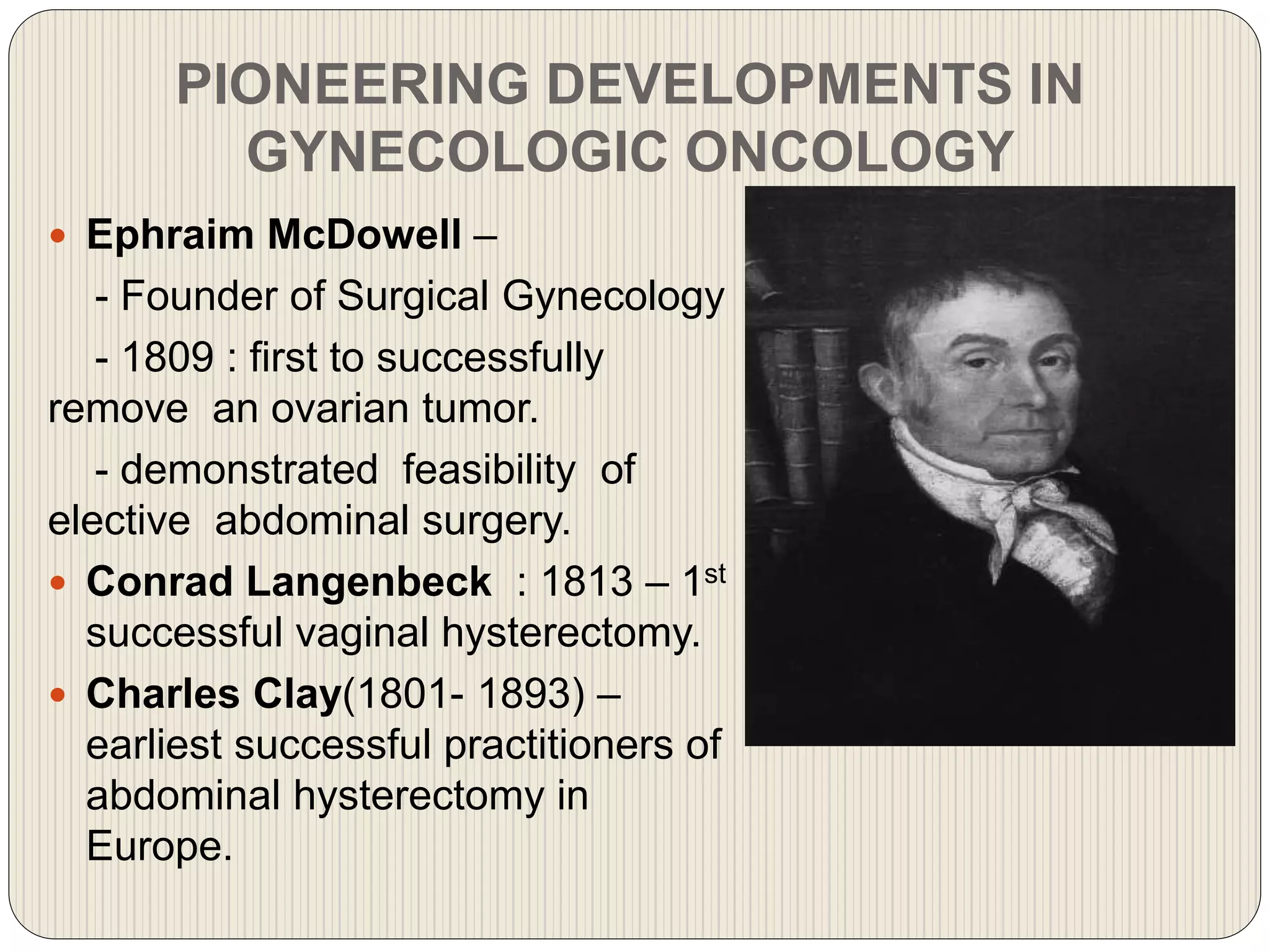
For centuries, removing a healthy or diseased uterus while still inside the pelvic cavity was considered universally fatal. The first documented successful, planned vaginal hysterectomy—meaning the removal of the uterus through the vaginal canal—is widely credited to Conrad Langenbeck in Germany in 1813.
Langenbeck’s approach was revolutionary because it avoided opening the abdominal cavity, a feat that drastically reduced the immediate risk of peritonitis in an era before germ theory. However, because anesthesia and antiseptic techniques did not yet exist, the patient experienced excruciating pain, and subsequent practitioners struggled to replicate Langenbeck's success consistently, keeping mortality rates extraordinarily high throughout the early nineteenth century.
3. The Introduction of Anesthesia (1846)
The mid-nineteenth century marked a watershed moment for all of surgery with the public demonstration of ether anesthesia by William T.G. Morton in 1846, followed shortly by the adoption of chloroform. Before anesthesia, surgeons had to perform procedures with extreme haste to minimize patient shock and trauma, severely limiting the complexity and safety of internal operations like a hysterectomy.
With the advent of reliable anesthesia, surgeons could take the necessary time to carefully isolate blood vessels, ligate tissues, and explore the pelvic anatomy thoroughly. This single innovation transformed pelvic surgery from a terrifying, traumatic ordeal into a controlled environment where precision superseded speed.
4. The Rise of Antisepsis and Asepsis (1860s–1880s)
Even with pain management, postoperative infection remained a primary executioner of surgical patients. Joseph Lister’s introduction of antiseptic techniques in the 1860s—utilizing carbolic acid to sterilize instruments, hands, and surgical wounds—fundamentally changed surgical outcomes.
Building upon Lister’s work, the subsequent adoption of aseptic techniques in the 1880s, including the use of sterilized gowns, drapes, and rubber gloves, drastically reduced hospital-acquired infections. For hysterectomy patients, this meant that opening the abdominal cavity no longer carried an almost guaranteed sentence of fatal peritonitis, clearing the path for the safe development of abdominal hysterectomy.
5. The First Successful Total Abdominal Hysterectomy (1853)
While vaginal approaches were favored to avoid the open abdomen, certain pathological conditions, such as massive uterine tumors or severe adhesions, required direct access through the abdominal wall. The first successful planned total abdominal hysterectomy is credited to the English surgeon Charles Clay in 1843, though American physician Walter Burnham also performed notable early abdominal procedures around the same period.
These early abdominal interventions were exceptionally risky, and many established medical societies initially condemned the procedure due to high mortality rates. It was only through the parallel improvements in anesthesia, suture materials, and infection control that the abdominal approach eventually became a viable and standardized technique by the late nineteenth century.
6. The Standardization of the Supravaginal vs. Total Hysterectomy Debate (Late 19th Century)
As abdominal hysterectomies became more frequent, surgeons debated whether to remove the entire uterus—including the cervix (total hysterectomy)—or leave the cervical stump intact (supravaginal or subtotal hysterectomy).
Surgeons like Tyler Smith and later proponents of subtotal hysterectomy argued that leaving the cervix minimized surgical time, reduced the risk of hemorrhage, and avoided injuring the ureters, which run close to the cervix. Conversely, advocates for total hysterectomy argued that removing the cervix eliminated the future risk of cervical cancer and chronic cervicitis. This debate persisted for decades, fluctuating with surgical technologies, until medical consensus eventually favored total hysterectomy for most benign and malignant conditions, though subtotal approaches occasionally re-emerge in modern surgical discussions based on patient preference and specific anatomical indications.
7. The Development of Safe Ligatures and Hemostasis Techniques
Controlling blood supply to the uterus is the most critical mechanical challenge in performing a hysterectomy. In the nineteenth and early twentieth centuries, surgeons experimented with various methods to secure uterine blood vessels, ranging from mass ligatures (tying off large bundles of tissue blindly) to heavy clamps and cautery.
The refinement of fine surgical instruments, curved hemostats, and absorbable suture materials allowed surgeons to individually isolate and ligate the uterine and ovarian arteries safely. This drastically reduced intraoperative blood loss and minimized the accidental damage to surrounding structures such as the bladder, bowel, and ureters.
8. The Introduction of Laparoscopy to Gynecology (Late 20th Century)
The latter half of the twentieth century witnessed a shift away from large abdominal incisions toward minimally invasive techniques. Pioneered by gynecologic endoscopists, laparoscopy was initially used for diagnostic purposes and tubal ligations. However, advancements in fiber optics, video cameras, and specialized surgical instruments in the 1970s and 1980s opened the door for advanced operative laparoscopy.
In 1989, Dr. Harry Reich performed the first successful laparoscopic hysterectomy. This milestone revolutionized gynecological surgery by demonstrating that a complete uterus could be removed through small keyhole incisions in the abdominal wall, dramatically reducing postoperative pain, hospital stays, and recovery times compared to traditional open abdominal surgery.
9. The Evolution of Robotic-Assisted Hysterectomy (Early 21st Century)
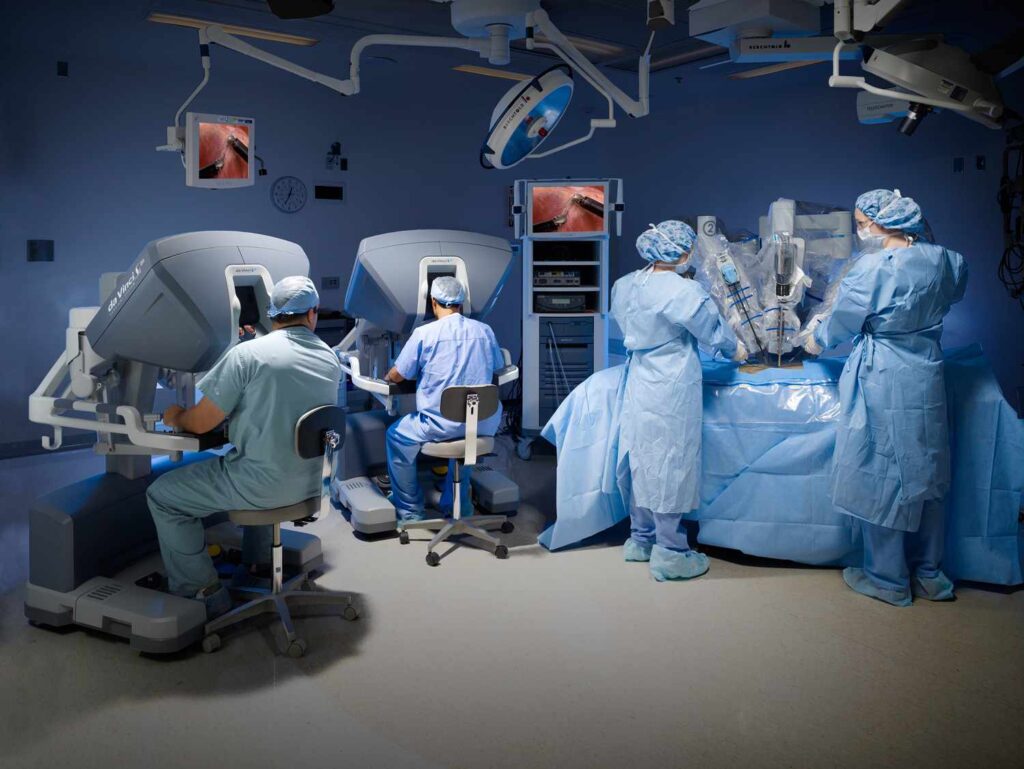
Building upon the successes of laparoscopy, the introduction of robotic surgical systems in the early 2000s provided surgeons with enhanced three-dimensional visualization, wristed instruments that mimic human wrist movements, and tremor-filtration technology.
Robotic-assisted hysterectomy quickly became a prominent option, particularly for complex gynecological cases involving severe endometriosis, extensive scar tissue, or morbid obesity, where traditional laparoscopy presented physical visibility and maneuverability challenges. This technology further refined the precision of tissue dissection and expanded the boundaries of minimally invasive pelvic surgery.
10. Modern Enhanced Recovery After Surgery (ERAS) Protocols
The most recent milestone in the history of hysterectomy is not a single physical tool or surgical cut, but rather a paradigm shift in perioperative care known as Enhanced Recovery After Surgery (ERAS) pathways.
Implemented widely over the past two decades, ERAS protocols combine evidence-based practices across the entire surgical journey—including optimized preoperative nutrition, minimization of narcotic use through multimodal pain management, early mobilization, and early removal of catheters. These standardized pathways have reduced hospital lengths of stay from weeks in the nineteenth century to outpatient or overnight stays for modern minimally invasive procedures, optimizing both physical recovery and patient outcomes.
Comparison of Hysterectomy Approaches Through History
| Approach / Era | Primary Innovation | Typical Recovery Time | Major Risk Factors |
|---|---|---|---|
| Ancient / Early 19th Century | Manual extraction / early vaginal attempts | Weeks to months (if survived) | Severe hemorrhage, sepsis, shock |
| Mid-19th Century | Introduction of Ether Anesthesia | Weeks | Infection, hemorrhage, lack of antisepsis |
| Late 19th Century | Antiseptic/Aseptic techniques & Abdominal access | 4 to 6 weeks | Postoperative infection, ureteral injury |
| Late 20th Century | Laparoscopic techniques (Harry Reich, 1989) | 1 to 3 weeks | Trocar injuries, conversion to open surgery |
| Modern Era (21st Century) | Robotic assistance & ERAS protocols | Days to 2 weeks | Anesthetic risks, organ injury, cost |
Frequently Asked Questions
What is the difference between a total and a subtotal hysterectomy?
A total hysterectomy involves the surgical removal of both the uterine body and the cervix. A subtotal (or partial/supracervical) hysterectomy removes the upper portion of the uterus while leaving the cervical stump intact. The choice depends on the patient's underlying pathology, medical history, and personal discussions with their surgeon regarding cancer screening and pelvic support.
Why was the hysterectomy historically considered a dangerous procedure?
Before the development of anesthesia, antisepsis, and blood transfusion, major abdominal surgery carried an exceptionally high risk of death from hemorrhagic shock and bacterial peritonitis. Surgeons lacked effective ways to control bleeding and sterilize instruments, making any internal pelvic manipulation hazardous.
How did anesthesia change the trajectory of pelvic surgery?
Anesthesia eliminated patient movement and physiological shock during procedures, giving surgeons the necessary time to meticulously identify internal anatomy, carefully ligate blood vessels, and perform complex operations with precision rather than desperate speed.
When was the first laparoscopic hysterectomy performed?
The first successful total laparoscopic hysterectomy was performed by Dr. Harry Reich in 1989. This milestone marked the beginning of modern minimally invasive gynecological surgery, replacing large abdominal incisions with small puncture ports in many cases.
What are the primary recovery differences between open and minimally invasive hysterectomy?
Open abdominal hysterectomies typically require a large vertical or horizontal incision, resulting in a hospital stay of several days and a recovery period of six to eight weeks. In contrast, laparoscopic and robotic-assisted hysterectomies utilize small incisions, often allowing patients to go home the same day or the following day, with a compressed recovery window of one to three weeks.
Next Actions and Clinical Guidance
For patients exploring the history or clinical context of hysterectomy for personal health decisions, consulting a board-certified gynecologist or specialist is essential. Modern surgical planning involves a thorough review of medical history, diagnostic imaging, discussion of alternative conservative treatments (such as medical management, myomectomy, or uterine fibroid embolization), and a personalized determination of the safest surgical approach—whether vaginal, laparoscopic, robotic, or abdominal.