In both data science and financial markets, the letter "K" is a ubiquitous shorthand representing the multiplier one thousand, derived from the Greek word chilioi. Mastering this notation is essential for correctly interpreting data sets, financial statements, algorithmic outputs, and market updates without miscalculating scale or executing erroneous trades.
Introduction to the "K" Notation: Origins and Core Meaning
The abbreviation "K" stands for kilo, a prefix universally adopted in the International System of Units (SI) to denote a factor of $10^3$, or $1,000$. While its roots lie in the physical sciences—where a kilogram equals one thousand grams—the notation has been seamlessly imported into the quantitative realms of data science and finance. In these fields, quick visual scanning of large quantities is paramount. Writing "1K" instead of "1,000" saves horizontal space, reduces visual clutter on charts and spreadsheets, and minimizes typographical errors associated with counting zeros.
However, the usage of "K" is not monolithic. Depending on whether you are analyzing a database schema, evaluating corporate earnings reports, or reading algorithmic trading logs, "K" can represent raw integer counts, monetary units, or algorithmic cluster centroids. Misinterpreting this single letter can lead to critical errors, such as misvaluing a corporate acquisition or misinterpreting dataset sizes in machine learning pipelines. Therefore, a granular understanding of how context dictates the meaning of "K" is a mandatory competency for analysts, traders, and engineers alike.
The "1K" Notation in Data Science and Machine Learning
Within data science, the "K" notation primarily serves three distinct purposes: representing dataset sizes, indicating memory or file dimensions, and functioning as a variable name in unsupervised machine learning algorithms like K-Means clustering.
Dataset Scaling and Feature Counts
When examining machine learning datasets, "1K" rows or features indicate a scale of one thousand records or dimensions. For example, a tabular dataset described as containing "50K rows and 2K columns" translates to 50,000 individual observations across 2,000 distinct variables. Understanding this scale helps data engineers estimate RAM requirements, choose appropriate model architectures, and anticipate computational bottlenecks during training.
Memory, Storage, and Computational Complexity
In computational contexts, "K" often bridges decimal and binary interpretations. While strictly speaking, 1K can denote 1,000 bytes, programmers frequently encounter it in the context of KiB (kibibytes), where 1K equals 1,024 bytes ($2^{10}$). When reviewing computational complexity—such as Big O notation—variables like $K$ frequently appear to denote a subset of parameters, such as the number of nearest neighbors in a K-Nearest Neighbors (KNN) classifier or the number of trees in a random forest ensemble.
The Special Case: K-Means Clustering Notation
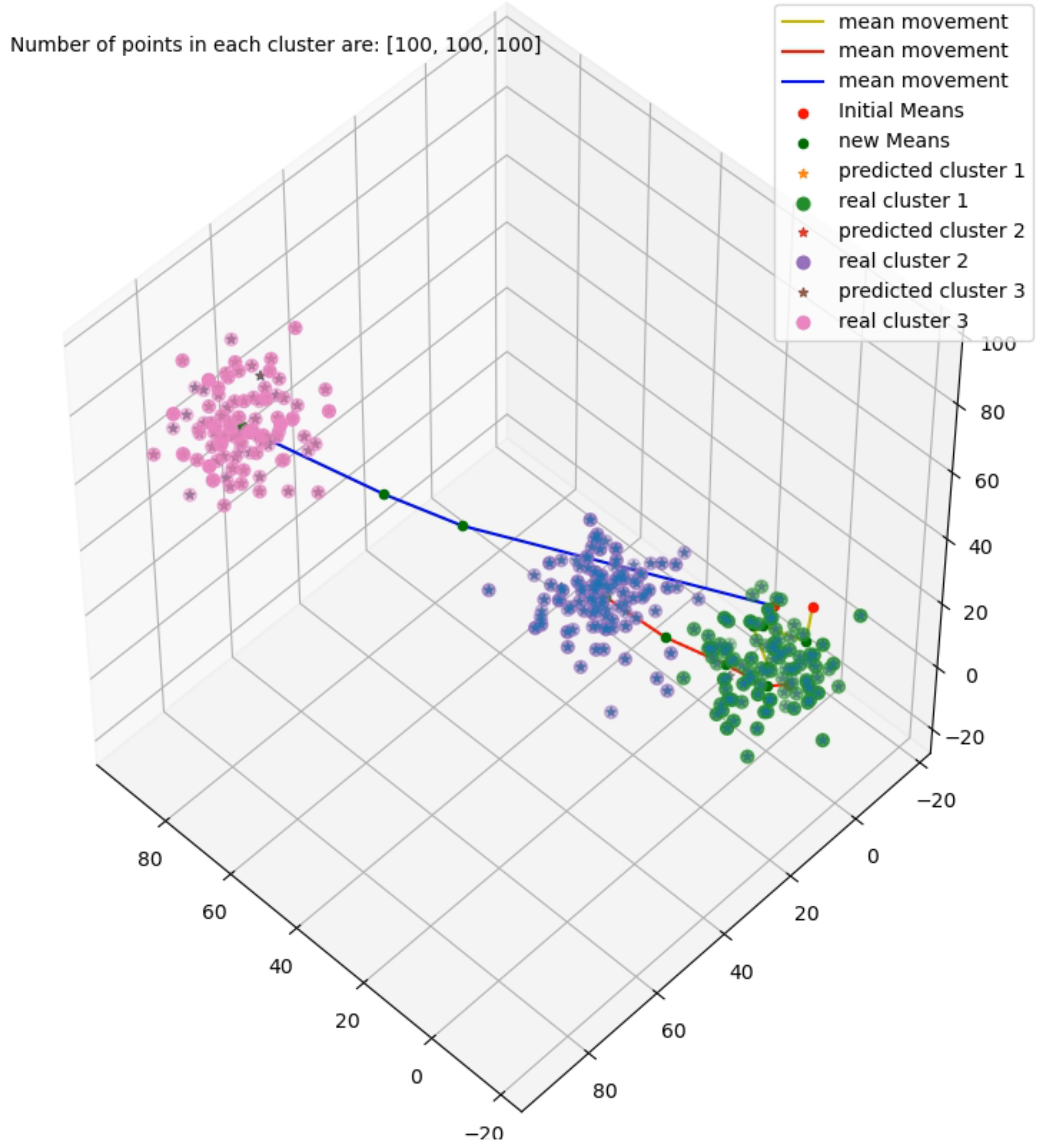
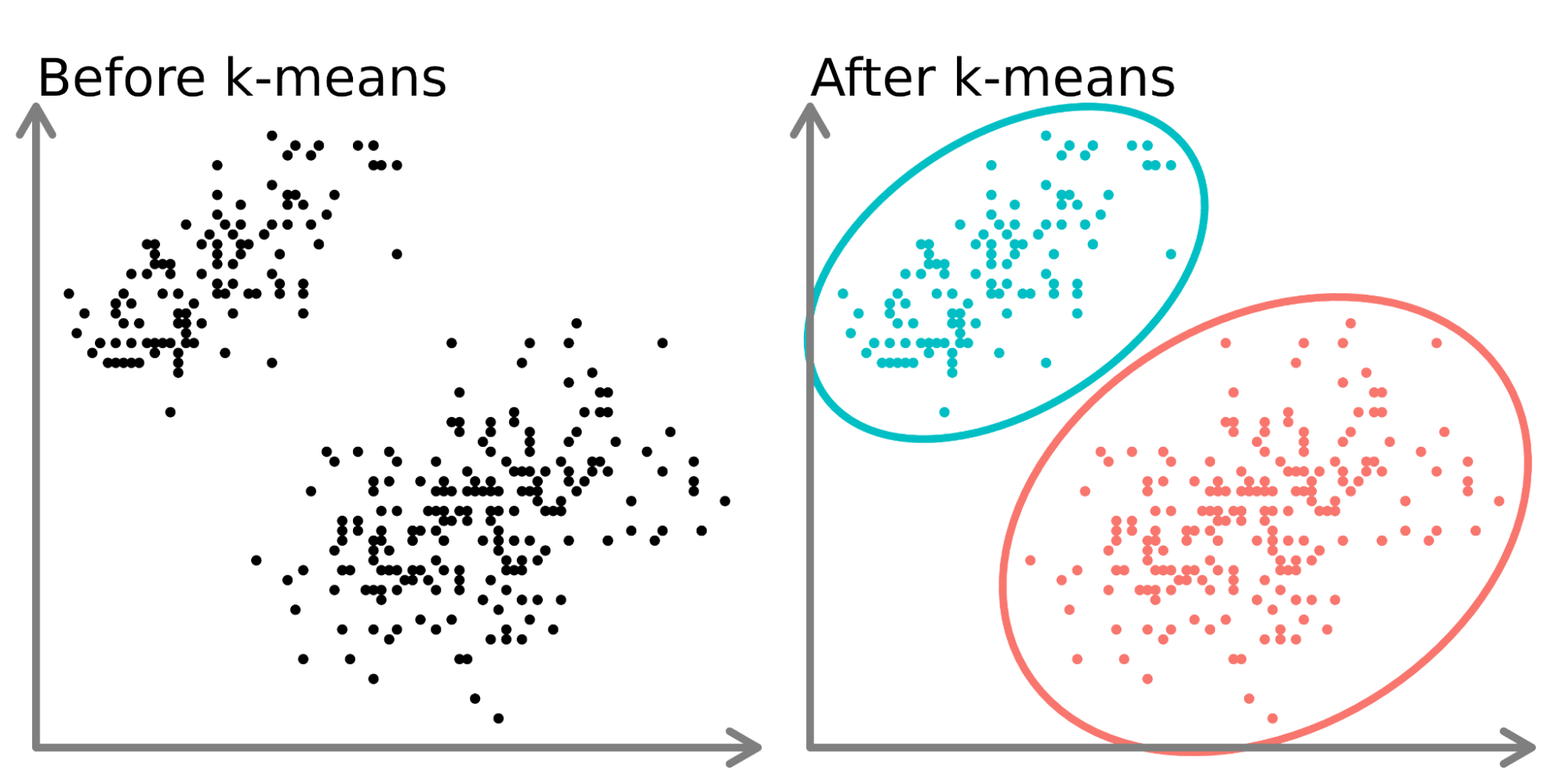
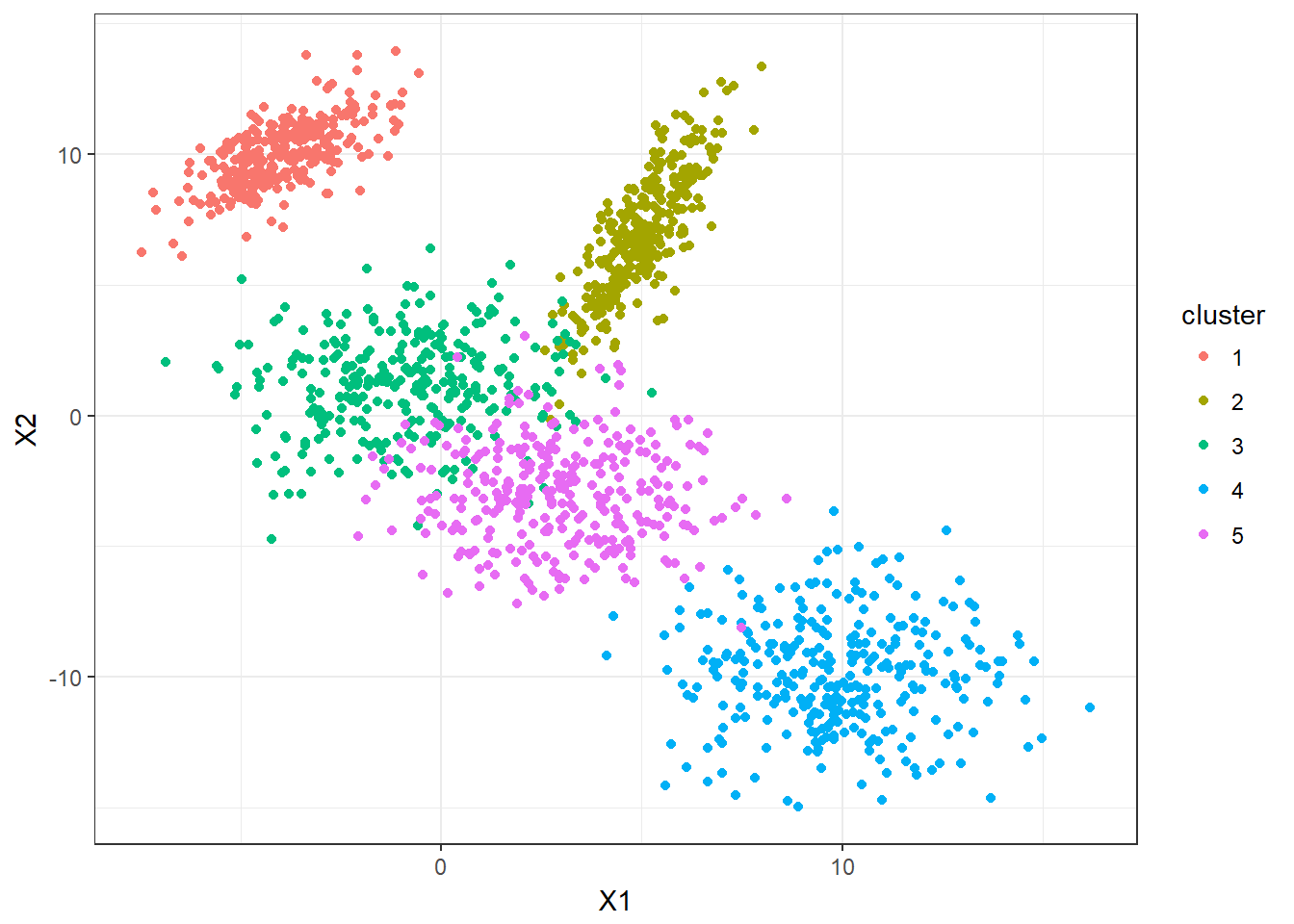
In unsupervised learning, the capital letter $K$ represents a hyperparameter: the user-defined number of clusters into which the algorithm must partition a dataset.
- The Mathematical Formulation: Given a set of observations $(x_1, x_2, \dots, x_n)$, where each observation is a $d$-dimensional real vector, K-Means aims to partition the $n$ observations into $K$ sets $S = {S_1, S_2, \dots, S_K}$ so as to minimize the within-cluster sum of squares (WCSS).
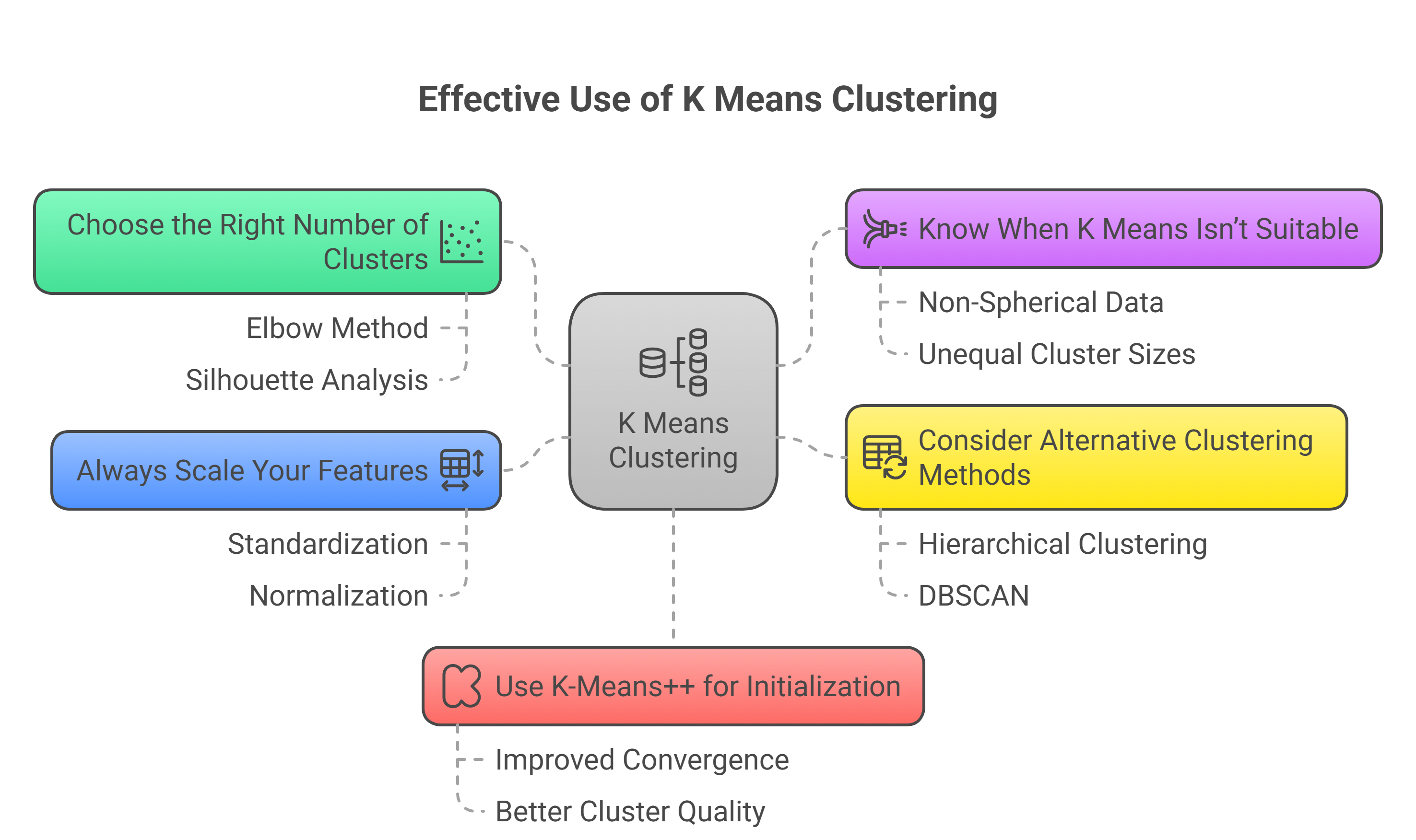
- Choosing $K$: The notation dictates that $K$ must be specified a priori before the iterative expectation-maximization algorithm executes. Techniques like the Elbow Method or Silhouette Analysis help practitioners determine the optimal integer value for $K$.
The "1K" Notation in Finance and Corporate Accounting
In finance, "1K" almost exclusively denotes currency or volume values scaled by one thousand. Whether evaluating stock pricing, corporate balance sheets, or portfolio returns, the notation provides an immediate shorthand for scaling figures.
Financial Statements and Income Reports
Publicly traded companies often report figures in thousands or millions to maintain readability on financial statements. A line item on an income statement reading "Revenue: 1,500K" signifies $1,500,000 (one million five hundred thousand dollars). Analysts must cross-reference the header of the financial statement—which typically states "All figures in thousands unless otherwise noted"—to ensure they apply the correct multiplier.
Market Capitalization, Trading Volume, and Order Books
In trading platforms and market data feeds, "K" frequently appears alongside asset prices and share volumes:
- Volume: A stock showing a daily volume of "450K" means 450,000 shares have changed hands.
- Order Books: Bid and ask sizes are often aggregated in blocks of thousands to protect high-frequency trading anonymity and simplify depth-of-market visualization.
- Cryptocurrency: In digital asset markets, "1K" is frequently used to denote milestones for tokens or total value locked (TVL) in decentralized finance protocols.
Comparative Analysis: "K" vs. Other Scale Notations
To prevent confusion when transitioning between data science dashboards and financial terminals, it is helpful to review how "K" relates to other common scaling suffixes. The table below outlines these standard notations, their mathematical multipliers, and their contextual applications.
| Notation | Multiplier ($10^x$) | Exact Decimal Value | Primary Data Science Context | Primary Finance Context |
|---|---|---|---|---|
| 1K | $10^3$ | 1,000 | Dataset rows, feature counts, K-Means clusters ($K$) | Thousand dollars, share volume, minor asset values |
| 1M | $10^6$ | 1,000,000 | Total training samples, massive text corpora | Million dollars, company revenue, market cap subset |
| 1B | $10^9$ | 1,000,000,000 | Large-scale language model (LLM) parameter counts | Global market capitalization, macroeconomic debt |
| 1T | $10^{12}$ | 1,000,000,000,000 | Big data enterprise lakes, petabyte-scale telemetry | National GDP figures, global derivatives markets |
Common Pitfalls and Misinterpretations
Misinterpreting notation scales can lead to catastrophic financial losses or severe data modeling failures. Below are the most common pitfalls associated with the "1K" notation and how to avoid them.
1. The Decimal vs. Binary Confusion (Data Science)
In low-level programming and memory allocation, confusing decimal thousands (1,000) with binary kibibytes (1,024) leads to buffer overflows and memory allocation errors. Always verify whether a system uses SI decimal prefixes ($10^3$) or binary prefixes ($2^{10}$).
2. Unit Omission on Financial Dashboards (Finance)
A common mistake among junior analysts is pulling data from automated API endpoints where the multiplier is stripped, treating "500K" as 500 absolute units rather than 500,000 dollars. Always inspect the metadata schema of financial databases before running aggregation queries.
3. Confusing Hyperparameters with Scale (Machine Learning)
In Python machine learning libraries (such as Scikit-Learn), the variable n_clusters=K is an integer representing group count, whereas an output metric like loss: 1.2K might represent a scaled cost function. Conflating the hyperparameter $K$ with dataset scale will break model execution.
Frequently Asked Questions
Does "1K" always mean exactly one thousand?
In standard financial reporting and data science scaling, yes, "1K" represents $1,000$. However, in computer science and memory architecture contexts, it can occasionally refer to $1,024$ ($2^{10}$) due to binary computing conventions. Always check the system documentation to confirm whether decimal or binary scaling is applied.
How do I convert "1.5K" into a standard integer in Python?
You can convert a string like "1.5K" into a float or integer by writing a simple parsing function that strips the "K" suffix, converts the remaining string to a float, and multiplies it by $1,000$:
def parse_k_notation(val_str): if val_str.endswith('K') or val_str.endswith('k'): return float(val_str[:-1]) * 1000 return float(val_str)
What is the difference between "K" in K-Means clustering and "K" in financial notation?
In K-Means clustering, $K$ is a mathematical variable and hyperparameter representing the number of discrete groups the algorithm must discover within a dataset. In finance, $1\text{K}$ is a static numerical multiplier representing one thousand units of currency, shares, or volume.
Can lowercase "k" be used interchangeably with uppercase "K"?
Yes, in informal communication and many dashboards, lowercase "k" and uppercase "K" are used interchangeably to mean one thousand. However, in strict scientific and financial publishing guidelines, uppercase "K" is preferred for the thousand multiplier to avoid confusion with the lowercase "k" used for the SI prefix kilo.
Conclusion and Next Steps
Understanding the "1K" notation requires looking beyond the single letter to examine the surrounding context. Whether you are defining cluster counts in an unsupervised machine learning algorithm, auditing corporate income statements, or parsing raw data streams, recognizing scale ensures precision in quantitative analysis. To deepen your expertise, verify the metadata schema of your data pipelines and financial terminals, ensure consistent unit conversion functions in your codebases, and always double-check whether scale multipliers are explicitly declared in report headers.