Achieving weight loss at the gym requires combining progressive resistance training to preserve lean muscle mass with targeted cardiovascular exercise to maximize caloric expenditure, all underpinned by a sustainable caloric deficit and consistent recovery protocols.
Understanding the Fundamentals of Weight Loss at the Gym
Embarking on a journey to lose weight within a fitness facility setting involves far more than simply walking onto the turf and lifting random weights or jogging on a treadmill until exhaustion sets in. Successful weight loss is fundamentally governed by energy balance: consuming fewer calories than your body expends. However, the composition of the weight you lose matters significantly. Without a structured exercise regimen, rapid weight loss often strips away vital lean muscle tissue alongside fat, lowering your resting metabolic rate and making long-term weight management increasingly difficult.
A well-designed gym workout plan protects your muscle mass through resistance training while accelerating fat loss through metabolic conditioning and cardiovascular training. Understanding how these distinct exercise modalities interact allows you to approach your gym sessions with clear purpose. Rather than viewing the gym as a place to burn off specific foods, view it as an environment where you stimulate your body to adapt, build metabolic efficiency, and reshape its physical composition.
The Science of Energy Expenditure and Metabolic Adaptation
When designing a fitness regimen for weight loss, it is helpful to understand how human energy expenditure works. Total Daily Energy Expenditure (TDEE) consists of four primary components:
- Basal Metabolic Rate (BMR): The energy expended while at rest to maintain vital organ function.
- Thermic Effect of Food (TEF): The energy required to digest, absorb, and process nutrients.
- Non-Exercise Activity Thermogenesis (NEAT): The energy expended for everything we do that is not sleeping, eating, or sports-like exercise (e.g., walking, fidgeting, standing).
- Exercise Activity Thermogenesis (EAT): The intentional physical activity you perform at the gym.
While cardiovascular exercise directly increases EAT during the session, heavy resistance training creates an extended elevation in post-exercise oxygen consumption (EPOC), often referred to as the afterburn effect. Furthermore, maintaining or increasing muscle mass through resistance training elevates your BMR over time, because muscle tissue is metabolically more active than adipose tissue. A comprehensive gym plan harnesses both mechanisms to ensure efficient and sustainable fat loss.
Establishing Prerequisites and Gym Access Requirements
Before stepping onto the gym floor with a rigid schedule, certain foundational elements must be addressed. Walking into a commercial fitness facility without a clear understanding of your current physical condition, equipment availability, and logistical constraints can quickly derail your consistency.
Assessing Physical Readiness and Safety Limits
Weight loss routines place physical stress on the joints, central nervous system, and cardiovascular network. If you are returning to exercise after a prolonged absence, have underlying joint issues, or manage metabolic conditions, consult a qualified healthcare professional or licensed physical therapist before beginning high-intensity or heavy-loading protocols.
- Joint Considerations: High-impact activities like running or plyometric jumping can place excessive stress on the knees and lower back if body weight is significantly elevated. Beginners often benefit from low-impact alternatives such as rowing machines, stationary cycling, or elliptical trainers.
- Progressive Overload Principle: Beginners must prioritize movement quality and technical proficiency over heavy loads or maximal speed. Rushing into advanced routines often leads to preventable overuse injuries.
Gym Equipment Selection and Logistics
Your workout plan must align with the equipment accessible to you. Most commercial gyms provide a robust mix of free weights, cable machines, selectorized resistance equipment, and various cardiovascular ergometers.
- Free Weights: Barbells, dumbbells, and kettlebells allow for multi-joint, compound movements that recruit vast amounts of muscle mass and challenge stabilization.
- Resistance Machines: Cable stacks and pin-loaded machines offer guided paths of motion, making them ideal for isolating specific muscle groups safely, especially toward the end of a workout when stabilizing muscles are fatigued.
- Cardio Apparatus: Treadmills, stair climbers, rowers, and assault bikes provide reliable ways to monitor heart rate, wattage, and caloric output.
Structuring the Weekly Gym Routine
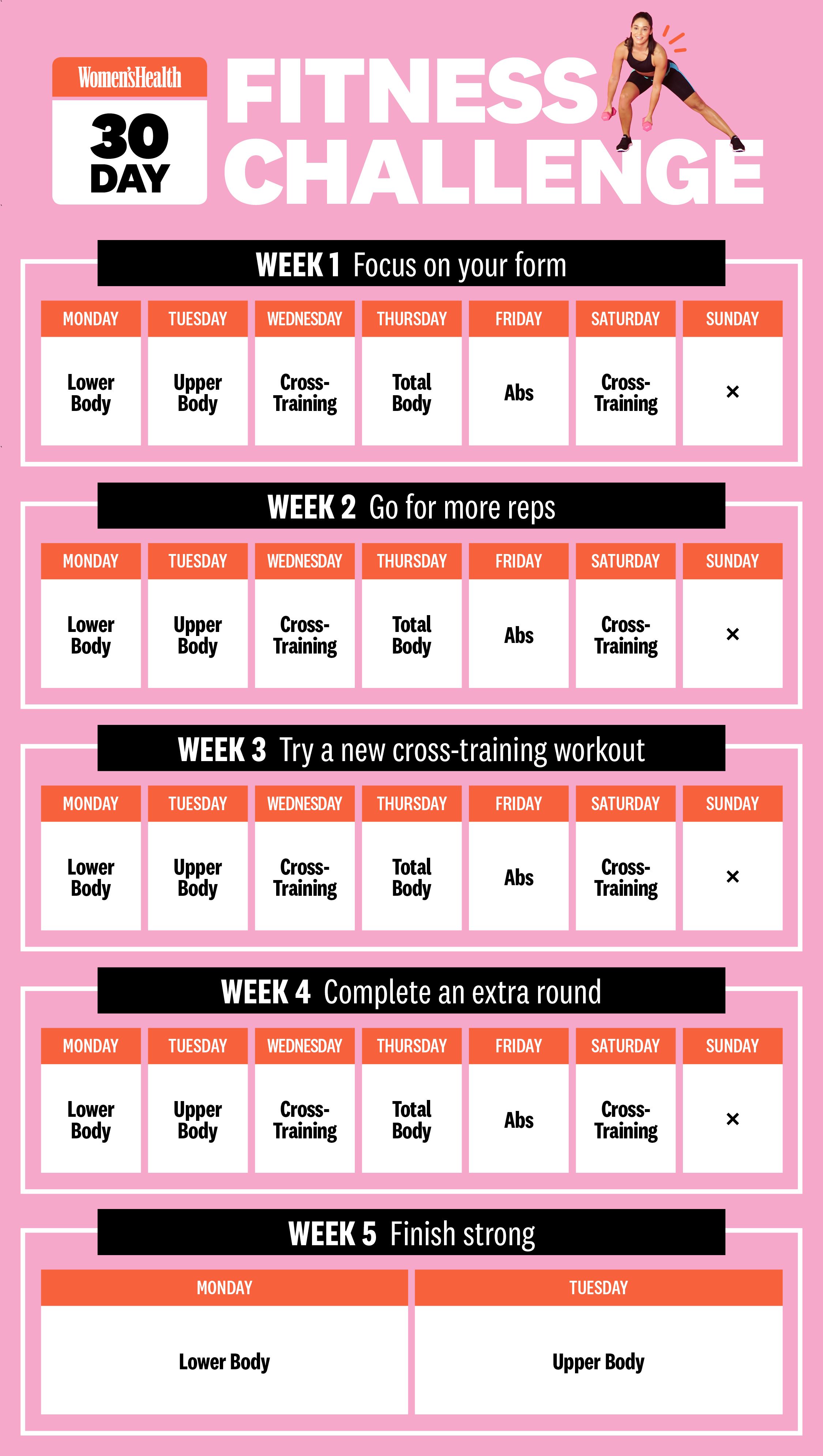
A balanced weekly workout schedule for weight loss typically spans three to five days, depending on your recovery capacity, schedule, and experience level. Trying to work out seven days a week usually leads to burnout, elevated cortisol levels, and compromised recovery.
Below is an examination of a balanced 4-day split that alternates between upper-body and lower-body resistance training, integrated with cardiovascular sessions.
Weekly Schedule Overview
| Day | Primary Focus | Training Type | Typical Duration |
|---|---|---|---|
| Monday | Upper Body Strength & Hypertrophy | Resistance (Compound + Isolation) | 45–60 Minutes |
| Tuesday | Lower Body Power & Conditioning | Resistance + Zone 2 Cardio | 50–65 Minutes |
| Wednesday | Active Recovery or Rest | Mobility, Light Walking, Stretching | 30–45 Minutes |
| Thursday | Upper Body Volume | Resistance (Dumbbells & Cables) | 45–60 Minutes |
| Friday | Lower Body Posterior Chain | Resistance (Glutes, Hamstrings, Core) | 45–60 Minutes |
| Saturday | High-Intensity Intervals (HIIT) or Steady State | Cardiovascular Conditioning | 30–45 Minutes |
| Sunday | Complete Rest | Complete Recovery | 0 Minutes |
Phase-by-Phase Breakdown of the Workout Plan
1. The Warm-Up Protocol (10 Minutes)
Never skip the warm-up. Jumping straight into heavy lifting or intense cardio raises injury risk and limits performance.
- Cardiovascular Primer: 3 to 5 minutes on a stationary bike or rower at a conversational pace to elevate core body temperature and increase blood flow to working muscles.
- Dynamic Mobility: Leg swings, arm circles, cat-cow stretches, and bodyweight squats to lubricate joints and prepare the nervous system for the specific movement patterns ahead.
2. Resistance Training Workouts
Resistance training forms the backbone of the physical transformation process. Each session should be executed with controlled tempos, focusing on the eccentric (lowering) phase of the lift.
Upper Body Session Focus
- Barbell Bench Press or Dumbbell Chest Press: 3 sets of 8–10 repetitions. Focuses on pectoral muscles, anterior deltoids, and triceps.
- Lat Pulldown or Pull-Up Assisted: 3 sets of 10–12 repetitions. Engages the latissimus dorsi and upper back for postural balance.
- Seated Cable Row: 3 sets of 10–12 repetitions. Targets mid-back thickness and scapular retraction.
- Dumbbell Shoulder Press: 3 sets of 10 repetitions. Strengthens the shoulders.
- Superset: Bicep Curls and Tricep Pushdowns: 3 sets of 12–15 repetitions each.
Lower Body Session Focus
- Goblet Squat or Barbell Back Squat: 3 sets of 8–10 repetitions. The ultimate compound movement for quadriceps, glutes, and core stability.
- Romanian Deadlifts (RDLs): 3 sets of 10–12 repetitions. Focuses heavily on hamstrings and glutes while reinforcing proper hip hinge mechanics.
- Leg Press Machine: 3 sets of 12 repetitions. Allows safe loading of the lower body when stabilizer muscles tire.
- Walking Lunges: 2 sets of 20 total steps. Enhances unilateral stability and lower-body endurance.
- Plank Holds: 3 sets of 45-second holds to reinforce deep core stability.
3. Integrating Cardiovascular Training
Cardio should complement your resistance work, not compete with it. If performed immediately prior to weight training, high-intensity cardio depletes glycogen stores and compromises your lifting performance.
- Zone 2 Steady-State Cardio: Perform 20 to 30 minutes of moderate cardiovascular exercise (such as incline treadmill walking or stair climbing at a pace where you can still hold a conversation) immediately following your resistance training sessions, or on dedicated days. This intensity relies heavily on fat oxidation.
- High-Intensity Interval Training (HIIT): Limit HIIT to 1 or 2 sessions per week if utilized. Sessions should consist of short bursts of maximal effort (e.g., 30 seconds sprinting on an assault bike) followed by longer periods of active recovery (e.g., 90 seconds slow pedaling), repeated for 15 to 20 minutes.
Common Mistakes to Avoid in Your Weight Loss Routine
Navigating a gym routine without awareness of common pitfalls can stall your progress or lead to injury. Keep these principles in mind:
- Chasing Extreme Caloric Deficits and Overtraining: Cutting calories too drastically while doubling gym hours leads to muscle wasting, severe fatigue, and hormonal disruption (such as elevated cortisol and suppressed thyroid output). Weight loss is a gradual adaptation.
- Neglecting Progressive Overload: Doing the exact same weight for the exact same number of repetitions week after week signals your body that it no longer needs to adapt. Gradually increase weight, repetitions, or improve your form over time.
- Spot Reduction Fallacy: You cannot choose where your body loses fat first. Doing hundreds of crunches will strengthen your abdominal wall, but it will not selectively melt fat from your midsection. Fat loss occurs systemically across the entire body as dictated by genetics and overall energy balance.
- Ignoring Sleep and Recovery: Muscle repair and fat mobilization occur primarily during rest periods. Inadequate sleep elevates ghrelin (the hunger hormone) and suppresses leptin (the satiety hormone), making dietary adherence significantly harder.
Frequently Asked Questions
Should I do cardio before or after lifting weights for weight loss?
You should perform cardio after lifting weights. Resistance training requires high neuromuscular output and glycogen availability to move weight safely and effectively. If you exhaust your energy reserves on the treadmill first, your lifting form deteriorates, reducing your ability to stimulate muscle tissue and protect your metabolic rate.
How many days a week should I go to the gym to lose weight?
A frequency of 3 to 5 days per week strikes the ideal balance between caloric expenditure, muscle stimulus, and recovery capacity. Beginners can achieve exceptional results with 3 full-body sessions per week, while intermediate exercisers often transition to a 4-day upper/lower or push/pull/legs split.
Can I lose weight by lifting weights alone without doing cardio?
Yes, weight loss is driven primarily by maintaining a caloric deficit, which is managed through nutrition. Lifting weights preserves lean mass and burns significant energy. However, incorporating dedicated low-intensity or moderate-intensity cardio accelerates total caloric expenditure and improves cardiovascular health, making the weight loss process more efficient.
What should I eat before and after my gym workout?
Prioritize a balanced meal containing easily digestible carbohydrates and lean protein 1 to 2 hours before your workout to fuel performance. Post-workout, consume a source of quality protein (such as poultry, fish, tofu, or whey protein) alongside complex carbohydrates to jumpstart muscle protein synthesis and replenish glycogen stores.
Why has my weight loss stalled after a few weeks?
A weight loss plateau is common as your body adapts to lower caloric intake and reduced body mass (meaning it takes less energy to move your lighter body). When this occurs, reassess your daily dietary intake to ensure adherence to your caloric target, increase your daily non-exercise physical activity (NEAT) by aiming for higher daily step counts, and ensure your sleep hygiene is optimal.
Next Actions and Implementation Strategy
To turn this blueprint into tangible results, start by evaluating your current weekly schedule and selecting a realistic gym frequency—such as 3 or 4 days per week—that you can maintain consistently for the next 12 weeks. Map your workout days into your calendar, prepare your gym bag the night before, and pair your physical training with a moderate, sustainable nutritional deficit. Consistency, patience, and progressive adaptation remain the ultimate drivers of long-term body composition transformation.