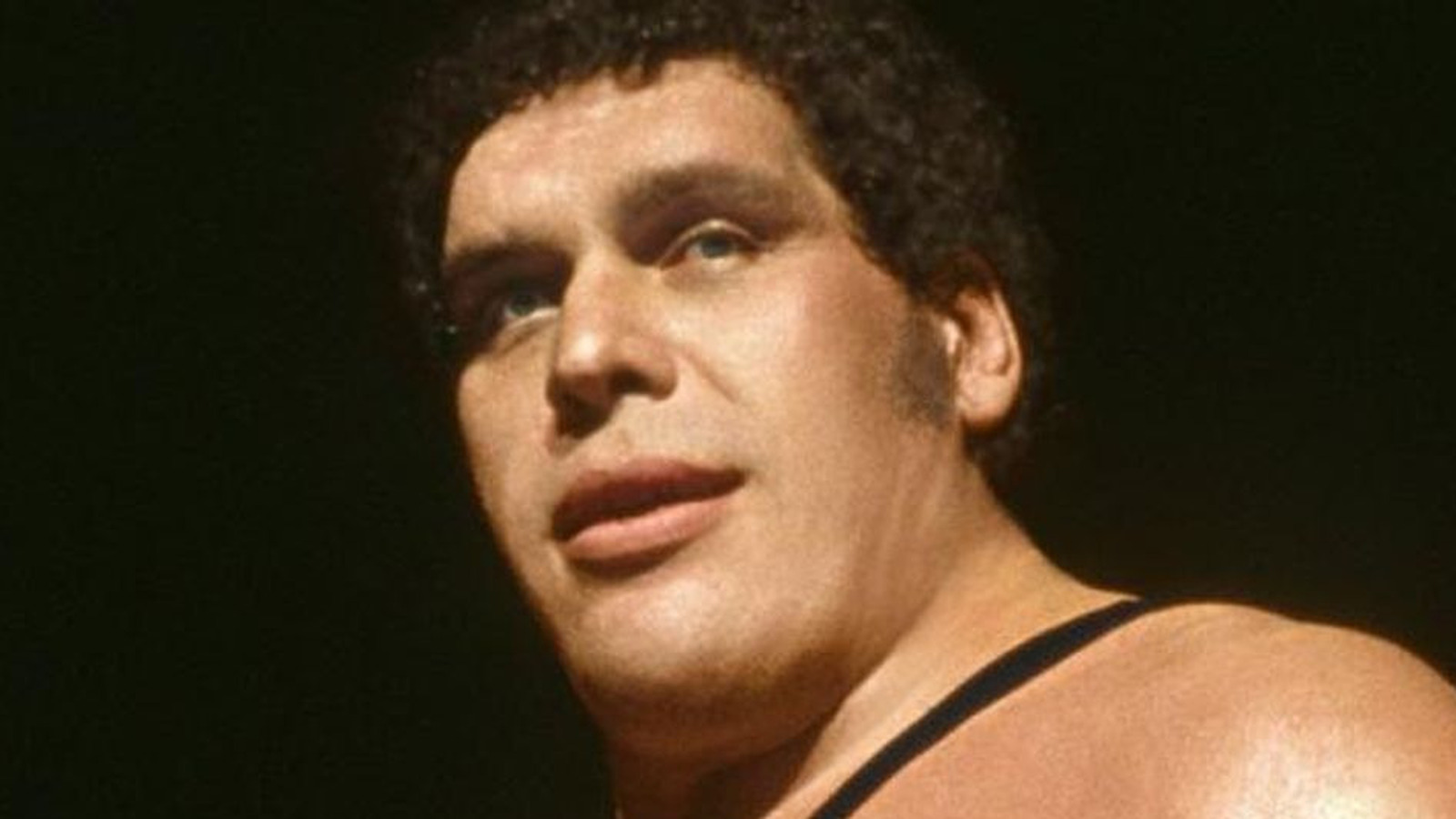
André the Giant remains one of the most recognizable and enduring figures in the history of professional wrestling and popular culture. Standing over seven feet tall and weighing upward of 500 pounds due to a condition called acromegaly, he transcended the squared circle to become a global phenomenon, a box-office attraction, and a beloved cinematic icon whose cultural footprint far outlasted his physical lifetime.
The Origins of a Titan: Early Life and the Rise of Acromegaly
Born André René Roussimoff on May 19, 1946, in Grenoble, France, André grew up in a working-class family in the small village of Molien. Even during his early childhood, signs of extraordinary physical development began to emerge. By the time he was twelve years old, André stood over six feet tall and weighed more than 200 pounds, outgrowing his peers and making standard clothing and furniture entirely impractical.
These rapid, uninhibited growth spurts were the result of acromegaly, a hormonal disorder caused by a benign tumor on the pituitary gland that overproduces growth hormone. While acromegaly granted him immense size, physical strength, and a commanding presence, it also laid the groundwork for severe medical complications later in life. Despite the physical and social challenges of growing up as an outlier in rural France, André maintained a resilient spirit. At the age of fourteen, he left school to work on his family's farm, but manual labor on the land could not contain a young man of his extraordinary dimensions.
Seeking opportunity and a community where his size was an asset rather than an anomaly, André moved to Paris in his late teens. There, he was introduced to professional wrestling, a career path that would utilize his unique physical attributes and propel him onto the international stage. In Paris, he trained under local veterans and adopted wrestling personas such as "Géant Ferré," drawing immediate curiosity from promoters and fans alike who had never witnessed a human being of such towering proportions.
Conquering the Globe: The Touring Era and Market Dominance
Before the widespread dominance of national television syndication and pay-per-view events, professional wrestling operated as a vast, interconnected network of regional territories managed by local promoters. André the Giant became the ultimate migratory attraction in this ecosystem. Promoters across the globe—from the United States and Canada to Japan, Europe, and Australia—relied on André as a special-edition booking that could instantly elevate house show attendance.
Operating as a traveling spectacle, André rarely stayed in one territory for long. This calculated strategy preserved his mystique. Fans could not watch him week in and week out on local television; they had to purchase a ticket to see the giant in person. In the ring, his wrestling style evolved to match his frame. Early in his career, he displayed surprising agility, executing dropkicks and moving with fluid mobility. As his body aged and the cumulative toll of acromegaly increased, his style shifted into that of a towering immovable force. Opponents would bounce off his chest, and his signature maneuvers—such as the massive sit-down splash or the double-underhook suplex—devastated opponents with crushing authority.
The Phenomenon of International Stardom
In Japan, where he wrestled frequently for International Wrestling Enterprise (IWE) and later All Japan Pro Wrestling (AJPW), he was revered as a warrior deity, known locally as "Monster Roussimoff." Japanese crowds respected his work ethic, his resilience, and his willingness to endure grueling travel schedules. In North America, working primarily for Vince McMahon Sr. and later Vince McMahon Jr. at the World Wrestling Federation (WWF), André was marketed as an eighth wonder of the world—an invincible giant who was officially billed as undefeated for fifteen years, a promotional exaggeration that reinforced his mythical status in the public imagination.
| Promotional Territory / Era | Primary Region | Significance to Career |
|---|---|---|
| Paris & Europe | France, UK | Initial training, early bouts, and discovery of his international marketability. |
| Japan (IWE / AJPW) | Japan | High-level athletic competition, massive fan reverence, and legendary tag-team runs. |
| WWF (Pre-Expansion) | North America | Mainstream exposure, traveling special attraction, and legendary feud foundations. |
| WWF (Golden Era) | Global | Peak commercial visibility, WrestleMania III main event, and heel turn. |
The Undefeated Myth and the WrestleMania III Turning Point
The apex of André the Giant’s wrestling career arrived on March 29, 1987, at WrestleMania III inside the Pontiac Silverdome in Michigan. For years, the WWF built its narrative around the premise that André had never been legitimately pinned or submitted in a professional wrestling ring. That aura of invulnerability made him the ultimate antagonist when he turned against his friend and rival, Hulk Hogan, challenging him for the WWF World Heavyweight Championship.
The build-up to WrestleMania III captivated millions of fans, serving as a defining cultural touchstone for the 1980s wrestling boom. Over 93,000 fans packed the stadium, creating a then-indoor attendance record. The confrontation between the 520-pound giant and the reigning champion, Hulk Hogan, culminated in one of the most iconic moments in sports entertainment history: Hogan slamming the giant to the mat before executing his finishing leg drop to secure the victory.
This match did more than crown a winner; it successfully transferred the torch of industry dominance while cementing André’s legacy. Even in defeat, André carried the match, working through intense physical pain and cardiovascular strain to deliver a performance that validated the grand scale of the spectacle. It proved that his value extended far beyond an undefeated streak; his willingness to put over a fellow competitor demonstrated profound professionalism and an acute understanding of storytelling in the squared circle.
Beyond the Ring: Cinematic Stardom and Cultural Legacy
While André’s physical size built his wrestling career, his gentle demeanor, sharp wit, and unexpected comedic timing opened doors in Hollywood. His most celebrated non-wrestling achievement was his portrayal of Fezzik the giant in Rob Reiner’s 1987 fantasy-adventure classic The Princess Bride, adapted from William Goldman’s novel.
Director Rob Reiner sought someone massive yet inherently kind-hearted for the role, and André fit the description perfectly. On the set of The Princess Bride, working alongside Cary Elwes, Mandy Patinkin, and Billy Crystal, André was known for his warmth, generosity, and legendary appetite. Despite experiencing intense back and joint pain during filming—making it difficult for co-star Cary Elwes to be dropped safely during stunt work—André remained a professional and a beloved colleague. Fezzik allowed audiences who had never watched a professional wrestling match to appreciate his unique charisma, humor, and gentle nature.
Beyond The Princess Bride, André made notable television appearances on series like The Six Million Dollar Man and The Greatest American Hero, often playing variations of gentle giants or formidable adversaries. These roles helped transition his public image from a terrifying sports-entertainment monster into a universally adored pop-culture icon.
Physical Toll, Health Challenges, and Untimely Passing
Behind the curtain of fame and physical grandeur, André’s life was heavily impacted by the relentless progression of acromegaly. The constant overproduction of growth hormone placed immense strain on his cardiovascular system, joints, and internal organs. Standard infrastructure—such as hotel beds, airline seats, automobiles, and doorways—was fundamentally unsuited for a man of his size, forcing him to endure chronic discomfort in everyday life.
By the late 1980s and early 1990s, his mobility was severely compromised. Spinal stenosis and advanced arthritis in his knees and back made walking unassisted a painful ordeal. Despite these physical limitations, he continued to make sporadic wrestling appearances for World Championship Wrestling (WCW) and various international promotions, driven by a lifelong dedication to the industry and his obligations to fans.
André the Giant passed away peacefully in his sleep from congestive heart failure on January 27, 1993, in a Paris hotel room where he was staying to attend his father’s funeral. In accordance with his final wishes, his body was cremated, and his ashes were scattered on his ranch in Ellerbe, North Carolina. His passing marked the end of an era for professional wrestling, prompting an outpouring of grief and tribute from peers, promoters, and fans across the globe. In 1993, the WWF established the legacy of the Hall of Fame, inducting André the Giant as its very first and sole inductee—a fitting tribute to a pioneer who shaped the industry more than almost anyone else in its history.
Frequently Asked Questions
How tall was André the Giant and what caused his size?
André the Giant was officially billed at seven feet four inches tall, though he typically measured closer to seven feet in reality. His immense size and rapid physical development were caused by acromegaly, a rare hormonal disorder resulting from a benign tumor on the pituitary gland that caused excess growth hormone production throughout his life.
Did André the Giant actually go undefeated for fifteen years?
The claim that André went undefeated for fifteen years was largely a promotional narrative constructed by wrestling promoters to enhance his mystique as an unbeatable attraction. While he rarely lost matches during the peak of his career, historical records show he did suffer occasional defeats via count-out, disqualification, or rare pinfalls in international territories prior to his famous WrestleMania III loss.
What was André the Giant's role in The Princess Bride?
André played Fezzik, a gentle, poetry-reciting giant and loyal companion to the character Vizzini, in the 1987 film The Princess Bride. The role showcased his natural charisma, comedic timing, and gentle personality, introducing him to a mainstream film audience outside of professional wrestling.
How did André the Giant's health affect his later career?
The cumulative effects of acromegaly, combined with the physical demands of wrestling, caused severe joint deterioration, spinal stenosis, and heart complications. In his later years, these conditions severely limited his mobility, requiring him to rely on specialized support and modifying his in-ring style to accommodate his physical pain.
What is André the Giant's enduring legacy in professional wrestling?
André revolutionized the concept of the special--attraction superstar, proving that a giant could carry box-office receipts on a global scale. He was inducted as the inaugural member of the WWE Hall of Fame in 1993, and his legacy continues to influence how giant athletes are utilized and respected in sports entertainment.