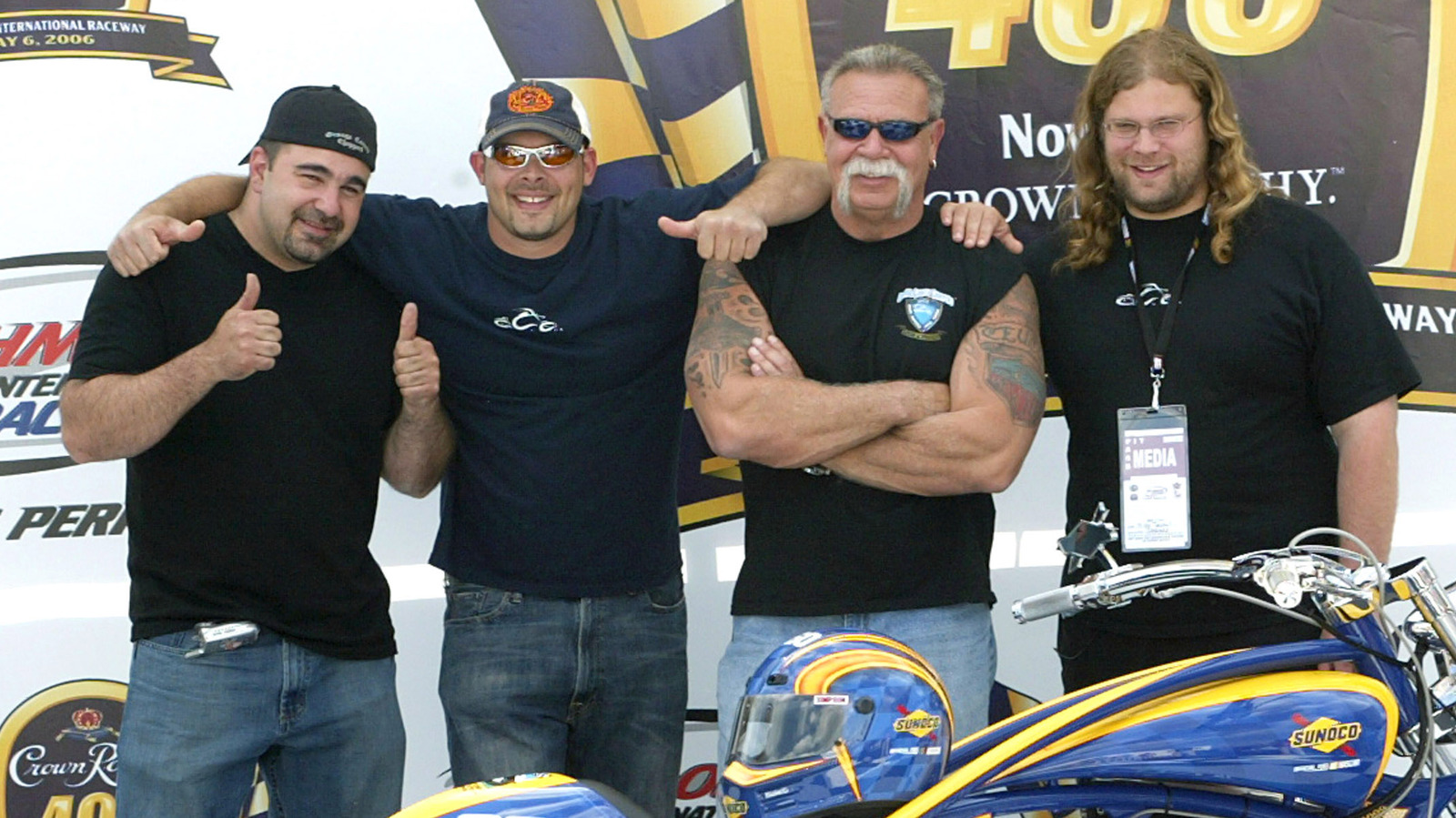
Vincent "Vinnie" DiMartino is a master technician and fabricator best known as the technical backbone of Orange County Choppers (OCC) during the peak of the Discovery Channel series American Chopper. As of 2026, he continues to operate DiMartino Motorsports, focusing on high-end automotive and motorcycle repair and custom fabrication, maintaining his reputation for precision engineering over television drama.
The Technical Legacy of Vinnie DiMartino at Orange County Choppers
To understand the art of custom motorcycles through the lens of Vinnie DiMartino, one must first look at the early 2000s era of Orange County Choppers. While Paul Teutul Sr. provided the brand's powerhouse personality and Paul Jr. provided the aesthetic vision, it was Vinnie who often translated those abstract concepts into functional mechanical assemblies.
Vinnie joined OCC in 2002, bringing a formal background in automotive repair and a natural aptitude for metalwork. In the early seasons of American Chopper, his role was crucial. He was rarely the center of the verbal altercations that defined the show; instead, he was the person at the lift, TIG welding a frame or troubleshooting a primary drive alignment. His mastery of the "art" was grounded in the "science" of motorcycle geometry.
The Role of the Lead Fabricator
The lead fabricator in a custom shop is responsible for the structural integrity of the machine. At OCC, Vinnie handled the "mock-up" phase—the most critical part of a custom build. During mock-up, every component, from the oil tank to the hand controls, is fitted to the raw frame before paint. This requires an intimate knowledge of:
- Clearance and Tolerances: Ensuring that moving parts, such as the drive belt and the rear 300mm tire, have adequate space to operate without friction.
- Component Integration: Mounting electrical components and oil lines in a way that is aesthetically "clean" but accessible for maintenance.
- Structural Modification: Stretching or raking a frame while maintaining the metallurgical strength required to support a high-torque V-twin engine.
Transitioning to V-Force Customs: Defining an Independent Style
In 2007, Vinnie DiMartino left Orange County Choppers to establish his own shop, V-Force Customs, located in Rock Tavern, New York. This move was a pivotal moment in his career, marking his transition from a supporting technician to a lead designer.
At V-Force Customs, Vinnie moved away from the "theme bike" aesthetic that had become the hallmark of OCC. While OCC focused on literal interpretations (bikes shaped like fire trucks or space shuttles), Vinnie’s art focused on the silhouette and mechanical purity of the motorcycle. His first major independent build, the V-Force V-01, showcased a cleaner, more aggressive look that prioritized flow over gadgetry.
The Philosophy of V-Force Design
Vinnie’s independent work emphasized "ridability." During the mid-2000s, the custom motorcycle world was obsessed with "trailer queens"—bikes that looked spectacular but were nearly impossible to ride due to extreme rake angles and rigid frames. Vinnie’s approach was different:
- Balanced Geometry: He preferred rake angles that allowed for low-speed Maneuverability.
- Performance Components: Integration of high-quality braking systems (such as Brembo or Beringer) and inverted forks for better handling.
- Ergonomics: Designing the "rider triangle" (the relationship between the seat, handlebars, and footpegs) to accommodate a human being rather than a display stand.
The Art of Fabrication: Technical Mastery and Tools
The "art" in custom motorcycles is often found in the details of fabrication. For Vinnie DiMartino, this meant a mastery of various metal-shaping tools and techniques that have remained relevant into 2026.
Welding and Metallurgy
Custom frames are typically constructed from 1018 mild steel or 4130 chromoly tubing. Vinnie’s preference for TIG (Tungsten Inert Gas) welding is a hallmark of high-end custom building. Unlike MIG welding, TIG welding allows for greater control over the heat affected zone (HAZ), resulting in welds that are not only aesthetically beautiful—resembling a stack of dimes—but also structurally superior.
Metal Shaping
Creating a custom gas tank or fender requires an understanding of how metal stretches and shrinks. Vinnie utilized traditional tools such as the English Wheel and the planishing hammer. The English Wheel is used to create compound curves in sheet metal; by passing the metal between two steel rollers, the fabricator can slowly stretch the material into a three-dimensional shape. This is where the artistry lies—feeling the metal and knowing exactly where to apply pressure to achieve a symmetrical, smooth surface without the need for excessive body filler.
Machining Custom Parts
As the industry evolved, Vinnie integrated CNC (Computer Numerical Control) machining with traditional manual lathes and mills. This allowed for the creation of one-off components, such as triple trees and wheel hubs, that were engineered to precise specifications. By machining his own parts, Vinnie ensured that every "artistic" choice was backed by industrial-grade precision.
The PJD Era and the Return to Television
In 2010, the landscape of American Chopper shifted with the "Senior vs. Junior" storyline. Vinnie returned to work with Paul Teutul Jr. at the newly formed Paul Jr. Designs (PJD). This reunion was significant for fans of the show, but more importantly, it reunited a premier design mind (Paul Jr.) with a premier technical mind (Vinnie).
During the PJD era, Vinnie was instrumental in some of the most famous builds in custom motorcycle history, including the Black Widow (a redesign of an earlier OCC concept) and the Geico Bike. His role at PJD was more senior, acting as a shop manager and mentor to younger fabricators while still maintaining his hands-on approach to the most complex aspects of the builds.
Comparison of Build Styles and Roles
| Feature | OCC Era (2002–2007) | V-Force Customs (2007–2010) | PJD Era (2010–2012) | DiMartino Motorsports (2012–2026) |
|---|---|---|---|---|
| Primary Focus | Theme-based Choppers | Performance & Silhouette | High-End Design/Brand Bikes | Automotive & Cycle Service |
| Vinnie's Role | Lead Fabricator | Owner / Lead Designer | Shop Manager / Fabricator | Owner / Master Technician |
| Technical Style | Heavy fabrication, literal themes | Clean lines, rider-focused | Sophisticated aesthetic, mixed media | Precision repair and restoration |
| Notable Tooling | Manual Lathe, TIG Welder | English Wheel, Custom Jigs | CNC integration, 3D Design | Diagnostic Tech, Fabricating Repairs |
DiMartino Motorsports: The Evolution into 2026
By 2012, the "chopper craze" that dominated the early 2000s had significantly cooled. Vinnie, ever the pragmatist, recognized that the market for $100,000 custom motorcycles was shrinking. He pivoted his career by opening DiMartino Motorsports, an automotive and motorcycle repair facility.
As of 2026, DiMartino Motorsports represents the natural evolution of Vinnie’s career. While the flash and drama of reality television have faded, the core technical skills remain. The shop provides a range of services that bridge the gap between daily maintenance and high-end customization:
- Performance Tuning: Utilizing modern dyno-tuning equipment to optimize fuel injection maps for both cars and motorcycles.
- Custom Restomodding: Applying custom fabrication skills to classic vehicle restorations, integrating modern suspension and drivetrains into vintage chassis.
- Specialized Fabrication: Providing high-quality welding and machining for local enthusiasts who need one-off parts for their own projects.
Vinnie’s current focus reflects a broader trend in the custom world: a move toward functionality and longevity. The "art" is no longer just about how a bike looks on a rotating pedestal; it is about how it performs over 20,000 miles of real-world riding.
The Enduring Principles of Custom Motorcycle Art
What Vinnie DiMartino contributed to the "art of custom motorcycles" transcends the specific bikes he built on television. His work embodies several core principles that continue to guide fabricators in 2026.
1. The Primacy of the Frame
The frame is the canvas of the motorcycle. Vinnie’s builds always started with a focus on "the lines." If the backbone of the frame and the angle of the neck don't harmonize, no amount of chrome or paint can fix the design. He taught a generation of viewers that the "art" begins with the heavy steel tubes, not the final clear coat.
2. Form Follows Function
Vinnie often served as the voice of reason when designs became too impractical. His contribution to the art was the insistence that a motorcycle must, above all else, be a machine. This meant ensuring proper cooling for the engine, adequate braking power for the weight of the bike, and a geometry that wouldn't "flop" at low speeds.
3. The Integrity of the Weld
In an era of mass-produced components, Vinnie highlighted the value of the handmade. The art of the custom motorcycle is a celebration of human skill. When a fabricator like Vinnie spends hours hand-filing a bracket or perfecting a weld, they are imbuing the machine with a level of soul that a factory-line bike lacks.
Common Technical Challenges in Custom Building
For those looking to follow in Vinnie’s footsteps, custom building presents several recurring challenges that he mastered over his decades-long career.
- Vibration Management: High-displacement V-twin engines produce significant vibration. Vinnie’s builds often utilized rubber mounting systems or specific torque-link arrangements to prevent the frame from cracking and to increase rider comfort.
- Electrical Cleaning: Modern custom bikes often feature "internal wiring," where the wires are run inside the handlebars and frame. This requires precision drilling and deburring of the steel to prevent the wires from chafing and shorting out over time.
- Heat Dissipation: Custom oil tanks and exhaust wraps are artistic choices that can affect engine temperature. Vinnie’s technical expertise ensured that these "cool" looking features didn't lead to engine failure.
Frequently Asked Questions
Why did Vinnie leave Orange County Choppers?
Vinnie left OCC in 2007 primarily to seek professional independence and to escape the high-stress, drama-filled environment of the television production. He wanted to build bikes according to his own design philosophy rather than the "theme bike" requirements of OCC's corporate clients.
Is Vinnie DiMartino still building motorcycles in 2026?
Yes, but his focus has shifted. Through DiMartino Motorsports, he performs high-end custom work and modifications, though he also handles general automotive repair and performance tuning. He prioritizes quality projects over mass-producing custom choppers.
What is Vinnie’s relationship with Paul Jr. today?
While they are no longer daily business partners on a television set, Vinnie and Paul Jr. have maintained a long-standing friendship. They successfully collaborated during the Senior vs. Junior years and have remained on good terms as they pursued their respective independent businesses.
What tools are essential for the "Vinnie-style" of fabrication?
The core kit includes a high-quality TIG welder, a manual lathe, a vertical mill, an English Wheel, and a wide array of hand tools for metal finishing. Additionally, modern diagnostic software is now essential for the performance tuning side of his 2026 operations.
How did Vinnie impact the custom motorcycle industry?
Vinnie provided a "technical North Star" for the industry. During a period when custom motorcycles were often criticized for being unridable "art pieces," Vinnie’s emphasis on mechanical integrity and functional fabrication helped preserve the credibility of the craft.
Final Recommendation for Aspiring Builders
If you are inspired by the work of Vinnie DiMartino and the art of custom motorcycles, the best path forward in 2026 is to prioritize technical education. The era of the "self-taught" builder who only knows how to weld is fading. To succeed today, one must understand both the traditional arts of metal shaping and the modern requirements of electronic fuel injection (EFI) and computer-aided design.
Start by mastering the basics of metallurgy and TIG welding. Once you have a foundation in structural integrity, you can begin to explore the aesthetic "art" of the machine. Remember Vinnie’s unspoken rule: a beautiful bike that doesn't run is just a sculpture; a beautiful bike that carves corners is a masterpiece.