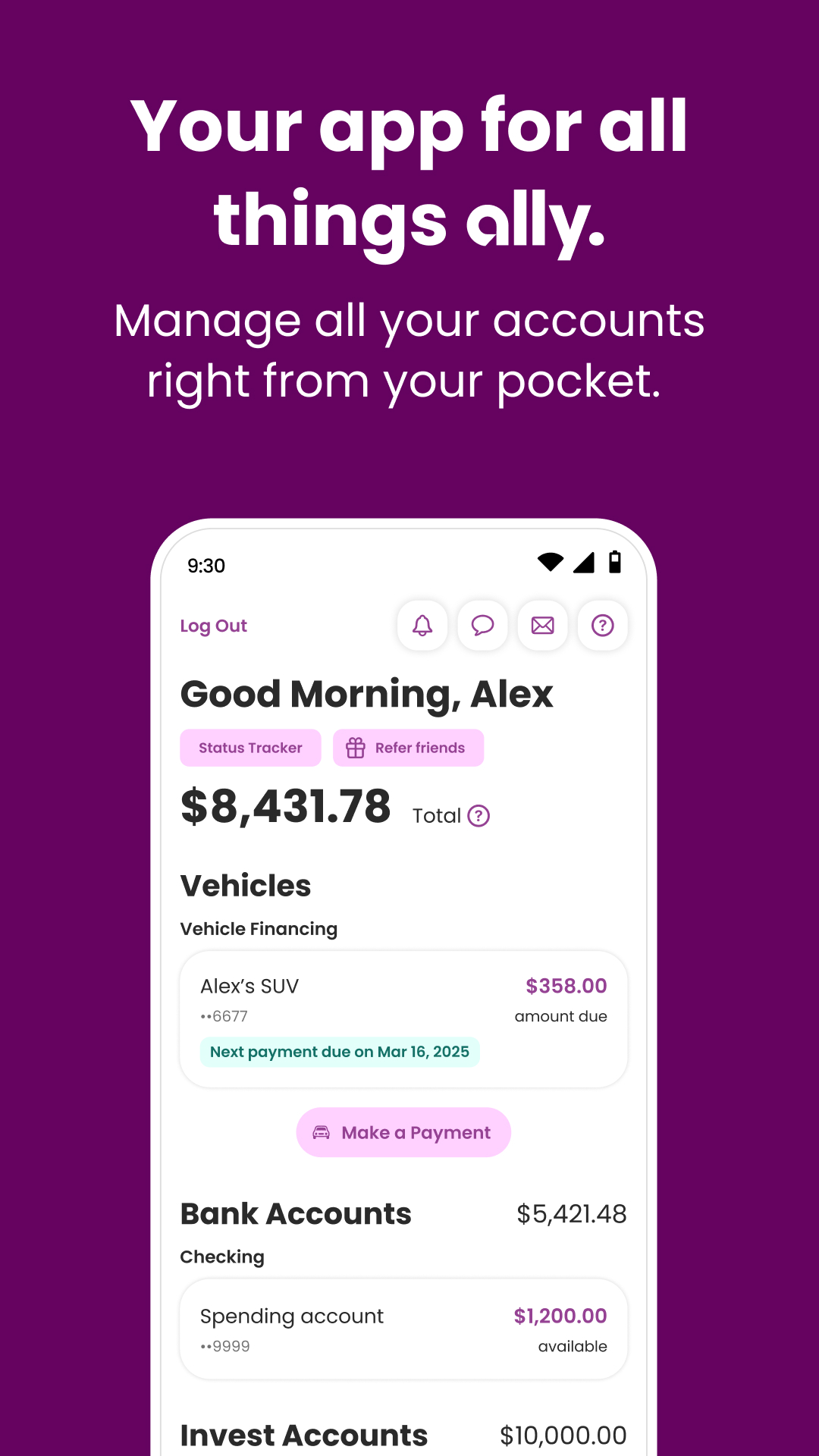
Ally Bank auto refinancing, primarily facilitated through its digital platform Clearlane, allows vehicle owners to replace their current high-interest car loans with new contracts featuring lower annual percentage rates (APR) or adjusted monthly payments. By leveraging Ally’s digital-first infrastructure, borrowers can pre-qualify without impacting their credit scores to see potential savings before committing to a full application.
Auto refinancing has become a cornerstone of personal financial management in 2026, as consumers seek to optimize their debt in a fluctuating interest rate environment. Ally Bank, one of the largest auto lenders in the United States, offers a streamlined digital experience designed to strip away the complexity of traditional bank financing. Whether you are looking to lower your monthly overhead or reduce the total interest paid over the life of your loan, understanding the nuances of Ally’s specific programs is essential for making an informed decision.
How Ally Bank Auto Refinancing Works
The core mechanism of auto refinancing with Ally involves taking out a new loan to pay off your existing vehicle debt. Although the vehicle remains the same, the terms of the debt—including the interest rate, the length of the loan, and the monthly payment amount—are rewritten. Ally facilitates this through its Clearlane platform, which acts as a specialized portal for direct-to-consumer auto financing.
When you apply, Ally evaluates your creditworthiness, the value of your vehicle, and your current loan balance. If approved, the new loan pays off your old lender in full. From that point forward, you make payments to Ally (or the specific lender assigned through the Clearlane marketplace). This process effectively "resets" your loan based on your current financial standing, which may have improved significantly since you first purchased the car.
The Role of Clearlane by Ally
It is important to distinguish between Ally’s standard dealer-based financing and its refinancing arm. Clearlane is the digital marketplace operated by Ally that connects consumers with refinancing options. While Ally Bank may be the ultimate lender, Clearlane also works with a network of other providers to ensure borrowers find a competitive match. This marketplace model increases the likelihood of approval for various credit profiles, ranging from prime to near-prime borrowers.
Eligibility Requirements for 2026
To qualify for auto refinancing through Ally, both the borrower and the vehicle must meet specific criteria. These standards ensure that the collateral (the car) retains enough value to secure the loan and that the borrower has the capacity to repay the debt.
Borrower Qualifications
- Credit Score: While Ally does not publicly disclose a hard minimum, most successful applicants possess a credit score of 620 or higher. Those with scores in the "Excellent" range (740+) typically secure the lowest advertised APRs.
- Income and Employment: You must demonstrate a steady source of income. Ally typically requires a minimum gross monthly income (often around $2,000) to ensure the debt-to-income (DTI) ratio remains within healthy limits.
- Residency: Borrowers must be legal residents of the United States and usually must be at least 18 years of age.
Vehicle and Loan Specifications
Ally maintains strict guidelines regarding the types of vehicles it will refinance. In 2026, these parameters are designed to exclude aging assets that may depreciate faster than the loan can be repaid.
- Maximum Mileage: Generally, vehicles must have fewer than 75,000 to 100,000 miles. High-mileage vehicles represent a higher risk for mechanical failure, which increases the risk of default.
- Vehicle Age: Vehicles are typically required to be 10 years old or newer.
- Loan Amount: The refinance amount usually falls between a minimum of $5,000 and a maximum of $75,000.
- Exclusions: Ally does not refinance commercial vehicles, motorcycles, RVs, or vehicles from certain discontinued manufacturers. Additionally, "branded" titles (salvage or rebuilt) are almost always ineligible.
The Financial Benefits of Refinancing with Ally
The primary motivation for refinancing is financial gain. Depending on your goals, Ally’s products can be used in two distinct ways: reducing monthly cash outflow or reducing the total cost of ownership.
Lowering Your APR
If your credit score has improved since you first financed your car—perhaps by 50 points or more—you likely qualify for a lower interest rate. Even a 2% reduction in APR can save a borrower over $1,000 in interest over the course of a 60-month loan for an average-priced vehicle. Lowering the rate is the most efficient way to refinance because it reduces the "rent" you pay on the borrowed money without necessarily extending the time you are in debt.
Extending the Loan Term
For some, the goal is immediate monthly relief. By extending the remaining term of the loan (e.g., moving from 24 months remaining to 48 months), the monthly payment drops significantly. However, caution is required here. Extending the term usually results in paying more interest over time, even if the APR is slightly lower. This path is best suited for those facing temporary cash flow challenges who need to prioritize lower monthly obligations.
Removing a Co-signer
Life changes such as divorce or a desire for financial independence often lead borrowers to refinance. Ally’s platform allows you to apply for a loan in your name only, effectively releasing a co-signer from their legal obligation to the debt, provided your individual credit and income are sufficient to support the loan.
Step-by-Step Application Process
Ally has optimized the refinancing journey to be almost entirely paperless. In 2026, the process follows a specific sequence designed to protect the borrower’s credit score until a firm decision is needed.
- Pre-Qualification: Visit the Clearlane/Ally website to enter basic information, including your name, address, and estimated credit score. This step uses a soft credit pull, which does not affect your credit score.
- Offer Selection: If you pre-qualify, you will see several loan options with different terms (e.g., 36, 48, or 60 months) and estimated APRs. Select the one that best fits your budget.
- Full Application: Once a plan is chosen, you submit a formal application. This involves a hard credit pull, which may cause a minor, temporary dip in your credit score. You will need to provide your Vehicle Identification Number (VIN) and current loan account details.
- Verification and Documentation: You may be asked to upload digital copies of your driver’s license, proof of insurance, and recent pay stubs. Ally’s system verifies the vehicle’s value through industry-standard databases like Kelley Blue Book.
- Payoff and Title Transfer: Upon final approval, Ally coordinates the payoff of your old loan. They send the funds directly to your previous lender. You will then work with Ally to ensure the vehicle title is updated to list them as the new lienholder, a process that varies slightly by state DMV regulations.
Comparing Ally to Other Lending Options
Before committing to Ally, it is helpful to see how their refinancing structure compares to other common avenues like credit unions or traditional dealership "buy-back" programs.
| Feature | Ally (Clearlane) | Local Credit Union | Online Marketplace (Competitors) |
|---|---|---|---|
| Ease of Use | High (Fully Digital) | Moderate (Often requires visit) | High |
| Credit Impact | Soft pull for pre-check | Usually hard pull only | Soft pull for pre-check |
| Min. Loan Amount | ~$5,000 | ~$2,500 | ~$5,000 |
| Max. Vehicle Age | 10 Years | Often up to 12 Years | Varies (7-10 Years) |
| Rate Structure | Competitive / Tiered | Typically Lowest Rates | Broad range |
| Membership Req. | None | Must be a member | None |
Potential Pitfalls and Considerations
While refinancing can be a powerful tool, it is not without risks. Borrowers should perform a "break-even" analysis before signing a new contract.
Negative Equity (Being "Upside Down")
If you owe more on your car than it is currently worth, you have negative equity. Many lenders, including Ally, have limits on the Loan-to-Value (LTV) ratio, often capped at 110% to 125% of the car’s wholesale value. If your negative equity is too high, you may be denied, or you may be required to pay a lump sum upfront to bring the loan balance down to an acceptable level.
Refinancing Fees
While Ally does not typically charge an "application fee," there are peripheral costs. Most states charge a fee to transfer the lien on a title, which can range from $15 to $100. Additionally, check your current loan for prepayment penalties. While rare in modern consumer auto loans, some "buy-here-pay-here" lots or subprime lenders include them, which could negate your refinancing savings.
The Impact of Total Interest
It is easy to be seduced by a lower monthly payment. However, if you are three years into a five-year loan and you refinance into a new five-year loan, you are effectively paying for your car over eight years. This significantly increases the total interest paid and keeps you in a state of debt for much longer, increasing the risk that the car will break down or wear out before the loan is paid off.
Expert Guidance: When Should You Refinance?
Timing is everything in the world of auto finance. According to the Consumer Financial Protection Bureau (CFPB), borrowers should look for specific "trigger events" to determine if refinancing is appropriate.
- The 6-12 Month Rule: Generally, you should wait at least six to twelve months after your original purchase before refinancing. This gives you time to establish a consistent payment history and for your credit score to recover from the initial "hard pull" of the purchase loan.
- Market Rate Shifts: If the Federal Reserve has lowered interest rates since you bought your car, market-wide APRs have likely dropped, making it a prime time to check for a better deal.
- Credit Improvement: If you have successfully disputed errors on your credit report or paid down significant credit card debt, your "borrower profile" has changed. You are no longer the same risk you were a year ago, and your interest rate should reflect that.
Frequently Asked Questions
Does Ally Bank charge a fee to refinance an auto loan?
Ally (via Clearlane) does not typically charge an upfront application or origination fee. However, borrowers are responsible for state-mandated title transfer fees and any fees charged by their current lender for closing the account. It is always advisable to review the Truth in Lending Act (TILA) disclosure provided during the application to see a full breakdown of costs.
Can I refinance a loan that is already with Ally Bank?
Generally, banks do not refinance their own internal loans to offer a lower rate. If you currently have an auto loan directly with Ally, you may need to look at other lenders to refinance. However, if your loan was through a dealer that used Ally as the backend lender, you should contact Ally customer service to see if any modification programs or "internal" refinancing options have been made available for 2026.
How much can I realistically save?
Savings vary based on the loan balance and the rate reduction. For example, on a $25,000 balance with 48 months remaining, dropping your APR from 9% to 5% would save you approximately $45 per month and over $2,100 in total interest over the life of the loan. Use an official calculator to run your specific numbers.
Will refinancing hurt my credit score?
The initial pre-qualification uses a soft credit inquiry, which has no impact. If you proceed with the full application, a hard inquiry will occur. This might cause a temporary drop of 5 to 10 points. However, in the long term, if refinancing leads to more affordable payments that you make on time, your credit score will likely improve.
What documents do I need for the Ally refinance process?
At a minimum, you will need your current loan's 10-day payoff amount, your vehicle’s 17-digit VIN, your Social Security number, and proof of current employment. Having a digital copy of your current vehicle registration and insurance card will also speed up the process.
Final Recommendation
Ally Bank’s auto refinancing through Clearlane remains a top-tier choice in 2026 for borrowers who value a digital experience and transparent pre-qualification. It is most effective for those who have seen a tangible improvement in their credit score or those who are currently "trapped" in high-interest dealer financing.
Before signing, ensure you compare the total interest cost of the new loan against your current one. If the goal is purely to save money, prioritize a shorter term with a lower APR. If the goal is survival and cash flow, the extended term may be necessary, but do so with the awareness of the higher long-term cost. To begin, gather your current loan statement and run a pre-qualification check on the Ally website to establish your baseline for savings.