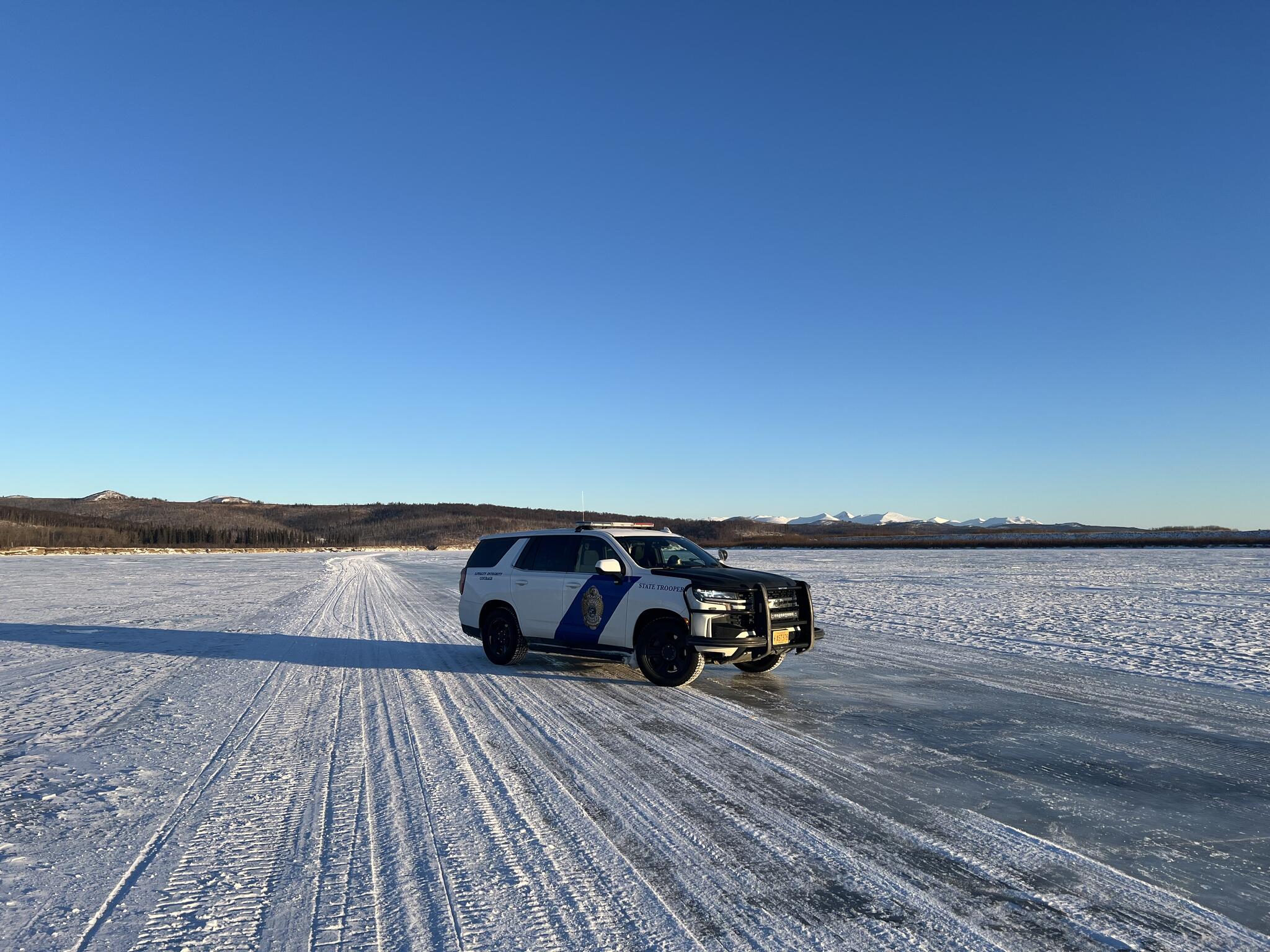
The Alaska State Troopers (AST) manage vehicle sustainability by balancing the extreme demands of Arctic law enforcement with modern fuel-efficiency standards. In 2026, the primary strategy involves deploying hybrid pursuit-rated vehicles and integrated idle-reduction technologies. This approach allows the department to reduce its carbon footprint and operational costs without compromising the reliability required in one of the world's most unforgiving climates.
The Alaska State Troopers operate under the Department of Public Safety (DPS), covering a geographic area of over 586,000 square miles. Unlike municipal police departments in the lower 48 states, the AST must contend with infrastructure gaps, "The Bush" (remote areas inaccessible by road), and temperatures that swing from -60°F in the interior to 70°F in the panhandle. Sustainability in this context is not merely about "going green"; it is about optimizing fleet longevity, reducing fuel dependency in remote outposts, and ensuring that life-saving equipment functions in total isolation.
The Evolution of the AST Patrol Fleet
As of 2026, the backbone of the Alaska State Troopers’ road patrol remains the Ford Police Interceptor Utility (PIU). While internal combustion engines (ICE) dominated the fleet for decades, the transition toward the Hybrid AWD model has become the standard for new procurement cycles. The shift was driven by the specific operational profile of a Trooper: long hours of stationary "stationary" work punctuated by high-speed responses.
The Ford PIU Hybrid is particularly suited for Alaska because its lithium-ion battery powers the extensive onboard electronics—radios, computers, dash cameras, and emergency lighting—without requiring the engine to run continuously. In a state where a vehicle may be left running for a full 12-hour shift during a blizzard to prevent fluids from freezing and to keep the cabin habitable, the fuel savings from hybrid technology are exponential rather than incremental.
Specialized Vehicles for the Alaskan Terrain
Beyond standard SUVs, the AST maintains a diverse fleet to handle varied terrain. This includes:
- Chevrolet Tahoe PPV (4WD): Used primarily in regions requiring higher ground clearance and significant towing capacity for snowmachine trailers.
- Ford F-150 and F-250 Pursuit-Rated Trucks: Essential for rural "hub" locations where Troopers must navigate unpaved roads and haul heavy equipment.
- Snowmachines and ATVs: Vital for the Alaska Wildlife Troopers (AWT), who enforce hunting and fishing regulations in roadless areas.
Sustainability in these specialized segments focuses on transitioning to four-stroke engines, which offer better fuel economy and lower emissions than older two-stroke models, and exploring the emerging market of electric snowmachines for short-range coastal patrols.
The Challenge of Arctic Sustainability
Implementing sustainable vehicle technology in Alaska presents unique hurdles that do not exist in temperate climates. The most significant of these is thermal management. In 2026, the AST continues to research and adapt to how extreme cold affects battery chemistry and charging infrastructure.
Battery Degradation and Range Anxiety
In temperatures below -20°F, standard lithium-ion batteries can lose up to 40% of their effective range due to the energy required to keep the battery pack within its optimal operating temperature. For a Trooper patrolling the Parks Highway between Anchorage and Fairbanks, where gas stations are few and far between, "range anxiety" is a matter of survival.
To combat this, the AST’s sustainability model in 2026 prioritizes Hybrid-Electric Vehicles (HEVs) over Battery Electric Vehicles (BEVs) for long-distance patrols. The hybrid system provides a "fail-safe" where the gasoline engine can take over entirely if the electrical system is hampered by extreme cold, ensuring the Trooper is never stranded.
Idle-Reduction Technology
A major component of the AST sustainability initiative is the integration of advanced idle-reduction systems. Before the widespread adoption of hybrids, a patrol car might idle for 3,000 hours a year, which is equivalent to roughly 100,000 miles of engine wear.
In 2026, the AST utilizes systems like Stealth Power or specialized Havis idle-management modules. these systems allow the engine to remain off while the vehicle's heating and cooling systems maintain cabin temperature through auxiliary heaters (like Webasto or Espar heaters) that run on tiny amounts of fuel. This drastically reduces "engine hours," extending the life of the vehicle from a traditional three-year cycle to five or more years.
Infrastructure and the "Alaska Electric Highway"
The feasibility of sustainable fleets depends heavily on the charging and fueling infrastructure provided by the Alaska Department of Transportation and Public Facilities (DOT&PF). In 2026, the expansion of the Alaska Electric Highway has influenced AST vehicle deployment.
This initiative has placed Level 3 DC Fast Chargers along the Railbelt (the corridor from Homer to Fairbanks). Because of this infrastructure, Troopers stationed in urbanized areas like the Matanuska-Susitna Valley or Anchorage have begun integrating full BEVs for administrative tasks and light-duty city patrols. However, for the "Deep Bush" outposts such as Galena or Nome, sustainability still relies on the efficient transport and storage of liquid fuels, as local power grids are often micro-grids powered by diesel generators.
Comparative Fleet Capabilities: 2026 Assessment
The following table outlines the performance and sustainability metrics for the primary vehicles utilized by the Alaska State Troopers in 2026.
| Vehicle Model | Powertrain | Primary Environment | Sustainability Factor | Operational Benefit |
|---|---|---|---|---|
| Ford PIU Hybrid | 3.3L V6 Hybrid | Highway/Urban | High Idle Reduction | 24/7 Electronics Support |
| Chevrolet Tahoe PPV | 5.3L V8 (ICE) | Mountain/Rural | High Durability | Superior Towing/Clearance |
| Ford F-150 Lightning | Electric (Dual Motor) | Urban Hubs | Zero Emissions | Instant Torque for Short Pursuit |
| Dodge Durango Pursuit | 5.7L V8 (ICE) | Highway Patrol | Enhanced Aerodynamics | High-Speed Interception |
| Aviation Fleet (Cessna) | Piston/Turboprop | Remote/Bush | Efficient Flight Pathing | Essential for Remote Access |
Aviation and Marine Sustainability
The Alaska State Troopers are unique in their heavy reliance on the Aviation Section. With over 40 aircraft, the AST operates one of the largest civilian law enforcement air fleets in the world. Sustainability in the air is arguably more difficult than on the ground.
In 2026, the focus for AST aviation is on fleet modernization. Replacing aging, less efficient airframes with modern turboprops and high-efficiency piston engines reduces fuel burn per mission hour. The Aviation Section also utilizes advanced flight-tracking and dispatch software to optimize routes, ensuring that "deadhead" miles (flying without a mission-critical purpose) are minimized.
Similarly, the Marine Section, which patrols Alaska’s 33,000 miles of coastline, has transitioned to multi-engine configurations with "lean-burn" technology. This allows a patrol vessel to cruise on a single engine during low-speed surveillance while retaining the ability to engage secondary engines for high-speed intercepts.
Lifecycle Management and Economic Sustainability
Sustainability for the AST also involves the fiscal responsibility of maintaining a fleet under extreme stress. The "total cost of ownership" (TCO) is the primary metric used by the DPS.
- Preventative Maintenance: In 2026, the AST uses telematics to monitor engine health in real-time. By catching minor issues before they become catastrophic failures in the wilderness, the department prevents the environmental and financial cost of towing vehicles from remote locations.
- Vehicle Upfitting: The AST has standardized its "upfitting" (the installation of cages, light bars, and racks) so that equipment can be moved from an older decommissioned vehicle to a new one. This "recycle and reuse" policy for expensive law enforcement hardware significantly reduces waste.
- End-of-Life Disposal: When a vehicle reaches the end of its Trooper service life (typically around 100,000 to 120,000 miles, which are much "harder" than civilian miles), it is often auctioned to smaller municipal departments or other state agencies, extending the functional life of the asset.
Future Outlook: Hydrogen and Alternative Fuels
Looking beyond 2026, the Alaska State Troopers are monitoring the development of Hydrogen Fuel Cell (FCEV) technology. Hydrogen is theoretically ideal for Alaska because it does not suffer the same range degradation as batteries in extreme cold and can be refueled as quickly as gasoline. However, until a hydrogen "backbone" exists in the state, this remains a pilot-phase consideration.
The department is also exploring the use of Renewable Diesel (R99) for its heavy-duty trucks and transport vehicles. Unlike traditional biodiesel, which can "gel" in cold temperatures, renewable diesel is a drop-in replacement that performs well in the Arctic and can reduce lifecycle greenhouse gas emissions by up to 80%.
Frequently Asked Questions
Why don't the Alaska State Troopers use 100% electric vehicles (EVs)?
While EVs offer zero emissions, they are currently impractical for statewide Alaskan law enforcement due to extreme cold. Batteries lose significant capacity in sub-zero temperatures, and the lack of charging stations in remote regions like the Dalton Highway makes long-range pursuit or rescue missions impossible for current EV technology. The AST uses a "mixed-fleet" approach, utilizing hybrids for most patrol duties.
How much fuel does a hybrid patrol car save compared to a traditional one?
On average, a Ford PIU Hybrid can save between 300 and 500 gallons of fuel per year per vehicle, primarily by reducing engine idle time. In Alaska, where fuel prices in remote villages can exceed $10 per gallon, these savings are substantial and allow the department to reallocate funds to other critical public safety needs.
Do sustainable vehicles perform as well as traditional ones in high-speed pursuits?
Yes. The 2026 Ford PIU Hybrid, for example, is pursuit-rated and often has better acceleration than its non-hybrid counterparts due to the instant torque provided by the electric motor. The AST does not sacrifice speed or safety for sustainability; vehicles must meet rigorous performance standards before being commissioned.
What happens to Trooper vehicles when they are no longer fit for service?
Once a vehicle reaches its mileage or maintenance threshold, it is decommissioned. Useful specialized equipment is stripped for reuse. The vehicles are then typically sold through the State of Alaska Surplus program, where they are often repurposed by local governments or private citizens, ensuring the vehicle's utility is maximized before it is eventually recycled.
Does the cold weather affect the "green" technology in these cars?
Yes, extreme cold is the primary enemy of green technology in Alaska. The AST compensates by using block heaters, battery blankets, and auxiliary fuel-fired heaters. These additions ensure that the hybrid batteries and electrical systems remain within a safe operating temperature, allowing the sustainability features to function even in mid-winter.
Practical Recommendations for Law Enforcement Fleet Managers
For other agencies looking to mirror the Alaska State Troopers’ sustainability model in 2026, the following steps are recommended:
- Prioritize Idle Reduction: Focus on the "stationary" carbon footprint. If a full hybrid fleet is not budget-feasible, retrofitting ICE vehicles with auxiliary power units can achieve significant fuel savings.
- Data-Driven Deployment: Use telematics to identify which routes are best suited for EVs (short, urban bursts) and which require hybrids or traditional ICE (long-range, rural).
- Invest in Thermal Protection: For cold-climate fleets, sustainability requires protecting the technology. Budget for heated garages and high-quality engine heating kits to prevent "cold-start" damage.
- Phased Integration: Do not replace an entire fleet at once. Use a phased approach to test how new powertrains handle local terrain and climate before committing to a 100% transition.
The Alaska State Troopers demonstrate that sustainability in law enforcement is not a "one size fits all" solution. In 2026, their success lies in the pragmatic application of technology—choosing the right tool for the environment to ensure that "The Last Frontier" remains both safe and preserved for future generations.