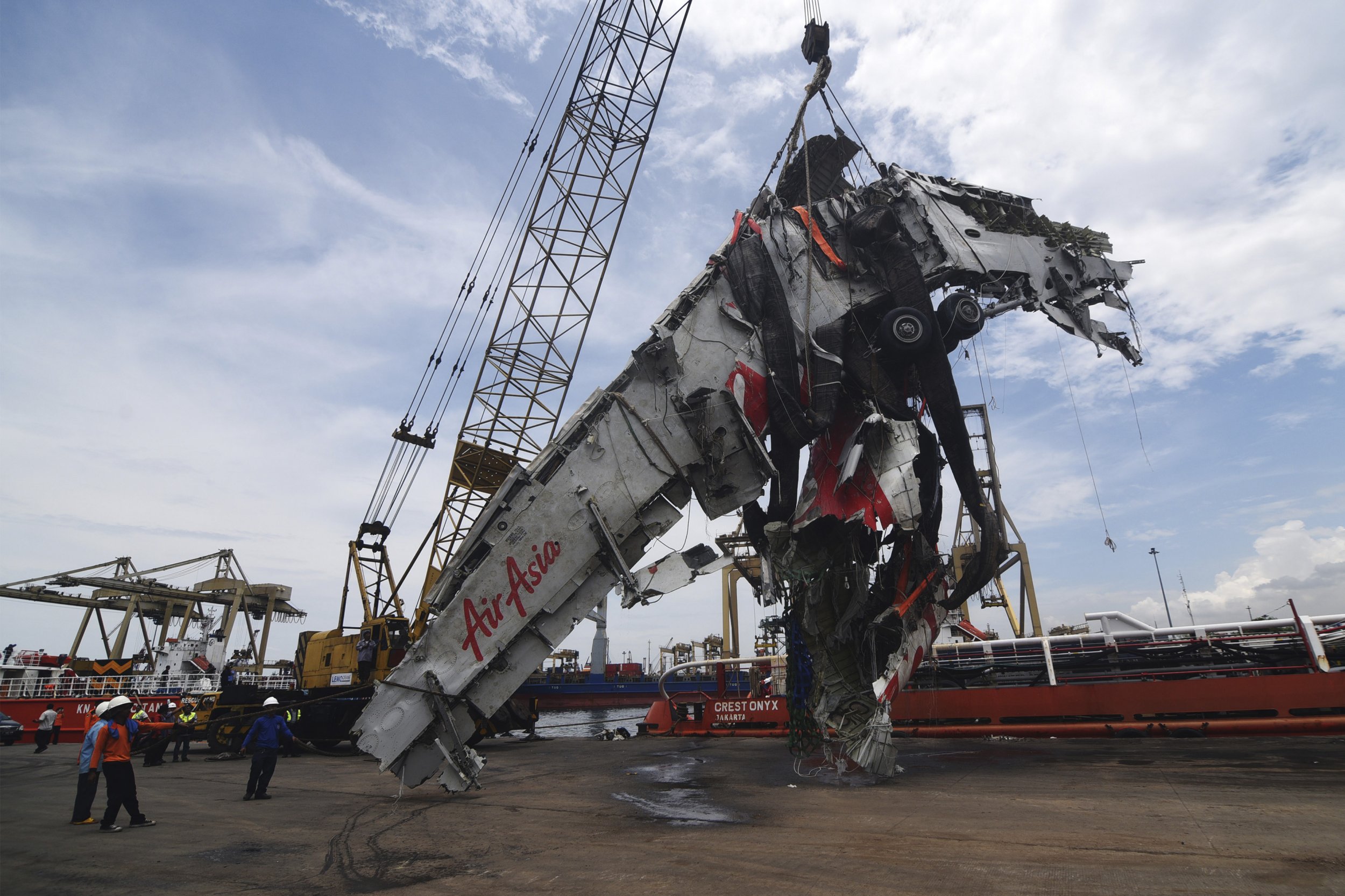
The investigation into the loss of AirAsia Flight QZ8501, which crashed into the Java Sea on December 28, 2014, identified a recurring malfunction in the Rudder Travel Limiter unit as the catalyst for the loss of control. The final report by the Indonesian National Transportation Safety Committee (KNKT) concluded that repeated electrical interruptions in the system’s soldering triggered a series of pilot actions that ultimately led the aircraft to stall and spiral into the ocean.
Understanding the Rudder Travel Limiter (RTL)
The rudder of a modern commercial airliner is a primary flight control surface responsible for controlling the aircraft's yaw, or the side-to-side movement of the nose. To prevent structural damage, the amount of rudder deflection permitted is restricted at higher airspeeds. The Rudder Travel Limiter (RTL) is the electromechanical unit responsible for enforcing these limits.
In the case of the Airbus A320-216 involved in the AirAsia incident, the RTL was managed by the Flight Augmentation Computers (FACs). The investigation discovered that the specific unit on the aircraft suffered from a cracked solder joint on its internal printed circuit board. This defect caused the unit to intermittently lose its electrical connection. When this occurred, the aircraft's flight control system would trigger an "ECAM" (Electronic Centralized Aircraft Monitor) warning—specifically, the "AUTO FLT RUD TRV LIM SYS" fault—signaling the flight crew that the system had entered a degraded, or "reversionary," mode.
Sequence of Events: From Fault to Loss of Control
The tragedy of QZ8501 was not caused by a single mechanical failure, but by the interaction between the system fault and the subsequent human response. The investigation reconstructed the timeline based on the Flight Data Recorder (FDR) and Cockpit Voice Recorder (CVR):
- The Initial Faults: During the flight, the RTL experienced four successive faults. Each time the warning appeared, the pilots performed the reset procedure as outlined in the manufacturer's checklist.
- The Fourth Reset: On the fourth occurrence, the aircraft was flying through severe weather. The pilots attempted to reset the flight control computers in an effort to clear the persistent fault.
- The Autopilot Disconnect: Performing this reset caused the flight control system to revert from "Normal Law" (a high-level, computer-protected state) to "Alternate Law," which removes several flight envelope protections, including the automatic prevention of a stall.
- Control Inputs: Crucially, the autopilot disconnected during the reset, and the aircraft began to roll to the left. The pilot, likely preoccupied with the fault, inadvertently applied a significant sidestick input that, in the absence of the normal flight control protections, caused the aircraft to climb rapidly and eventually stall.
Technical Limitations of the A320 Control Philosophy
The A320 family of aircraft uses a "fly-by-wire" system where pilot inputs are interpreted by flight computers before being sent to the control surfaces. Under "Normal Law," the computer prevents the pilot from commanding a stall or exceeding structural load factors. However, the system is designed with "reversionary modes"—Alternate Law and Direct Law—which are intended to ensure the aircraft remains controllable even if the flight computers or associated sensors experience a malfunction.
The investigation highlighted a critical gap in pilot awareness during these transitions. When an aircraft drops from Normal Law to Alternate Law, the handling characteristics change significantly. Pilots are trained for these scenarios, but the high-stress environment of an inflight technical fault, combined with adverse weather, created a scenario where the crew could not effectively compensate for the sudden loss of automatic protections.
The Role of Maintenance and Solder Integrity
A focal point of the investigation was why a flight control component would suffer from a cracked solder joint. Forensic examination of the RTL unit revealed that the soldering process for the specific electrical component had resulted in a hairline fracture. This type of failure is often referred to as "cold solder" or a fatigue-induced crack.
Under normal conditions, such a fault might never manifest as an in-flight emergency. However, due to vibrations and thermal cycling, the connection had become increasingly intermittent over time. The maintenance records for the aircraft were reviewed to determine if the fault should have been identified prior to the flight. The investigation found that the RTL had experienced 23 separate faults in the year leading up to the crash. While maintenance personnel had performed tasks to address the warnings, the deep-seated nature of the solder joint failure meant that surface-level troubleshooting could not permanently resolve the issue.
Comparison of Flight Control Systems and Pilot Interaction
To better understand the challenges faced by the crew, it is helpful to contrast how different aircraft types manage system faults and pilot intervention. The table below outlines key differences in flight control philosophies relevant to such investigations.
| Feature | Normal Law (A320) | Alternate Law (A320) | Traditional Mechanical/Hydraulic |
|---|---|---|---|
| Stall Protection | Computer-enforced | Reduced/Manual | Pilot-enforced |
| Bank Limit | 67 degrees | Reduced protection | None |
| System Complexity | High (Full integration) | Medium (Degraded) | Low (Direct linkage) |
| Recovery Strategy | Automation prioritized | Pilot manual control | Pilot manual control |
In a traditional mechanical system, a pilot feels a physical change in control forces when a system fails. In the fly-by-wire A320, the pilot must transition from a "manager" role, where the computer handles envelope protection, to a "pilot" role, where they must manually ensure the aircraft remains within safe parameters.
Safety Recommendations and Industry Impact
Following the publication of the KNKT report, aviation regulators and Airbus implemented several safety improvements:
- Training Enhancements: Training programs for A320 pilots were modified to place greater emphasis on "upset recovery" and the practical implications of flying in Alternate Law.
- System Logic Updates: Changes were made to flight control software to improve how the system handles intermittent RTL faults, aiming to reduce the frequency of ECAM warnings that require pilot intervention.
- Component Inspection: Manufacturers issued updated maintenance bulletins requiring more rigorous inspections of solder joints and electrical connectors in flight control computers to prevent latent failures from becoming chronic issues.
- Crew Resource Management: The industry placed a renewed focus on ensuring that when a system fault occurs, one pilot remains dedicated solely to flying the aircraft while the other manages the checklist.
Addressing Recurring Technical Faults
For aircraft operators, the AirAsia investigation serves as a case study in the danger of "normalization of deviance." When a specific fault occurs repeatedly, there is a risk that maintenance teams and crews begin to view it as a known, manageable annoyance rather than a potential precursor to a catastrophic failure.
To address this, airlines utilize Safety Management Systems (SMS). An effective SMS requires that any repetitive, non-critical fault be investigated with the same rigor as a major incident. By analyzing the history of a specific serial number or component type, engineers can identify patterns that suggest an underlying design or manufacturing weakness—such as the solder joint issue—that standard maintenance checklists might miss.
Frequently Asked Questions
What is the Rudder Travel Limiter's primary function? The RTL is an electromechanical device that restricts the amount of rudder movement at high speeds to prevent the pilot from accidentally inducing structural failure of the vertical stabilizer.
Why does an aircraft enter "Alternate Law"? An aircraft enters Alternate Law when the flight control computers detect that primary sensors or critical system components (like the RTL or air data units) have failed, necessitating a move to a secondary control mode that offers fewer automatic protections.
Could the pilots have recovered from the stall? The investigation noted that the aircraft reached a state where the control inputs were insufficient to recover from the high-altitude stall. The primary issue was the rapid transition to an uncontrolled state, which left very little margin for error.
What is a "cold solder joint" and why is it dangerous? A cold solder joint occurs when solder does not fully melt or bond with the component leads, resulting in a weak, brittle electrical connection. This connection can pass tests intermittently but fail under the stress of vibration or temperature changes.
How do pilots learn to handle system reversions? Pilots undergo extensive simulator training that forces them to practice handling various ECAM failures and reverting to manual control modes under challenging scenarios, ensuring they are prepared for situations where the flight computers are no longer managing the full flight envelope.
Is the A320 still considered safe after this incident? The A320 remains one of the most widely used and statistically safe commercial aircraft in history. The lessons learned from the QZ8501 investigation were integrated into global pilot training and maintenance protocols, specifically to bridge the gap between computer-assisted flight and manual recovery.
Final Recommendations for Aviation Safety Professionals
The investigation into the faulty rudder system underscores that flight safety relies as much on the robustness of human-machine interfaces as it does on the mechanical integrity of the aircraft. For pilots and maintenance technicians, the primary takeaway is the importance of "staying ahead of the machine." When a system repeatedly signals a fault, it is not merely a nuisance—it is a signal that the aircraft's operating environment has changed.
If you are involved in aviation operations or maintenance, ensure that your reporting systems for "nuisance" faults are robust. Do not allow recurring issues to become part of the background noise of operations. Always prioritize manual control and situational awareness when a transition in flight control laws is triggered. By focusing on deep-root cause analysis rather than simple clearing of warning messages, the aviation industry continues to refine the safety standards that keep air travel reliable and secure.