Choosing between AIG and Nationwide for life insurance requires a clear understanding of your specific financial objectives, as both carriers occupy different positions in the marketplace. AIG, specifically through its American General Life Insurance Company subsidiary, is widely recognized for its robust term life offerings and sophisticated underwriting for high-net-worth individuals, while Nationwide distinguishes itself through a diverse portfolio of permanent products, including universal and indexed universal life insurance, supported by a strong emphasis on personalized financial planning through a network of agents.
Understanding the Corporate Profiles
AIG (American International Group) operates on a global scale with a massive presence in the North American life insurance market. Their life insurance division is primarily known for a flexible underwriting process that can be particularly advantageous for applicants with specific health profiles or those seeking high-face-value policies. They have cultivated a reputation for being a "go-to" carrier for complex estate planning and large-scale term life insurance policies, often appealing to professionals who require high coverage amounts to offset business liabilities or significant tax burdens.
Nationwide, a Fortune 100 company, carries a different legacy. While it offers term life insurance, it is perhaps best known for its "on your side" philosophy, which translates into a strong focus on permanent life insurance products—such as Whole Life, Universal Life, and Indexed Universal Life (IUL). Nationwide often targets the individual family market, focusing on products that blend insurance protection with cash-value accumulation. Their model is heavily agent-centric, meaning the quality of your experience may often depend on the guidance provided by the specific licensed professional you select.
Product Portfolio Comparison
When evaluating AIG versus Nationwide, the divergence in their product strengths becomes clear. It is essential to determine whether you are seeking a simple, temporary income-replacement tool or a long-term financial vehicle.
Term Life Insurance
AIG consistently ranks as a market leader in term life insurance. They offer a wide array of term lengths (10, 15, 20, 25, 30, and sometimes 35 years) and are noted for their "Select-a-Term" product. This feature allows policyholders to select a specific term length that aligns exactly with their debt obligations—such as a 17-year mortgage or a 12-year window until a child graduates college—rather than being forced into standard 10- or 20-year buckets.
Nationwide offers competitive term life insurance, but it is often viewed as a "gateway" product designed to introduce families to the Nationwide ecosystem. Their term products are reliable and backed by a highly rated company, but they may lack the granular customization found in AIG’s specialized term portfolio. If your primary goal is a straightforward, low-cost death benefit for a fixed period, both companies are capable providers, but AIG's breadth of term options often wins on flexibility.
Permanent Life Insurance (Whole and Universal)
This is where the two companies diverge significantly. Nationwide offers a deeper bench of permanent life products. They are particularly recognized for their Indexed Universal Life (IUL) offerings, which allow policyholders to tie their cash-value growth to the performance of market indices, such as the S&P 500, while maintaining a floor to protect against market volatility. Nationwide’s permanent products often include a variety of riders—such as long-term care or chronic illness riders—that are integrated seamlessly into the policy.
AIG provides permanent coverage, including Universal Life and Guaranteed Universal Life, which are frequently utilized in high-net-worth scenarios where the objective is wealth transfer or estate liquidity. AIG’s approach to permanent insurance is often more institutional, focusing on the math of the death benefit and premium efficiency, whereas Nationwide’s permanent suite is designed for individual wealth accumulation and protection of retirement assets.
Financial Strength and Reliability
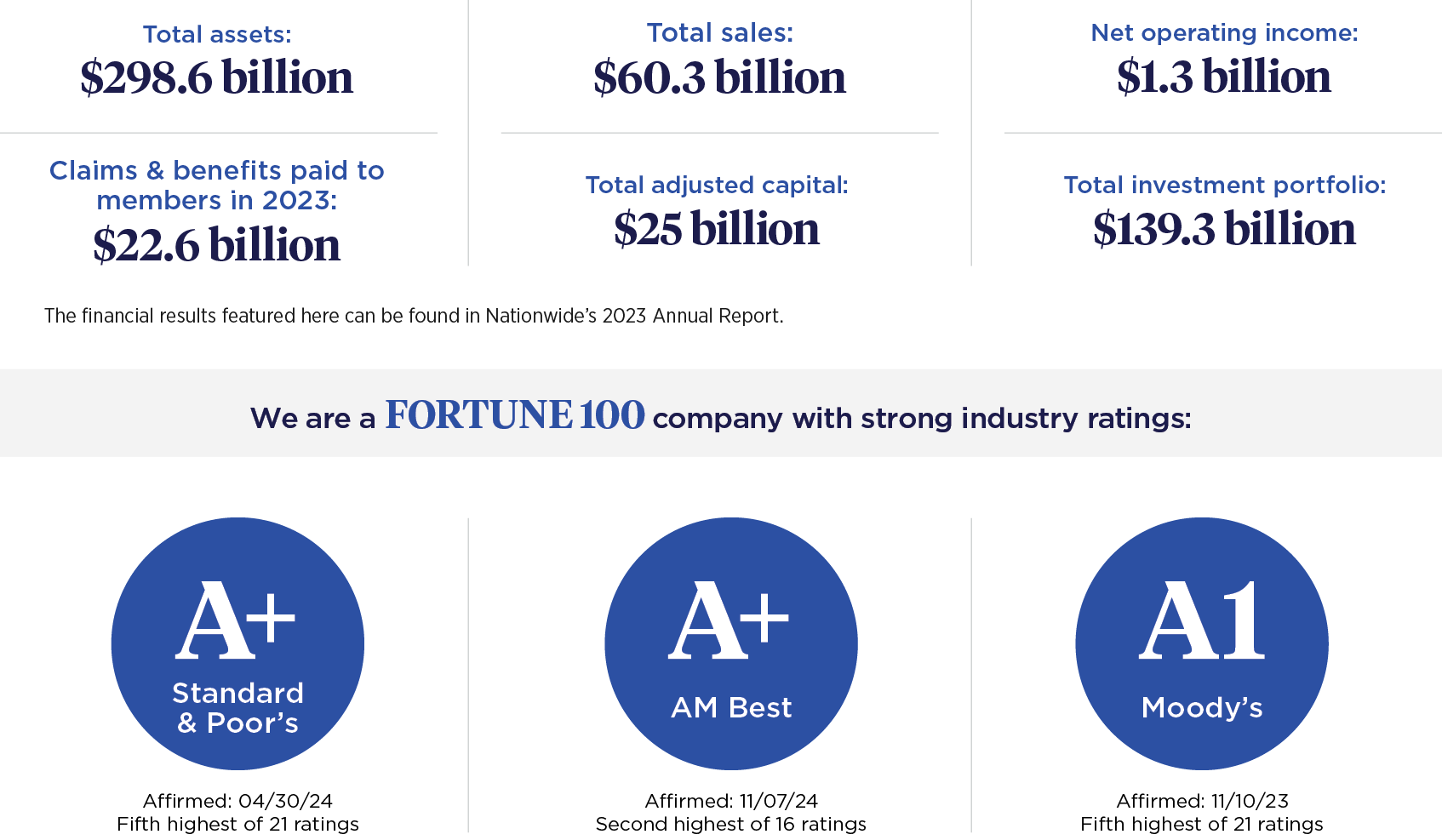
In 2026, both AIG and Nationwide maintain strong financial ratings from major agencies such as AM Best, S&P, and Moody’s. These ratings are crucial because life insurance is a multi-decade contract; you must ensure the company will have the reserves to pay your beneficiaries 30 or 40 years from now.
- AIG: Benefiting from its position as one of the world's largest insurance organizations, AIG possesses massive capital reserves. Its financial stability is frequently cited as a reason for its popularity among clients purchasing multi-million dollar policies.
- Nationwide: As a mutual-based heritage company that has transitioned into a complex financial services organization, Nationwide prides itself on a conservative management style. Policyholders often value the perception of stability that comes with a company that has been a staple in the American household market for nearly a century.
Comparison Table: Key Considerations
| Feature | AIG (American General) | Nationwide |
|---|---|---|
| Primary Strength | Term Life & High-Net-Worth Solutions | Permanent Life & Financial Planning |
| Term Customization | High (Select-a-Term) | Moderate (Standard Terms) |
| Cash Value Products | Strong (Focus on Estate/Wealth) | Extensive (Focus on Accumulation) |
| Agent Model | Independent Brokerage Network | Tied & Independent Agency Model |
| Best For | Complex underwriting, high coverage | Families, retirement planning, IUL |
The Underwriting Process
The underwriting process—the method by which a company evaluates your risk and determines your premium—is a critical differentiator.
AIG is known for utilizing a sophisticated, often data-driven approach to underwriting. They have robust processes for "accelerated underwriting," where, for eligible applicants, they can bypass the traditional medical exam in favor of digital health data, prescription history, and motor vehicle reports. This makes them a fast option for healthy applicants who are tech-savvy.
Nationwide also utilizes accelerated underwriting, but their process is often deeply tied to their agent-consultative model. While AIG might emphasize the efficiency of the digital application, Nationwide emphasizes the role of the agent in helping the applicant prepare their medical history and understand the requirements of the policy. If you have "non-standard" health issues—such as a history of high blood pressure or other manageable conditions—Nationwide’s agents are often highly skilled at presenting your case to the underwriters to ensure a fair assessment.
Identifying Your Needs: A Strategic Approach
To decide between AIG and Nationwide, you should start by defining your primary motivation for purchasing a policy in 2026.
- If your goal is simple income replacement: Look at AIG. Their "Select-a-Term" product allows you to match your coverage period precisely to your liabilities, potentially saving you money by not paying for "extra" years of coverage you do not need.
- If your goal is wealth accumulation and legacy: Consider Nationwide. Their IUL products are designed to be part of a broader financial strategy. If you are already working with a financial advisor, they may favor Nationwide because of the product’s integration with other retirement vehicles.
- If you have complex health history: Request quotes from both. Because underwriting philosophies shift, one company may be more "lenient" toward your specific condition than the other at any given time. A broker who can shop both companies on your behalf will be your most valuable asset here.
Common Pitfalls and Troubleshooting
A common mistake when comparing these carriers is focusing exclusively on the "monthly premium." While cost is vital, life insurance is a contract of promises. If you choose the cheapest premium but the policy lacks the specific riders (such as terminal illness or waiver of premium) that you require, you have effectively bought the wrong product.
If you encounter a "rated" policy (a higher-than-average premium due to health), do not settle immediately. Both AIG and Nationwide have processes for reconsideration. If you make lifestyle changes—such as losing weight, quitting smoking, or managing a condition better—you can often request an "underwriting reconsideration" to lower your premiums. Always ask your agent about the company's specific process for future rate reductions before you sign the initial application.
Frequently Asked Questions
1. Is AIG or Nationwide better for someone with health issues? Neither is universally "better," as underwriting guidelines change frequently. AIG often excels with high-net-worth applicants who have complex financial backgrounds, while Nationwide’s agent-based model allows for more personal advocacy if you have specific medical conditions. Always apply to multiple carriers simultaneously to see which provides the best "class" rating for your health.
2. Which company offers better cash-value growth? Nationwide is generally considered to have a more diverse and accessible suite of permanent insurance products (like IUL) aimed at individual wealth accumulation. AIG’s permanent products are often geared toward institutional-grade estate planning and liquidity. Your choice should depend on whether you want a "wealth builder" (Nationwide) or a "wealth protector" (AIG).
3. Do I need a medical exam for either company in 2026? Both AIG and Nationwide utilize "accelerated underwriting" programs that can waive the medical exam for qualified applicants. However, this is not guaranteed. If you are older, are seeking a very high coverage amount (usually over $1 million), or have significant health history, you should expect to undergo a standard paramedical exam.
4. Can I convert my term policy to a permanent one later? Yes. Both companies offer conversion privileges on their term life insurance products. This allows you to convert a temporary term policy into a permanent whole or universal life policy without having to prove your insurability again. This is a critical feature if your health declines during your term period.
5. How do I verify the financial stability of my insurance company? You should review the current ratings from AM Best, Standard & Poor’s (S&P), and Moody’s. These agencies provide independent analysis of an insurer's ability to pay claims. In 2026, both AIG and Nationwide maintain high investment-grade ratings, indicating a very strong capacity to meet their long-term obligations to policyholders.
Final Recommendation
For most consumers, the choice between AIG and Nationwide comes down to the nature of the policy. If you are looking for a highly customizable term life insurance policy to cover a specific financial obligation, AIG is an industry standout. If you are looking for a permanent life insurance solution that offers cash-value accumulation potential and personalized, agent-led service, Nationwide is a premier option. Before finalizing your decision, work with an independent broker who can provide a side-by-side comparison of specific illustrations for your age, health status, and coverage goals.