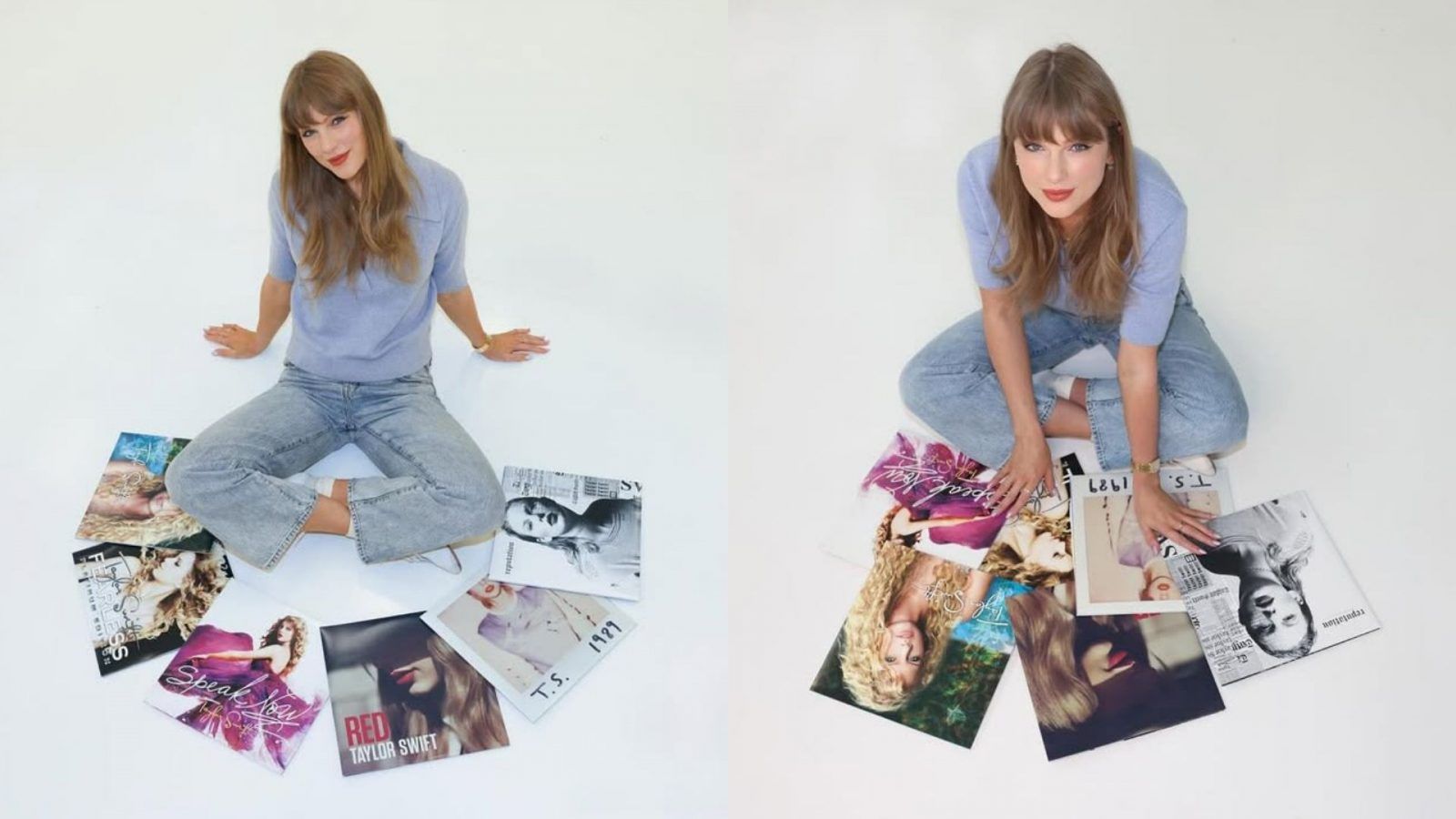
Adele and Taylor Swift represent the pinnacle of commercial success in the modern music industry, though they achieve their record-breaking numbers through distinct market strategies. While Adele’s 25 remains the all-time leader for pure sales in a single week (3.38 million), Taylor Swift’s The Tortured Poets Department holds the crown for the highest modern-era units (2.61 million) fueled by massive streaming volumes and physical variants.
The Battle of Titans: Understanding the Numbers
To accurately compare Adele and Taylor Swift, one must first distinguish between "pure sales" and "units." In the music industry of 2026, we look back at two different eras of consumption. Pure sales refer to physical copies (CDs, vinyl, cassettes) and digital downloads. Units, or Album Equivalent Units (AEU), combine those pure sales with Streaming Equivalent Albums (SEA) and Track Equivalent Albums (TEA).
Adele has historically been a juggernaut of pure sales. Her audience demographic traditionally skewed toward older consumers who preferred owning physical media or digital files. In contrast, Taylor Swift has mastered the hybrid model, commanding both a massive physical collector’s market and an unprecedented streaming presence. When comparing their first-week totals, we are looking at the two most successful "event" artists of the 21st century, whose release weeks effectively pause the rest of the industry.
Adele’s Historic Peak: The "25" Phenomenon
In November 2015, Adele released her third studio album, 25. The first-week numbers were not just high; they were an anomaly that redefined the limits of the music business. In the United States alone, 25 sold 3.38 million copies in its first seven days. This remains the highest first-week sales figure for any album since Nielsen (now Luminate) began tracking data in 1991.
Several technical factors contributed to this unprecedented success. First, Adele and her team at XL Recordings/Columbia made the strategic decision to withhold the album from streaming platforms like Spotify and Apple Music for several months. This forced her massive audience to purchase the album to hear it. Second, the album's lead single, "Hello," had created a cultural moment of universal appeal that crossed generational lines.
Adele’s subsequent release, 30 (2021), arrived in a very different landscape. While it debuted with a massive 839,000 units, it showed the industry's shift toward streaming. Despite the lower total compared to 25, it was still the biggest debut of that year, proving that Adele’s "event" status remained intact even as the market for CDs and digital downloads contracted.
Taylor Swift’s Modern Dominance: The "TTPD" and "Midnights" Eras
Taylor Swift’s trajectory is unique because her first-week numbers have actually increased as she progressed further into her career, defying the typical "peaking" cycle of pop stars. Her most significant benchmarks occurred with the releases of Midnights (2022) and The Tortured Poets Department (2024).
Midnights broke the "million-seller" ceiling that many thought was impossible in the 2020s, moving 1.578 million units in its first week. However, she surpassed even this with The Tortured Poets Department (TTPD), which debuted with a staggering 2.61 million units.
The technical breakdown of Taylor’s sales is essential for comparison. Unlike Adele’s 25, which relied almost entirely on purchases, Taylor’s TTPD numbers were a blend:
- Pure Sales: 1.914 million (including massive vinyl sales).
- Streaming Units: 891.34 million on-demand official streams (accounting for roughly 689,000 SEA units).
Taylor Swift’s strategy utilizes variant marketing—releasing multiple editions of an album with different covers, colors, or "bonus" tracks—which encourages her "Swiftie" fanbase to purchase multiple copies. This allows her to maintain high pure sales figures while simultaneously dominating the streaming charts.
Side-by-Side Comparison: Key Albums and Figures
The following table compares the most significant first-week debuts from both artists to highlight the shift in how music is consumed.
| Artist | Album | Release Year | Total First-Week Units (US) | Pure Sales Component | Streaming (SEA) Component |
|---|---|---|---|---|---|
| Adele | 21 | 2011 | 352,000 | 352,000 | N/A (Pre-SEA era) |
| Adele | 25 | 2015 | 3,380,000 | 3,380,000 | Negligible (Withheld) |
| Adele | 30 | 2021 | 839,000 | 692,000 | 141,000 |
| Taylor Swift | 1989 | 2014 | 1,287,000 | 1,287,000 | N/A (Pre-SEA era) |
| Taylor Swift | Reputation | 2017 | 1,238,000 | 1,216,000 | 22,000 |
| Taylor Swift | Midnights | 2022 | 1,578,000 | 1,140,000 | 411,000 |
| Taylor Swift | The Tortured Poets Department | 2024 | 2,614,000 | 1,914,000 | 689,000 |
Pure Sales vs. Streaming Equivalents: How the Landscape Changed
The comparison between Adele and Taylor Swift is often a comparison of scarcity versus ubiquity. Adele’s historic 2015 record was built on scarcity; the only way to hear 25 was to buy it. This created a massive surge in "pure" revenue for her label and retailers.
By the time Taylor Swift released The Tortured Poets Department in 2024, the Billboard 200 rules had undergone several revisions. Billboard currently uses a formula where 1,250 paid audio streams or 3,750 ad-supported streams equal one album sale. Taylor’s ability to generate nearly 900 million streams in seven days is a feat of modern engagement that was not even a possibility during Adele’s 25 era.
Furthermore, the "Bundle" rule changes in 2020 significantly impacted how these numbers are reported. Previously, artists could bundle an album with a t-shirt or concert ticket to count as a sale. Billboard now requires that physical albums must be sold as standalone items or as a clearly priced add-on to count toward the charts. Both Adele and Taylor have successfully navigated these rules, though Taylor’s use of multiple vinyl configurations (often up to 4 or 5 versions) has become the new standard for driving physical volume.
Marketing Strategies: Scarcity vs. World-Building
Adele’s marketing strategy is built on absence. She often retreats from the public eye for years at a time, making her return feel like a global news event. This "mystery" drives her older demographic to support her in the most traditional way: purchasing the full body of work. Adele’s brand is rooted in vocal prowess and emotional relatability, which translates into "prestige" sales.
Taylor Swift, conversely, employs a strategy of constant engagement and world-building. She uses "Easter eggs" (hidden clues) in her music videos, liner notes, and social media posts to keep her audience constantly theorizing and consuming. For Taylor, an album release is not just a collection of songs; it is a chapter in a long-running narrative. This drives her younger, digitally native audience to stream her music repeatedly while her collectors buy every physical version to "complete the set."
Impact on the Industry and Record Labels
The sales figures of these two artists have massive implications for the broader music economy. When Adele sold 3.38 million copies of 25, it single-handedly boosted the quarterly revenue of the entire music industry. It proved that the "album" format was not dead, despite the rise of digital singles.
Taylor Swift’s recent streaks have had a different impact, specifically on vinyl production. Her massive orders for Midnights and TTPD (moving over 700k and 850k vinyl copies respectively in their first weeks) reportedly caused backlogs at pressing plants worldwide. Her success has essentially subsidized the vinyl industry, keeping pressing plants operational but also making it difficult for smaller independent artists to find slots for their own releases.
The Role of Global Markets
While US figures are the primary benchmark for these comparisons, the global perspective is equally telling. Adele has traditionally held a stronger grasp on the UK and European markets. 25 sold over 800,000 copies in its first week in the UK, a record that still stands.
Taylor Swift, however, has seen exponential growth in Asian and Latin American markets, largely due to her "Eras Tour" (2023-2025). By 2026, we can see that her global footprint has expanded to a point where her "off-peak" weeks in international territories often exceed the peak weeks of other A-list stars.
Frequently Asked Questions
Did Taylor Swift ever beat Adele’s pure sales record for "25"?
As of 2026, no artist has surpassed the 3.38 million pure sales record set by Adele’s 25 in 2015. Taylor Swift’s The Tortured Poets Department came the closest in the modern era with 2.61 million total units, but Adele still holds the crown for the most actual copies sold in a seven-day period.
Why are Adele’s streaming numbers lower than Taylor Swift’s?
Adele’s audience includes a higher percentage of "legacy" listeners who prefer physical media or digital downloads. Additionally, Adele’s albums are typically shorter and released less frequently. Taylor Swift’s albums, such as the 31-track version of TTPD, are designed to maximize streaming volume; more tracks naturally lead to more total streams, which the Billboard formula converts into album units.
How do vinyl sales affect the comparison?
Vinyl is currently the most significant driver of pure sales. Taylor Swift is the current leader in this category, often selling more vinyl in a single week than most artists sell in a year. Adele also moves significant vinyl volume, but Taylor’s strategy of releasing four or more color variants significantly inflates her totals compared to Adele’s more traditional release patterns.
What is the "Streaming Equivalent Album" (SEA) and why does it matter?
SEA is a metric used to equate a certain number of song streams to one album sale. Currently, it takes 1,250 premium streams to equal one sale. This is vital because it allows Taylor Swift’s massive digital popularity to be weighed against Adele’s traditional sales dominance. Without SEA, Taylor's modern totals would appear much lower than they actually are in terms of total consumption.
Has the "Year of Release" influenced these records?
Yes, significantly. Adele’s 25 was released in 2015, the last "golden year" for digital downloads (iTunes) before streaming became the absolute dominant force. If 25 were released today, its pure sales would likely be lower, but its streaming numbers would be much higher. Taylor Swift’s recent records benefit from a fully matured streaming market and a revitalized vinyl market.
Final Recommendation for Data Analysis
When comparing these two artists, avoid looking at the "Total Units" in isolation. To understand the true cultural impact, one must look at the Pure Sales to gauge fan commitment and the SEA Units to gauge cultural ubiquity. Adele remains the queen of the "Physical Purchase," while Taylor Swift is the undisputed ruler of the "Consumption Era." For any industry analysis, it is recommended to use Luminate Data (formerly Nielsen) as the gold standard for verified sales, as third-party social media reports often conflate global and domestic (US) figures.